
Elapidae
Indonesian Cobra
VenomousNaja sputatrix
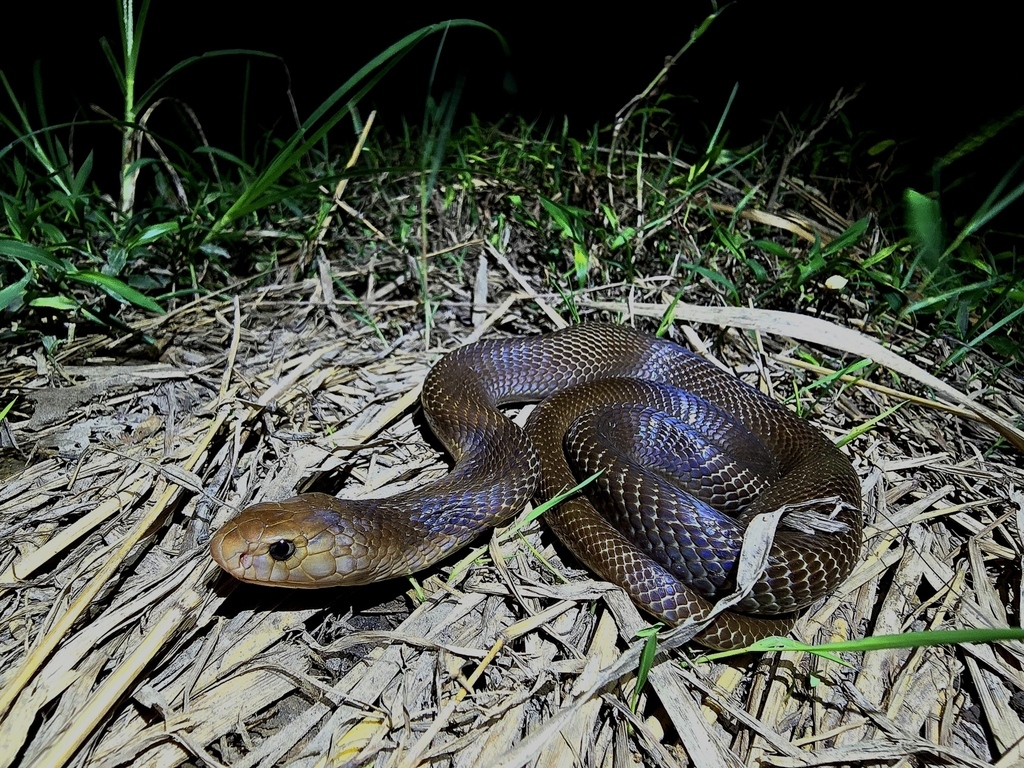
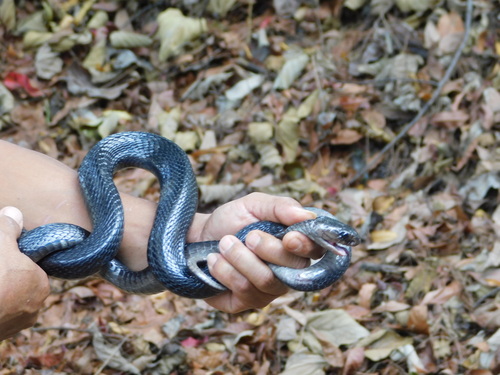
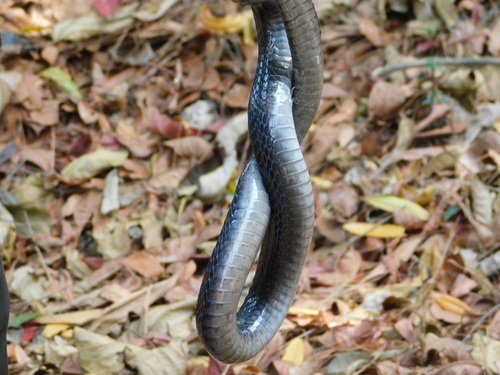
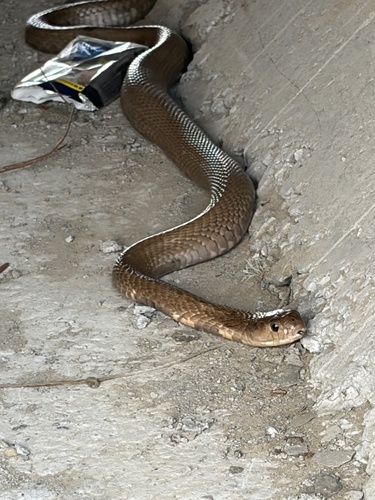
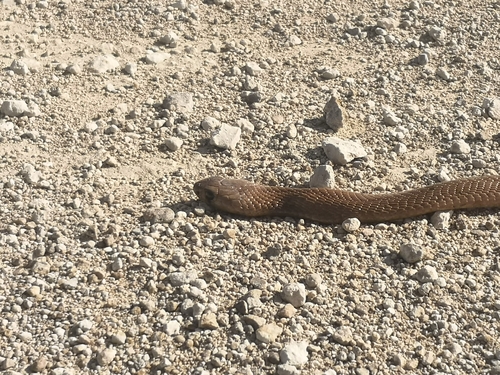
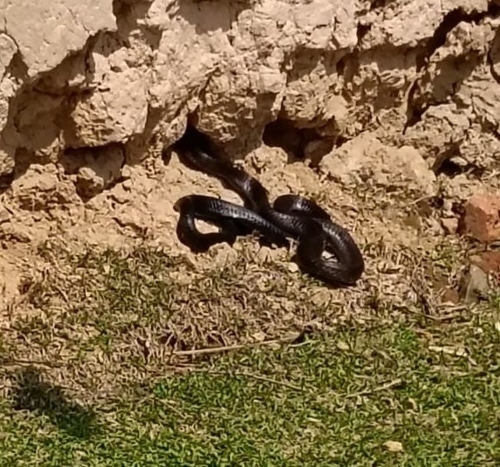
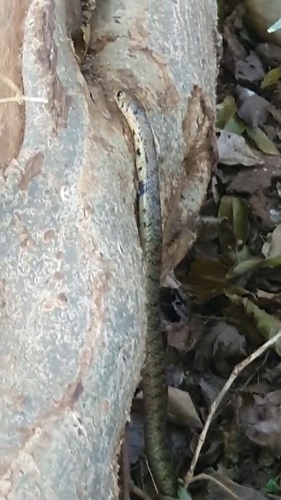
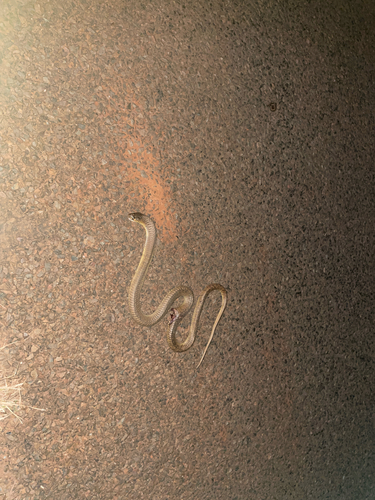
3 photographs of the Indonesian Cobra. © Max Tibby.
The Indonesian Cobra (Naja sputatrix) is a venomous snake in the Elapidae family, recorded in 5 countries.
If you are bitten
This is a venomous snake. Treat any bite as a medical emergency: stay calm, keep the bitten limb still and roughly level with the heart, remove rings and tight clothing, and get to emergency care immediately. Do not apply a tourniquet, cut the wound, apply ice, or try to suck out venom. Call your local emergency number or poison center.
- Family
- Elapidae
- Danger
- high
About the Indonesian Cobra
The Javan spitting cobra (Naja sputatrix), also called Indonesian cobra or Komodo spitting cobra, is a species of venomous cobra in the family Elapidae, found in the Lesser Sunda Islands of Indonesia, including Java, Bali, Lombok, Sumbawa, Flores, Komodo, and others.
Etymology and names
Naja sputatrix is classified under the genus Naja of the family Elapidae. It was first described by German entomologist, herpetologist, ornithologist, and lawyer Friedrich Boie in 1827. The generic name Naja is a Latinisation of the Sanskrit word nāgá (नाग), meaning "cobra". The specific epithet sputatrix comes from the Latin word sputator, which means "spitter."
Description
The Java spitting cobra is a medium to large sized snake and has long cervical ribs, capable of expanding to form a hood when threatened. The body of this species is compressed dorsoventrally and posteriorly cylindrical. The average length of an adult is 1.3 metres (4.3 ft), but they can grow to a maximum of around 1.85 metres (6.1 ft). The head is elliptical, slightly different from the neck with a short rounded snout and large nostrils. Its eyes are of moderate size, with round pupils. The dorsal scales are smooth and very oblique. Dorsal scale count is usually 25–19. Some colouration and pattern differences occur between Javan specimens and those from the other islands where this species occurs. Javan adults are usually uniform yellowish, brown or blackish in colour, while juveniles often have throat bands and lateral throat spots. Specimens do not always have hood marks, but when there is a mark, it is most often chevron-shaped.
Distribution
This species of cobra is native to the Indonesian islands of Java and the Lesser Sunda Islands of Bali, Lombok, Sumbawa, Komodo, Flores, Lomblen, and Alor. They may possibly occur in the other islands in the group. One was found on Rinca Island on 26 December 2015. Verification is still required as to whether or not this species of cobra also occurs in the islands of Timor and Sulawesi. Although a single specimen was observed in the island of Sulawesi, it is thought that the specimen may have originated from the island of Java, as it was indistinguishable from Javan specimens. Scientist De Hass did research on this species in two districts of western Java: in Nandjoeng Djaja, where it was relatively uncommon and in Bandjarwangi, where the altitude is 900 metres (3,000 ft) it was not recorded. A 1998 study by FB Yuwono found the species was abundant in Java. Dunn (1927b) reported specimens taken on Komodo from sea level to 650 metres (2,130 ft), the highest altitude this species has been found at.
Habitat, behaviour and ecology
The Javan spitting cobra is found mostly in tropical forests and wet forest, but the species adapts well to a wide variety of habitats across its range on the islands, including more arid regions, dry woodlands, and cultivated hill country. In the island of Komodo, it has been observed in a variety of habitats including dry savanna and deciduous monsoon forest. It has also been reported that specimens in the island of Komodo are reluctant to spit, but field observations suggest the opposite. This species is easy prey for the Komodo dragon. Naja sputatrix is very defensive and readily spits out venom when it feels threatened. It is a terrestrial snake that's nocturnal in nature. It preys predominantly on small mammals such as small rats and mice, but it will also feed on frogs, other snakes, and lizards. Herpetologist Shine Boeadi, in a study published in 1998, measured and dissected 80 Javan specimens of this species and found that most prey items were mammals.
Reproduction
Adapted from Wikipedia, available under CC BY-SA.
Local and regional names
The Indonesian Cobra is known by these names across the regions where it lives:
- Arabic
- الناشر الجاوي البصَّاق, كوبرا إندونيسية
- Bulgarian
- Южноиндонезийска плюеща кобра
- Chinese
- 南洋眼鏡蛇
- Czech
- kobra jávská
- English
- Javan Spitting Cobra, Southern Indonesian Spitting Cobra
- French
- Cobra cracheur indonésien, Cobra de Komodo
- German
- Javanische Speikobra
- Hebrew
- קוברה יורקת אינדונזית
- Hungarian
- Jávai köpködőkobra, maláj köpködőkobra
- Indonesian
- Kobra Jawa, Ular Sendok, Ular kobra, Ular-Sendok Jawa
- Italian
- Cobra sputatore indonesiano
- Japanese
- インドネシアコブラ
- Polish
- kobra sundajska
- Russian
- Плюющая индийская кобра
- Spanish
- Cobra de Indonesia
- Ukrainian
- Кобра плююча індонезійська
Frequently asked: Indonesian Cobra
- Is the Indonesian Cobra venomous?
- Yes. The Indonesian Cobra (Naja sputatrix) is venomous and belongs to the Elapidae family (cobra, mamba, coral or sea snake). Its bite is considered high risk to people. Treat any bite as a medical emergency.
- Is the Indonesian Cobra poisonous?
- Snakes are venomous, not poisonous. "Poisonous" means harmful to eat or touch; "venomous" means injecting toxins through a bite. The Indonesian Cobra is venomous, delivering venom through a bite.
- Is the Indonesian Cobra dangerous?
- This is a venomous snake. Treat any bite as a medical emergency: stay calm, keep the bitten limb still and roughly level with the heart, remove rings and tight clothing, and get to emergency care immediately. Do not apply a tourniquet, cut the wound, apply ice, or try to suck out venom. Call your local emergency number or poison center.
- Where does the Indonesian Cobra live?
- The Indonesian Cobra has verified records in 5 countries, including Indonesia, Thailand, Singapore. See the distribution section below for its full range.
- Why is it called the Indonesian Cobra?
- Naja sputatrix is classified under the genus Naja of the family Elapidae. It was first described by German entomologist, herpetologist, ornithologist, and lawyer Friedrich Boie in 1827. The generic name Naja is a Latinisation of the Sanskrit word nāgá (नाग), meaning "cobra". The specific epithet sputatrix comes from the Latin word sputator, which means "spitter."
If you are bitten by the Indonesian Cobra
Do
- Get away from the snake and stay calm. Most bites worsen when people panic or try again to handle the snake.
- Call 911 or Poison Control (1-800-222-1222) right away. Antivenom works best when given early.
- Note the time of the bite and, from a safe distance, the snake's color and pattern, a phone photo is enough. Do not chase it.
- Keep the bitten limb still and at roughly heart level. Sit or lie down and limit movement.
- Remove rings, watches, and tight clothing near the bite before swelling starts.
- Gently wash the bite with soap and water and cover it with a clean, dry dressing.
Do not
- Do not cut the wound or try to suck out the venom.
- Do not apply a tourniquet or ice.
- Do not drink alcohol or caffeine.
- Do not take aspirin or ibuprofen, they can worsen bleeding. Acetaminophen is safer for pain.
- Do not try to catch or kill the snake. A dead snake can still bite by reflex.
First-aid guidance adapted from the U.S. Centers for Disease Control and Prevention (CDC NIOSH), Venomous Snakes. Educational only; always follow the instructions of emergency responders.
Where it is found
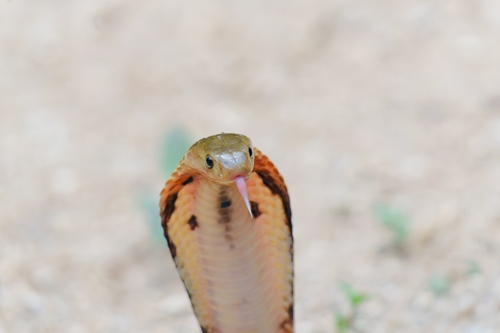
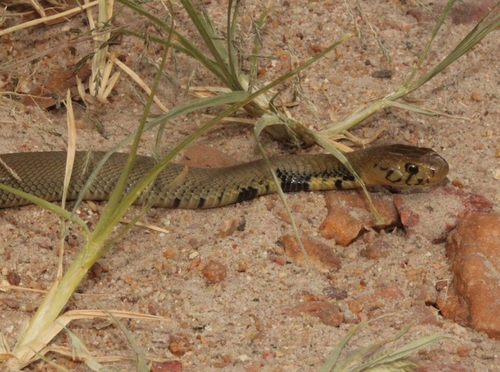
More Elapidae snakes
Classification
How scientists group this snake, from the broadest category down to the exact species. Each step narrows to its closest relatives.
Keep learning
- Are Snakes Dangerous? The Real Risk, in PerspectiveMost snakes are harmless and avoid people. Here is the honest picture of snakebite risk worldwide and how to lower your own.
- Snakebite First Aid: What to Do (and What Never to Do)A clear, CDC-based guide to snakebite first aid: the steps that help, the popular myths that hurt, and how to tell a serious bite from a minor one.
- Venomous vs Nonvenomous: How to Tell the DifferenceThe folk rules for telling venomous snakes apart, where each one fails, and why location-based identification beats guessing by sight.
- What to Do If You Find a SnakeFound a snake at home or on a trail? Here is how to stay calm, give it space, identify it safely, and know when to call a professional.
Distribution from GBIF & iNaturalist. Venom status per CDC. Background: Wikipedia. Informational only. Never handle a snake to identify it.