
Colubridae
Buff Striped Keelback
HarmlessAmphiesma stolatum
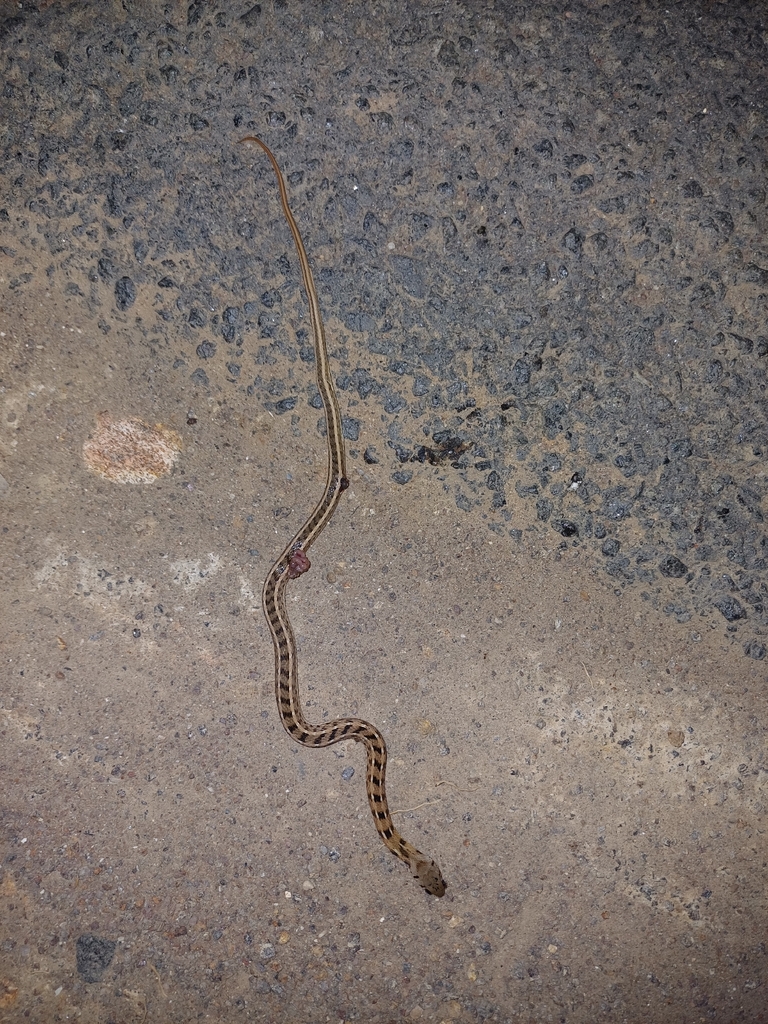
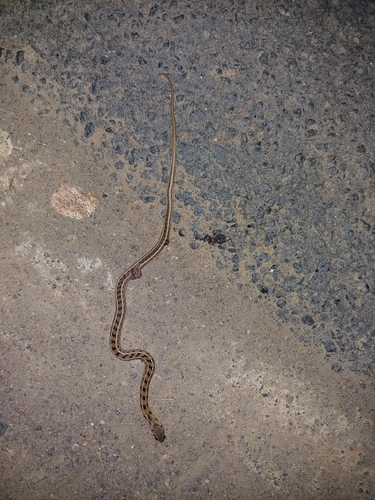
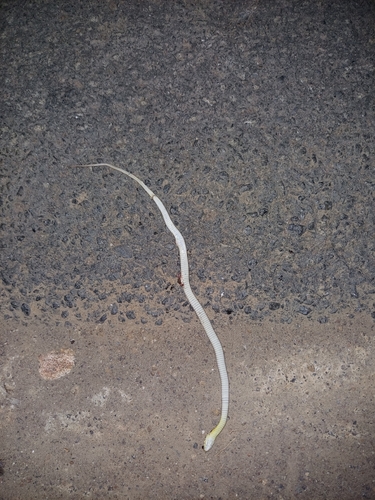
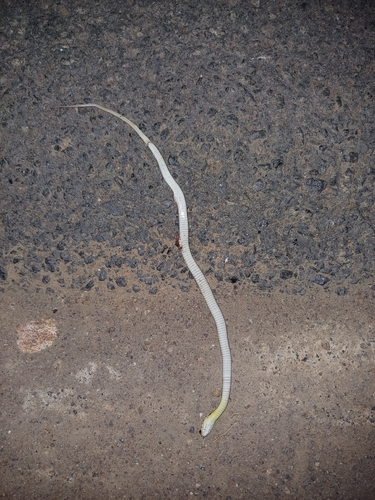
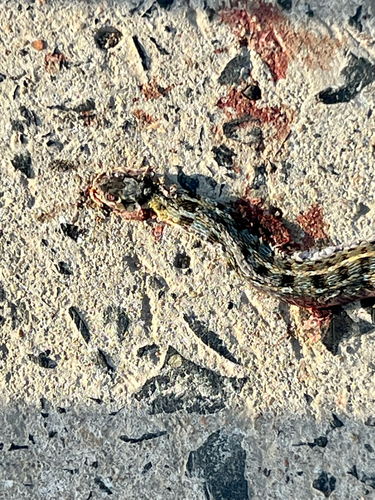
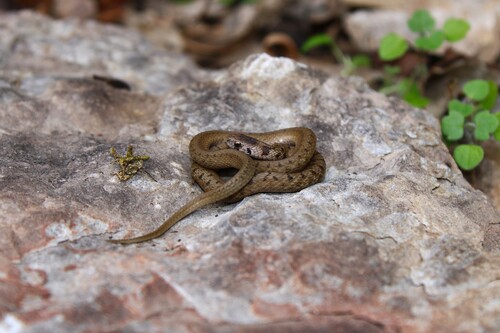
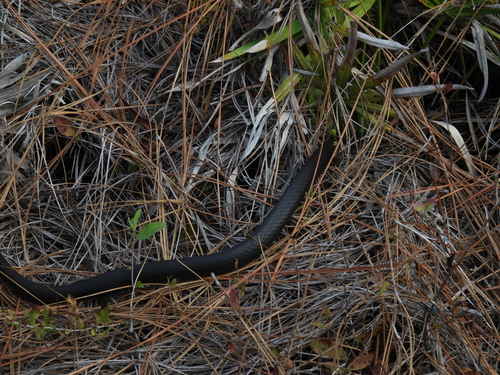
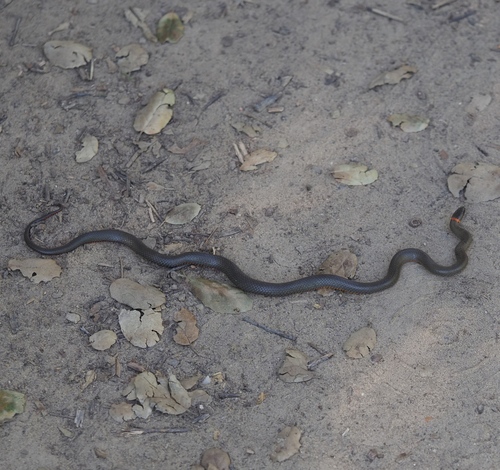
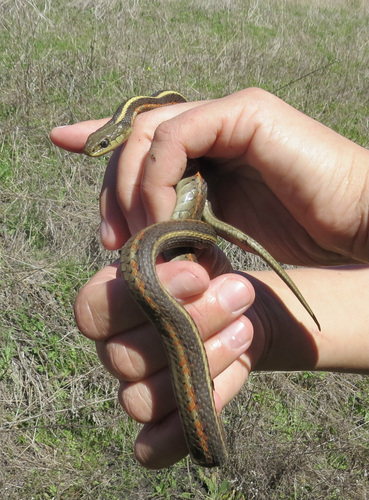
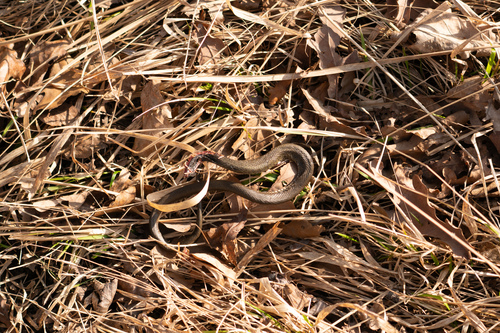
5 photographs of the Buff Striped Keelback. © Hopeland.
The Buff Striped Keelback (Amphiesma stolatum) is a non-venomous snake in the Colubridae family, recorded in 26 countries.
- Family
- Colubridae
About the Buff Striped Keelback
The buff striped keelback (Amphiesma stolatum) is a species of nonvenomous colubrid snake found across Asia. It is a typically non-aggressive snake that feeds on frogs and toads. It belongs to the subfamily Natricinae, and is closely related to water snakes and grass snakes. It resembles an Asian version of the American garter snake. It is quite a common snake but is rarely seen.
Taxonomy
Based on morphological characters including hemipenial morphology, dentition, and external scalation, in 1960 the genus Natrix sensu lato was divided into several genera, revalidating the genus Amphiesma with the type species A. stolatum.
Anatomy and morphology
A small, slender snake, the buff striped keelback is generally olive-brown to gray in colour. The head and the body are of the same colour.
The body of the buff striped keelback is short, and it has a long slender tail which is almost a quarter of its length. Two yellow stripes along the length and to the sides of the spine are the distinctive feature of this snake. These stripes are diffuse at the head and are especially bright on the second half of its body.
The keelback has irregular blackish crossbars on the body. Near the head the crossbars are prominent, whereas on the second half of the snake they become diffuse.
The sides of the head are yellow, and the head tapers to form a distinctive neck. The nape is red during the breeding season. The chin and throats are white or sometimes yellow. The lips and area in front of and behind eye are yellowish. The forked tongue is black. The eyes have large round pupils with golden flecks on the iris.
The underside is pale cream and has small black spots scattered along both the margins. It has keeled scales on the dorsal surface of the body.
Morphs
There are two distinct colour varieties – a typical variety, found everywhere, with grayish-blue interscale colour. The second variety, erythrostictus, is common mainly in coastal areas and has bright vermillion interscale colour. The interscale colours become visible only when the snake puffs itself up when agitated.
Identifying characteristics
Scalation has been described as:
The nasal shield does not touch the second supralabial (upper lip shield);
The rostral touches a total of 6 shields. These are two inter-nasals, two nasals and the first supralabial on each side;
Supralabial 8 (3rd to 5th touching eye);
Presence of single temporal shield;
Nineteen rows of costals which are strongly keeled except for the outer row which is perfectly smooth;
Presence of stripes;
Ventrals 118–161, usually divided;
Anal divided;
Subcaudals 46-89, paired.
Size
The Buff Striped keelback is usually 50 to 80 cm (about 19.7 to 31.5 inches) in total length. Females are usually longer than the males.
Distribution
Adapted from Wikipedia, available under CC BY-SA.
Frequently asked: Buff Striped Keelback
- Is the Buff Striped Keelback venomous?
- No. The Buff Striped Keelback (Amphiesma stolatum) is non-venomous and is not considered dangerous to humans. Like most snakes, it will retreat rather than bite when given the chance.
- Is the Buff Striped Keelback poisonous?
- Snakes are venomous, not poisonous. "Poisonous" means harmful to eat or touch; "venomous" means injecting toxins through a bite. The Buff Striped Keelback is neither poisonous nor venomous.
- Is the Buff Striped Keelback dangerous?
- The Buff Striped Keelback is not dangerous to humans. It has no medically significant venom and bites only defensively if cornered or handled.
- Where does the Buff Striped Keelback live?
- The Buff Striped Keelback has verified records in 26 countries, including India, Chinese Taipei, China. See the distribution section below for its full range.
- What does the Buff Striped Keelback eat?
- The primary diet of adult A. stolatum is small amphibians such as frogs and toads, but they are also known to consume earthworms, small lizards and rodents.
Where it is found
More Colubridae snakes
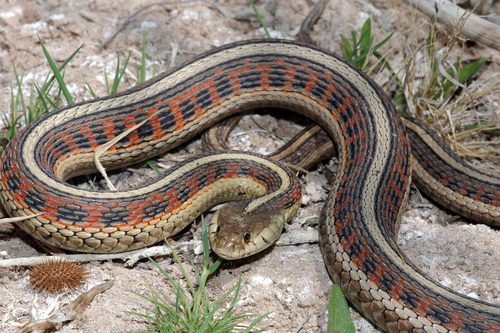
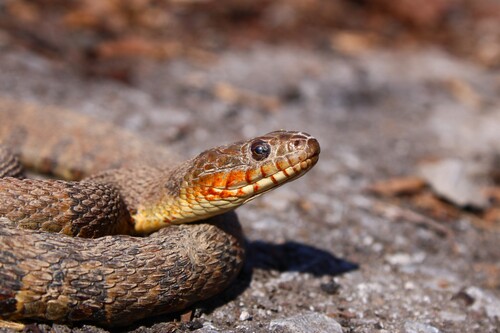
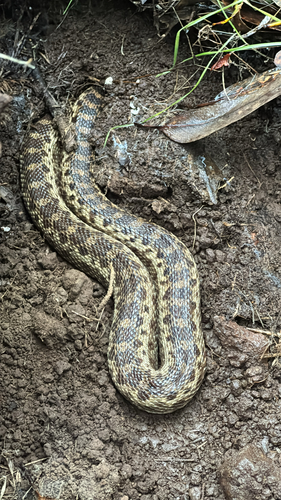
Classification
How scientists group this snake, from the broadest category down to the exact species. Each step narrows to its closest relatives.
- OrderThe broad group of scaled reptiles: all snakes and lizards
- Squamata
- FamilyA group of related snakes that share key traits
- Colubridae
- GenusA close-knit group of very similar species
- Amphiesma
- SpeciesThis exact snake, named in the two-part scientific name
- Amphiesma stolatum
Keep learning
- What to Do If You Find a SnakeFound a snake at home or on a trail? Here is how to stay calm, give it space, identify it safely, and know when to call a professional.
- Venomous vs Nonvenomous: How to Tell the DifferenceThe folk rules for telling venomous snakes apart, where each one fails, and why location-based identification beats guessing by sight.
- What Is a Snake? Anatomy and the BasicsA clear overview of what makes a snake a snake: limbless body plan, anatomy, evolution from lizards, species diversity, and why they are ectothermic.
- How to Keep Snakes Out of Your Yard and HomeA practical guide to keeping snakes out of your yard and home using habitat changes that work, plus what to skip and what to do if one shows up.
Distribution from GBIF & iNaturalist. Venom status per CDC. Background: Wikipedia. Informational only. Never handle a snake to identify it.