
Racer
North American Racer
HarmlessColuber constrictor
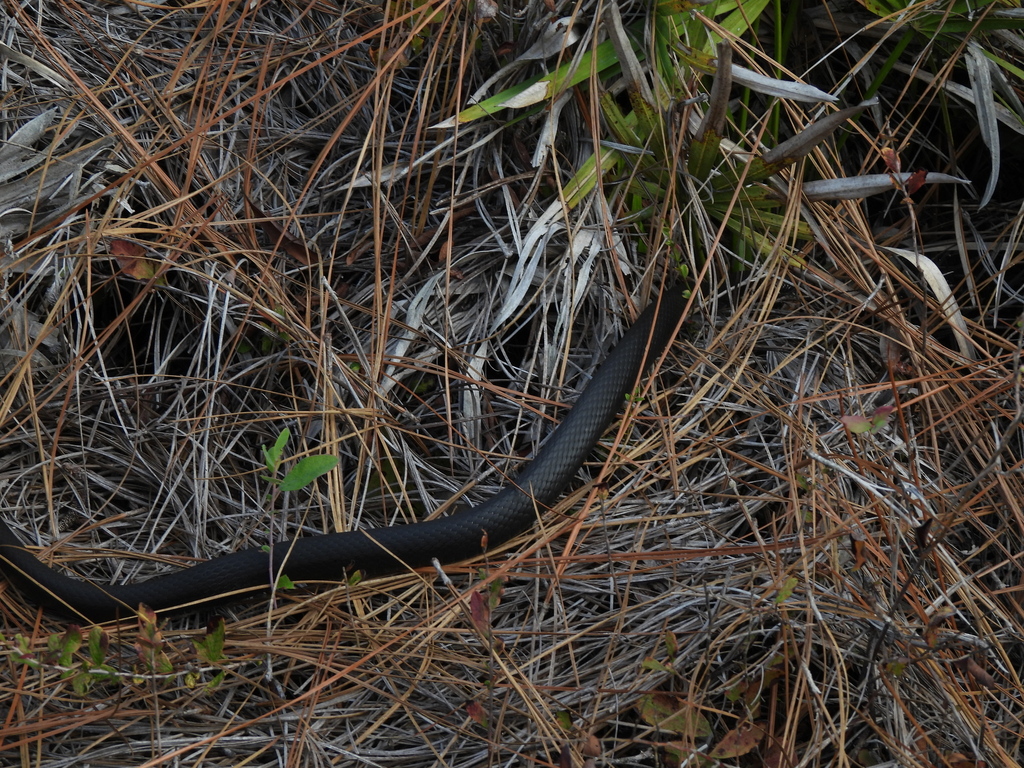
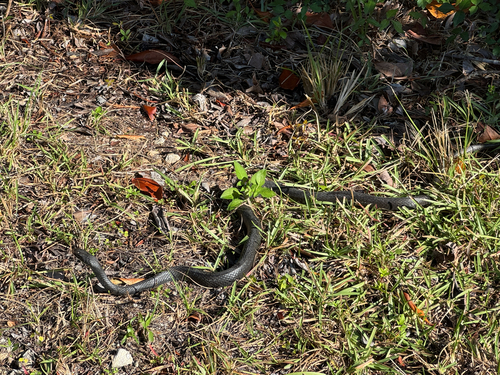
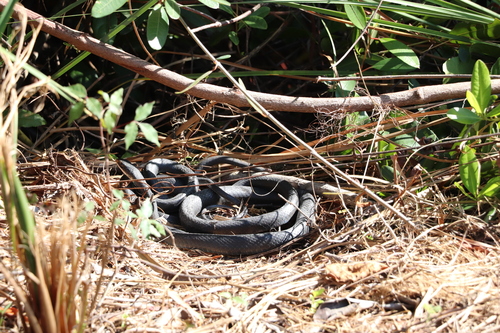
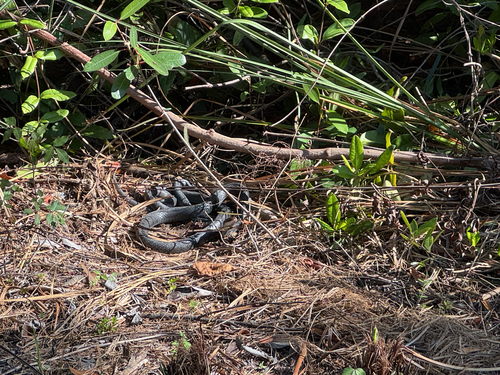
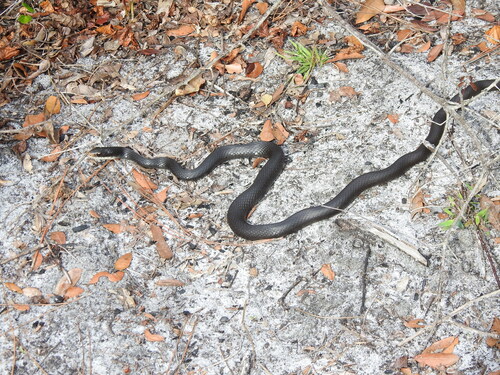
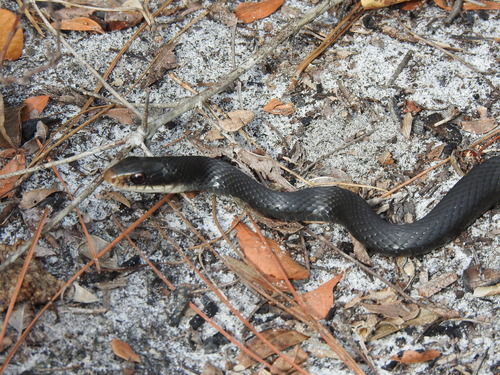
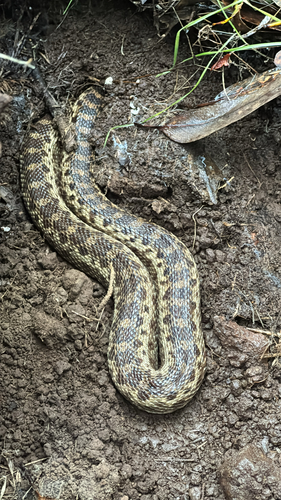
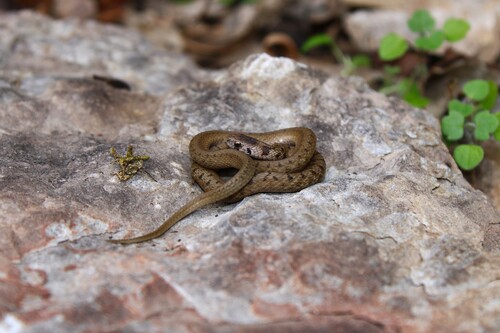
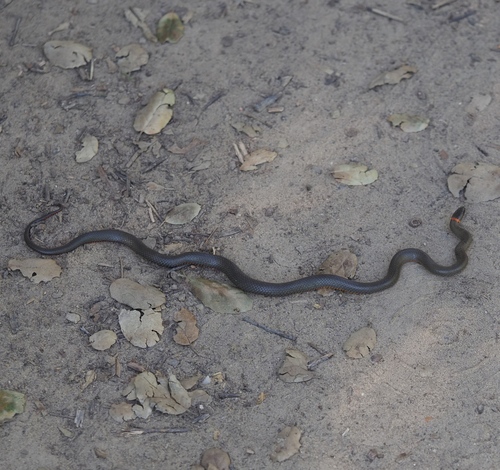
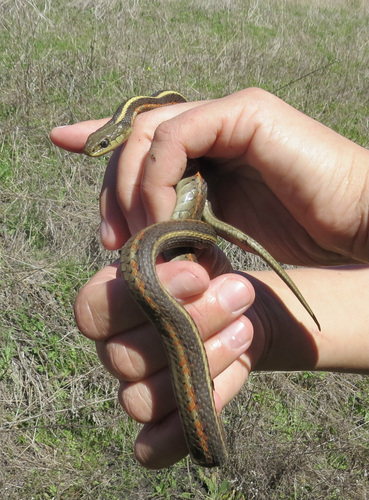
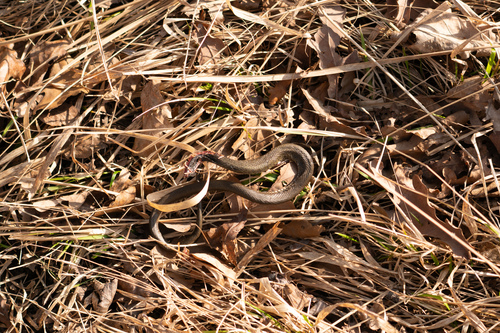
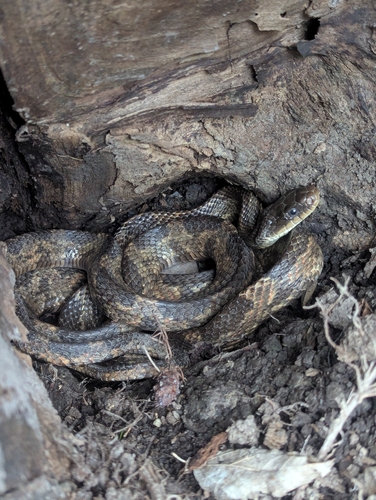
6 photographs of the North American Racer. © geosesarma.
The North American Racer (Coluber constrictor) is a non-venomous snake in the Colubridae family, recorded in 11 countries.
- Also called
- Racer
- Family
- Colubridae
- Size
- Slender, 3–5 ft.
- Habitat
- Open fields, grasslands, and brush.
- Behavior
- Extremely fast, alert, day-active hunters.
- Identify
- Slender, smooth-scaled, usually solid black, blue, or tan with large eyes.
About the North American Racer
The eastern racer, or North American racer (Coluber constrictor), is a species of nonvenomous snake in the subfamily Colubrinae of the family Colubridae. The species is native to North America and Central America. Eleven subspecies, including the nominotypical subspecies, are recognized, which as a group are commonly referred to as the eastern racers. The species is monotypic in the genus Coluber.
Geographic range
Coluber constrictor is found throughout much of the United States, on both sides of the Rocky Mountains, but it also ranges north into Canada and south into Mexico, Guatemala, and Belize.
Subspecies
Description
Adult eastern racers can typically vary from 50 to 152 cm (20 to 60 in) in total length (tail included) depending on the subspecies, but a record-sized specimen measured 185.4 cm (73.0 in) in total length. A typical adult specimen will weigh around 556 g (1.226 lb), with little size difference between the sexes.
The patterns vary widely among subspecies. Most are solid-colored as their common names imply: black racers, brown racers, tan racers, blue racers, or green racers. "Runner" is sometimes used instead of "racer" in their common names. All subspecies have a lighter-colored underbelly: white, light tan, or yellow in color. Juveniles are more strikingly patterned, with a middorsal row of dark blotches on a light ground color. The tail is unpatterned. As they grow older, the dorsum darkens and the juvenile pattern gradually disappears.
Behavior
The eastern racers are fast-moving, highly active, diurnal snakes. Their diet consists primarily of small rodents, other mammals (as large as small cottontail rabbits), frogs, toads, small turtles, lizards, and other snakes. Some subspecies are known to climb trees to eat eggs and young birds. Juveniles often consume soft-bodied insects and other small invertebrates, as well as small frogs, small reptiles (including lizards and snakes and their eggs), young rodents, and shrews. Despite their specific name, constrictor, they do not really employ constriction, instead simply subduing struggling prey by pinning it bodily, pressing one or two coils against it to hold it in place instead of actually suffocating it. Most smaller prey items are simply swallowed alive.
They are curious snakes with excellent vision. They are visual hunters and hunt exclusively in the daytime and are often seen raising their heads above the ground to get a better view of their surroundings, a behavior dubbed "periscoping" by snake enthusiasts. Aptly named, racers are very fast and typically flee from a potential predator. However, once cornered, they put up a vigorous fight, biting hard and often. They are difficult to handle and will writhe, defecate, and release a foul-smelling musk from their cloacae. Vibrating their tails among dry leaves, racers can sound convincingly like rattlesnakes.
Habitat
Adapted from Wikipedia, available under CC BY-SA.
Frequently asked: North American Racer
- Is the North American Racer venomous?
- No. The North American Racer (Coluber constrictor) is non-venomous and is not considered dangerous to humans. Like most snakes, it will retreat rather than bite when given the chance.
- Is the North American Racer poisonous?
- Snakes are venomous, not poisonous. "Poisonous" means harmful to eat or touch; "venomous" means injecting toxins through a bite. The North American Racer is neither poisonous nor venomous.
- Is the North American Racer dangerous?
- The North American Racer is not dangerous to humans. It has no medically significant venom and bites only defensively if cornered or handled.
- Where does the North American Racer live?
- The North American Racer has verified records in 11 countries, including United States of America, Canada, Mexico. See the distribution section below for its full range.
- How do I identify the North American Racer?
- Slender, smooth-scaled, usually solid black, blue, or tan with large eyes.
- How big does the North American Racer get?
- Slender, 3–5 ft.
Where it is found
By U.S. state
More Colubridae snakes
Classification
How scientists group this snake, from the broadest category down to the exact species. Each step narrows to its closest relatives.
- OrderThe broad group of scaled reptiles: all snakes and lizards
- Squamata
- FamilyA group of related snakes that share key traits
- Colubridae
- GenusA close-knit group of very similar species
- Coluber
- SpeciesThis exact snake, named in the two-part scientific name
- Coluber constrictor
Keep learning
- What to Do If You Find a SnakeFound a snake at home or on a trail? Here is how to stay calm, give it space, identify it safely, and know when to call a professional.
- Venomous vs Nonvenomous: How to Tell the DifferenceThe folk rules for telling venomous snakes apart, where each one fails, and why location-based identification beats guessing by sight.
- What Is a Snake? Anatomy and the BasicsA clear overview of what makes a snake a snake: limbless body plan, anatomy, evolution from lizards, species diversity, and why they are ectothermic.
- How to Keep Snakes Out of Your Yard and HomeA practical guide to keeping snakes out of your yard and home using habitat changes that work, plus what to skip and what to do if one shows up.
Distribution from GBIF & iNaturalist. Venom status per CDC. Background: Wikipedia. Informational only. Never handle a snake to identify it.