
Genus · Colubridae
Amphiesma
The genus Amphiesma contains a single species. It is not considered dangerous to humans.
About keelbacks
Amphiesma is a small group of semi-aquatic Asian keelbacks, harmless water-loving colubrids best known from the widespread Buff Striped Keelback.
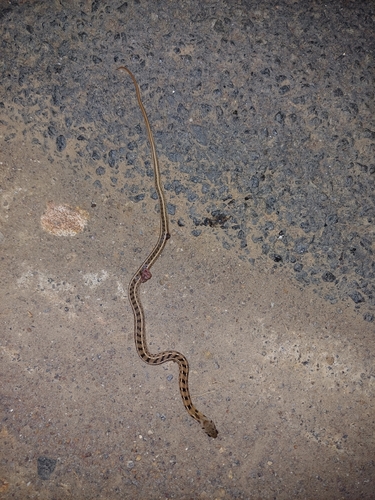
Amphiesma is a genus of keelback snakes in the family Colubridae, the largest snake family. The name keelback refers to the raised ridge, or keel, running down the center of each dorsal scale, which gives many of these snakes a slightly rough, matte texture rather than a glossy one. Historically the genus held many species, but most have been moved into the related genus Hebius as researchers refined natnicine keelback classification, leaving Amphiesma a much smaller group. The best-known member is the Buff Striped Keelback, a slender snake of South and Southeast Asia marked by pale lengthwise stripes along a darker body.
These are snakes of warm, wet places. Keelbacks in this lineage live near water across South and Southeast Asia, favoring rice paddies, marshes, pond edges, ditches, streams, and damp grassland and forest floor. They are ground-dwelling and semi-aquatic, often active by day, and they feed mainly on the small cold-blooded prey such habitats supply: frogs, toads, tadpoles, fish, and similar animals. Like many colubrids they lay eggs rather than giving live birth. In general appearance they are small to moderate, slim-bodied snakes with keeled scales and, in the striped forms, clear longitudinal lines that aid recognition.
Amphiesma keelbacks are not front-fanged venomous snakes and are not considered dangerous to people; they are harmless, secretive animals that flee water or cover when disturbed. As a general rule with any wild snake, the safe choice is to leave it alone and not attempt to handle it, since identification in the field is easy to get wrong. If anyone is bitten by a snake they cannot confidently identify, or if symptoms develop after any snakebite, treat it as a medical situation and seek emergency care immediately. In the United States contact Poison Control at 1-800-222-1222 or call local emergency services; elsewhere contact local emergency services.
Amphiesma belongs to the Colubridae family (Colubrids). The largest snake family, and the one most snakes you meet belong to. Typically round pupils, a head only slightly wider than the neck, and no heat-sensing facial pit or rattle. Scales may be smooth and glossy or keeled and matte depending on the species.
Danger: Almost all colubrids are harmless. A small number are rear-fanged with medically significant venom, the boomslang and the twig (vine) snakes of Africa being the dangerous exceptions. Most colubrids will flee or bluff rather than bite.
All species (1)
Keep learning
- What Is a Snake? Anatomy and the BasicsA clear overview of what makes a snake a snake: limbless body plan, anatomy, evolution from lizards, species diversity, and why they are ectothermic.
- How Snakes Move, Hunt, and EatHow snakes move without legs, hunt as ambushers or active foragers, kill by constriction or venom, and swallow prey wider than their head.
- What Do Snakes Eat?All snakes are carnivores. Learn what snakes eat, how diet changes with size and age, how often they feed, and how they hunt and swallow prey.
- Venomous vs Nonvenomous: How to Tell the DifferenceThe folk rules for telling venomous snakes apart, where each one fails, and why location-based identification beats guessing by sight.