
Brown / Redbelly snake
DeKay's Brownsnake
HarmlessStoreria dekayi
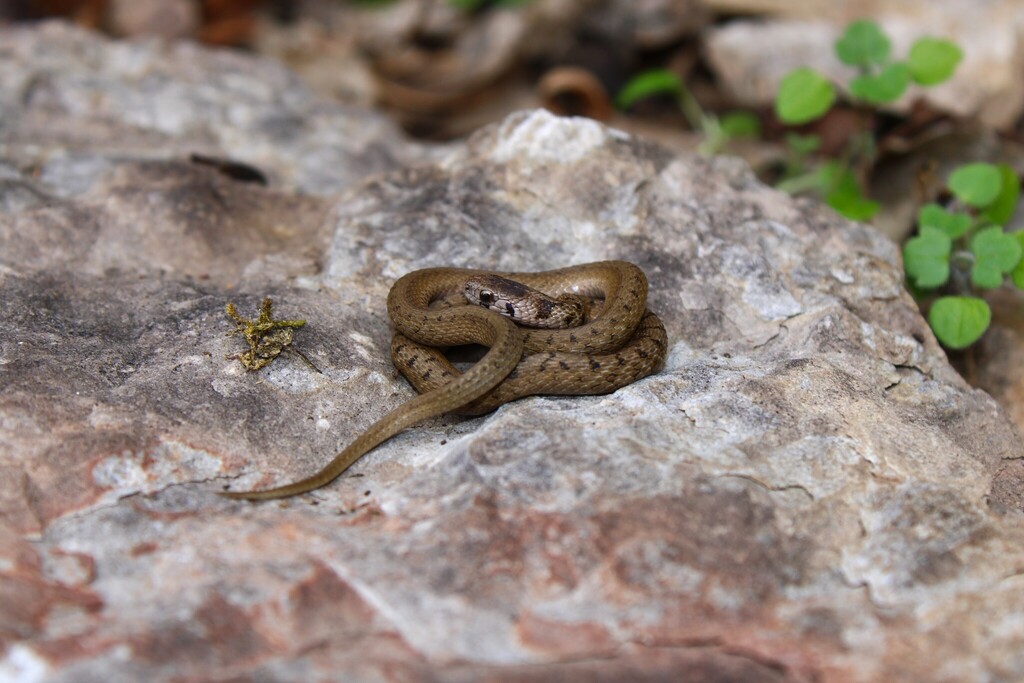
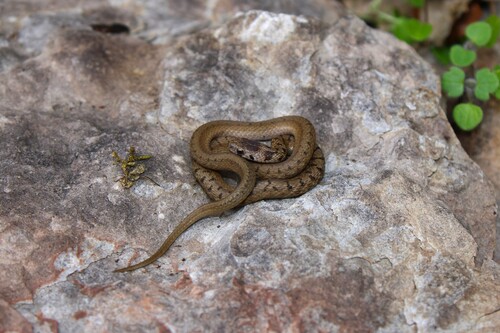
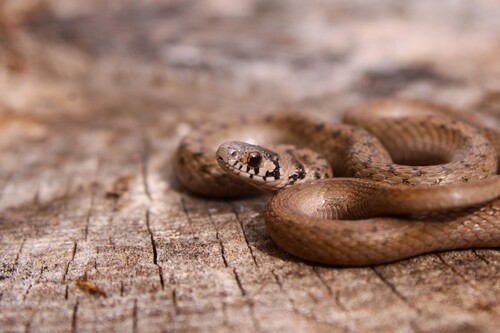
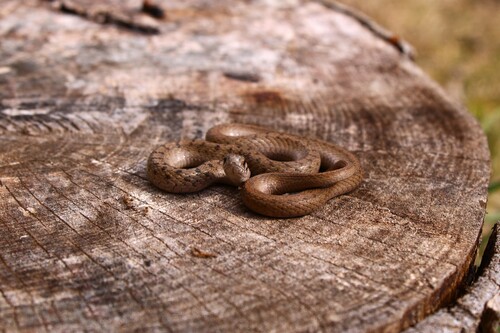
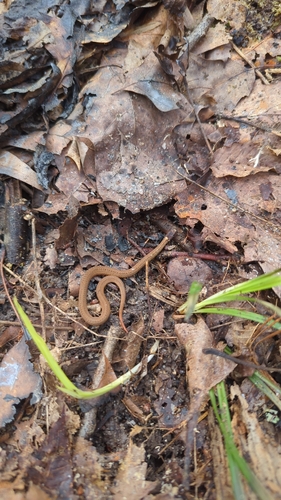
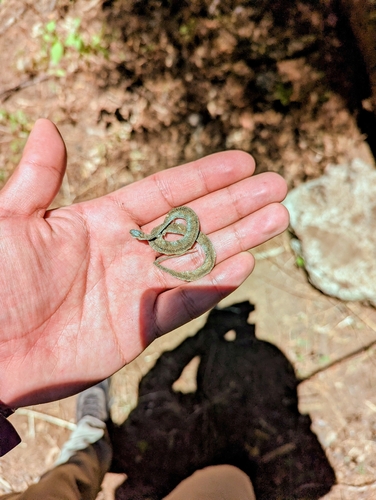
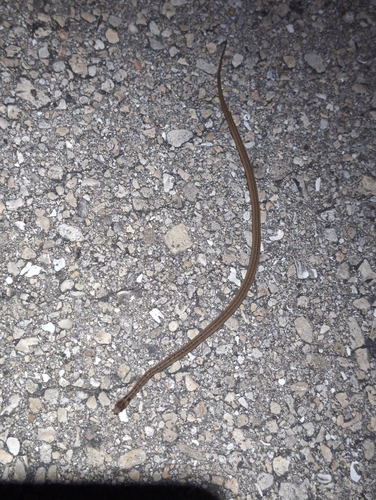
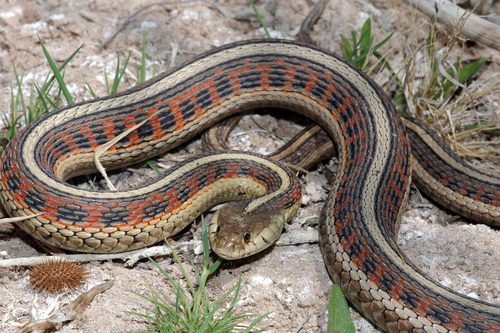
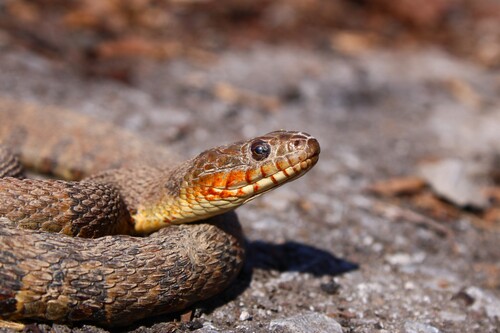
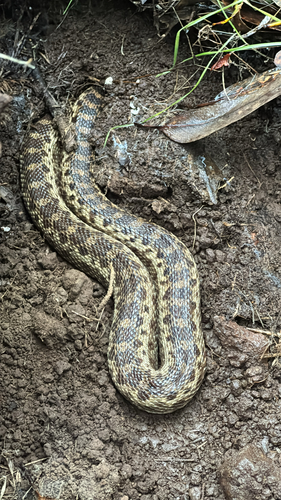
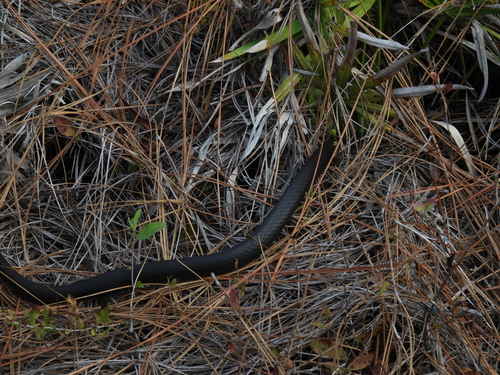
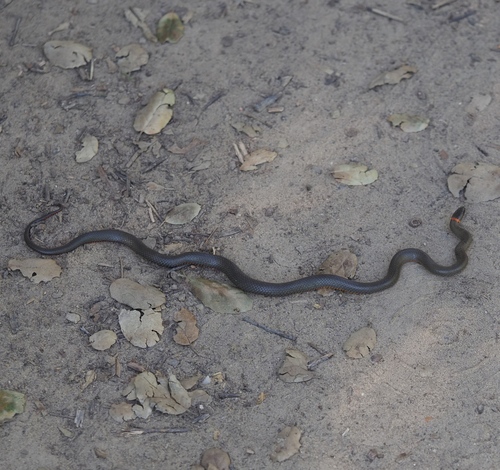
4 photographs of the DeKay's Brownsnake. © Dominic.
The DeKay's Brownsnake (Storeria dekayi) is a non-venomous snake in the Colubridae family, recorded in 9 countries.
- Also called
- Brown / Redbelly snake
- Family
- Colubridae
- Size
- Tiny, 8–14 in.
- Habitat
- Gardens, woodlands, and leaf litter; common even in cities.
- Behavior
- Secretive; eat slugs, snails, and earthworms.
- Identify
- Tiny, brown or gray, often with a pale belly or pale neck spots.
About the DeKay's Brownsnake
Storeria dekayi, commonly known as De Kay's brown snake, De Kay's snake, and simply the brown snake (along with many other snakes), is a small non-venomous species of snake in the family Colubridae. The species is native to North America and Central America.
Geographic range
S. dekayi is native to Southern Ontario and Quebec, most of the eastern half of the United States, through Mexico, Guatemala, Honduras, and possibly El Salvador. More specifically, this common species inhabits most wetland and terrestrial habitats east of the Great Plains from sea level to 1,400 meters (4,600 feet) above sea level.
Description
Dorsally, S. dekayi is brown to gray with a lighter center stripe bordered by small black spots; ventrally, it is lighter brown or pink with small black dots at the ends of the ventral scales. Adults usually measure less than 12 inches (30 cm) in total length (including tail), but the record total length is 19+3⁄8 inches (49 cm). On average, juveniles measured 3 inches (7.68 cm) just after being born. The dorsal scales are keeled, and it has no loreal scale. Females exceed males in snout–vent length and number of ventral scales while males exceed females in tail length, head dimensions, and number of subcaudal scales.
Habitat
S. dekayi is a lover of urban areas and tends to frequent cities more often than the countryside. It can also be found in areas such as wetlands, grasslands, dunes, and forests, but it is most commonly encountered where humans are found.It prefers moist habitats. Although S. dekayi is solitary, aggregations of individuals have been observed.
Reproduction
Like other natricine snakes such as water snakes (genus Nerodia) and garter snakes (genus Thamnophis), S. dekayi is a viviparous species, giving birth to live young. Sexual maturity is reached at two to three years. Females have seasonal sperm storage that allows for delayed fertilization and parturition, which synchronize birth timing with peak prey availability. Mating takes place in the spring, after snakes emerge from brumation. Field studies have shown that males use pheromone-based mate searching to find receptive females. Between 3 and 41 young are born in late summer.
Diet
S. dekayi primarily feeds on slugs, snails, and earthworms. In the southern extent of its region, the snake usually preys predominantly on earthworms; however, in the northern reaches of its range, slugs are the predominant food source. It has specialized jaws that allow it to remove snails from their shells for consumption. Reports of other invertebrates (such as woodlice, mites, or millipedes) in the diet of S. dekayi are more than likely the result of accidental ingestion rather than intentional feeding, in which one of these invertebrates may have adhered to a slug or other prey item being consumed.
Ecology
Adapted from Wikipedia, available under CC BY-SA.
Frequently asked: DeKay's Brownsnake
- Is the DeKay's Brownsnake venomous?
- No. The DeKay's Brownsnake (Storeria dekayi) is non-venomous and is not considered dangerous to humans. Like most snakes, it will retreat rather than bite when given the chance.
- Is the DeKay's Brownsnake poisonous?
- Snakes are venomous, not poisonous. "Poisonous" means harmful to eat or touch; "venomous" means injecting toxins through a bite. The DeKay's Brownsnake is neither poisonous nor venomous.
- Is the DeKay's Brownsnake dangerous?
- The DeKay's Brownsnake is not dangerous to humans. It has no medically significant venom and bites only defensively if cornered or handled.
- Where does the DeKay's Brownsnake live?
- The DeKay's Brownsnake has verified records in 9 countries, including United States of America, Canada, Mexico. See the distribution section below for its full range.
- How do I identify the DeKay's Brownsnake?
- Tiny, brown or gray, often with a pale belly or pale neck spots.
- How big does the DeKay's Brownsnake get?
- Tiny, 8–14 in.
- What does the DeKay's Brownsnake eat?
- S. dekayi primarily feeds on slugs, snails, and earthworms. In the southern extent of its region, the snake usually preys predominantly on earthworms; however, in the northern reaches of its range, slugs are the predominant food source. It has specialized jaws that allow it to remove snails from their shells for consumption. Reports of other invertebrates (such as woodlice, mites, or millipedes) in the diet of S.
- Why is it called the DeKay's Brownsnake?
- The specific name, dekayi, is in honor of American zoologist James Ellsworth De Kay (1792–1851), who collected the first specimen on Long Island, New York, while the generic name, Storeria, honors American zoologist David Humphreys Storer. This is the only North American snake whose binomial is a double honorific – that is, both the generic name and the specific name honor people.
Where it is found
By U.S. state
More Colubridae snakes
Classification
How scientists group this snake, from the broadest category down to the exact species. Each step narrows to its closest relatives.
- OrderThe broad group of scaled reptiles: all snakes and lizards
- Squamata
- FamilyA group of related snakes that share key traits
- Colubridae
- GenusA close-knit group of very similar species
- Storeria
- SpeciesThis exact snake, named in the two-part scientific name
- Storeria dekayi
Keep learning
- What to Do If You Find a SnakeFound a snake at home or on a trail? Here is how to stay calm, give it space, identify it safely, and know when to call a professional.
- Venomous vs Nonvenomous: How to Tell the DifferenceThe folk rules for telling venomous snakes apart, where each one fails, and why location-based identification beats guessing by sight.
- What Is a Snake? Anatomy and the BasicsA clear overview of what makes a snake a snake: limbless body plan, anatomy, evolution from lizards, species diversity, and why they are ectothermic.
- How to Keep Snakes Out of Your Yard and HomeA practical guide to keeping snakes out of your yard and home using habitat changes that work, plus what to skip and what to do if one shows up.
Distribution from GBIF & iNaturalist. Venom status per CDC. Background: Wikipedia. Informational only. Never handle a snake to identify it.