
Garter / Ribbon snake
Western Terrestrial Garter Snake
HarmlessThamnophis elegans
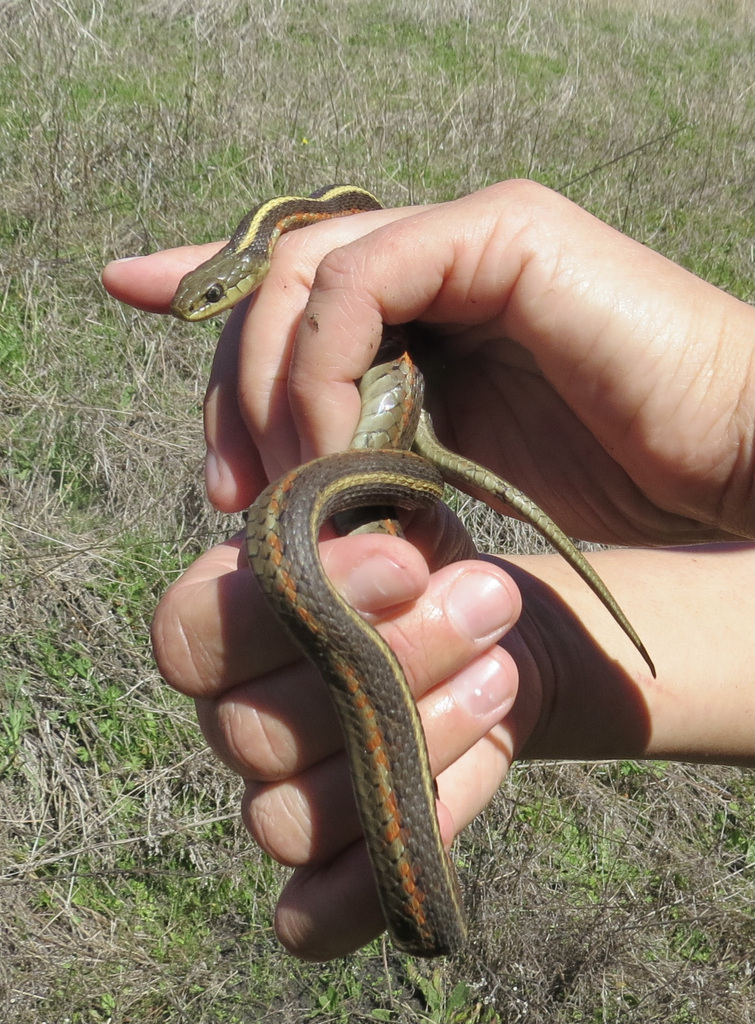
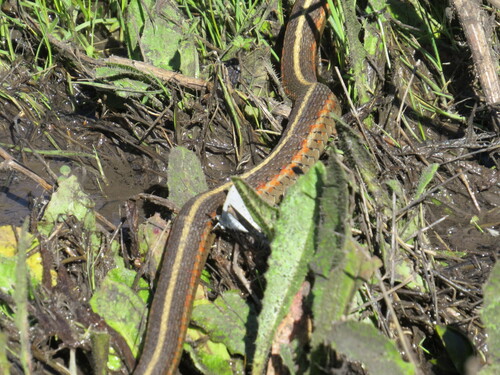
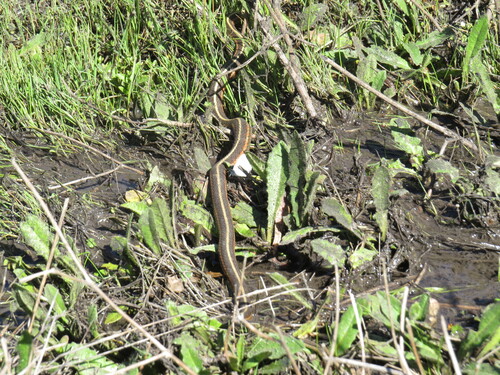
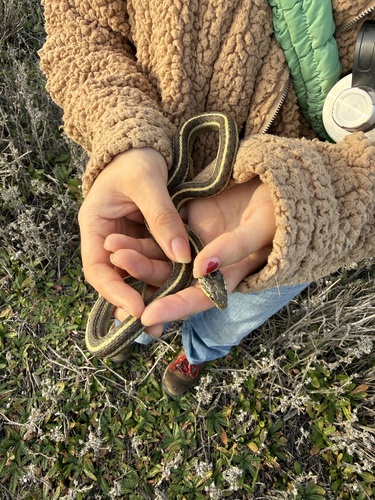
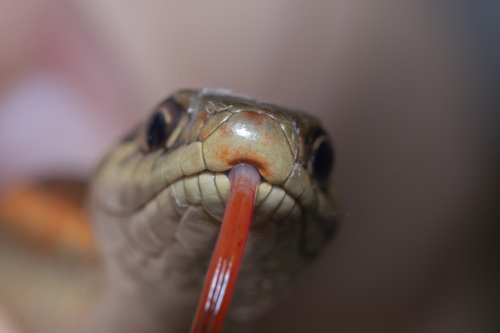
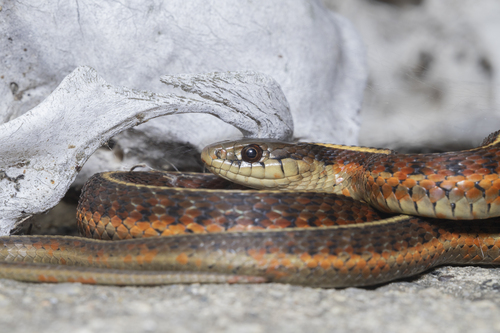
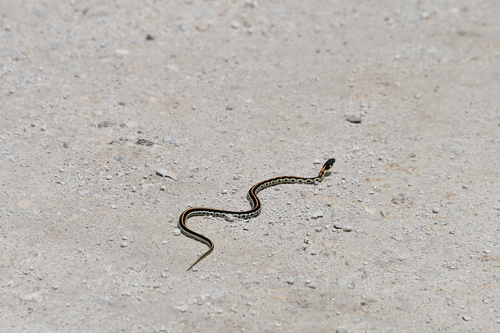
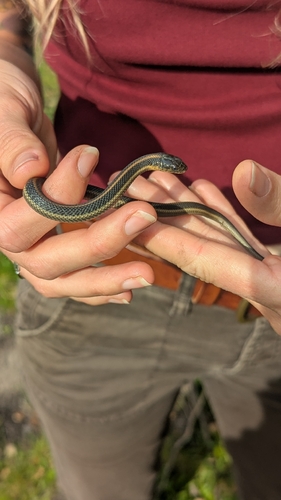
6 photographs of the Western Terrestrial Garter Snake. © Garth Harwood.
The Western Terrestrial Garter Snake (Thamnophis elegans) is a non-venomous snake in the Colubridae family, recorded in 3 countries.
- Also called
- Garter / Ribbon snake
- Family
- Colubridae
- Size
- Slender, 1.5–3 ft.
- Habitat
- Almost anywhere with moisture — gardens, fields, wetlands, and streamsides.
- Behavior
- Harmless and active by day; may release musk if handled. The most commonly seen snakes across most of the U.S.
- Identify
- Slender body with three light stripes running the length of a darker back.
About the Western Terrestrial Garter Snake
The western terrestrial garter snake (Thamnophis elegans) is a western North American species of colubrid snake. At least five subspecies are recognized.
Geographic range
Thamnophis elegans is found in central British Columbia, central Alberta, and southwestern Manitoba in Canada. It can be found in the western United States, as far east as western Nebraska and the Oklahoma Panhandle. An isolated population occurs in Baja California, Mexico.
Subspecies
Six subspecies have been identified, although the validity of some of them is debated.
Description
Most western terrestrial garter snakes have a yellow, light orange, or white dorsal stripe, accompanied by two stripes of the same color, one on each side. Some varieties have red or black spots between the dorsal stripe and the side stripes. It is an immensely variable species, and even the most experienced herpetologists have trouble with its identification. They are medium-sized snakes, usually 46–104 cm (18–41 in).
Like many species of North American garter snake, the western terrestrial garter snake possesses a mildly venomous saliva. Specimens collected from Idaho and Washington produced venom with myonecrotic (muscle tissue-killing) effects when injected into the gastrocnemius muscles of mice. Several cases of mild human envenomation with local edema and other symptoms (but without any systemic symptoms) have occurred from the wandering garter snake subspecies, including in Colorado.
This species is the only garter snake species with a well-documented tendency to constrict prey, although the constriction is inefficient when compared with the constriction of many other snakes (such as the gopher snake), involving disorganized, loose, and sometimes unstable coils and a longer time required to kill prey. Snakes from Colorado populations of terrestrial garter snakes appear to be more efficient at killing their prey by constriction than those from Pacific Coast populations.
Habitat
Thamnophis elegans occurs in a wide variety of habitats, including grasslands, woodlands, and coniferous forests, from sea level up to 3,962 m (12,999 ft). It is primarily terrestrial, although populations in the Great Basin and Rocky Mountains are semi-aquatic.
Reproduction
The western terrestrial garter snake does not lay eggs, but instead is ovoviviparous, which is characteristic of natricine snakes. Broods of eight to 12 young are born in August and September.
Diet
The diet of Thamnophis elegans depends heavily on the prey available in the local area, and thus varies due to regional geographical differences. This makes the western terrestrial garter snake an excellent example of polyphagism—the adaptation of an organism to maintain a varied diet. There are two main variants that are most prevalent: coastal and inland. As T. elegans is found along the Pacific West Coast of the United States, they will often be seen hunting at or adjacent-to beaches, estuaries, lagoons and marshes along the coast, often at sites where ocean saltwater meets an inland freshwater source (brackish water). Meanwhile, more inland or montane populations are often found adjacent to fresh water sources such as creeks, rivers, streams, ponds, or lakes.
Adapted from Wikipedia, available under CC BY-SA.
Frequently asked: Western Terrestrial Garter Snake
- Is the Western Terrestrial Garter Snake venomous?
- No. The Western Terrestrial Garter Snake (Thamnophis elegans) is non-venomous and is not considered dangerous to humans. Like most snakes, it will retreat rather than bite when given the chance.
- Is the Western Terrestrial Garter Snake poisonous?
- Snakes are venomous, not poisonous. "Poisonous" means harmful to eat or touch; "venomous" means injecting toxins through a bite. The Western Terrestrial Garter Snake is neither poisonous nor venomous.
- Is the Western Terrestrial Garter Snake dangerous?
- The Western Terrestrial Garter Snake is not dangerous to humans. It has no medically significant venom and bites only defensively if cornered or handled.
- Where does the Western Terrestrial Garter Snake live?
- The Western Terrestrial Garter Snake has verified records in 3 countries, including United States of America, Canada, Mexico. See the distribution section below for its full range.
- How do I identify the Western Terrestrial Garter Snake?
- Slender body with three light stripes running the length of a darker back.
- How big does the Western Terrestrial Garter Snake get?
- Slender, 1.5–3 ft.
- What does the Western Terrestrial Garter Snake eat?
- The diet of Thamnophis elegans depends heavily on the prey available in the local area, and thus varies due to regional geographical differences. This makes the western terrestrial garter snake an excellent example of polyphagism—the adaptation of an organism to maintain a varied diet. There are two main variants that are most prevalent: coastal and inland. As T.
Where it is found
More Colubridae snakes
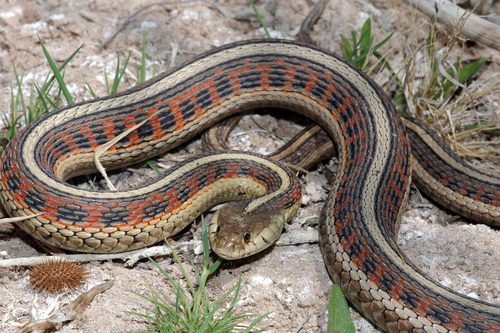 Common Garter SnakeThamnophis sirtalis
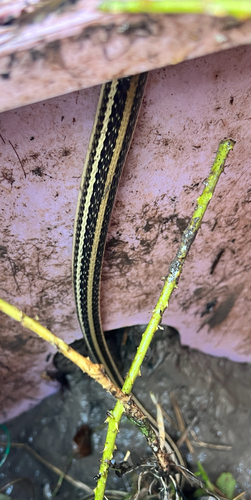 Western Ribbon SnakeThamnophis proximus
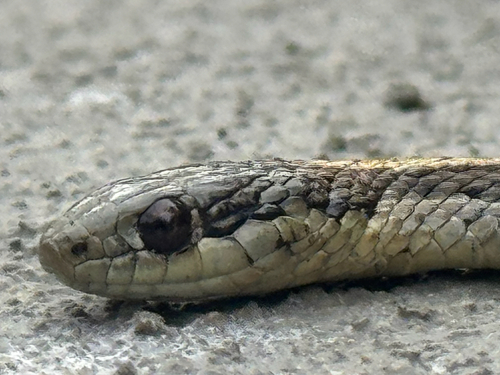 Northwestern Garter SnakeThamnophis ordinoides
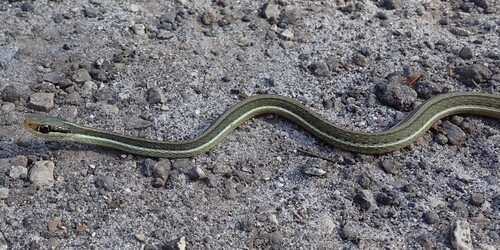 Common Ribbon SnakeThamnophis saurita
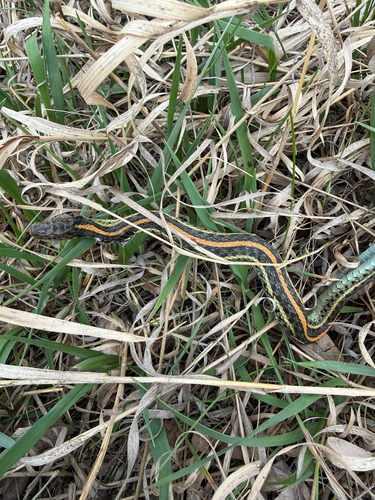 Plains Garter SnakeThamnophis radix
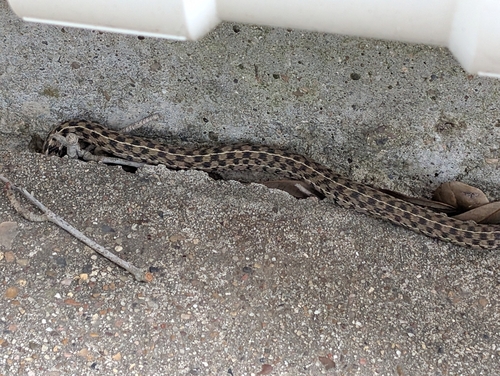 Checkered Garter SnakeThamnophis marcianus
 Black-necked Garter SnakeThamnophis cyrtopsis
 Aquatic Garter SnakeThamnophis atratus
Classification
How scientists group this snake, from the broadest category down to the exact species. Each step narrows to its closest relatives.
- OrderThe broad group of scaled reptiles: all snakes and lizards
- Squamata
- FamilyA group of related snakes that share key traits
- Colubridae
- GenusA close-knit group of very similar species
- Thamnophis
- SpeciesThis exact snake, named in the two-part scientific name
- Thamnophis elegans
Keep learning
- What to Do If You Find a SnakeFound a snake at home or on a trail? Here is how to stay calm, give it space, identify it safely, and know when to call a professional.
- Venomous vs Nonvenomous: How to Tell the DifferenceThe folk rules for telling venomous snakes apart, where each one fails, and why location-based identification beats guessing by sight.
- What Is a Snake? Anatomy and the BasicsA clear overview of what makes a snake a snake: limbless body plan, anatomy, evolution from lizards, species diversity, and why they are ectothermic.
- How to Keep Snakes Out of Your Yard and HomeA practical guide to keeping snakes out of your yard and home using habitat changes that work, plus what to skip and what to do if one shows up.
Distribution from GBIF & iNaturalist. Venom status per CDC. Background: Wikipedia. Informational only. Never handle a snake to identify it.