
Psammophiidae
Western Rufous Beaked Snake
HarmlessRhamphiophis oxyrhynchus
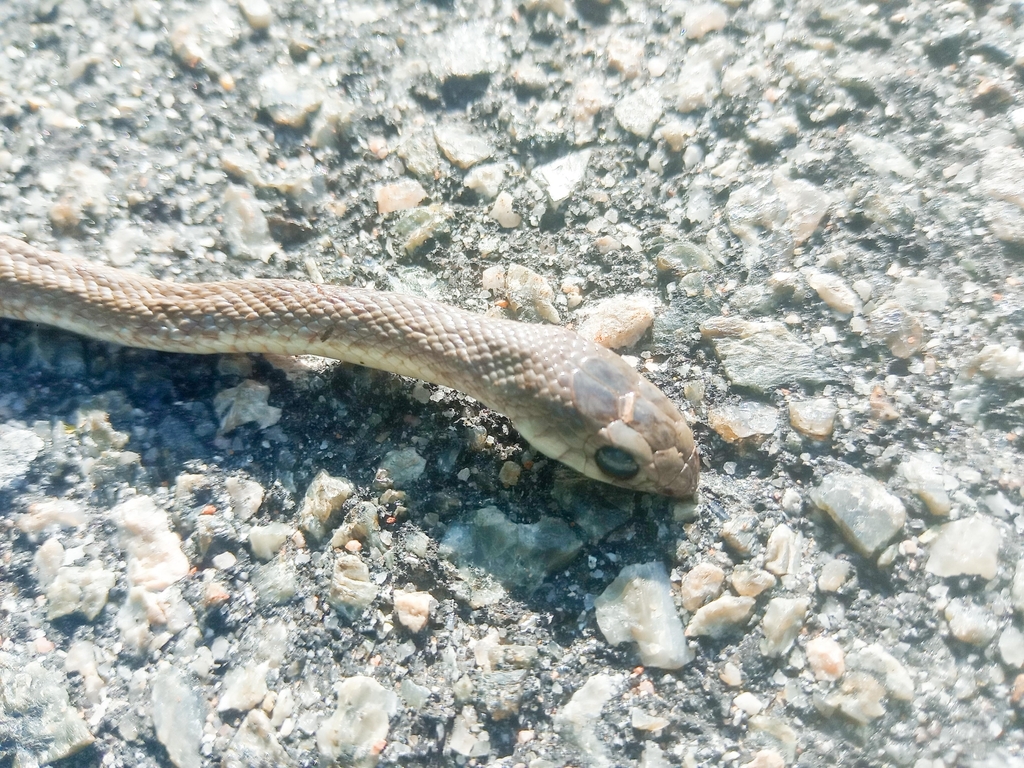
The Western Rufous Beaked Snake (Rhamphiophis oxyrhynchus) is a non-venomous snake in the Psammophiidae family, recorded in 32 countries.
- Family
- Psammophiidae
About the Western Rufous Beaked Snake
Rhamphiophis oxyrhynchus is a species of mildly venomous snake in the family Psammophiidae. The species is native to East Africa. Its common name refers to its hooked snout, which it uses to dig burrows, and to its reddish-brown dorsal coloration. It hunts small animals during the day with the help of its venomous bite.
Taxonomy
The two subspecies are R.o. oxyrhynchus (J.T. Reinhardt, 1843) and R.o. rostratus W. Peters, 1854. Some authorities consider the latter to be a species, R. rostratus W. Peters, 1854.
Description
Rhamphiophis oxyrhynchus is large and stout, with males reaching a maximum length of 1.1 m (3.6 ft) and females reaching 1.07 m (3.5 ft). It has a shortened skull, as with all beaked snakes, giving it a clear distinction between its head and body, as well as a dark brown eye stripe running down the side of its head. Its eyes are large with round pupils. Its back ranges from grey to yellowish-brown to reddish-brown, and its belly is cream or yellowish-white.
Geographic range
The range of Rhamphiophis oxyrhynchus includes north Botswana, north Zimbabwe, Zambia, Mozambique, Tanzania, Uganda, Kenya, South Sudan, and Sudan.
Habitat
It primarily inhabits bushveld and thornveld (bushland) habitats.
Biology
Diurnal animals, Rhamphiophis oxyrhynchus hunts small animals, including other snakes, but stays in burrows during the hottest part of the day. In the summer, females lay eight to 17 cylindrical eggs with dimensions of about 36 mm × 21 mm (1.42 in × 0.83 in) over the span of several days. The snake's venom, one of its components of which is a neurotoxin called rufoxin, causes hypotension and circulatory shock in small mammals, but is not dangerous to humans.
Adapted from Wikipedia, available under CC BY-SA.
Frequently asked: Western Rufous Beaked Snake
- Is the Western Rufous Beaked Snake venomous?
- No. The Western Rufous Beaked Snake (Rhamphiophis oxyrhynchus) is non-venomous and is not considered dangerous to humans. Like most snakes, it will retreat rather than bite when given the chance.
- Is the Western Rufous Beaked Snake poisonous?
- Snakes are venomous, not poisonous. "Poisonous" means harmful to eat or touch; "venomous" means injecting toxins through a bite. The Western Rufous Beaked Snake is neither poisonous nor venomous.
- Is the Western Rufous Beaked Snake dangerous?
- The Western Rufous Beaked Snake is not dangerous to humans. It has no medically significant venom and bites only defensively if cornered or handled.
- Where does the Western Rufous Beaked Snake live?
- The Western Rufous Beaked Snake has verified records in 32 countries, including Tanzania, United Republic of, Benin, Kenya. See the distribution section below for its full range.
Where it is found
More Psammophiidae snakes
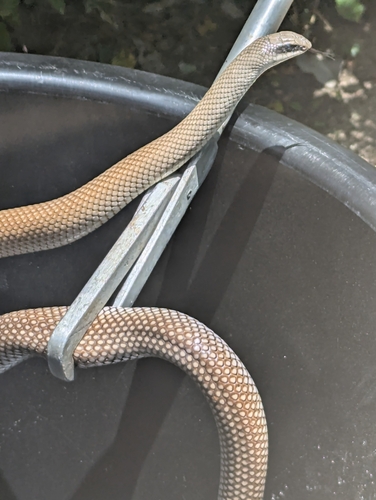 Eastern Rufous Beaked SnakeRhamphiophis rostratus
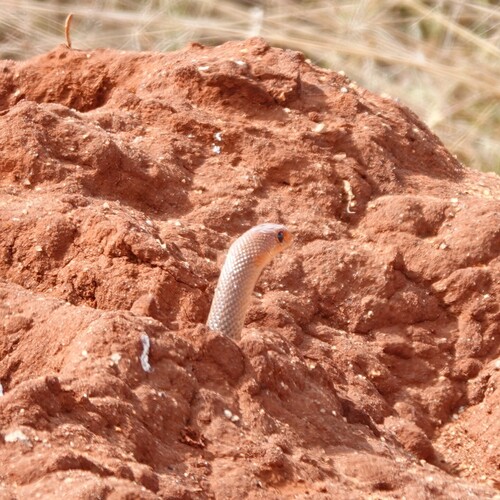 Red-spotted Beaked SnakeRhamphiophis rubropunctatus
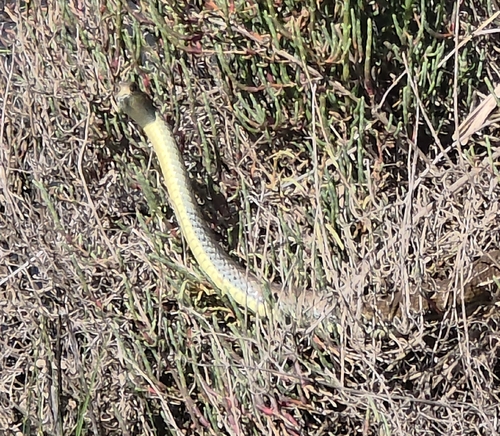 Western Montpellier SnakeMalpolon monspessulanus
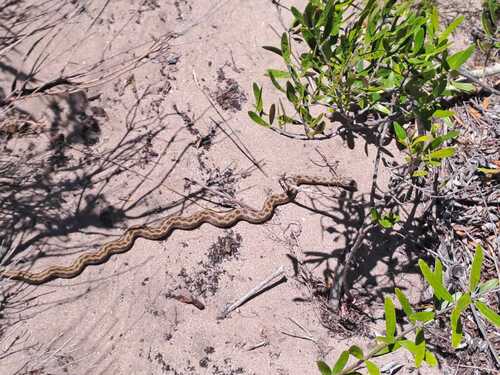 Rhombic SkaapstekerPsammophylax rhombeatus
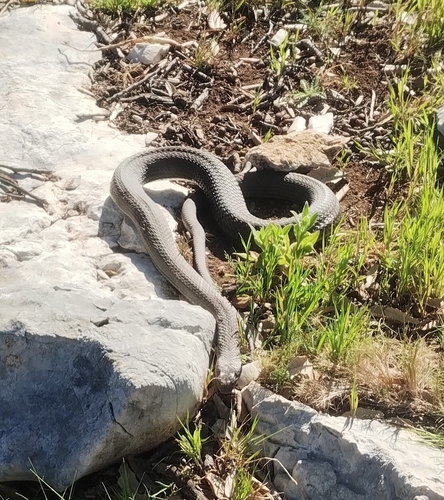 Eastern Montpellier SnakeMalpolon insignitus
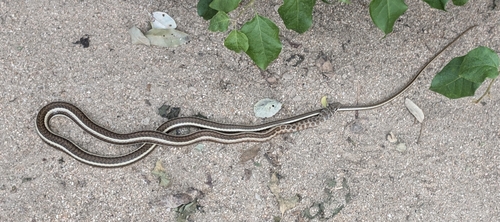 Stripe-bellied Sand SnakePsammophis subtaeniatus
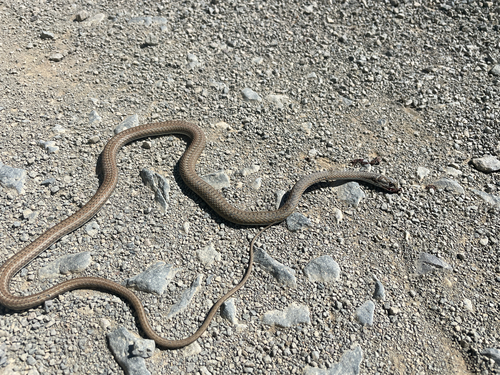 Karoo Sand SnakePsammophis notostictus
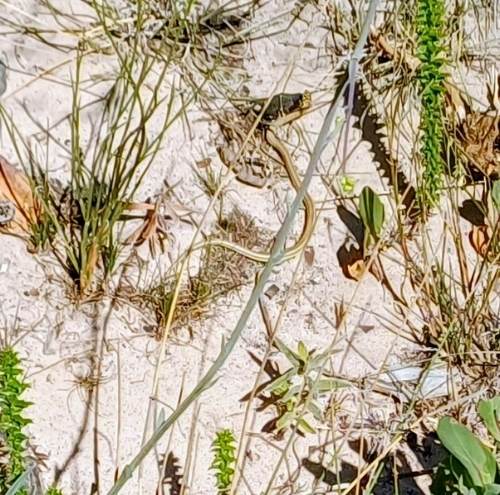 Cross-marked Sand SnakePsammophis crucifer
Classification
How scientists group this snake, from the broadest category down to the exact species. Each step narrows to its closest relatives.
- OrderThe broad group of scaled reptiles: all snakes and lizards
- Squamata
- FamilyA group of related snakes that share key traits
- Psammophiidae
- GenusA close-knit group of very similar species
- Rhamphiophis
- SpeciesThis exact snake, named in the two-part scientific name
- Rhamphiophis oxyrhynchus
Keep learning
- What to Do If You Find a SnakeFound a snake at home or on a trail? Here is how to stay calm, give it space, identify it safely, and know when to call a professional.
- Venomous vs Nonvenomous: How to Tell the DifferenceThe folk rules for telling venomous snakes apart, where each one fails, and why location-based identification beats guessing by sight.
- What Is a Snake? Anatomy and the BasicsA clear overview of what makes a snake a snake: limbless body plan, anatomy, evolution from lizards, species diversity, and why they are ectothermic.
- How to Keep Snakes Out of Your Yard and HomeA practical guide to keeping snakes out of your yard and home using habitat changes that work, plus what to skip and what to do if one shows up.
Distribution from GBIF & iNaturalist. Venom status per CDC. Background: Wikipedia. Informational only. Never handle a snake to identify it.