
Genus · Psammophiidae
Types of beaked snakes
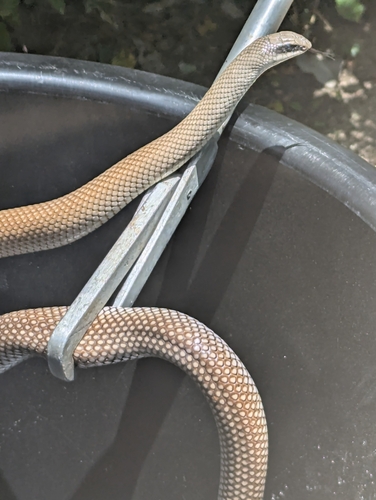
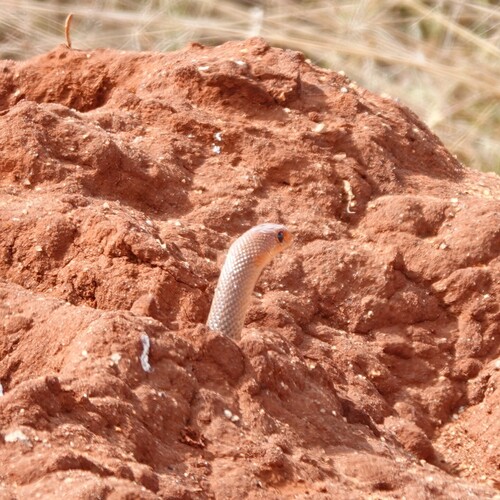
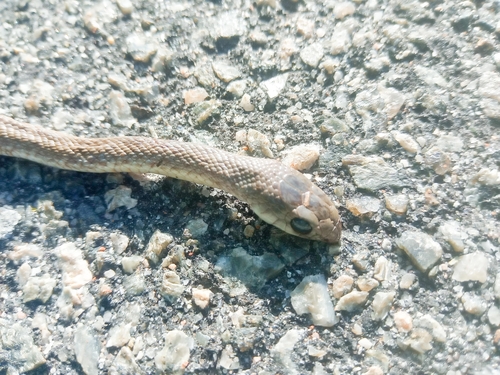
3 species make up the genus Rhamphiophis, the snakes commonly called beaked snakes. None are considered dangerous to humans.
About beaked snakes
African sand snakes with a hooked, shovel-like snout built for digging out prey on dry ground.
Rhamphiophis is a genus of African snakes in the family Psammophiidae, the group of sand snakes and their relatives. The name beaked snake comes from the most obvious field mark: a pointed, downturned snout with an enlarged rostral scale that overhangs the lower jaw, giving the head a hooked or beaked profile. This snout is a digging and probing tool, fitting the genus into the wider Psammophiidae pattern of fast, alert, terrestrial hunters of open country.
These are medium to large, slender, smooth-scaled snakes that move and hunt by day. They live across sub-Saharan Africa, favoring dry and semi-arid habitats such as savanna, grassland, scrub, and the edges of arid bush. They spend much of their time on or near the ground and frequently shelter in burrows, often taking over the holes of rodents and other animals rather than living in dense forest or wetlands.
In general terms you recognize a member of this genus by the wedge-shaped, beaked snout, the slim body, smooth scales, and large eyes typical of active diurnal hunters. Color tends toward plain browns, sandy tones, or rufous, sometimes with a dark stripe through the eye. The rufous beaked snakes in particular show the warm reddish-brown coloring that gives them their common name.
Like other psammophiids, beaked snakes are rear-fanged and mildly venomous. They carry enlarged grooved teeth at the back of the upper jaw and a venom that helps subdue small prey. For people these snakes are not considered dangerous, and bites are generally minor, but rear-fanged does not mean harmless. No wild venomous or rear-fanged snake is safe to handle. Do not attempt to catch or handle one, and if a bite occurs, contact emergency care: in the US call Poison Control at 1-800-222-1222, or contact local emergency services in your region.
Ecologically these are active foragers that use the beaked snout to dig and to flush prey from burrows and loose soil. Diet centers on small ground-dwelling animals such as rodents, lizards, frogs, and other small vertebrates, and they will probe shelters to root out hidden prey. Like other members of the family they are egg-laying. They are alert and quick to retreat, and their burrowing, ground-hunting lifestyle keeps them mostly out of sight despite a wide range.
Rhamphiophis belongs to the Psammophiidae family (Sand & grass snakes). Fast, slender, day-active snakes of open country. Long, slim, and fast, with large eyes and a streamlined head, often striped lengthwise.
Danger: Rear-fanged and mildly venomous; bites can cause local swelling but are not considered dangerous to people.
All species (3)
Keep learning
- What Is a Snake? Anatomy and the BasicsA clear overview of what makes a snake a snake: limbless body plan, anatomy, evolution from lizards, species diversity, and why they are ectothermic.
- How Snakes Move, Hunt, and EatHow snakes move without legs, hunt as ambushers or active foragers, kill by constriction or venom, and swallow prey wider than their head.
- What Do Snakes Eat?All snakes are carnivores. Learn what snakes eat, how diet changes with size and age, how often they feed, and how they hunt and swallow prey.
- Venomous vs Nonvenomous: How to Tell the DifferenceThe folk rules for telling venomous snakes apart, where each one fails, and why location-based identification beats guessing by sight.