
Psammophiidae
Eastern Rufous Beaked Snake
HarmlessRhamphiophis rostratus
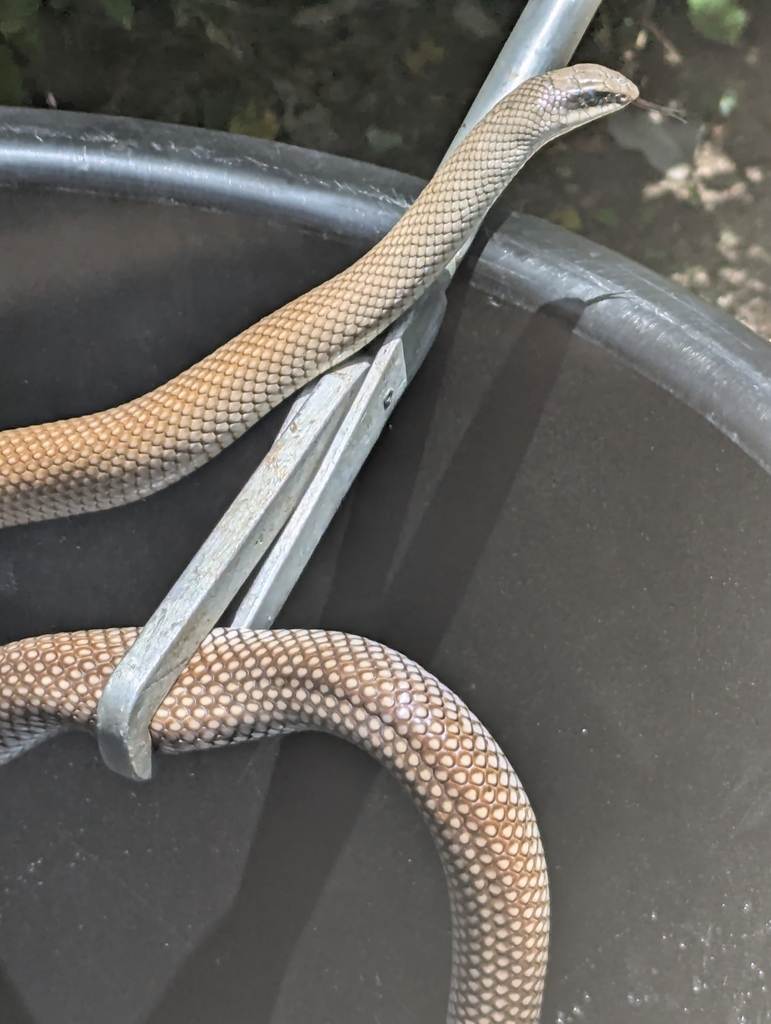
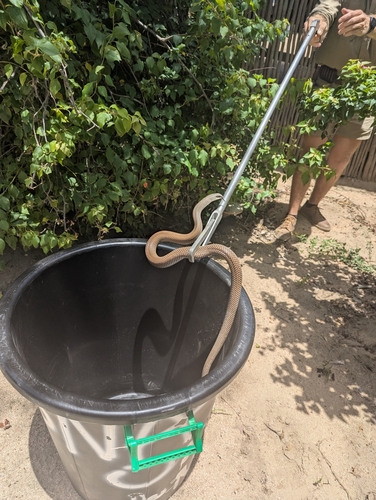
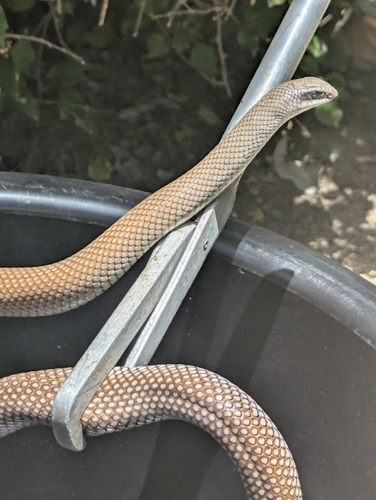
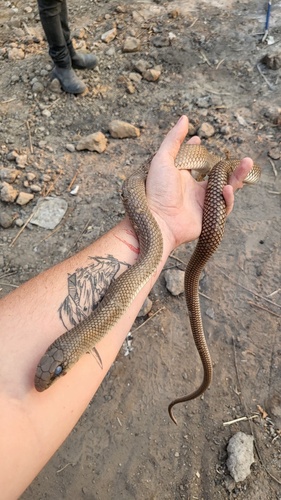
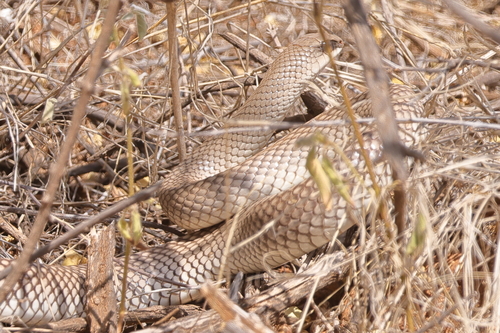
6 photographs of the Eastern Rufous Beaked Snake. © Shedron Mukhumo.
The Eastern Rufous Beaked Snake (Rhamphiophis rostratus) is a non-venomous snake in the Psammophiidae family, recorded in 12 countries.
- Family
- Psammophiidae
About the Eastern Rufous Beaked Snake
Rhamphiophis rostratus, commonly known as the rufous beaked snake, is a species of snake in the family Psammophiidae. It is a large diurnal species native to eastern Africa, ranging from Somalia and Ethiopia in the north to South Africa in the south. It is easily identified by its pointed snout and a dark stripe running through the eye.
Taxonomy and history
Rhamphiophis rostratus was described in 1854 by German naturalist Wilhelm Peters based on four syntype specimens collected by Peters from Mossuril and Tete in Mozambique between June 1843 and August 1847. It is the type species of the genus Rhamphiophis, which is placed within the family Psammophiidae. Some authors consider it a subspecies of Rhamphiophis oxyrhynchus and refer to it by the trinomial name Rhamphiophis oxyrhynchus rostratus, however, molecular phylogenetic evidence supports its status as a species, with a 2008 analysis finding that R. rostratus represented a sister taxon to R. rubropunctatus and R. oxyrhynchus.
Distribution and habitat
Rhamphiophis rostratus is widespread in eastern Africa, ranging from Ethiopia, Somalia, and South Sudan in the north through Kenya, Tanzania, Uganda, Mozambique, Malawi, Zambia, Zimbabwe, and Botswana, with the southernmost point of its range ending in north-eastern South Africa. A doubtful record from Eritrea is believed to be a misidentification, and it is not known from Burundi or Rwanda. It may also occur in Djibouti, but this has not been confirmed. It inhabits both dry and moist environments, including coastal thickets, woodlands, savanna, and semi-desert areas at altitudes from near sea level up to 1,700 m (5,600 ft) above sea level.
Description
Rhamphiophis rostratus is a large, muscular snake with a distinctive short, downwards-pointed snout and a dark stripe running through the eye. Adults typically grow to 80 cm (31 in) to 1.2 m (3 ft 11 in) long, with the largest specimens reaching 1.6 m (5 ft 3 in). Juveniles are reddish-brown with dark speckles that fade once the snake reaches around 60–70 cm (24–28 in) in length. Body colour is variable and adults may be brown, grey, orange or pinkish above with unmarked white, cream, or yellow undersides. Darker specimens may have a pale centre to the scales, especially towards the tail, that gives a speckled appearance. It is a rear-fanged species and when threatened it is capable of flattening its neck to create a hood.
Ecology
Rhamphiophis rostratus is a fast-moving and largely terrestrial diurnal species. It spends much of the day searching for prey on the ground, but is known to sometimes climb into bushes. It primarily feeds on frogs, lizards, rodents (including naked mole rats), and other snakes, but has also been reported eating beetles. It is capable of digging with its snout, breaking the soil apart with its pointed rostrum and turning its head sideways to scoop the soil out of the hole. When inactive it rests in holes, including squirrel burrows and abandoned termite nests. It is an oviparous species, laying clutches of four to twelve eggs at a time.
Adapted from Wikipedia, available under CC BY-SA.
Frequently asked: Eastern Rufous Beaked Snake
- Is the Eastern Rufous Beaked Snake venomous?
- No. The Eastern Rufous Beaked Snake (Rhamphiophis rostratus) is non-venomous and is not considered dangerous to humans. Like most snakes, it will retreat rather than bite when given the chance.
- Is the Eastern Rufous Beaked Snake poisonous?
- Snakes are venomous, not poisonous. "Poisonous" means harmful to eat or touch; "venomous" means injecting toxins through a bite. The Eastern Rufous Beaked Snake is neither poisonous nor venomous.
- Is the Eastern Rufous Beaked Snake dangerous?
- The Eastern Rufous Beaked Snake is not dangerous to humans. It has no medically significant venom and bites only defensively if cornered or handled.
- Where does the Eastern Rufous Beaked Snake live?
- The Eastern Rufous Beaked Snake has verified records in 12 countries, including Kenya, South Africa, Zimbabwe. See the distribution section below for its full range.
Where it is found
More Psammophiidae snakes
 Red-spotted Beaked SnakeRhamphiophis rubropunctatus
 Western Rufous Beaked SnakeRhamphiophis oxyrhynchus
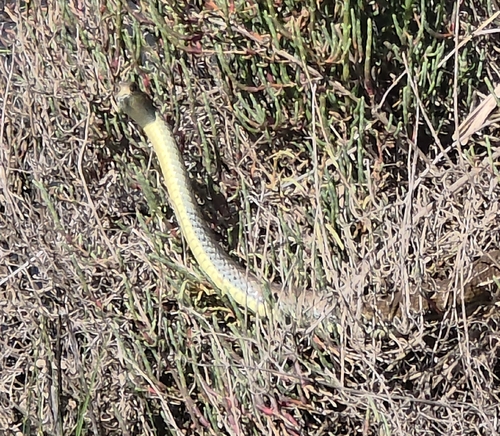 Western Montpellier SnakeMalpolon monspessulanus
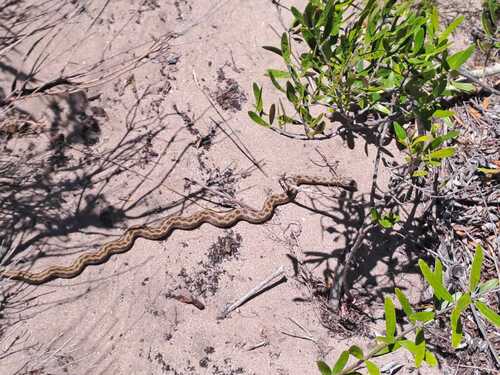 Rhombic SkaapstekerPsammophylax rhombeatus
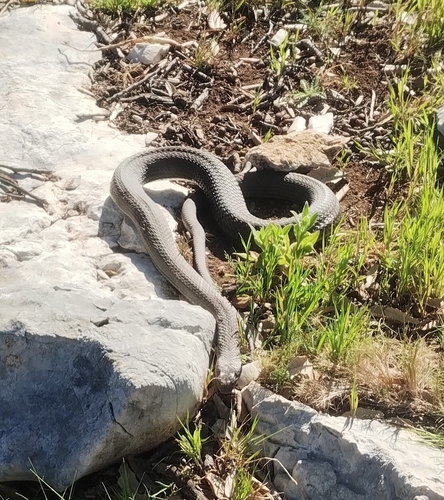 Eastern Montpellier SnakeMalpolon insignitus
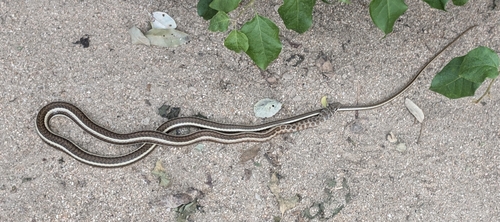 Stripe-bellied Sand SnakePsammophis subtaeniatus
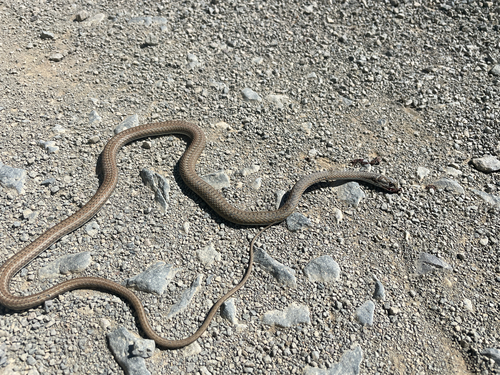 Karoo Sand SnakePsammophis notostictus
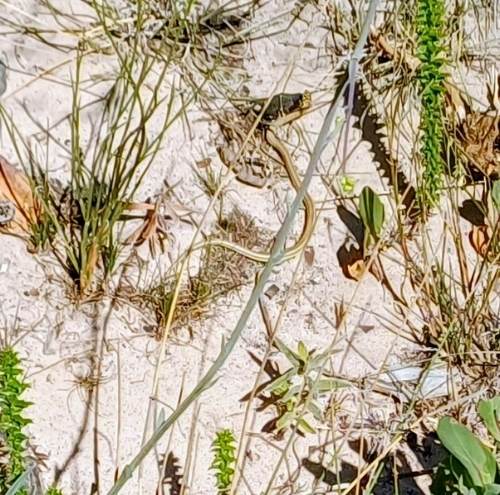 Cross-marked Sand SnakePsammophis crucifer
Classification
How scientists group this snake, from the broadest category down to the exact species. Each step narrows to its closest relatives.
- OrderThe broad group of scaled reptiles: all snakes and lizards
- Squamata
- FamilyA group of related snakes that share key traits
- Psammophiidae
- GenusA close-knit group of very similar species
- Rhamphiophis
- SpeciesThis exact snake, named in the two-part scientific name
- Rhamphiophis rostratus
Keep learning
- What to Do If You Find a SnakeFound a snake at home or on a trail? Here is how to stay calm, give it space, identify it safely, and know when to call a professional.
- Venomous vs Nonvenomous: How to Tell the DifferenceThe folk rules for telling venomous snakes apart, where each one fails, and why location-based identification beats guessing by sight.
- What Is a Snake? Anatomy and the BasicsA clear overview of what makes a snake a snake: limbless body plan, anatomy, evolution from lizards, species diversity, and why they are ectothermic.
- How to Keep Snakes Out of Your Yard and HomeA practical guide to keeping snakes out of your yard and home using habitat changes that work, plus what to skip and what to do if one shows up.
Distribution from GBIF & iNaturalist. Venom status per CDC. Background: Wikipedia. Informational only. Never handle a snake to identify it.