
Lamprophiidae
Striped House Snake
HarmlessBoaedon lineatus
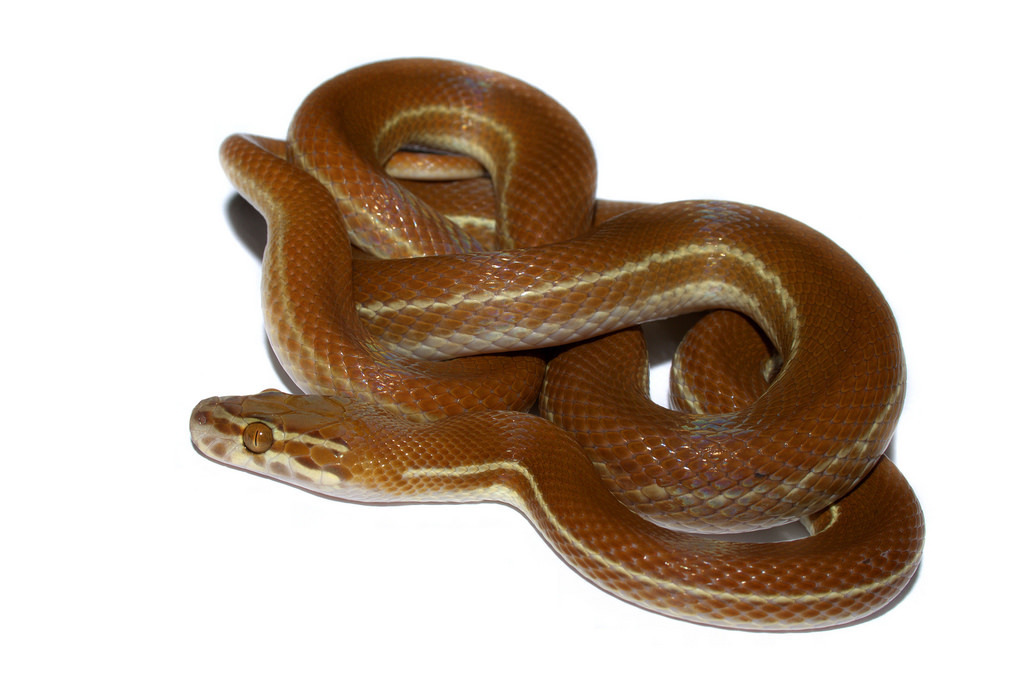
The Striped House Snake (Boaedon lineatus) is a non-venomous snake in the Lamprophiidae family, recorded in 35 countries.
- Family
- Lamprophiidae
About the Striped House Snake
Boaedon lineatus, the striped house snake, is a species of lamprophiid from
all throughout Africa. This species has a wide range stretching from Tanzania through Central Africa as far as Uganda. They are kept as pets with increasing regularity, often captured and exported for the pet trade.
Until November 2010, this species was grouped in the genus Lamprophis, but a paper published by Kelly et al. reclassified this species in the genus Boaedon.
Appearance
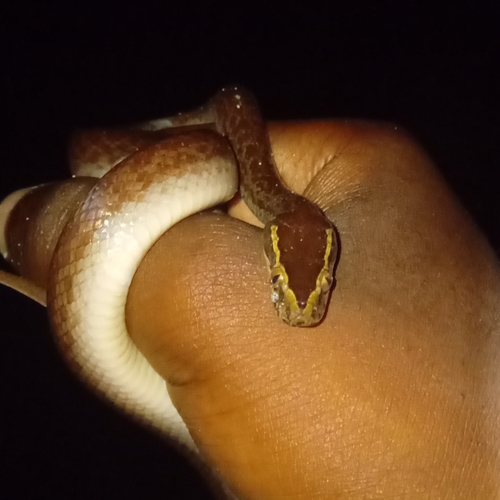
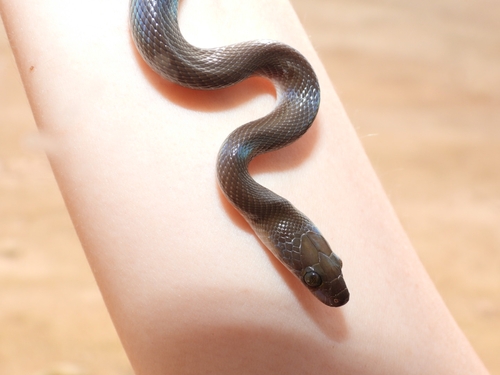
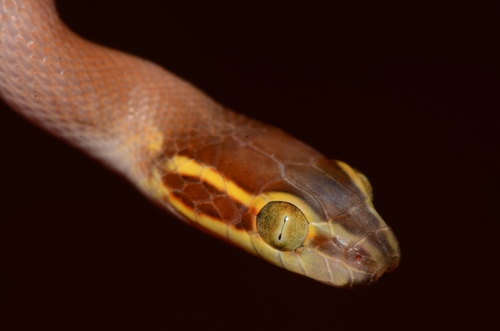
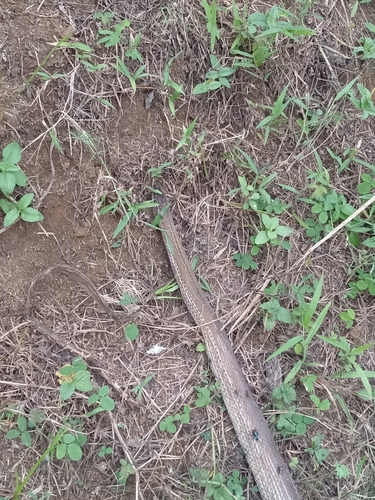
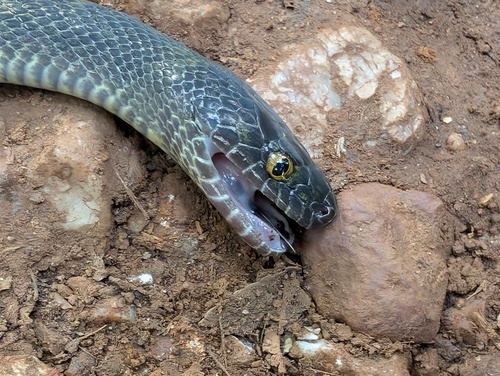
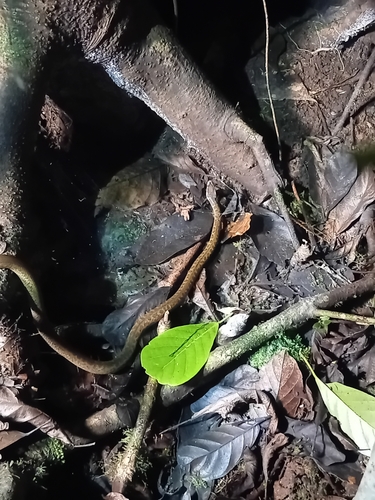
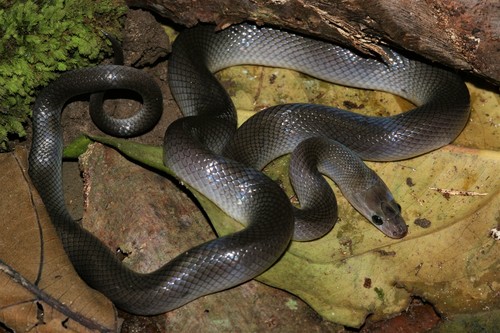
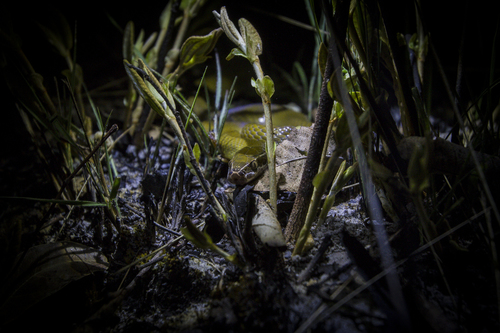
This species is highly variable in appearance, their colour varying from deep black through light reddish brown and often greenish. Their eyes are large & 'bug-like' with vertically elliptical pupils. Stripes stretch from the rostral scale above the mouth through the eye to the rear of the head where they typically terminate. The species gains its name due to the thick, bold white/cream stripes which stretch laterally along the length of the body, these occasionally terminate after around two thirds of the body & may be broken or very pale. Uncommonly these stripes are totally absent. Striped house snakes are highly sexually dimorphic, females growing far larger than males, reaching lengths of around 100 centimetres (39 in) males generally smaller rarely exceeding 60 centimetres (24 in). As with all members in the genus Boaedon these snakes are highly iridescent, having an oil-on-water sheen in certain lights.
Behaviour and diet
In the wild, this species is known to frequent human habitation, opportunistically feeding on the rodents that gather around human waste. They are known to feed on chicks & small lizards also. They are known to breed year-round and, unlike in captivity, breed once per year. Hatchlings are usually around 15 centimetres (5.9 in) in length. These are nocturnal in nature and are known to occur at 1000 feet above sea level.
In captivity
This species is increasingly more common in captivity with more individuals beginning to keep and breed them. They are often imported from Tanzania as Wild Caught or Captive Farmed individuals. No known genetically inheritable mutations are currently available. This species fares well in captivity, with some TLC they feed well on defrosted rodents & breed, laying 3–6 clutches of around 3–10 eggs per year. Care is basic & in time, as they become more readily available, this species should grow in popularity.
Adapted from Wikipedia, available under CC BY-SA.
Frequently asked: Striped House Snake
- Is the Striped House Snake venomous?
- No. The Striped House Snake (Boaedon lineatus) is non-venomous and is not considered dangerous to humans. Like most snakes, it will retreat rather than bite when given the chance.
- Is the Striped House Snake poisonous?
- Snakes are venomous, not poisonous. "Poisonous" means harmful to eat or touch; "venomous" means injecting toxins through a bite. The Striped House Snake is neither poisonous nor venomous.
- Is the Striped House Snake dangerous?
- The Striped House Snake is not dangerous to humans. It has no medically significant venom and bites only defensively if cornered or handled.
- Where does the Striped House Snake live?
- The Striped House Snake has verified records in 35 countries, including Ghana, Congo, Tanzania, United Republic of. See the distribution section below for its full range.
- What does the Striped House Snake eat?
- In the wild, this species is known to frequent human habitation, opportunistically feeding on the rodents that gather around human waste. They are known to feed on chicks & small lizards also. They are known to breed year-round and, unlike in captivity, breed once per year. Hatchlings are usually around 15 centimetres (5.9 in) in length. These are nocturnal in nature and are known to occur at 1000 feet above sea level.
Where it is found
More Lamprophiidae snakes
Classification
How scientists group this snake, from the broadest category down to the exact species. Each step narrows to its closest relatives.
- OrderThe broad group of scaled reptiles: all snakes and lizards
- Squamata
- FamilyA group of related snakes that share key traits
- Lamprophiidae
- GenusA close-knit group of very similar species
- Boaedon
- SpeciesThis exact snake, named in the two-part scientific name
- Boaedon lineatus
Keep learning
- What to Do If You Find a SnakeFound a snake at home or on a trail? Here is how to stay calm, give it space, identify it safely, and know when to call a professional.
- Venomous vs Nonvenomous: How to Tell the DifferenceThe folk rules for telling venomous snakes apart, where each one fails, and why location-based identification beats guessing by sight.
- What Is a Snake? Anatomy and the BasicsA clear overview of what makes a snake a snake: limbless body plan, anatomy, evolution from lizards, species diversity, and why they are ectothermic.
- How to Keep Snakes Out of Your Yard and HomeA practical guide to keeping snakes out of your yard and home using habitat changes that work, plus what to skip and what to do if one shows up.
Distribution from GBIF & iNaturalist. Venom status per CDC. Background: Wikipedia. Informational only. Never handle a snake to identify it.