
Genus · Lamprophiidae
Types of house snakes
10+ species make up the genus Boaedon, the snakes commonly called house snakes. None are considered dangerous to humans.
About African house snakes
Boaedon are nonvenomous African constrictors named for their habit of living alongside people, where they hunt the rodents that gather around homes and farms.
Boaedon is a genus of snakes in the family Lamprophiidae, a large group of mostly African and Madagascan snakes that includes wolf snakes, file snakes, and many other secretive ground dwellers. The genus is commonly called the African house snakes because several species thrive near human settlements. They were long lumped into the broader genus Lamprophis, and modern work has split and reshuffled these snakes repeatedly, so the species list keeps changing as researchers study them more closely. Our database tracks 10+ species, including the Cape House Snake, Brown House Snake, Bug-Eyed House Snake, and Striped House Snake.
These snakes range across sub-Saharan Africa, with members reaching from southern Africa up through the central and eastern parts of the continent. They are highly adaptable and turn up in savanna, grassland, scrub, rocky areas, and the edges of forest. Their close association with people is the trait that gave them their name. Where humans build, rodents follow, and the house snakes follow the rodents into gardens, outbuildings, sheds, and the foundations of houses. This makes them one of the more frequently encountered snakes in many African communities.
Recognizing a Boaedon in general terms means looking for a slender to moderately built snake with smooth, glossy scales and a body that is usually some shade of brown, reddish brown, olive, or near black. Many species show two pale lines running back from the snout along each side of the head, a useful field clue. The eyes are relatively large with vertical or slightly elliptical pupils, fitting their largely nocturnal lifestyle. Most are modest in size. Because the genus has been split and rearranged so often, confident identification to species usually needs locality data and close inspection rather than color alone.
Boaedon snakes are nonvenomous. They kill prey by constriction, looping coils around an animal and tightening until it can no longer breathe, rather than by injecting venom. They are not rear-fanged and pose no medical venom risk to humans. They are generally regarded as harmless and even beneficial because they control rodent populations around homes. A frightened individual may bite, hiss, or release musk when handled, and any bite from a wild animal should be cleaned and watched for ordinary infection, but there is no venom to treat. As with any wild snake, the safest choice is to leave it alone and let it move off on its own. If you are ever unsure whether a snake is dangerous, treat it as if it could be, keep your distance, and in a medical emergency contact local emergency services or, in the United States, Poison Control at 1-800-222-1222.
Ecologically, house snakes are nocturnal hunters that feed heavily on small mammals such as mice and rats, along with lizards, frogs, and sometimes birds or other small prey. This rodent-focused diet is exactly why they tolerate and even seek out human-altered habitats. They are egg-laying snakes, with females depositing clutches that hatch into small, independent young. Their calm temperament, manageable size, and willingness to feed make several species popular in captivity, but in the wild they are best appreciated as quiet, effective pest controllers going about their business after dark.
Boaedon belongs to the Lamprophiidae family (African house snakes & allies). Common African snakes, including the familiar house snakes. Variable; many are smooth-scaled, secretive, and active at night.
Danger: Mostly harmless. A few are rear-fanged with mild venom of no medical significance.
All species (19)
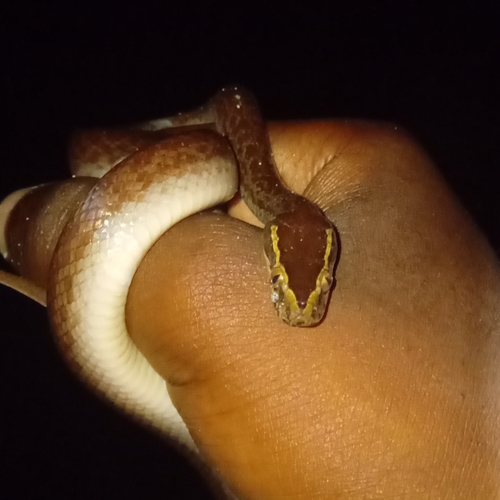 Cape House SnakeBoaedon capensisHarmless
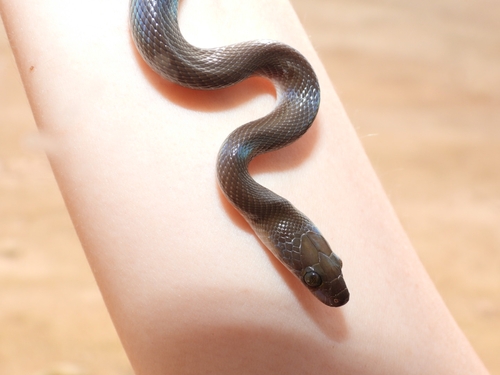 Brown House SnakeBoaedon fuliginosusHarmless
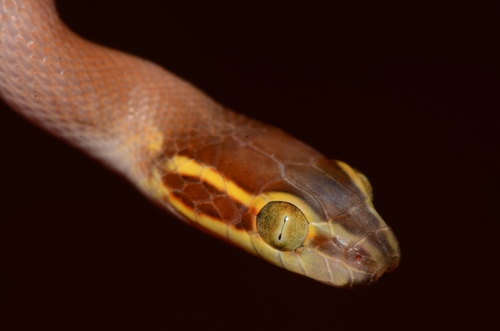 Bug-Eyed House SnakeBoaedon mentalisHarmless
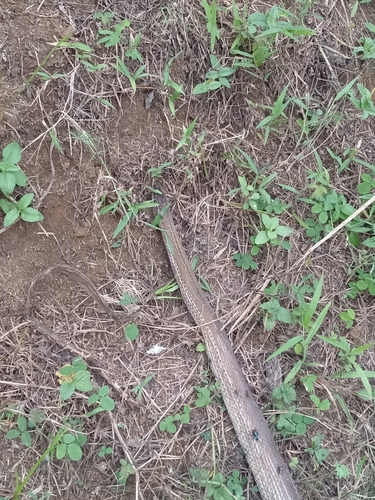 Boaedon bedriagaeHarmless
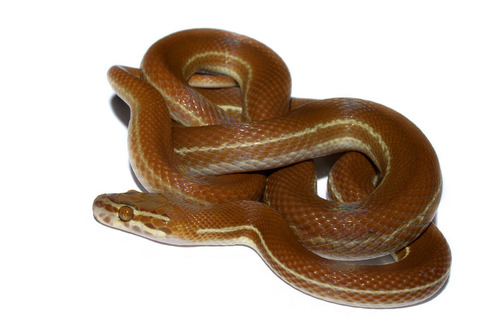 Striped House SnakeBoaedon lineatusHarmless
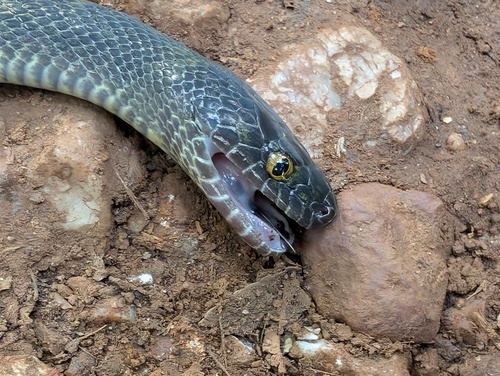 Olive House SnakeBoaedon olivaceusHarmless
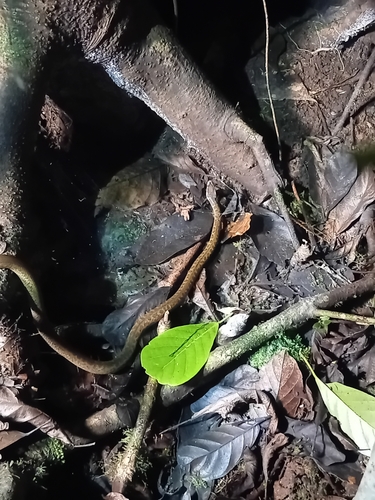 Boaedon mendesiHarmless
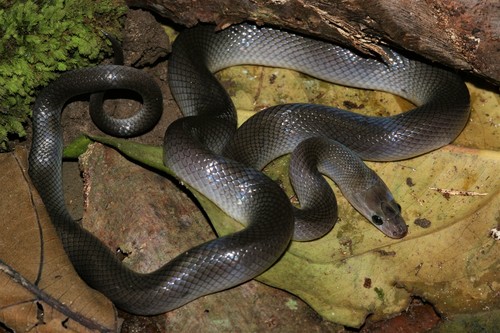 Boaedon perisilvestrisHarmless
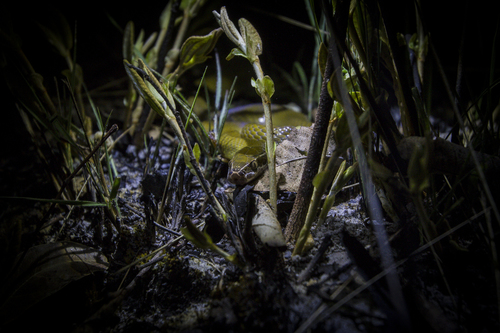 Boaedon fradeiHarmless
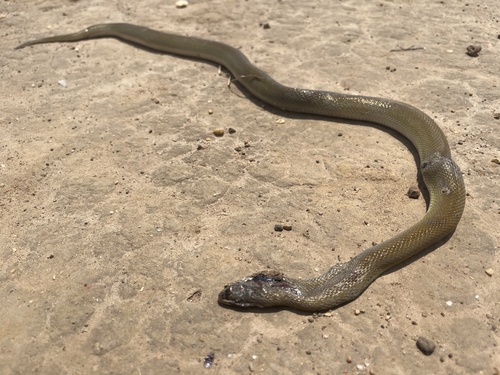 Boaedon montanusHarmless
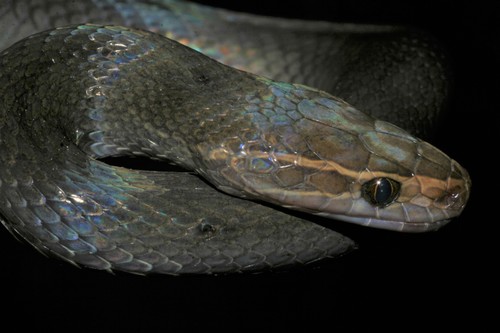 Hallowell's House SnakeBoaedon virgatusHarmless
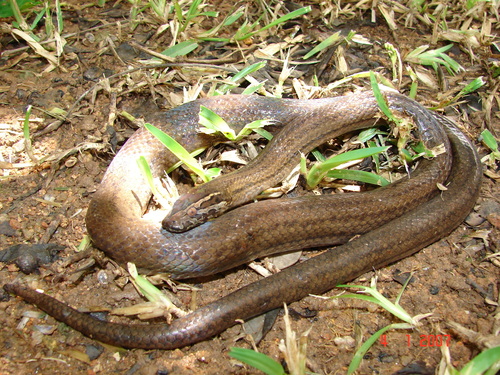 Seychelles House SnakeBoaedon geometricusHarmless
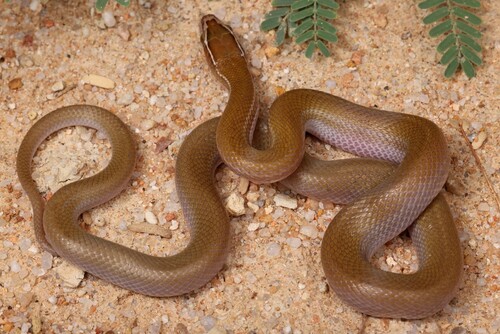 Boaedon bocageiHarmless
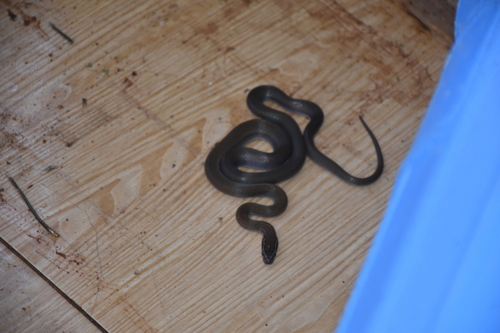 Boaedon angolensisHarmless
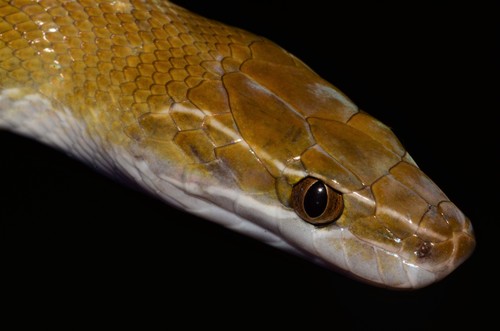 Coastal House SnakeBoaedon littoralisHarmless
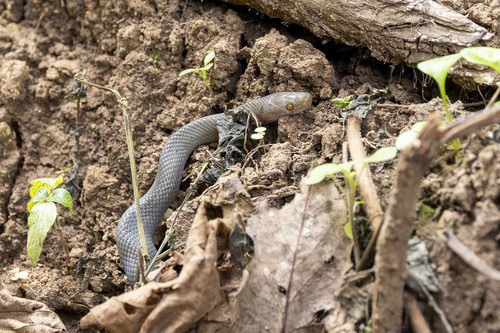 Radford's House SnakeBoaedon radfordiHarmless
- No photoLong-lined House SnakeBoaedon longilineatusHarmless
- No photoBoaedon arabicusHarmless
- No photoDark-bellied HousesnakeBoaedon variegatusHarmless
Keep learning
- What Is a Snake? Anatomy and the BasicsA clear overview of what makes a snake a snake: limbless body plan, anatomy, evolution from lizards, species diversity, and why they are ectothermic.
- How Snakes Move, Hunt, and EatHow snakes move without legs, hunt as ambushers or active foragers, kill by constriction or venom, and swallow prey wider than their head.
- What Do Snakes Eat?All snakes are carnivores. Learn what snakes eat, how diet changes with size and age, how often they feed, and how they hunt and swallow prey.
- Venomous vs Nonvenomous: How to Tell the DifferenceThe folk rules for telling venomous snakes apart, where each one fails, and why location-based identification beats guessing by sight.