
Lamprophiidae
Cape House Snake
HarmlessBoaedon capensis
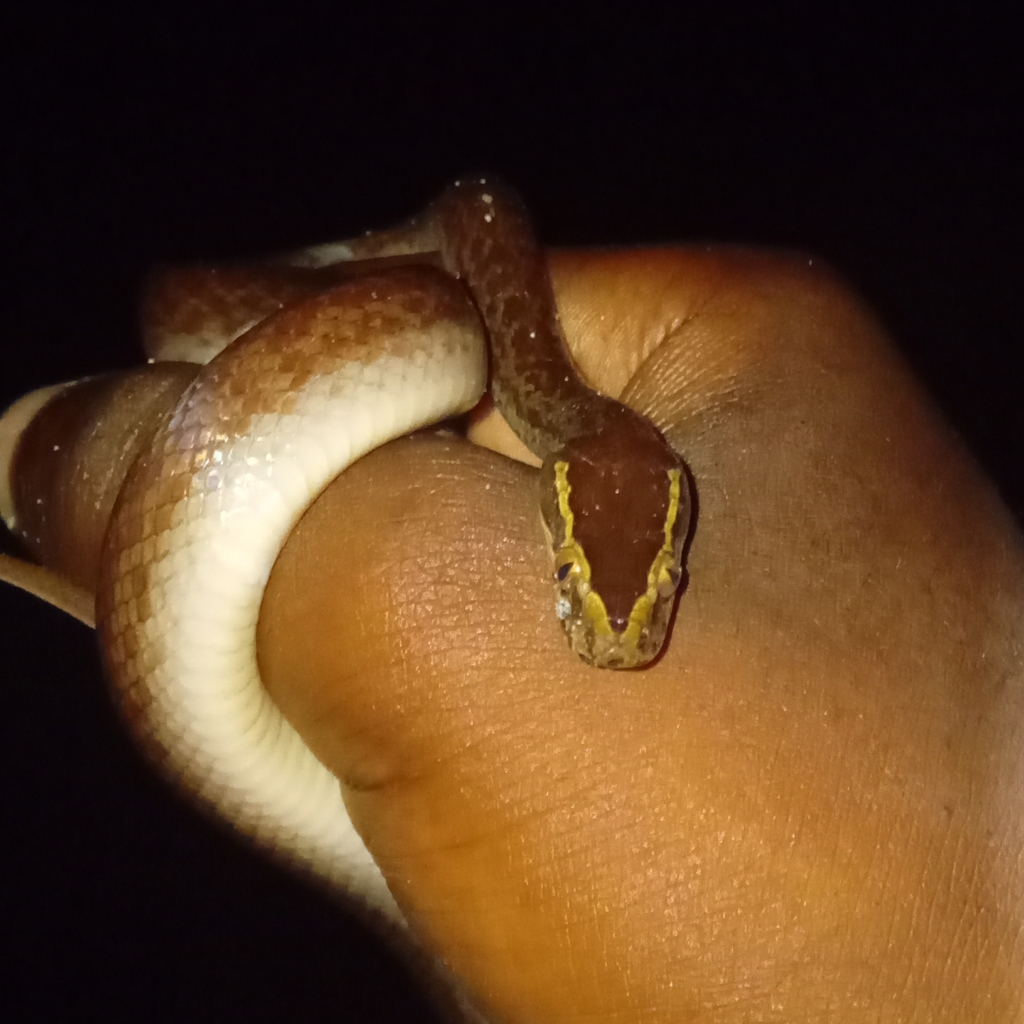
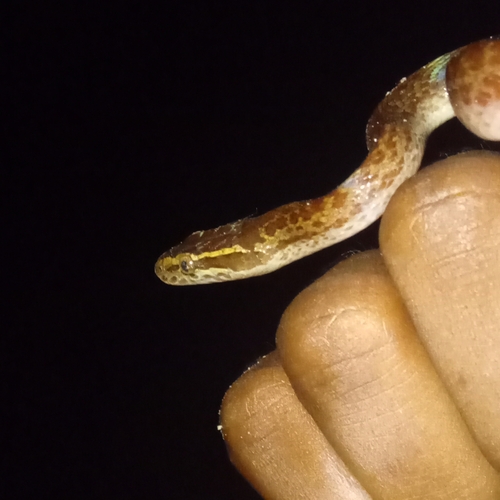
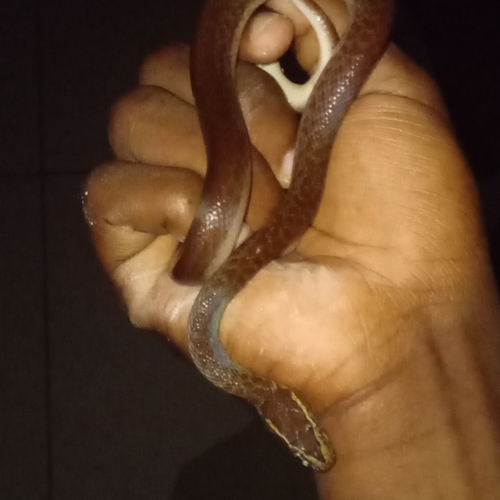
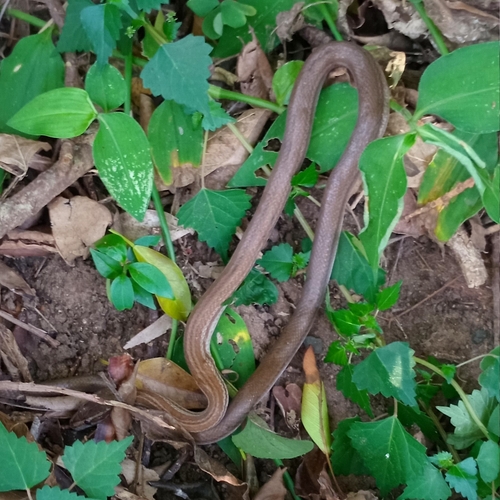
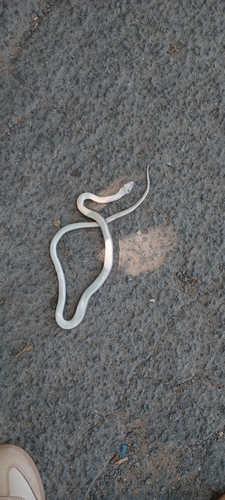
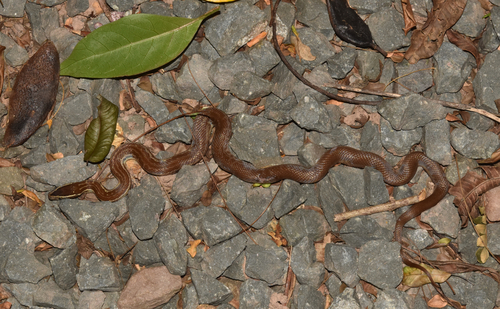
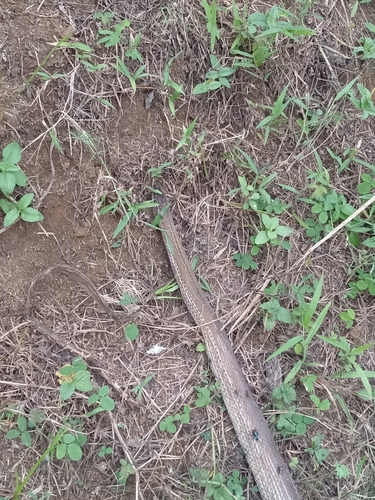
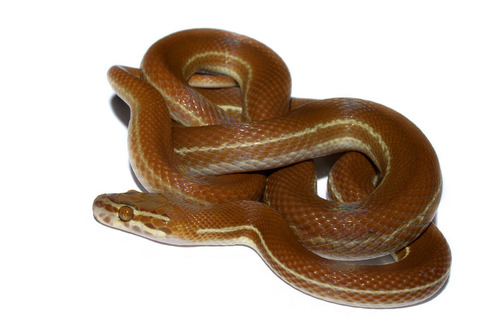
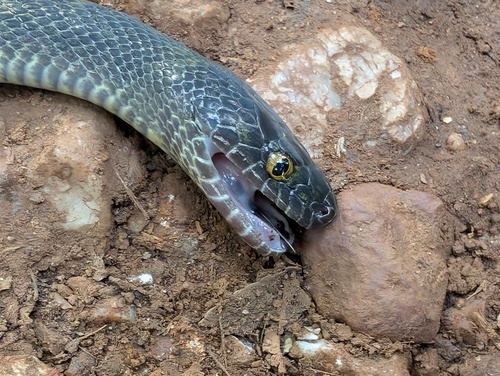
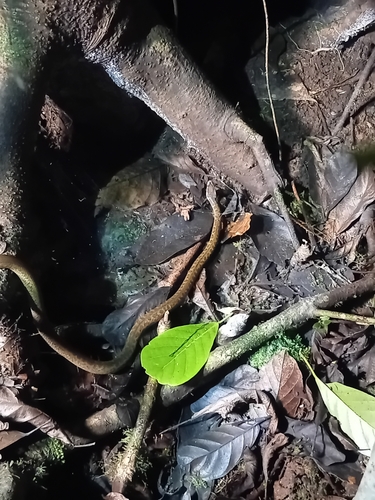
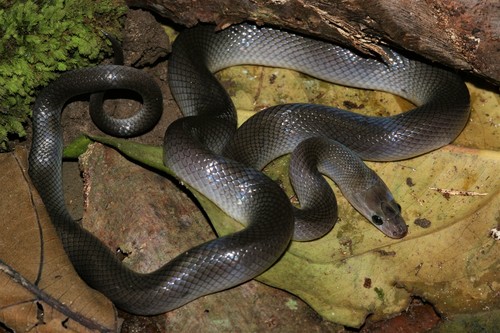
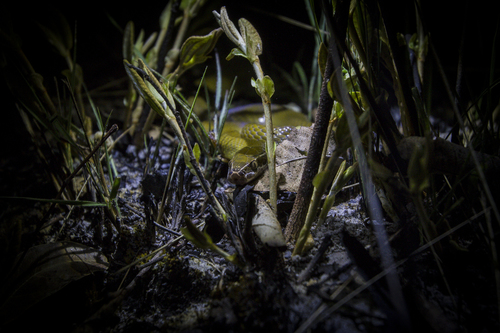
6 photographs of the Cape House Snake. © Lifa Nkosi.
The Cape House Snake (Boaedon capensis) is a non-venomous snake in the Lamprophiidae family, recorded in 14 countries.
- Family
- Lamprophiidae
About the Cape House Snake
Boaedon capensis, the Cape house snake, also known as the brown house snake, is a species of lamprophiid from Botswana, South Africa (from KwaZulu-Natal all the way through to the Western Cape), Mozambique, Zambia and Zimbabwe. They are a non-venomous lamprophiid. This species was previously grouped in the genus Lamprophis but is regrouped with the genus Boaedon.
Appearance
Cape house snakes are usually dark brown on top, but the colour varies greatly from almost black through brown to olive green. The stripes that stretch from the rostral scale through the eye to the back of the head are very strong, thick, and bold. This species may have a lateral stripe running down the flanks, often resembling the links of a chain. They also sometimes have lateral stripes running along either side of the spine. Linking lines between the lateral striping is not uncommon. These body markings tend to be a paler brown/cream in colour on top of the often dark, chocolate-brown base tones. These markings normally fade two-thirds of the way down the body until only the base colour remains, but there are exceptions to the rule. Individuals without pattern are often found in the wild. These individuals have the head markings but no other markings on top of an often pale-brown body. Like all house snakes, Boaedon capensis is very iridescent, their scales often shining with an oily sheen in certain lights. This is a sexually dimorphic species. Females grow substantially larger than males, sometimes reaching up to 4 feet (120 cm). Males are smaller, often only reaching 2–2.5 ft (61–76 cm).
Behaviour and diet
In the wild, this species is known to frequent human habitations, feeding on the rodents that gather there. It is a common misconception that South African people introduce these snakes to their homes to eat rodents. This happens extremely rarely.
Nocturnal by nature, this species is known to eat entire nests of mice in one sitting. In the wild, this species breeds once or twice per year.
In captivity
This species is increasingly more common in the exotic pet trade, with many hobbyists beginning to keep and breed this species throughout the world. It has become increasingly popular with hobbyists as more reproducible morphs become available. Their care is basic, making them ideal for the new hobbyist, yet they still hold their interest for the more advanced keepers as well. In captivity, this species is known to breed as many as 6 times a year, laying 5–16 eggs every 60 days or so.
Morphs
With more selective and captive breeding taking place, there are an increasingly high number of genetically viable colour variants of Boaedon capensis available through the pet trade. Those that are currently known are listed below:
Adapted from Wikipedia, available under CC BY-SA.
Frequently asked: Cape House Snake
- Is the Cape House Snake venomous?
- No. The Cape House Snake (Boaedon capensis) is non-venomous and is not considered dangerous to humans. Like most snakes, it will retreat rather than bite when given the chance.
- Is the Cape House Snake poisonous?
- Snakes are venomous, not poisonous. "Poisonous" means harmful to eat or touch; "venomous" means injecting toxins through a bite. The Cape House Snake is neither poisonous nor venomous.
- Is the Cape House Snake dangerous?
- The Cape House Snake is not dangerous to humans. It has no medically significant venom and bites only defensively if cornered or handled.
- Where does the Cape House Snake live?
- The Cape House Snake has verified records in 14 countries, including South Africa, Zambia, Zimbabwe. See the distribution section below for its full range.
- What does the Cape House Snake eat?
- In the wild, this species is known to frequent human habitations, feeding on the rodents that gather there. It is a common misconception that South African people introduce these snakes to their homes to eat rodents. This happens extremely rarely. Nocturnal by nature, this species is known to eat entire nests of mice in one sitting. In the wild, this species breeds once or twice per year.
Where it is found
More Lamprophiidae snakes
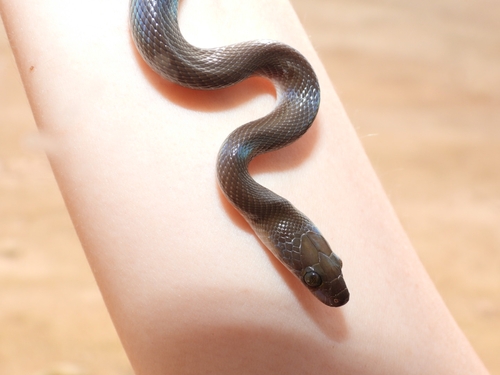
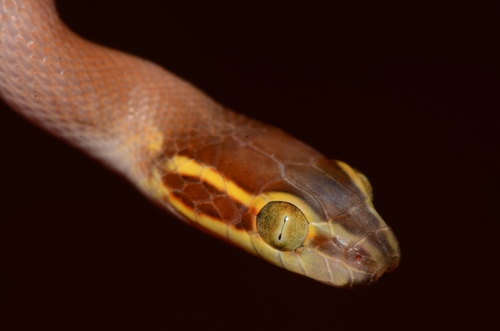
Classification
How scientists group this snake, from the broadest category down to the exact species. Each step narrows to its closest relatives.
- OrderThe broad group of scaled reptiles: all snakes and lizards
- Squamata
- FamilyA group of related snakes that share key traits
- Lamprophiidae
- GenusA close-knit group of very similar species
- Boaedon
- SpeciesThis exact snake, named in the two-part scientific name
- Boaedon capensis
Keep learning
- What to Do If You Find a SnakeFound a snake at home or on a trail? Here is how to stay calm, give it space, identify it safely, and know when to call a professional.
- Venomous vs Nonvenomous: How to Tell the DifferenceThe folk rules for telling venomous snakes apart, where each one fails, and why location-based identification beats guessing by sight.
- What Is a Snake? Anatomy and the BasicsA clear overview of what makes a snake a snake: limbless body plan, anatomy, evolution from lizards, species diversity, and why they are ectothermic.
- How to Keep Snakes Out of Your Yard and HomeA practical guide to keeping snakes out of your yard and home using habitat changes that work, plus what to skip and what to do if one shows up.
Distribution from GBIF & iNaturalist. Venom status per CDC. Background: Wikipedia. Informational only. Never handle a snake to identify it.