
Viperidae
Saw-scaled Viper
VenomousEchis carinatus
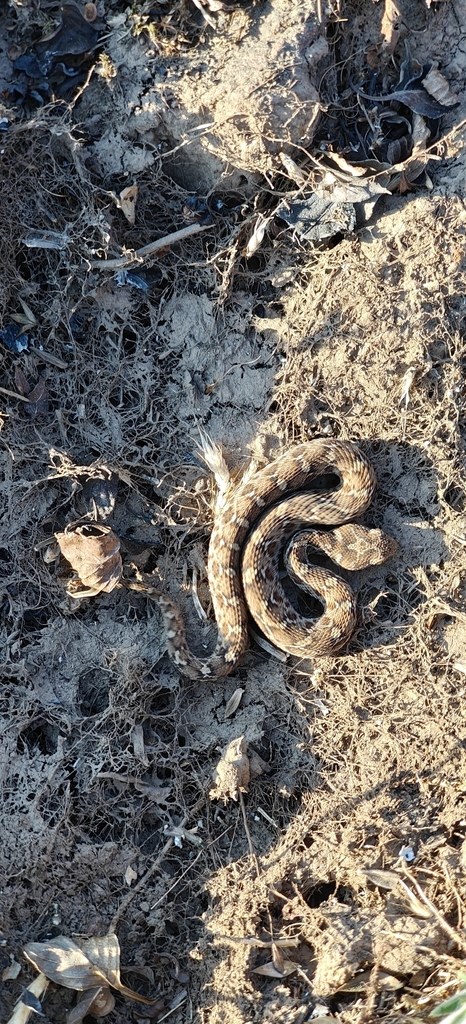
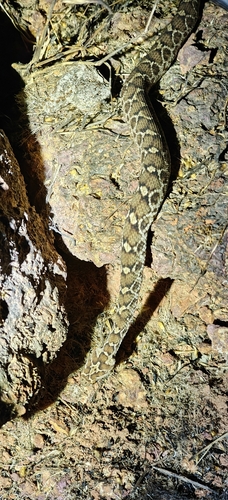
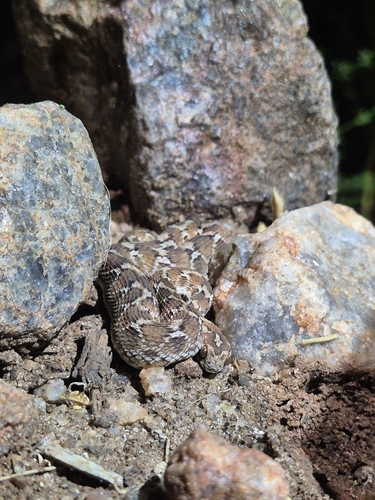
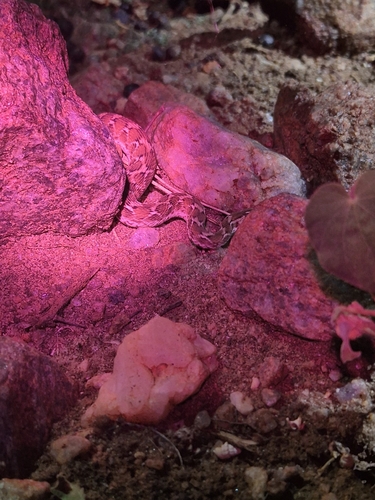
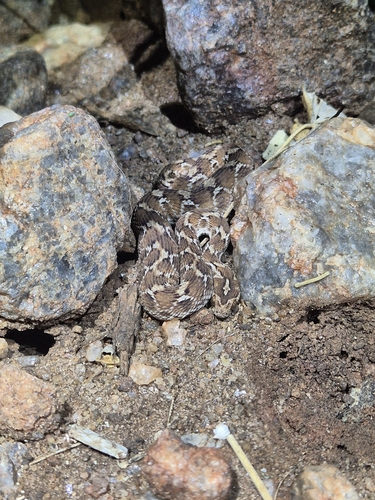
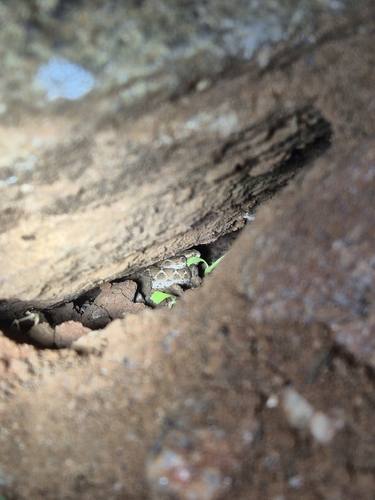
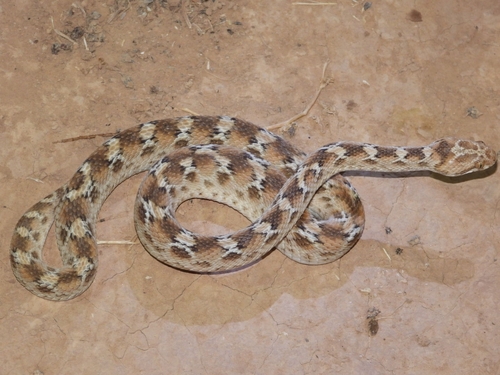
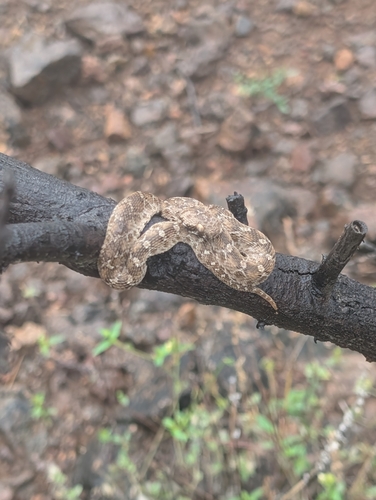
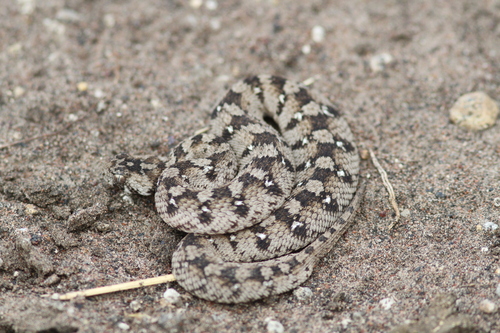
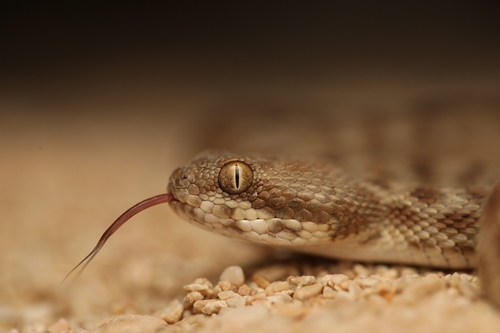
6 photographs of the Saw-scaled Viper. © Rohit Naniwadekar.
The Saw-scaled Viper (Echis carinatus) is a venomous snake in the Viperidae family, recorded in 17 countries.
If you are bitten
This is a venomous snake. Treat any bite as a medical emergency: stay calm, keep the bitten limb still and roughly level with the heart, remove rings and tight clothing, and get to emergency care immediately. Do not apply a tourniquet, cut the wound, apply ice, or try to suck out venom. Call your local emergency number or poison center.
- Family
- Viperidae
- Danger
- high
About the Saw-scaled Viper
Echis carinatus, known as the Sindh saw-scaled viper, saw-scaled viper, Indian saw-scaled viper, little Indian viper, and by other common names, is a viper species found in parts of the Middle East and Central Asia, and especially the Indian subcontinent. It is the smallest member of the "big four" Indian snakes that are responsible for causing the most snakebite cases and deaths, due to various factors including their frequent occurrence in highly populated regions, and their inconspicuous nature. Like all vipers, the species is venomous. Two subspecies are currently recognized, including the nominate subspecies described here.
Description
The size of E. carinatus ranges between 38 and 80 cm (15 and 31 in) in total length (body + tail), but usually no more than 60 cm (24 in).
Its head is distinct from its neck; its snout is very short and rounded. The nostril is between three shields, and the head is covered with small keeled scales, among which an enlarged supraocular is sometimes present. There are 9–14 interocular scales across the top of the head and 14–21 circumorbital scales. 1–3 rows of scales separate the eye from the supralabials. There are 10–12 supralabials, the fourth usually largest, and 10–13 sublabials.
Scalation
Midbody there are 25–39 rows of dorsal scales that are keeled scales with apical pits; on the flanks, these have serrated keels. There are 143–189 ventral scales that are rounded and cover the full width of the belly. The subcaudals are undivided and number 21–52, and the anal scale is single.
The color-pattern consists of a pale buff, grayish, reddish, olive or pale brown ground color, overlaid mid-dorsally with a series of variably colored, but mostly whitish spots, edged with dark brown, and separated by lighter inter-blotch patches. A series of white bows run dorsolaterally. The top of the head has a whitish cruciform or trident pattern and there is a faint stripe running from the eye to the angle of the jaw. The belly is whitish to pinkish, uniform in color or with brown dots that are either faint or distinct.
Common names
English - saw-scaled viper, Indian saw-scaled viper, little Indian viper.
Tamil - surattai pambu. viriyan pamboo, surutai vireyan ( சுருட்டை விரியன் )
Sinhala - vali polonga (වැලි පොලඟා).
Odia - Dhuli Naga.
Pushtu - phissi.
Telugu - Chinna pinjara, pinjara
Sindhi - kuppur, janndi.
Marathi - phoorsa ([फुरसं]).
Kannada - kallu haavu.
Malayalam - anali അണലി
Gujarati - tarachha, zeri padkoo (ઝેરી પૈડકુ) udaneyn.
Hindi - aphai (अफई)
Russian - peschanaya efa (песчаная эфа)
Iraqi Arabic - ḥayyat sayyid dakhīl (حية سيد دخيل)
Persian - mār-e ja'fari (مار جعفری)
Bengali - fursa boda sap (ফুরসা বোড়া সাপ), also কাঁটা-আঁইশা বোড়া, খুঁদে চন্দ্রবোড়া, বোড়া সাপ, বঙ্করাজ।
Adapted from Wikipedia, available under CC BY-SA.
Local and regional names
The Saw-scaled Viper is known by these names across the regions where it lives:
- Arabic
- أفعى منشارية الحراشف
- Chinese
- 鋸鱗蝰
- Czech
- zmije paví
- Danish
- Almindelig Tæppehugorm, efan
- Dutch
- Zaagschubadder
- English
- Carpet Viper, Phoorsa, Sindh Saw-scaled Viper
- German
- Gemeine Sandrasselotter, Sandrasselotter
- Gujarati
- ફુરસો
- Hungarian
- Arab efa
- Italian
- Echide carenato, Echide rostrato, Vipera tappeto carenata, Vipera tappeto rostrata
- Japanese
- ノコギリヘビ
- Marathi
- फुरसे
- Polish
- efa piaskowa
- Russian
- Песчаная эфа
- Spanish
- víbora gariba
- Tamil
- சுருட்டைவிரியன்
- Turkish
- Çöl engereği
Frequently asked: Saw-scaled Viper
- Is the Saw-scaled Viper venomous?
- Yes. The Saw-scaled Viper (Echis carinatus) is venomous and belongs to the Viperidae family (viper). Its bite is considered high risk to people. Treat any bite as a medical emergency.
- Is the Saw-scaled Viper poisonous?
- Snakes are venomous, not poisonous. "Poisonous" means harmful to eat or touch; "venomous" means injecting toxins through a bite. The Saw-scaled Viper is venomous, delivering venom through a bite.
- Is the Saw-scaled Viper dangerous?
- This is a venomous snake. Treat any bite as a medical emergency: stay calm, keep the bitten limb still and roughly level with the heart, remove rings and tight clothing, and get to emergency care immediately. Do not apply a tourniquet, cut the wound, apply ice, or try to suck out venom. Call your local emergency number or poison center.
- Where does the Saw-scaled Viper live?
- The Saw-scaled Viper has verified records in 17 countries, including India, United Arab Emirates, Pakistan. See the distribution section below for its full range.
- What does the Saw-scaled Viper eat?
- Echis carinatus feeds on rodents, lizards, frogs, and a variety of arthropods, such as scorpions, centipedes and large insects. Diet may be varied according to availability of prey. High populations in some areas may be due to this generalist diet.
- Why is it called the Saw-scaled Viper?
- English - saw-scaled viper, Indian saw-scaled viper, little Indian viper. Tamil - surattai pambu. viriyan pamboo, surutai vireyan ( சுருட்டை விரியன் ) Sinhala - vali polonga (වැලි පොලඟා). Odia - Dhuli Naga. Pushtu - phissi. Telugu - Chinna pinjara, pinjara Sindhi - kuppur, janndi. Marathi - phoorsa ([फुरसं]). Kannada - kallu haavu. Malayalam - anali അണലി Gujarati - tarachha, zeri padkoo (ઝેરી પૈડકુ) udaneyn. Hindi - aphai (अफई) Russian - peschanaya efa (песчаная эфа)
If you are bitten by the Saw-scaled Viper
Do
- Get away from the snake and stay calm. Most bites worsen when people panic or try again to handle the snake.
- Call 911 or Poison Control (1-800-222-1222) right away. Antivenom works best when given early.
- Note the time of the bite and, from a safe distance, the snake's color and pattern, a phone photo is enough. Do not chase it.
- Keep the bitten limb still and at roughly heart level. Sit or lie down and limit movement.
- Remove rings, watches, and tight clothing near the bite before swelling starts.
- Gently wash the bite with soap and water and cover it with a clean, dry dressing.
Do not
- Do not cut the wound or try to suck out the venom.
- Do not apply a tourniquet or ice.
- Do not drink alcohol or caffeine.
- Do not take aspirin or ibuprofen, they can worsen bleeding. Acetaminophen is safer for pain.
- Do not try to catch or kill the snake. A dead snake can still bite by reflex.
First-aid guidance adapted from the U.S. Centers for Disease Control and Prevention (CDC NIOSH), Venomous Snakes. Educational only; always follow the instructions of emergency responders.
Where it is found
More Viperidae snakes
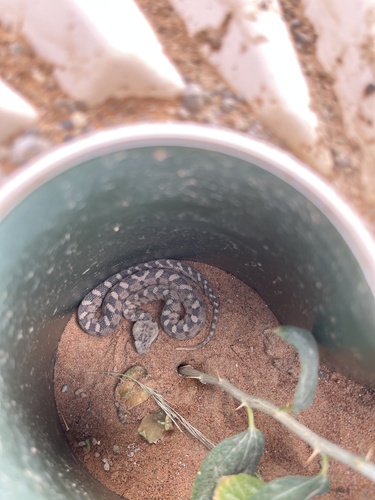 Oman Saw-scaled ViperEchis omanensis
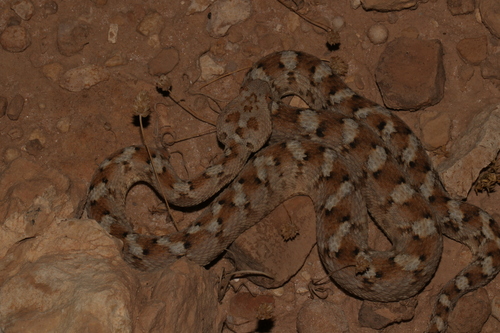 Palestine Saw-scaled ViperEchis coloratus
 Roman's Saw-scaled ViperEchis leucogaster
 Egyptian Saw-scaled ViperEchis pyramidum
 African Saw-scaled ViperEchis ocellatus
 Khosatzki's Saw-scaled ViperEchis khosatzkii
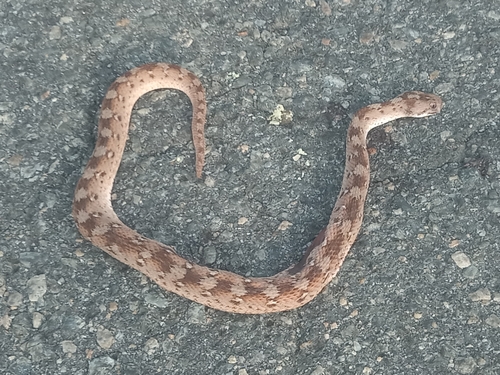 Roman's Carpet ViperEchis romani
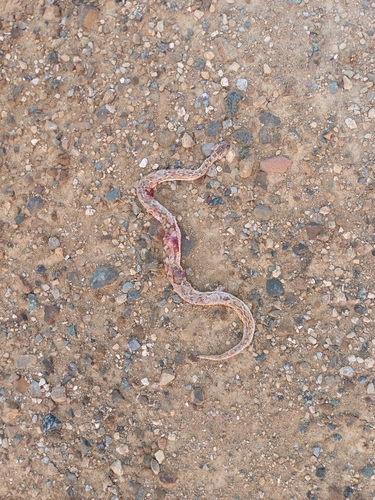 Borkin's Carpet ViperEchis borkini
Classification
How scientists group this snake, from the broadest category down to the exact species. Each step narrows to its closest relatives.
Keep learning
- Are Snakes Dangerous? The Real Risk, in PerspectiveMost snakes are harmless and avoid people. Here is the honest picture of snakebite risk worldwide and how to lower your own.
- Snakebite First Aid: What to Do (and What Never to Do)A clear, CDC-based guide to snakebite first aid: the steps that help, the popular myths that hurt, and how to tell a serious bite from a minor one.
- Venomous vs Nonvenomous: How to Tell the DifferenceThe folk rules for telling venomous snakes apart, where each one fails, and why location-based identification beats guessing by sight.
- What to Do If You Find a SnakeFound a snake at home or on a trail? Here is how to stay calm, give it space, identify it safely, and know when to call a professional.
Distribution from GBIF & iNaturalist. Venom status per CDC. Background: Wikipedia. Informational only. Never handle a snake to identify it.