
Viperidae
African Saw-scaled Viper
VenomousEchis ocellatus
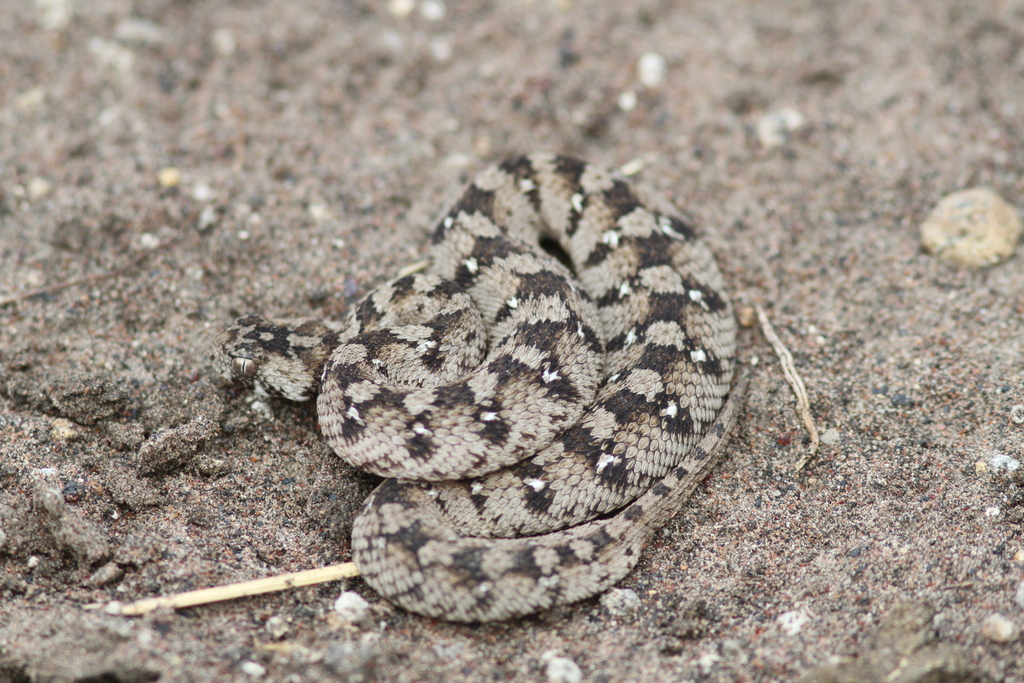
The African Saw-scaled Viper (Echis ocellatus) is a venomous snake in the Viperidae family, recorded in 15 countries.
If you are bitten
This is a venomous snake. Treat any bite as a medical emergency: stay calm, keep the bitten limb still and roughly level with the heart, remove rings and tight clothing, and get to emergency care immediately. Do not apply a tourniquet, cut the wound, apply ice, or try to suck out venom. Call your local emergency number or poison center.
- Family
- Viperidae
- Danger
- high
About the African Saw-scaled Viper
Echis ocellatus, known by the common names West African carpet viper and ocellated carpet viper, is a highly venomous species of viper endemic to West Africa. No subspecies are currently recognized.
It is responsible for more human fatalities due to snakebite than all other African species combined. An antivenom called Echitab-plus-ICP is manufactured by the Costa Rican Instituto Clodomiro Picado and another called EchiTabG is manufactured by MicroPharm Ltd in the UK.
Taxonomy
Othmar Stemmler described the species in 1970. It was considered a subspecies of the E. carinatus.
Recent revisions split the species into three, with the recognition of Echis jogeri from Senegal, Guinea and Mali, and Echis romani from eastern Nigeria, southeastern Niger, Cameroon and Chad.
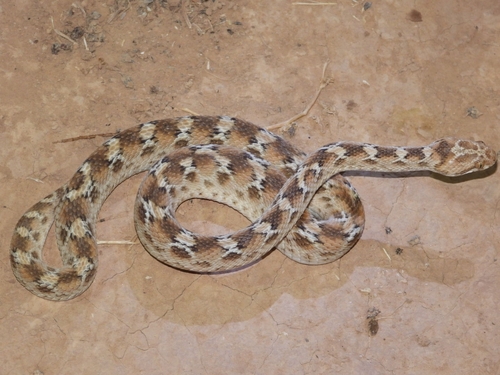
The specific name, ocellatus, is a reference to the distinctive series of "eye-spots" (ocelli) which runs the length of the body.
Common names include African saw-tailed viper, ocellated carpet viper and West African carpet viper.
Description and behavior
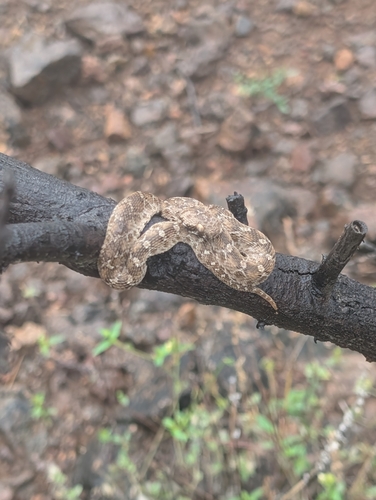
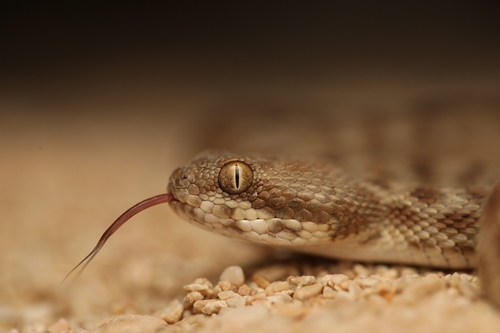
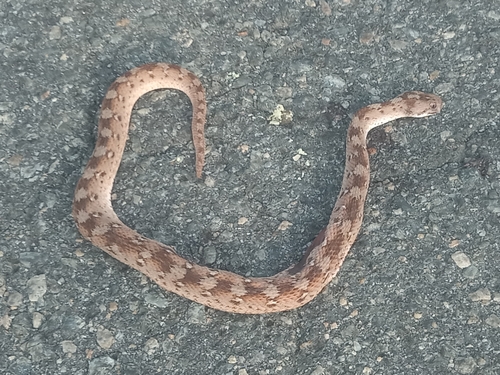
The maximum total length (body + tail) is 65 cm (26 in), possibly more, while the average total length is 30–50 cm (12–20 in). They are characterized by their bulging eyes and short snout, typical of species of the genus Echis. E. ocellatus is terrestrial, nocturnal and crepuscular: it usually goes out to hunt its prey at the first hours of the night, prey like small vertebrates, like mammals, birds, lizards and amphibians, it has already been reported to hunt small invertebrates like centipedes and scorpions. It's a very aggressive viper; it forms its body like a ''S'' and rubs itself making an alert sound with its scales.
Range and habitat
It is found in West Africa in Mali, Ivory Coast, Burkina Faso, Ghana, Togo, Benin, southern Niger, and Nigeria. Older records from Senegal, Guinea Bissau and Guinea refer to Echis jogeri, and those from eastern Nigeria, Cameroon and southern Chad to Echis romani.
The type locality is described as "Haute Volta, Garango, 048 N, 033 W" (Burkina Faso).
There are also reports of single specimens found in the Bangui in the Central African Republic and in central Sudan. It is rarely found north of the 15th parallel, after which E. leucogaster becomes more common. The geographic range of E. ocellatus extends to the coast via the Dahomey Gap. They are mainly found in savanna and occasionally in wooded areas.
Reproduction
Sexually mature females lay between 6 and 20 eggs, usually at the end of the dry season in February to March. Hatchlings are 10–12 cm (3.9–4.7 in) in total length.
Venom
The venom of the West African carpet viper is responsible for more fatalities than all other African snakes combined. Its venom is a compound of procoagulants, anticoagulants, hemorraghins, nephrotoxins and necrotoxins, and bite symptoms include local pain, swelling, bleeding necrosis and disfigurement which may result in amputation. Systemic symptoms include coagulopathy, hemorrhages, shock, renal failure and blindness. The envenoming rate is 80% and the lethality rate is 10-20%.
Adapted from Wikipedia, available under CC BY-SA.
Local and regional names
The African Saw-scaled Viper is known by these names across the regions where it lives:
- Chinese
- 非洲鋸鱗蝰
- Czech
- zmije perlová
- Danish
- Vestafrikansk Tæppehugorm
- English
- West African Carpet Viper
- German
- Westafrikanische Augenfleck-Sandrasselotter
Frequently asked: African Saw-scaled Viper
- Is the African Saw-scaled Viper venomous?
- Yes. The African Saw-scaled Viper (Echis ocellatus) is venomous and belongs to the Viperidae family (viper). Its bite is considered high risk to people. Treat any bite as a medical emergency.
- Is the African Saw-scaled Viper poisonous?
- Snakes are venomous, not poisonous. "Poisonous" means harmful to eat or touch; "venomous" means injecting toxins through a bite. The African Saw-scaled Viper is venomous, delivering venom through a bite.
- Is the African Saw-scaled Viper dangerous?
- This is a venomous snake. Treat any bite as a medical emergency: stay calm, keep the bitten limb still and roughly level with the heart, remove rings and tight clothing, and get to emergency care immediately. Do not apply a tourniquet, cut the wound, apply ice, or try to suck out venom. Call your local emergency number or poison center.
- Where does the African Saw-scaled Viper live?
- The African Saw-scaled Viper has verified records in 15 countries, including Cameroon, Benin, Côte d’Ivoire. See the distribution section below for its full range.
If you are bitten by the African Saw-scaled Viper
Do
- Get away from the snake and stay calm. Most bites worsen when people panic or try again to handle the snake.
- Call 911 or Poison Control (1-800-222-1222) right away. Antivenom works best when given early.
- Note the time of the bite and, from a safe distance, the snake's color and pattern, a phone photo is enough. Do not chase it.
- Keep the bitten limb still and at roughly heart level. Sit or lie down and limit movement.
- Remove rings, watches, and tight clothing near the bite before swelling starts.
- Gently wash the bite with soap and water and cover it with a clean, dry dressing.
Do not
- Do not cut the wound or try to suck out the venom.
- Do not apply a tourniquet or ice.
- Do not drink alcohol or caffeine.
- Do not take aspirin or ibuprofen, they can worsen bleeding. Acetaminophen is safer for pain.
- Do not try to catch or kill the snake. A dead snake can still bite by reflex.
First-aid guidance adapted from the U.S. Centers for Disease Control and Prevention (CDC NIOSH), Venomous Snakes. Educational only; always follow the instructions of emergency responders.
Where it is found
More Viperidae snakes
Classification
How scientists group this snake, from the broadest category down to the exact species. Each step narrows to its closest relatives.
Keep learning
- Are Snakes Dangerous? The Real Risk, in PerspectiveMost snakes are harmless and avoid people. Here is the honest picture of snakebite risk worldwide and how to lower your own.
- Snakebite First Aid: What to Do (and What Never to Do)A clear, CDC-based guide to snakebite first aid: the steps that help, the popular myths that hurt, and how to tell a serious bite from a minor one.
- Venomous vs Nonvenomous: How to Tell the DifferenceThe folk rules for telling venomous snakes apart, where each one fails, and why location-based identification beats guessing by sight.
- What to Do If You Find a SnakeFound a snake at home or on a trail? Here is how to stay calm, give it space, identify it safely, and know when to call a professional.
Distribution from GBIF & iNaturalist. Venom status per CDC. Background: Wikipedia. Informational only. Never handle a snake to identify it.