
Eritrea
Snakes in Eritrea
10+ snake species have been recorded in Eritrea, 4 venomous.
Snakes of Eritrea
Eritrea sits in the Horn of Africa along the Red Sea, and its snake fauna reflects a sharp range of habitats packed into a small country. The hot, arid coastal plain and Danakil lowlands give way to the cooler central highlands around Asmara, then drop again toward the semi-arid western lowlands near the Sudanese border. Snakes track these zones closely. Desert and dry scrub species dominate the lowlands, while the highlands and wetter pockets support a different, more limited set. Our database records 10+ snake species for Eritrea, which is a modest total that fits a country where much of the land is hot, dry, and sparsely vegetated.
Of those 10+ species, 5 are venomous, and they belong to the snake groups that account for most serious snakebite across northeast Africa. Vipers are the central concern, including saw-scaled vipers of the genus Echis, which are small, well camouflaged, common in dry country, and responsible for a large share of dangerous bites across the region. Elapids are also present, represented by cobras and the burrowing relatives of that family. These are the snakes capable of causing medically significant envenomation. The remaining venomous species are part of the same broad viper and elapid lineages that range widely through the arid Horn of Africa.
The great majority of Eritrea's snakes are non-venomous or pose no real threat to people. Colubrid snakes make up most of this harmless majority, including sand snakes, racers, and other slender, fast-moving species adapted to open and rocky terrain, along with egg eaters and small ground-dwelling snakes. Burrowing blind snakes, which spend their lives underground feeding on ants and termites, round out the low end of the size range and are entirely harmless. These snakes are far more often seen than the dangerous minority, and most pose no medical risk at all.
Snakes are a working part of Eritrea's dryland ecosystems. They are efficient predators of rodents, lizards, insects, and other small animals, and in farming and grazing areas they help hold down rodent populations that would otherwise damage stored grain and crops. As both predators and prey for birds and larger animals, they sit in the middle of the food web. Their presence is a sign of a functioning landscape, not a problem to be eliminated.
For safety, the honest picture is that most snakes you might encounter in Eritrea are harmless, but the country does have venomous species, and saw-scaled and other vipers are the main medical threat. The correct response to any serious or uncertain snakebite is to get the person to a hospital quickly, because antivenom and professional medical care are the proven treatment. Never handle a wild snake, venomous or not, and never assume a wild snake is safe to pick up. Do not attempt field first-aid procedures in place of medical care. If a bite occurs, contact local emergency services right away, or in the United States reach Poison Control at 1-800-222-1222.
Snakes in Eritrea: FAQ
- Are there venomous snakes in Eritrea?
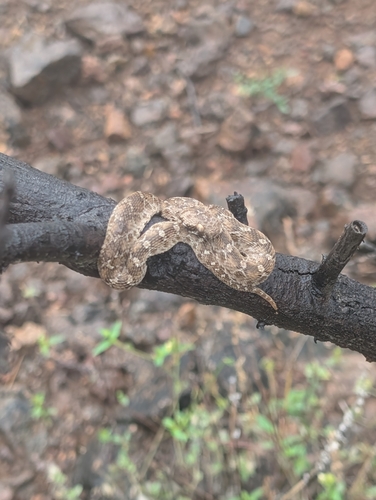
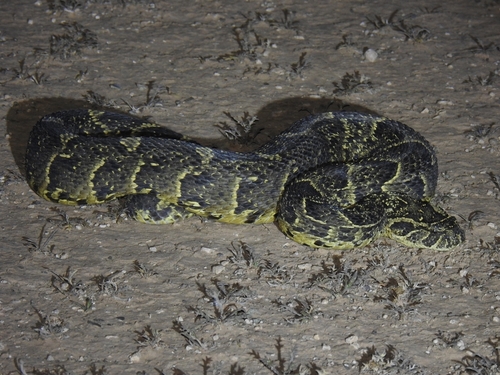
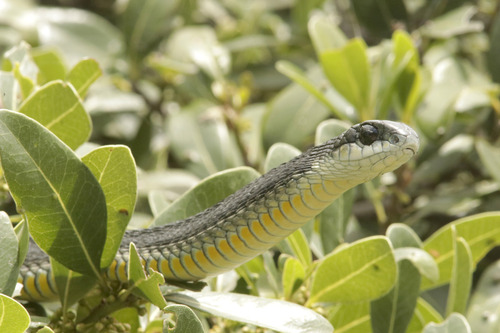
- Yes. 4 venomous snake species have verified records in Eritrea, including Egyptian Saw-scaled Viper, Puff Adder, Boomslang, Black Mamba. Most snakes in Eritrea, however, are harmless.
- How many snake species live in Eritrea?
- 10+ snake species have verified records in Eritrea, of which 4 are venomous.
- What is the most commonly seen snake in Eritrea?
- The Egyptian Saw-scaled Viper is the most frequently reported snake in Eritrea, based on verified wildlife observations.
- What should I do if I see a venomous snake in Eritrea?
- Keep your distance and do not try to catch or kill it. Most bites happen when people handle or corner a snake. If someone is bitten, contact local emergency services or poison control immediately.
Venomous snakes in Eritrea
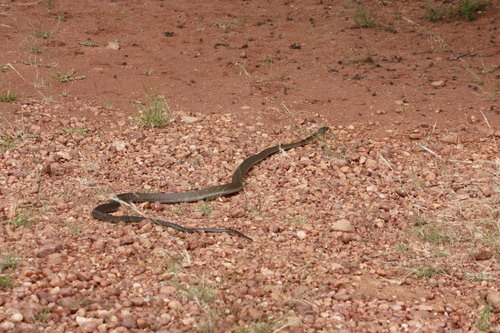
Every snake recorded in Eritrea
10+ species across 8 families, grouped by family. Venomous flagged.
Colubridae (4)
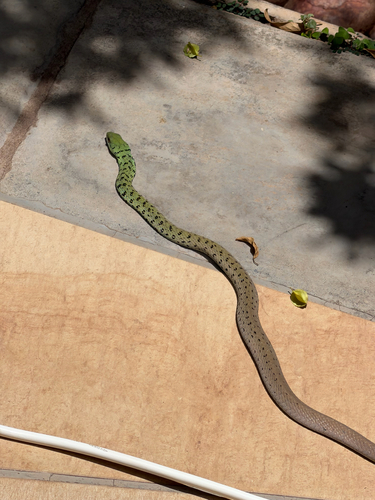
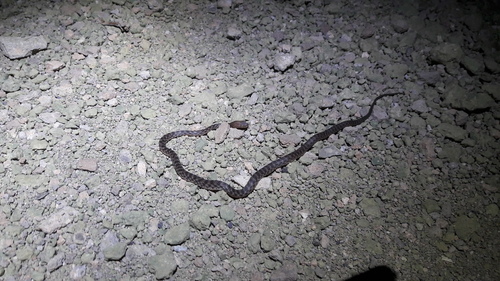
Psammophiidae (3)
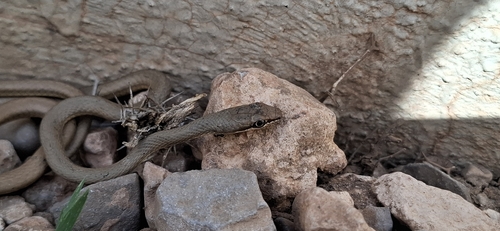
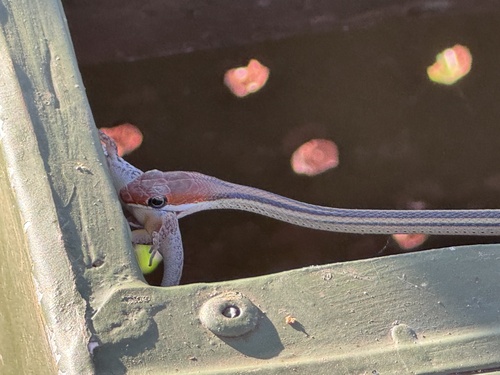
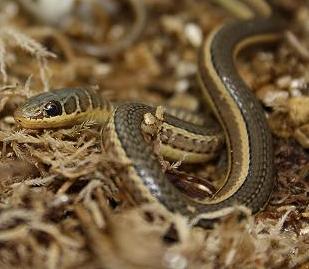
Typhlopidae (2)
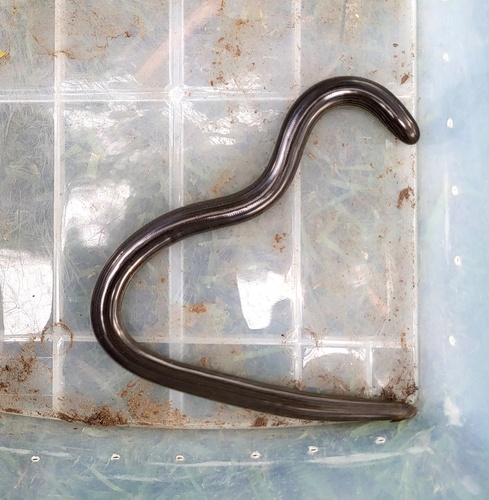
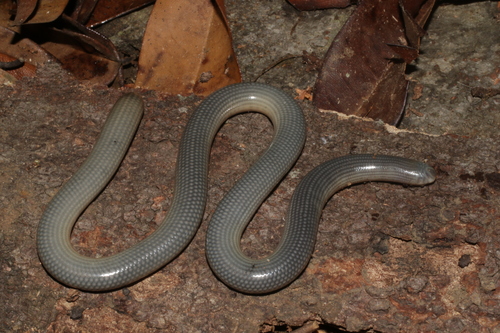
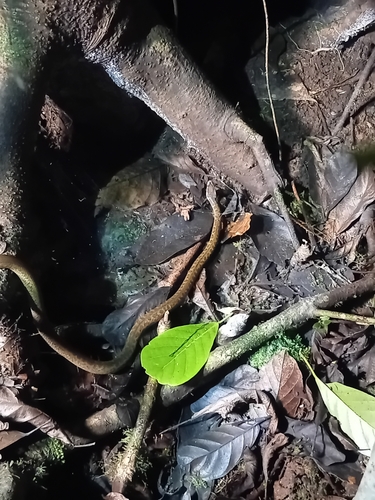
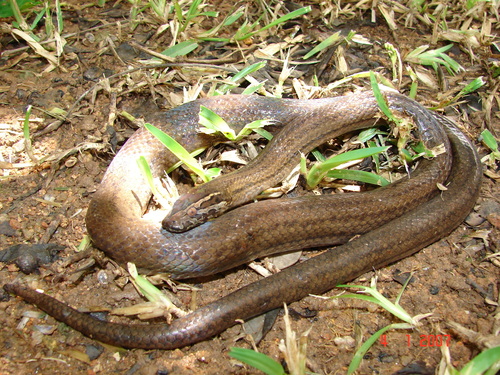
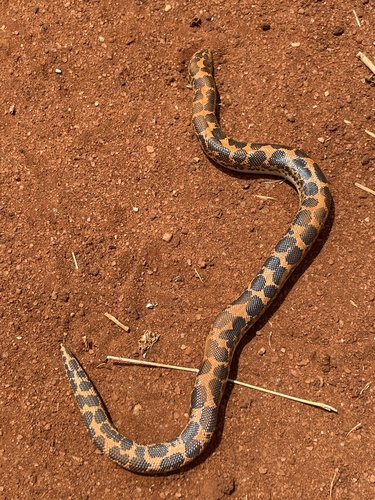
Leptotyphlopidae (1)
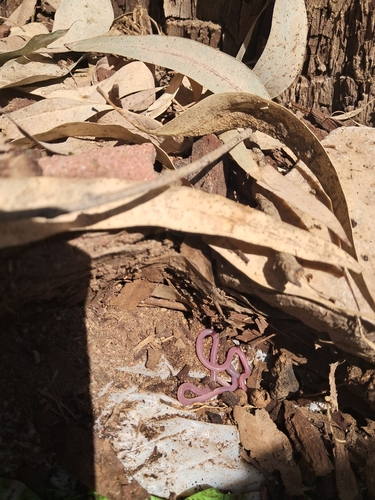
Elapidae (1)
Compiled from verified GBIF & iNaturalist observations. "How often seen" reflects how frequently a snake is reported here, not how dangerous it is. Informational only.
Keep learning
- Are Snakes Dangerous? The Real Risk, in PerspectiveMost snakes are harmless and avoid people. Here is the honest picture of snakebite risk worldwide and how to lower your own.
- Snakebite First Aid: What to Do (and What Never to Do)A clear, CDC-based guide to snakebite first aid: the steps that help, the popular myths that hurt, and how to tell a serious bite from a minor one.
- Venomous vs Nonvenomous: How to Tell the DifferenceThe folk rules for telling venomous snakes apart, where each one fails, and why location-based identification beats guessing by sight.
- What to Do If You Find a SnakeFound a snake at home or on a trail? Here is how to stay calm, give it space, identify it safely, and know when to call a professional.