
Genus · Viperidae
Types of vipers
10 species make up the genus Echis, the snakes commonly called vipers. All of them are venomous.
About saw-scaled vipers
Small Old World vipers, rarely more than half a meter long, yet thought to cause more human deaths than any other group of snakes on Earth.
Echis, the saw-scaled or carpet vipers, are small members of the family Viperidae found across the dry country of Africa, the Middle East, and South Asia. Most are short and stocky, rarely exceeding half a meter in length. Their patterning is cryptic, a mottled blend of browns, greys, and pale arcs that disappears against sand, scrub, and stony ground. That small size and quiet camouflage are exactly what make them so dangerous: they are easy to miss and easy to step on.
Despite their modest dimensions, saw-scaled vipers are believed to cause more human deaths than any other group of snakes. The reason is not that one bite is uniquely lethal but that everything else lines up against people. The snakes are abundant, well hidden, quick tempered, and live throughout densely populated farming regions where many people walk and work barefoot and where access to the correct antivenom and hospital care is often limited. Sheer overlap with human life, more than any single trait, drives the death toll.
Their name comes from a distinctive warning behavior. When threatened, an Echis coils into a series of C-shaped loops and rubs the serrated, strongly keeled scales along its sides against one another. This produces a dry rasping or sizzling sound, a little like sandpaper or frying fat. The sound is loud, deliberate, and a reliable field clue: a small viper that hisses by scraping its own scales together rather than by breathing is very likely a saw-scaled viper. The behavior gives the group both its common and scientific names.
Ecologically these snakes are built for hot, arid life. They are largely nocturnal during the heat of the year, sheltering by day and emerging at night to hunt across savanna, scrub, and desert. They take a broad menu of small vertebrates and invertebrates, including rodents, lizards, frogs, and arthropods such as scorpions and centipedes. They are fast to strike and quick to defend themselves, which is part of why encounters so often end in a bite. The genus ranges widely, with species spread from West Africa eastward across the Middle East to the Indian subcontinent.
The venom of Echis is potent and works largely on the blood, disrupting normal clotting and causing severe, sometimes prolonged bleeding that can be fatal without treatment. A bite is a major medical emergency. Because venom composition varies across the wide range of the genus, effective treatment depends on the correct region-specific antivenom delivered in a hospital. No wild venomous snake should be handled or approached, and a suspected saw-scaled viper bite calls for immediate emergency medical care rather than any home remedy.
Echis belongs to the Viperidae family (Vipers & pit vipers). Heavy-bodied venomous snakes with long, hinged, hollow fangs. Broad, triangular head distinct from a narrow neck, heavy body, and (usually) vertical, cat-like pupils. Pit vipers also have a heat-sensing pit; true vipers do not.
Danger: Every viper is venomous, and the family includes some of the world's most medically important snakes. Venom is typically hemotoxic, causing pain, swelling, tissue damage, and bleeding. Treat any viper bite as a medical emergency.
All species (10)
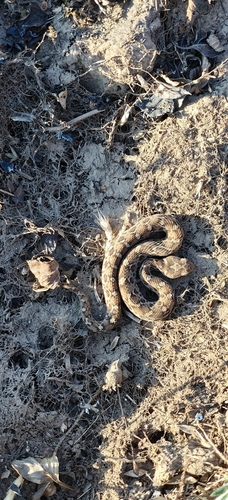 Saw-scaled ViperEchis carinatusVenomous
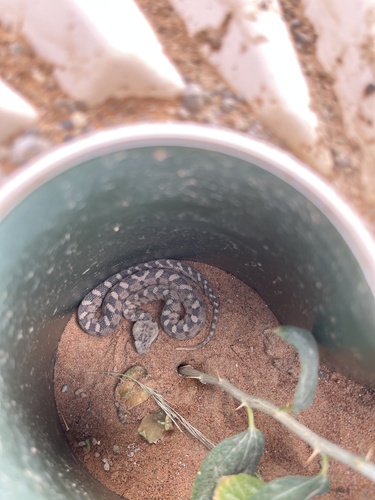 Oman Saw-scaled ViperEchis omanensisVenomous
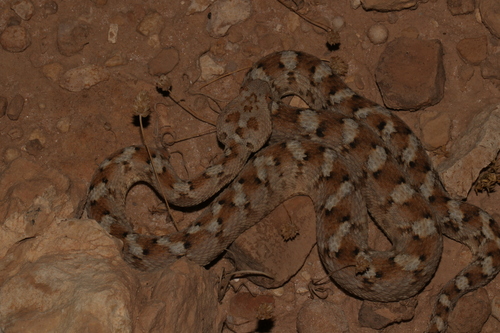 Palestine Saw-scaled ViperEchis coloratusVenomous
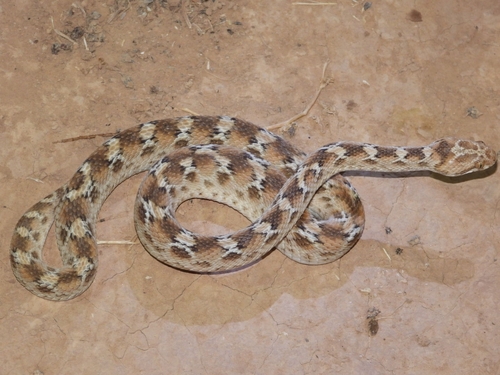 Roman's Saw-scaled ViperEchis leucogasterVenomous
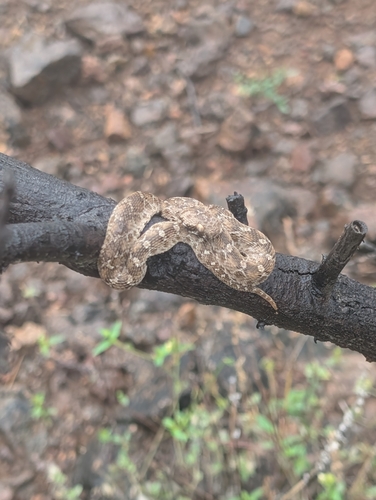 Egyptian Saw-scaled ViperEchis pyramidumVenomous
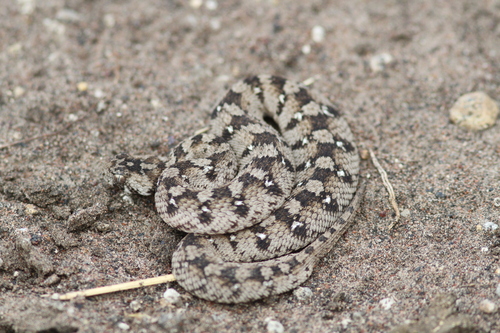 African Saw-scaled ViperEchis ocellatusVenomous
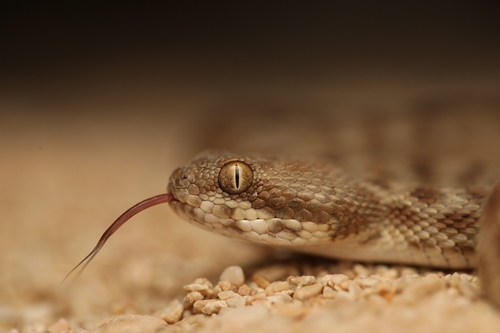 Khosatzki's Saw-scaled ViperEchis khosatzkiiVenomous
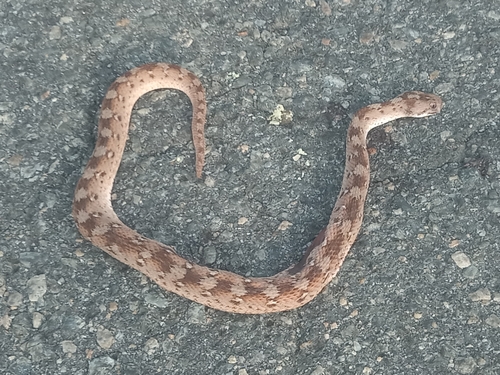 Roman's Carpet ViperEchis romaniVenomous
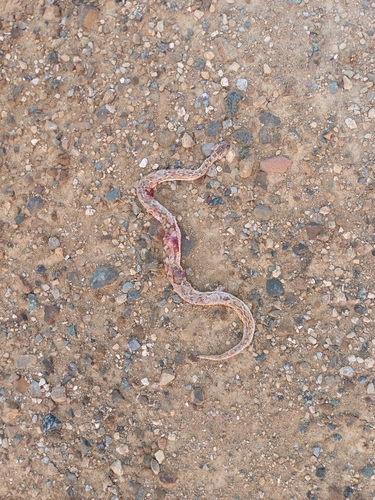 Borkin's Carpet ViperEchis borkiniVenomous
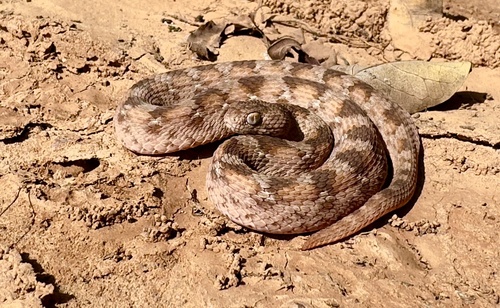 Joger's Saw-scaled ViperEchis jogeriVenomous
Keep learning
- Venomous vs Nonvenomous: How to Tell the DifferenceThe folk rules for telling venomous snakes apart, where each one fails, and why location-based identification beats guessing by sight.
- Are Snakes Dangerous? The Real Risk, in PerspectiveMost snakes are harmless and avoid people. Here is the honest picture of snakebite risk worldwide and how to lower your own.
- Snake Venom Explained: How It Works and WhyWhat snake venom actually is, why it evolved, the main venom types, fang delivery, how antivenom works, and why ranking the most venomous snake is hard.
- How Snakes Move, Hunt, and EatHow snakes move without legs, hunt as ambushers or active foragers, kill by constriction or venom, and swallow prey wider than their head.