
Viperidae
Roman's Saw-scaled Viper
VenomousEchis leucogaster
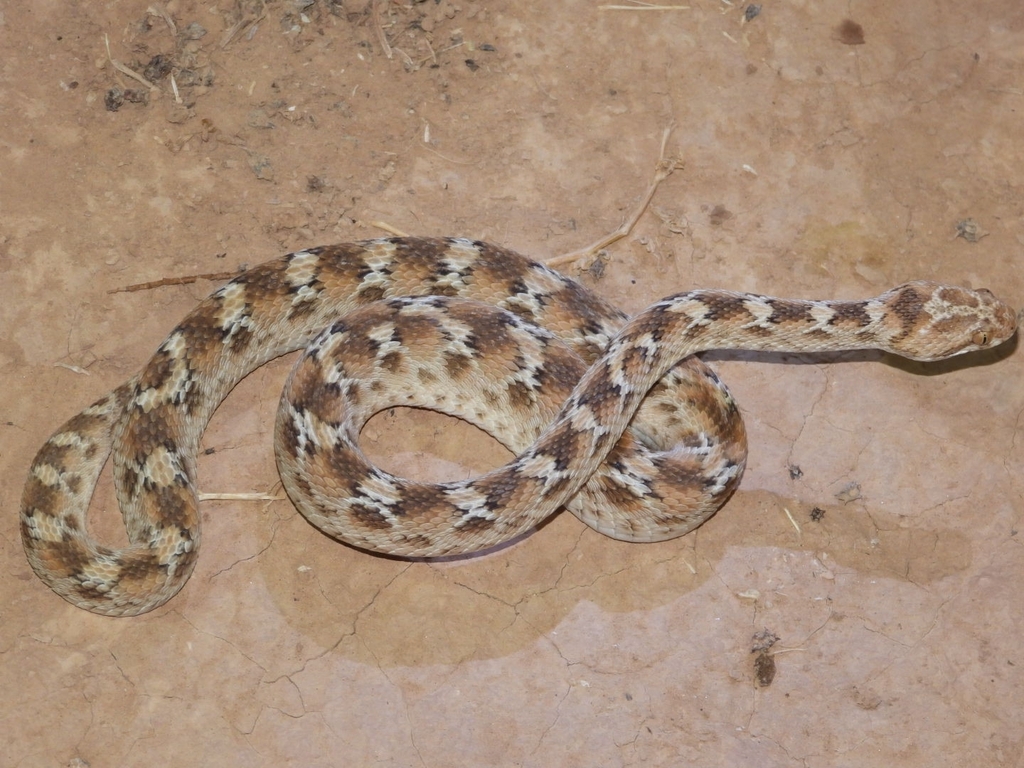
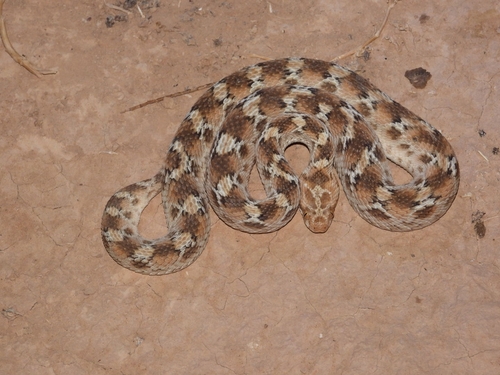
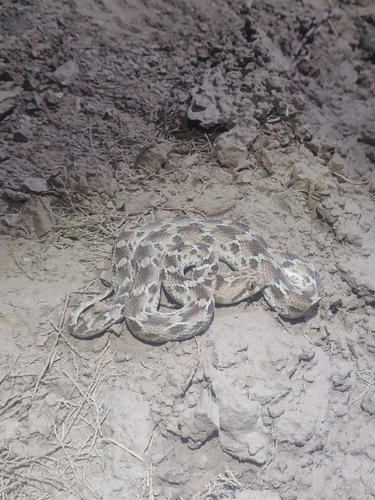
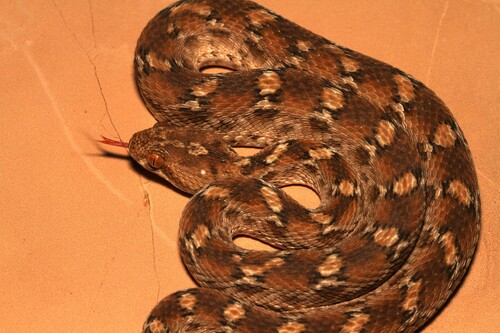
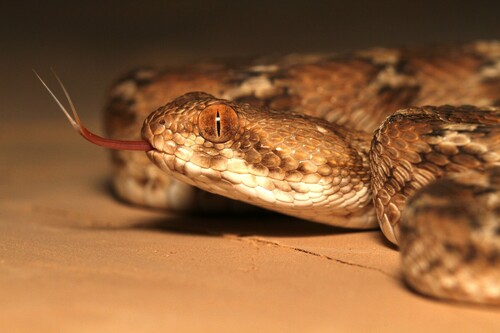
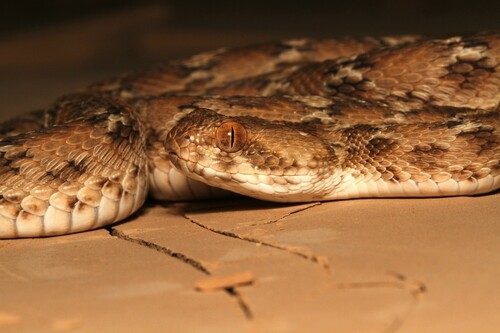
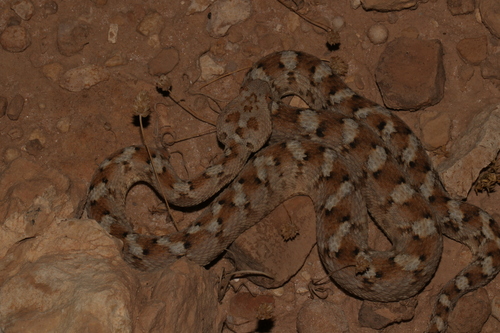
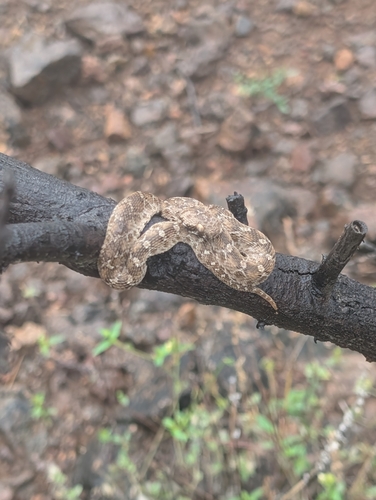
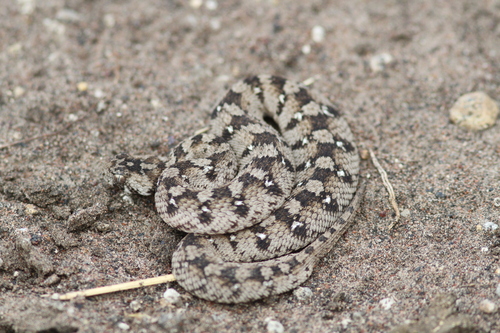
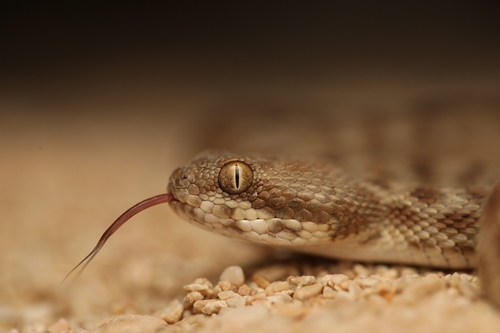
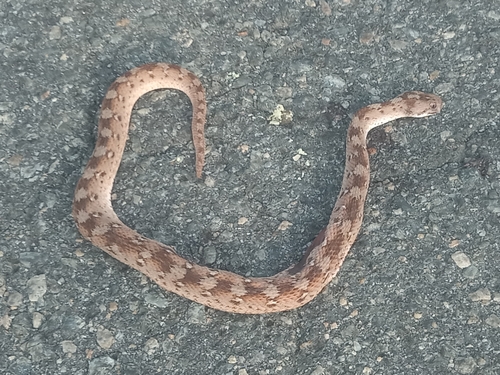
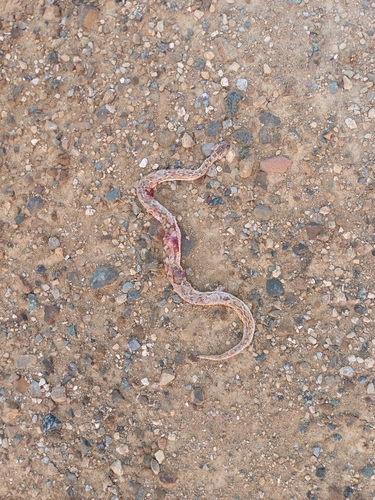
6 photographs of the Roman's Saw-scaled Viper. © Sara Navarro.
The Roman's Saw-scaled Viper (Echis leucogaster) is a venomous snake in the Viperidae family, recorded in 11 countries.
If you are bitten
This is a venomous snake. Treat any bite as a medical emergency: stay calm, keep the bitten limb still and roughly level with the heart, remove rings and tight clothing, and get to emergency care immediately. Do not apply a tourniquet, cut the wound, apply ice, or try to suck out venom. Call your local emergency number or poison center.
- Family
- Viperidae
- Danger
- high
About the Roman's Saw-scaled Viper
Echis leucogaster, also known as the white-bellied carpet viper or the Roman's saw-scaled viper, is a viper species endemic to West and Northwest Africa. Its scientific name derives from its white (leuco-), unmarked belly (gaster). like all other vipers, it is venomous. No subspecies are currently recognized.
Description
It grows to an average total length (body + tail) of 30–70 cm (12–28 in), with a maximum total length of 87 cm (34 in). The scalation of the head is similar to E. carinatus. The body is rather stout, the cross-section of which is circular or subtriangular. The dorsal scales are rough and heavily keeled. At midbody, there are 27-33 rows of dorsal scales. The ventral scales number 165-180.
Coloration and pattern are both variable. Color ranges from brown to gray to reddish and everything in between. Pattern generally consists of a series of light, oblique, dorsal crossbars or saddles set against a darker ground color. The flanks are lighter in color, normally with a series of triangular, subtriangular, or circular, dark markings with light or white edges. The belly is an unbroken pale cream, white, or ivory.
Geographic range
In West Africa it is found in northern Nigeria, western Niger, Burkina Faso, central Mali, northern Guinea, and Senegal. In Northwest Africa it is found in southern Mauritania, Western Sahara, Algeria (Ahaggar), and in the south of Morocco.
Roman (1975) described the type locality as "Boubon, à 20 km au Nord de Niamey, Niger".
According to Golay et al. (1993), the range includes Nigeria, Niger, Upper Volta, southern Algeria and Mauritania.
Spawls and Branch (1995) describe the range as extending from the southern half of Mauritania, Senegal and northern Guinea, through central Mali to northern Burkina Faso and western Niger. However, they are not sure whether or not the specimens from southern Morocco and the Ahaggar are connected to the main population. They also regard some of the specimens from Senegal and northern Mali as problematic.
Habitat
Not a true desert animal, it is found along edges of deserts. It is associated with arid savannah, semi-desert, Sahel, and well-vegetated dry river beds (wadis) and oases.
Diet
It eats a wide variety of prey, including invertebrates (especially scorpions and centipedes), small mammals and reptiles.
Reproduction
It is known to lay eggs. Hatchlings are 12–16 cm (4.7–6.3 in) in total length.
Adapted from Wikipedia, available under CC BY-SA.
Local and regional names
The Roman's Saw-scaled Viper is known by these names across the regions where it lives:
- Arabic
- Lafâa Assa
- Chinese
- 羅氏鋸鱗蝰
- Danish
- Hvidbuget Tæppehugorm
- English
- White-bellied Carpet Viper
- French
- Echide à Ventre Blanc
- German
- Maghreb-Sandrasselotter, Weißbauch-Sandrasselotter
- Russian
- Белобрюхая эфа
- Spanish
- Gariba o Víbora de Escamas Aserradas Norteafricana
Frequently asked: Roman's Saw-scaled Viper
- Is the Roman's Saw-scaled Viper venomous?
- Yes. The Roman's Saw-scaled Viper (Echis leucogaster) is venomous and belongs to the Viperidae family (viper). Its bite is considered high risk to people. Treat any bite as a medical emergency.
- Is the Roman's Saw-scaled Viper poisonous?
- Snakes are venomous, not poisonous. "Poisonous" means harmful to eat or touch; "venomous" means injecting toxins through a bite. The Roman's Saw-scaled Viper is venomous, delivering venom through a bite.
- Is the Roman's Saw-scaled Viper dangerous?
- This is a venomous snake. Treat any bite as a medical emergency: stay calm, keep the bitten limb still and roughly level with the heart, remove rings and tight clothing, and get to emergency care immediately. Do not apply a tourniquet, cut the wound, apply ice, or try to suck out venom. Call your local emergency number or poison center.
- Where does the Roman's Saw-scaled Viper live?
- The Roman's Saw-scaled Viper has verified records in 11 countries, including Mali, Morocco, Senegal. See the distribution section below for its full range.
- What does the Roman's Saw-scaled Viper eat?
- It eats a wide variety of prey, including invertebrates (especially scorpions and centipedes), small mammals and reptiles.
If you are bitten by the Roman's Saw-scaled Viper
Do
- Get away from the snake and stay calm. Most bites worsen when people panic or try again to handle the snake.
- Call 911 or Poison Control (1-800-222-1222) right away. Antivenom works best when given early.
- Note the time of the bite and, from a safe distance, the snake's color and pattern, a phone photo is enough. Do not chase it.
- Keep the bitten limb still and at roughly heart level. Sit or lie down and limit movement.
- Remove rings, watches, and tight clothing near the bite before swelling starts.
- Gently wash the bite with soap and water and cover it with a clean, dry dressing.
Do not
- Do not cut the wound or try to suck out the venom.
- Do not apply a tourniquet or ice.
- Do not drink alcohol or caffeine.
- Do not take aspirin or ibuprofen, they can worsen bleeding. Acetaminophen is safer for pain.
- Do not try to catch or kill the snake. A dead snake can still bite by reflex.
First-aid guidance adapted from the U.S. Centers for Disease Control and Prevention (CDC NIOSH), Venomous Snakes. Educational only; always follow the instructions of emergency responders.
Where it is found
More Viperidae snakes
Classification
How scientists group this snake, from the broadest category down to the exact species. Each step narrows to its closest relatives.
Keep learning
- Are Snakes Dangerous? The Real Risk, in PerspectiveMost snakes are harmless and avoid people. Here is the honest picture of snakebite risk worldwide and how to lower your own.
- Snakebite First Aid: What to Do (and What Never to Do)A clear, CDC-based guide to snakebite first aid: the steps that help, the popular myths that hurt, and how to tell a serious bite from a minor one.
- Venomous vs Nonvenomous: How to Tell the DifferenceThe folk rules for telling venomous snakes apart, where each one fails, and why location-based identification beats guessing by sight.
- What to Do If You Find a SnakeFound a snake at home or on a trail? Here is how to stay calm, give it space, identify it safely, and know when to call a professional.
Distribution from GBIF & iNaturalist. Venom status per CDC. Background: Wikipedia. Informational only. Never handle a snake to identify it.