
Colubridae
Viperine Snake
HarmlessNatrix maura
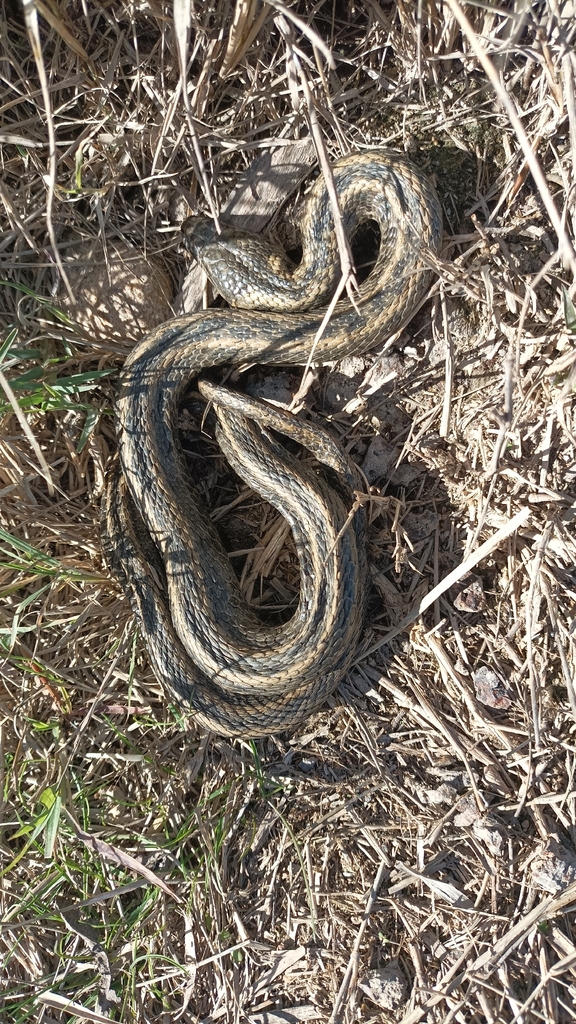
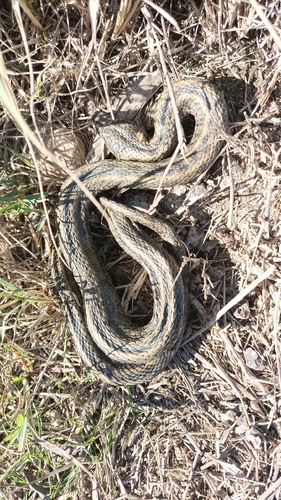
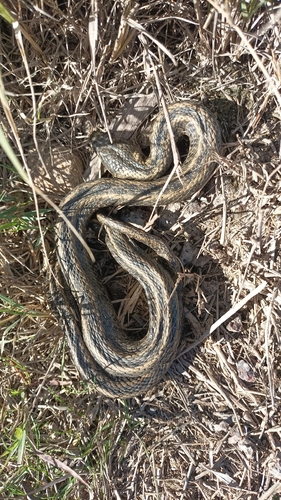
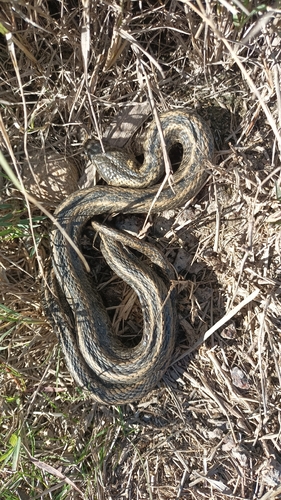
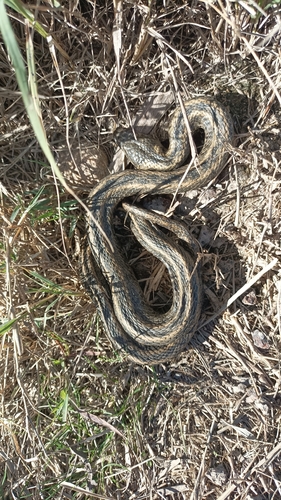
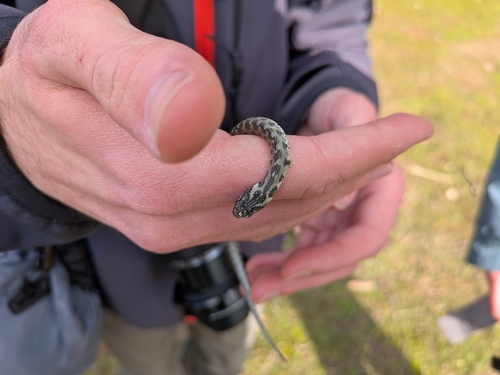
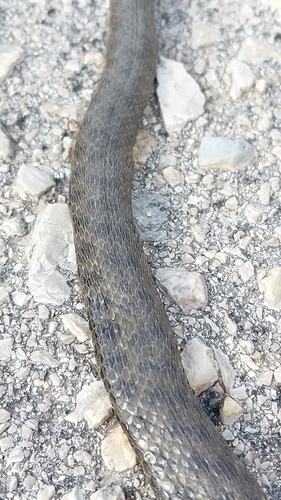
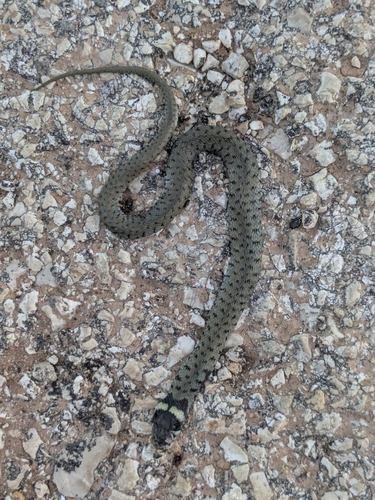
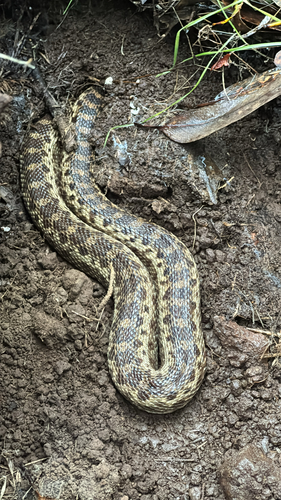
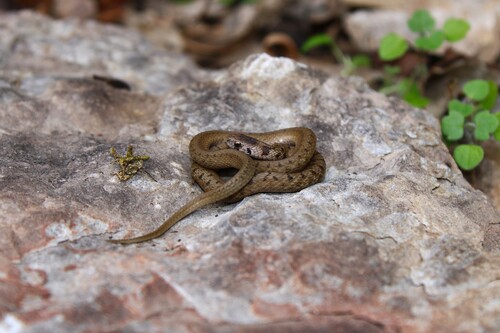
6 photographs of the Viperine Snake. © Manuel Herrero.
The Viperine Snake (Natrix maura) is a non-venomous snake in the Colubridae family, recorded in 23 countries.
- Family
- Colubridae
About the Viperine Snake
The viperine water snake or viperine snake (Natrix maura) is a semiaquatic, fish-eating natricine water snake. Despite its common names, it is not a member of the subfamily Viperinae. It was given its common names due to exhibiting a dorsal colour pattern that superficially resembles that of sympatric adder species. In comparison to other Natrix species its head is also somewhat wider and more distinct from the neck. Like most members of the Natricinae it possesses a venom gland on each side of the upper jaw (Duvernoy's gland) that produces a mild venom that may play a role in swallowing or digestion. The gland is not associated with an enlarged specialized tooth and the venom has to be applied by chewing. The species usually does not bite as a means of defense, and the effect of a bite would be harmless to humans.
Behaviour
The viperine snake looks like an adder and occasionally behaves like one. It is known to strike like an adder, but not to bite. It spends most of its time in water hunting fish, frogs and other aquatic animals. The species is diurnal.
Fossil record
Fossils of the viperine snake are known from El Chaparral, a fossil site in Villaluenga del Rosario that dates back to the latter part of the Early Pleistocene.
Geographic range
The viperine snake is found in southwestern Europe and northwestern Africa. Specifically, N. maura is found in the European countries of Portugal, Spain, Andorra, France, northwestern Italy, and Switzerland. It has spread to areas of England, as well. It is found in African countries of Morocco, northern Algeria, northwestern Libya, and northern to central Tunisia. It was introduced to Mallorca in the Baleares (not indicated on the distribution map).
Description
N. maura is grey, brown, or reddish dorsally, with a black zigzag vertebral stripe, and lateral series of black ocelli with yellow centers. The labials are yellow with black sutures. It has a diagonal dark band on each temple, and another behind it on each side of the neck. Ventrally, it is yellow or red, checkered with black, or all black.
The strongly keeled dorsal scales are arranged in 21 rows. The ventrals are 147–160; the anal plate is divided; and the paired subcaudals number 47–72.
Adults may attain a total length of 85 cm (33 inches), with a tail 17 cm (7 inches) long.
Habitat
The viperine snake is found in rivers and lakes, and has also been recorded from areas of brackish water.
Invasion
The species is invasive on Mallorca. N. maura predates on Pelophylax perezi among other prey on Mallorca. Research by Moore et al. 2004 suggests trophic subsidy provided by P. perezi is maintaining higher numbers of the invader than would otherwise occur. N. maura has altered the behavior of Mallorcan prey. Moore et al. 2004 found that the higher numbers mentioned above are allowing the invader to exert such high pressure that prey species such as the Majorcan midwife toad (Alytes muletensis) have retreated entirely to habitats too steep for N. maura.
Adapted from Wikipedia, available under CC BY-SA.
Frequently asked: Viperine Snake
- Is the Viperine Snake venomous?
- No. The Viperine Snake (Natrix maura) is non-venomous and is not considered dangerous to humans. Like most snakes, it will retreat rather than bite when given the chance.
- Is the Viperine Snake poisonous?
- Snakes are venomous, not poisonous. "Poisonous" means harmful to eat or touch; "venomous" means injecting toxins through a bite. The Viperine Snake is neither poisonous nor venomous.
- Is the Viperine Snake dangerous?
- The Viperine Snake is not dangerous to humans. It has no medically significant venom and bites only defensively if cornered or handled.
- Where does the Viperine Snake live?
- The Viperine Snake has verified records in 23 countries, including France, Spain, Portugal. See the distribution section below for its full range.
Where it is found
More Colubridae snakes
Classification
How scientists group this snake, from the broadest category down to the exact species. Each step narrows to its closest relatives.
- OrderThe broad group of scaled reptiles: all snakes and lizards
- Squamata
- FamilyA group of related snakes that share key traits
- Colubridae
- GenusA close-knit group of very similar species
- Natrix
- SpeciesThis exact snake, named in the two-part scientific name
- Natrix maura
Keep learning
- What to Do If You Find a SnakeFound a snake at home or on a trail? Here is how to stay calm, give it space, identify it safely, and know when to call a professional.
- Venomous vs Nonvenomous: How to Tell the DifferenceThe folk rules for telling venomous snakes apart, where each one fails, and why location-based identification beats guessing by sight.
- What Is a Snake? Anatomy and the BasicsA clear overview of what makes a snake a snake: limbless body plan, anatomy, evolution from lizards, species diversity, and why they are ectothermic.
- How to Keep Snakes Out of Your Yard and HomeA practical guide to keeping snakes out of your yard and home using habitat changes that work, plus what to skip and what to do if one shows up.
Distribution from GBIF & iNaturalist. Venom status per CDC. Background: Wikipedia. Informational only. Never handle a snake to identify it.