
Colubridae
Barred Grass Snake
HarmlessNatrix helvetica
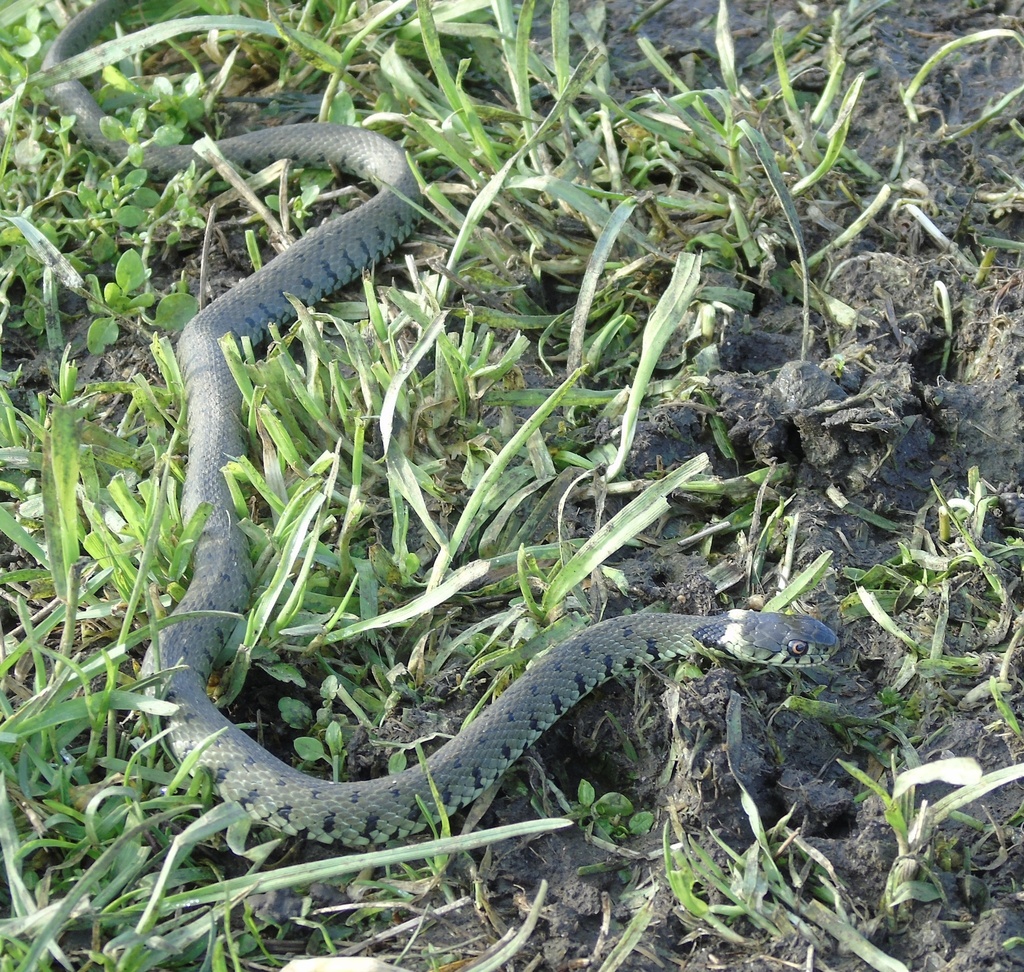
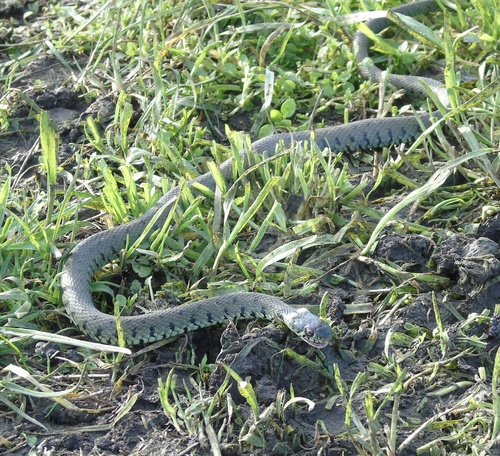
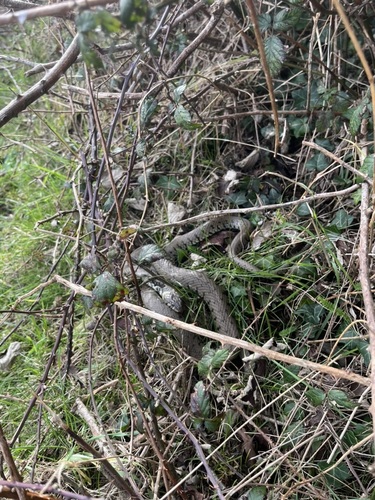
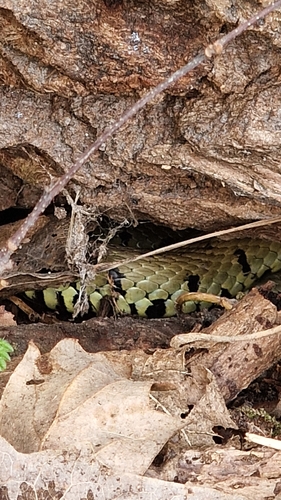
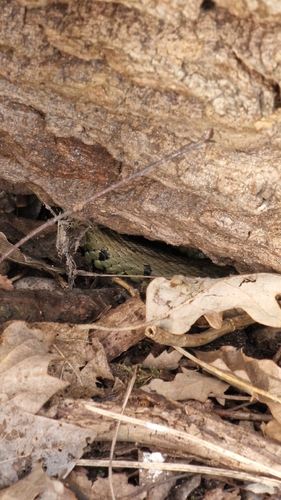
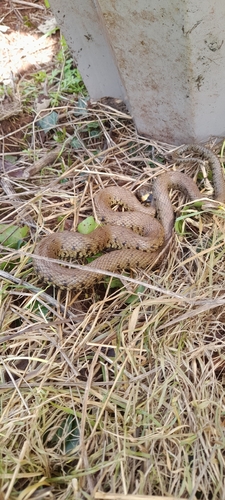
6 photographs of the Barred Grass Snake. © Garry Nobbs.
The Barred Grass Snake (Natrix helvetica) is a non-venomous snake in the Colubridae family, recorded in 23 countries.
- Family
- Colubridae
About the Barred Grass Snake
The barred grass snake (Natrix helvetica) is a non-venomous colubrid snake from Western Europe, typically living in and close to water. It was included within the grass snake species, Natrix natrix, until August 2017, when genetic analysis led to its reclassification as a separate species.
Subspecies
There are currently five subspecies of Natrix helvetica recognized (having been formerly classified as subspecies of N. natrix):
N. helvetica helvetica (syn. N. natrix helvetica) – most of range
N. helvetica cetti (syn. N. natrix cetti) – Sardinia
N. helvetica corsa (syn. N. natrix corsa) – Corsica
N. helvetica lanzai (syn. N. natrix lanzai) – mainland Italy, but not south
N. helvetica sicula (syn. N. natrix sicula) – Calabria and Sicily
Description
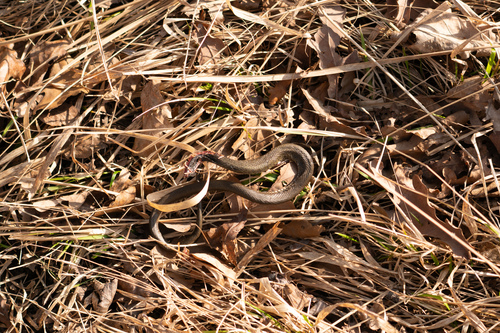
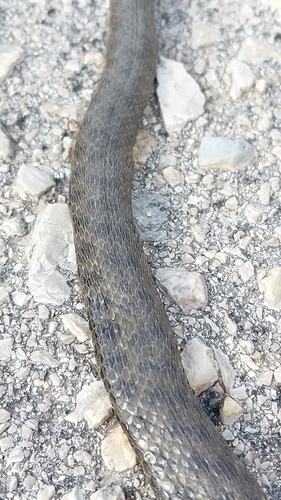
The barred grass snake has a dark grey-green upper body with distinctive black markings in the form of bars running along its sides. Its underside is pale. Like the grass snake, it has a distinctive yellow and black collar around its neck. It can grow to over a metre in length.
Distribution
The species is found in Great Britain as far north as southern Scotland, and in the Netherlands, western Germany, Switzerland, Italy and France. The nominate subspecies N. h. helvetica has the widest distribution: from Britain to the Pyrenees and the Rhine region.
Ecology
Feeding
Barred grass snakes are semi-aquatic and prey mainly on amphibians, especially common toads and common frogs; they also eat fish, some small land mammals and nestling birds, and may occasionally take ants and their larvae. Captive snakes have been observed accepting earthworms offered by hand, but they never take dead prey items. The snake actively searches for prey, often on the edges of the water, using its Jacobson's organ to detect smells and sights. They consume live prey without using constriction.
Hibernation
Barred grass snakes inhabit cooler climates such as those in northern Europe and Great Britain. They live near bodies of water and spend a significant portion of the year hibernating, typically throughout the coldest months. Hibernation periods can begin as early as October, when temperatures start to drop, and may last until April. They either seek shelter to protect themselves from harsh weather conditions or burrow underground to maintain a stable body temperature during hibernation.
Habitat
Barred grass snakes are strong swimmers and can be found near freshwater. However, there is evidence that individual snakes do not always require bodies of water throughout the entire season.
The preferred habitat appears to be open woodland and "edge" habitats, such as the edges of fields and woodlands. These areas offer adequate refuge while still affording ample opportunity for thermoregulation through basking. Pond edges are also favoured and the relatively high likelihood of observing this elusive species in such areas may explain why they are associated with ponds and water. Barred grass snakes also inhabit gardens and parks in their native range, as well as dry grasslands.
Adapted from Wikipedia, available under CC BY-SA.
Frequently asked: Barred Grass Snake
- Is the Barred Grass Snake venomous?
- No. The Barred Grass Snake (Natrix helvetica) is non-venomous and is not considered dangerous to humans. Like most snakes, it will retreat rather than bite when given the chance.
- Is the Barred Grass Snake poisonous?
- Snakes are venomous, not poisonous. "Poisonous" means harmful to eat or touch; "venomous" means injecting toxins through a bite. The Barred Grass Snake is neither poisonous nor venomous.
- Is the Barred Grass Snake dangerous?
- The Barred Grass Snake is not dangerous to humans. It has no medically significant venom and bites only defensively if cornered or handled.
- Where does the Barred Grass Snake live?
- The Barred Grass Snake has verified records in 23 countries, including Netherlands, France, United Kingdom of Great Britain and Northern Ireland. See the distribution section below for its full range.
- What does the Barred Grass Snake eat?
- Barred grass snakes are semi-aquatic and prey mainly on amphibians, especially common toads and common frogs; they also eat fish, some small land mammals and nestling birds, and may occasionally take ants and their larvae. Captive snakes have been observed accepting earthworms offered by hand, but they never take dead prey items. The snake actively searches for prey, often on the edges of the water, using its Jacobson's organ to detect smells and sights. They consume live prey without using constriction.
Where it is found
More Colubridae snakes
Classification
How scientists group this snake, from the broadest category down to the exact species. Each step narrows to its closest relatives.
- OrderThe broad group of scaled reptiles: all snakes and lizards
- Squamata
- FamilyA group of related snakes that share key traits
- Colubridae
- GenusA close-knit group of very similar species
- Natrix
- SpeciesThis exact snake, named in the two-part scientific name
- Natrix helvetica
Keep learning
- What to Do If You Find a SnakeFound a snake at home or on a trail? Here is how to stay calm, give it space, identify it safely, and know when to call a professional.
- Venomous vs Nonvenomous: How to Tell the DifferenceThe folk rules for telling venomous snakes apart, where each one fails, and why location-based identification beats guessing by sight.
- What Is a Snake? Anatomy and the BasicsA clear overview of what makes a snake a snake: limbless body plan, anatomy, evolution from lizards, species diversity, and why they are ectothermic.
- How to Keep Snakes Out of Your Yard and HomeA practical guide to keeping snakes out of your yard and home using habitat changes that work, plus what to skip and what to do if one shows up.
Distribution from GBIF & iNaturalist. Venom status per CDC. Background: Wikipedia. Informational only. Never handle a snake to identify it.