
Gibraltar
Snakes in Gibraltar
6 snake species have been recorded in Gibraltar, and none are venomous.
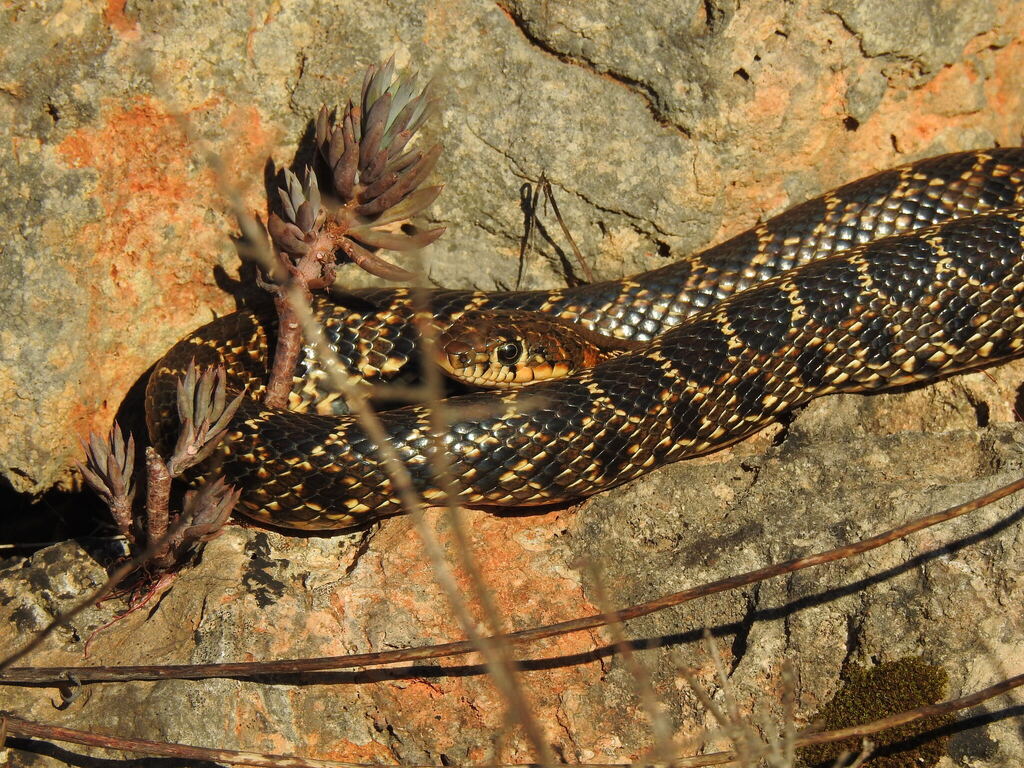
Snakes of Gibraltar
Gibraltar is a tiny British Overseas Territory on the southern tip of the Iberian Peninsula, dominated by the limestone mass of the Rock and bordered by the Mediterranean and the narrow strait that separates Europe from Africa. Its land area is small, but the terrain is varied: sunbaked rock faces and scree, scrubby Mediterranean maquis, garden and urban margins, and the upper slopes of the nature reserve. This mix of warm, dry, rocky habitat suits reptiles well, and the snakes found here are species shared with the surrounding Andalusian region of mainland Spain rather than a distinct island fauna. Our database records 6 snake species for Gibraltar, and none of them are recorded as venomous in a medically significant sense.
Gibraltar has no dangerously venomous snakes. The vipers that pose a medical risk on the wider Iberian mainland are not part of the established snake fauna recorded here, so a person on the Rock is realistically not going to meet a snake capable of a serious envenomation. The colubrid snakes present do include rear-fanged species whose mild venom is used to subdue small prey such as lizards, but these snakes are not considered a threat to people and are not classed as venomous in the medical sense used for vipers. In short, this is a place where the snake risk to humans is very low.
The harmless majority is the whole story here, and it is made up of typical western Mediterranean colubrids. These are agile, day-active snakes adapted to warm rocky ground, hunting lizards, small mammals, insects, and other prey. Some are slender and fast-moving whip snakes that vanish into rock crevices when disturbed; others are stouter, patterned ground snakes that prefer cover and cooler, damper corners. They range from small species barely longer than a hand span to larger snakes that can exceed a meter, and most are shy and quick to retreat rather than confront anything as large as a person.
Snakes are a working part of Gibraltar's ecology. As mid-level predators they keep populations of lizards, rodents, and large insects in check, and in turn they feed birds of prey and other larger animals. On a small, rocky territory with limited space, this predator role helps keep the food web balanced, and the presence of healthy snake populations is a sign that the scrub and rock habitats are functioning. Losing them would let prey species swing out of balance.
On safety, the honest picture is reassuring: the species recorded here are not a medical danger, and Gibraltar lacks the venomous vipers of the mainland that would be the main concern elsewhere in the region. Even so, no wild snake should ever be picked up or handled, because identification in the field is easy to get wrong and any snake can bite when cornered. If a bite happens, or if you are ever unsure about an envenomation, the correct response is professional medical care: go to a hospital or call emergency services, and in the United States contact Poison Control at 1-800-222-1222. Hospital assessment and, where needed, antivenom are the treatment, not field remedies.
Snakes in Gibraltar: FAQ
- Are there venomous snakes in Gibraltar?
- No venomous snakes have verified records in Gibraltar. Every snake recorded here is harmless to humans, though any snake may bite defensively if handled.
- How many snake species live in Gibraltar?
- 6 snake species have verified records in Gibraltar.
- What is the most commonly seen snake in Gibraltar?
- The Horseshoe Whip Snake is the most frequently reported snake in Gibraltar, based on verified wildlife observations.
Every snake recorded in Gibraltar
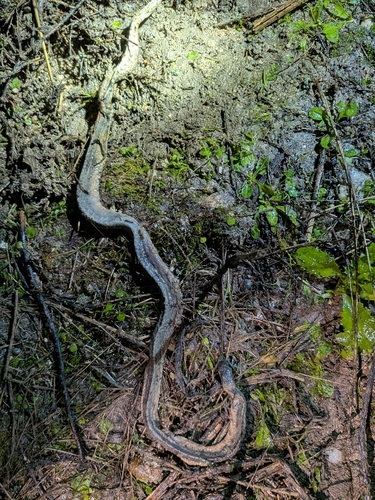
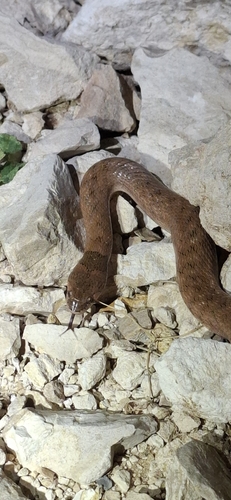
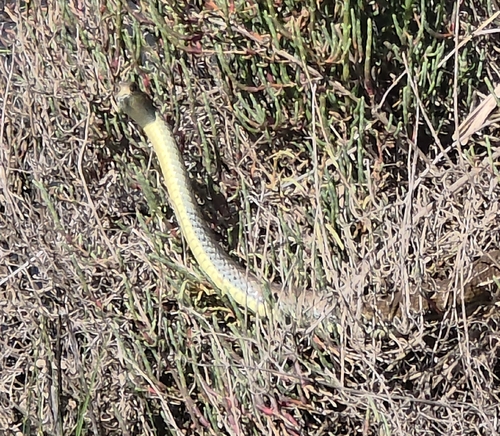
6 species across 2 families, grouped by family. Venomous flagged.
Colubridae (5)
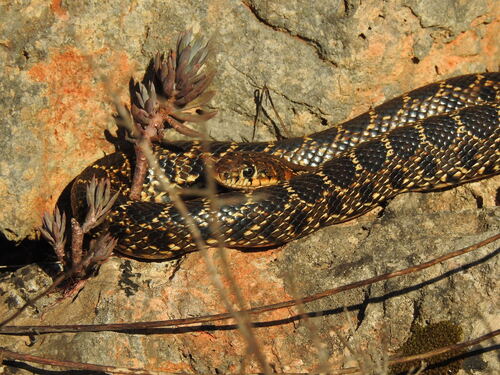
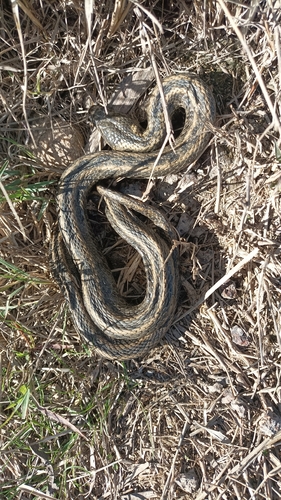
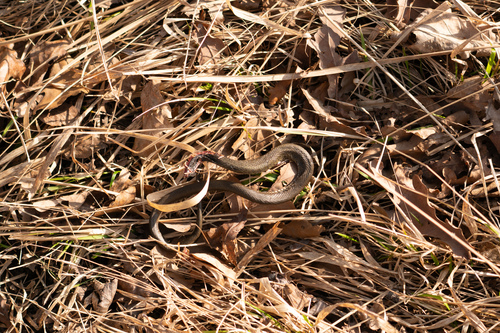
Psammophiidae (1)
Compiled from verified GBIF & iNaturalist observations. "How often seen" reflects how frequently a snake is reported here, not how dangerous it is. Informational only.
Keep learning
- What Is a Snake? Anatomy and the BasicsA clear overview of what makes a snake a snake: limbless body plan, anatomy, evolution from lizards, species diversity, and why they are ectothermic.
- What to Do If You Find a SnakeFound a snake at home or on a trail? Here is how to stay calm, give it space, identify it safely, and know when to call a professional.
- How to Keep Snakes Out of Your Yard and HomeA practical guide to keeping snakes out of your yard and home using habitat changes that work, plus what to skip and what to do if one shows up.
- Are Snakes Dangerous? The Real Risk, in PerspectiveMost snakes are harmless and avoid people. Here is the honest picture of snakebite risk worldwide and how to lower your own.