
Genus · Colubridae
Types of grass snakes
5 species make up the genus Natrix, the snakes commonly called grass snakes. None are considered dangerous to humans.
About European water snakes
Natrix is the genus of European and western Asian water snakes, semi-aquatic colubrids that hunt near ponds and rivers and pose no danger to people.
Natrix is a genus of nonvenomous snakes in the family Colubridae, the large and varied family that holds most of the world's living snakes. Its members are commonly called water snakes or grass snakes, and they are among the most familiar serpents across Europe, North Africa, and western and central Asia. Several species in our database fall under this genus, including the Grass Snake, the Barred Grass Snake, the Tessellated Water Snake, and the Viperine Snake. As a group, Natrix snakes are defined by their strong tie to water, their keeled scales that give the body a rough, matte texture, and their habit of foraging in and around wetlands.
These snakes live near water and depend on it. Typical habitat is the margin of ponds, lakes, slow rivers, marshes, ditches, and damp meadows, where amphibians and fish are abundant. The Grass Snake ranges widely across Europe and into parts of Asia and is often found in gardens, woodland edges, and compost heaps where it lays eggs in warm, rotting vegetation. The Tessellated and Viperine snakes are more strongly aquatic and are regularly seen swimming and diving. Members of the genus are excellent swimmers and rarely stray far from a water source.
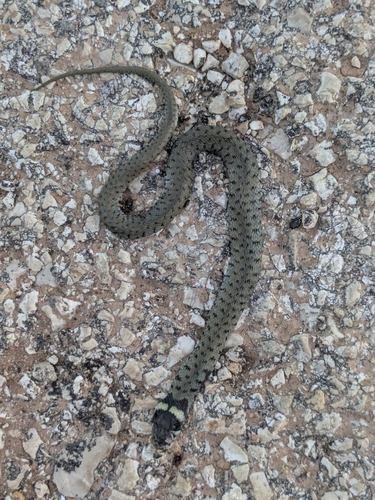
In general terms, Natrix snakes are slender to medium bodied with a fairly distinct head and round pupils. Coloration is muted, usually shades of olive, gray, brown, or greenish, marked with dark bars, spots, or a checkerboard pattern that breaks up the outline against pondside vegetation. The Grass Snake is well known for a pale yellow or orange collar behind the head, while the Viperine Snake earns its name from a zigzag dorsal pattern and triangular head shape that mimic a true viper, even though it is harmless. The keeled scales are a reliable shared trait across the genus.
Natrix snakes are nonvenomous and harmless to humans. They are not dangerous and possess no venom that affects people. When cornered they rely on bluff and odor rather than a meaningful bite: a threatened animal may flatten its head, hiss, strike with a closed mouth, or release a foul smelling musk from glands near the tail. The Grass Snake is famous for feigning death, going limp with its mouth open and tongue out. As with any wild animal, the responsible choice is to observe and not handle it, both for your sake and the snake's. If anyone is ever bitten by a snake they cannot confidently identify, treat it as a medical matter and contact emergency services or US Poison Control at 1-800-222-1222.
Ecologically, Natrix snakes are important predators of amphibians and fish. Their diet centers on frogs, toads, newts, tadpoles, and small fish, with the more aquatic species taking a larger share of fish. Unlike many colubrids, members of this genus are typically egg layers, depositing clutches in warm, decaying organic matter that incubates the eggs. They are active by day in mild weather, bask to regulate body temperature, and overwinter in sheltered burrows or crevices through cold months. As both predator and prey, they are a healthy sign of functioning wetland ecosystems.
Natrix belongs to the Colubridae family (Colubrids). The largest snake family, and the one most snakes you meet belong to. Typically round pupils, a head only slightly wider than the neck, and no heat-sensing facial pit or rattle. Scales may be smooth and glossy or keeled and matte depending on the species.
Danger: Almost all colubrids are harmless. A small number are rear-fanged with medically significant venom, the boomslang and the twig (vine) snakes of Africa being the dangerous exceptions. Most colubrids will flee or bluff rather than bite.
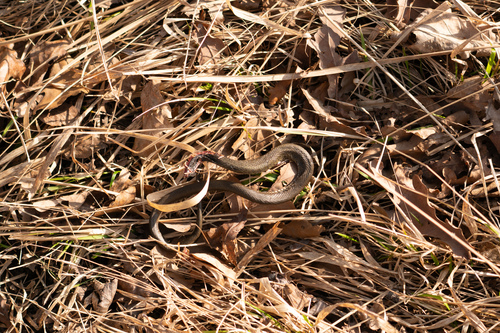
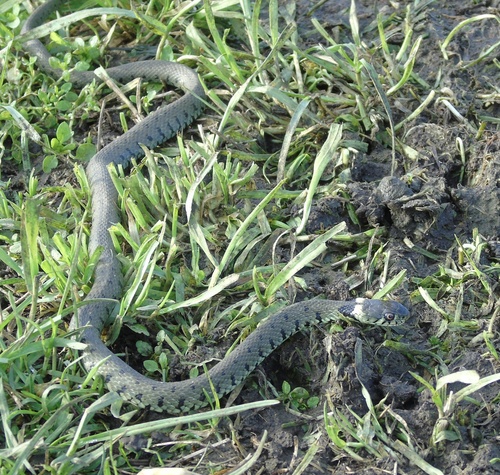
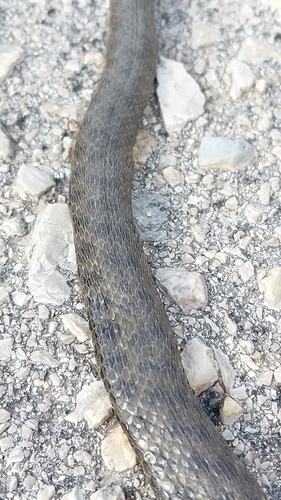
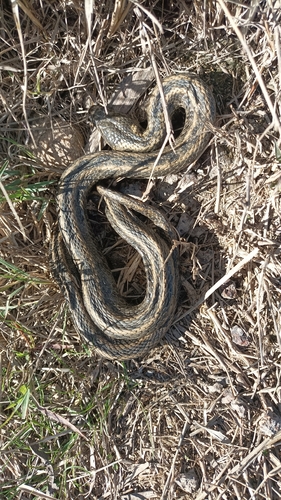
All species (5)
Keep learning
- What Is a Snake? Anatomy and the BasicsA clear overview of what makes a snake a snake: limbless body plan, anatomy, evolution from lizards, species diversity, and why they are ectothermic.
- How Snakes Move, Hunt, and EatHow snakes move without legs, hunt as ambushers or active foragers, kill by constriction or venom, and swallow prey wider than their head.
- What Do Snakes Eat?All snakes are carnivores. Learn what snakes eat, how diet changes with size and age, how often they feed, and how they hunt and swallow prey.
- Venomous vs Nonvenomous: How to Tell the DifferenceThe folk rules for telling venomous snakes apart, where each one fails, and why location-based identification beats guessing by sight.