
Viperidae
Common Lancehead
VenomousBothrops atrox
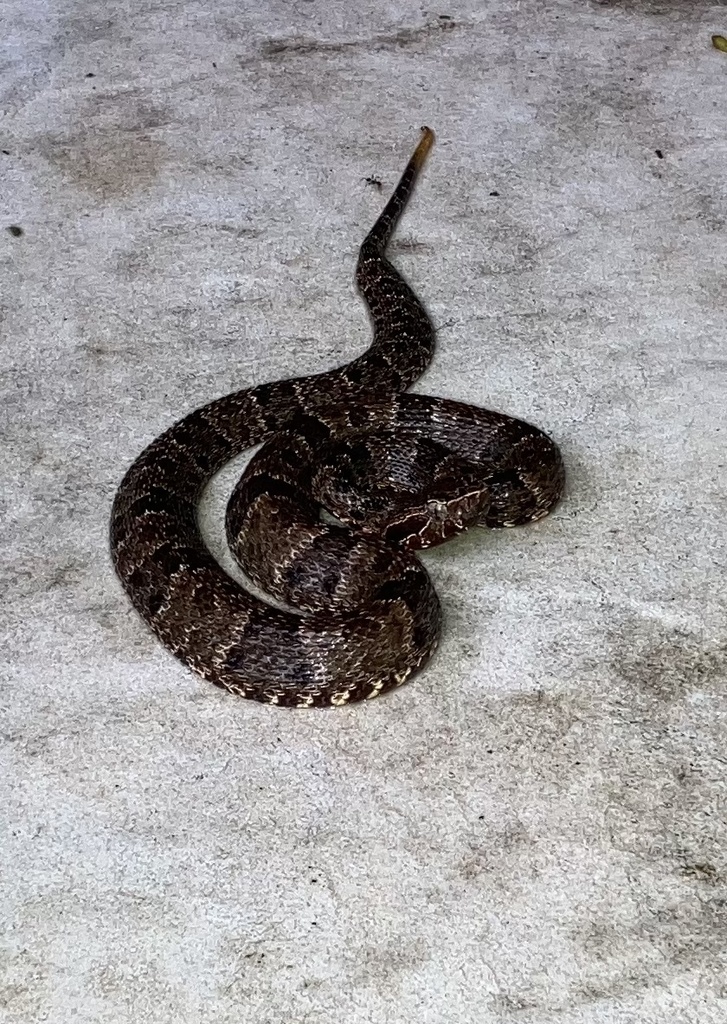
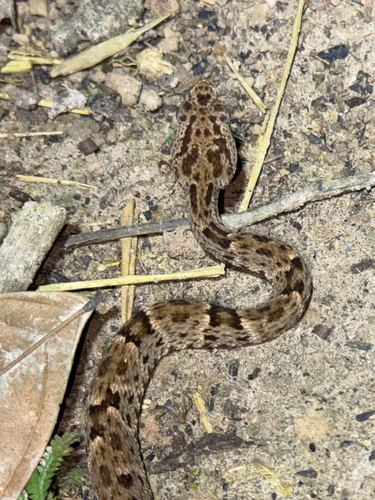
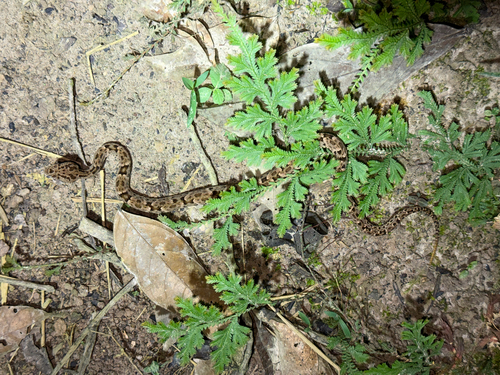
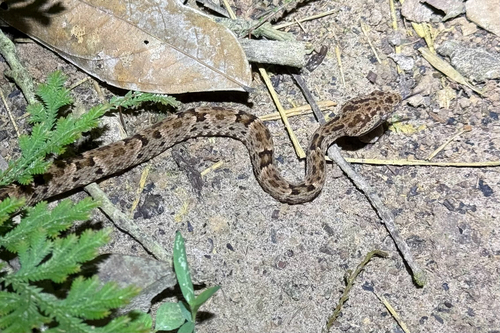
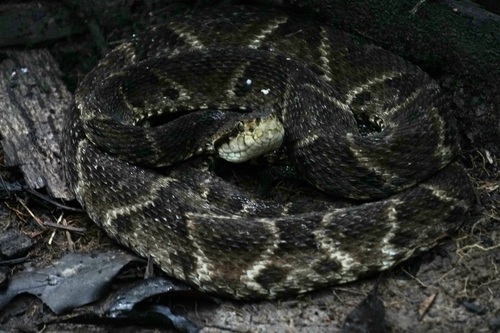
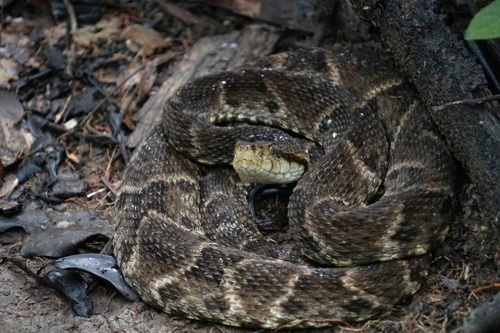
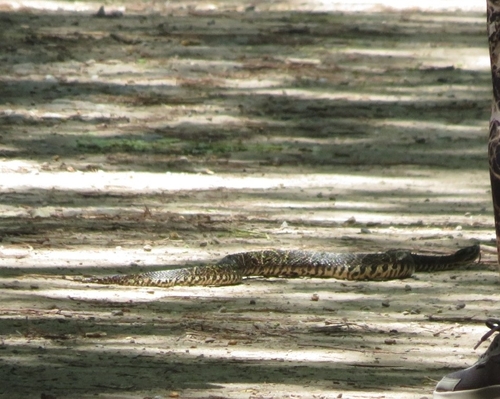
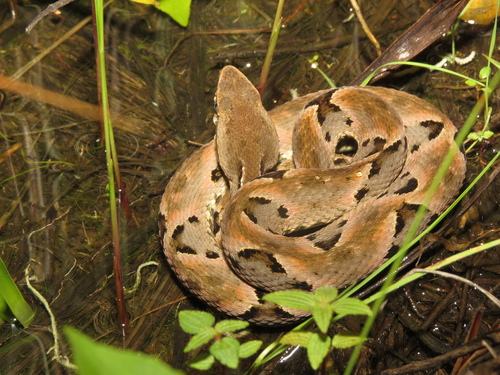
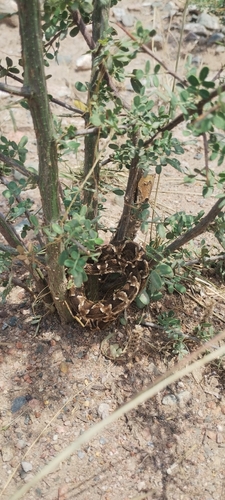
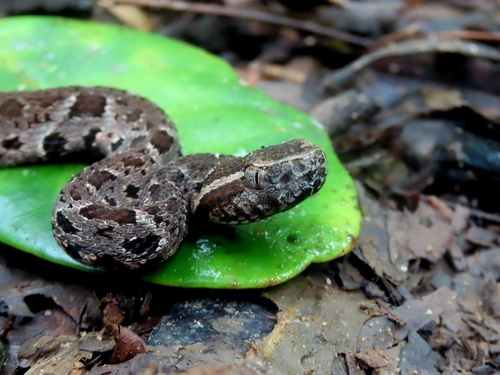
6 photographs of the Common Lancehead. © Mario Cohn-Haft.
The Common Lancehead (Bothrops atrox) is a venomous snake in the Viperidae family, recorded in 25 countries.
If you are bitten
This is a venomous snake. Treat any bite as a medical emergency: stay calm, keep the bitten limb still and roughly level with the heart, remove rings and tight clothing, and get to emergency care immediately. Do not apply a tourniquet, cut the wound, apply ice, or try to suck out venom. Call your local emergency number or poison center.
- Family
- Viperidae
- Danger
- high
About the Common Lancehead
Bothrops atrox — also known as the common lancehead, fer-de-lance, barba amarilla, and mapepire balsain — is a highly venomous pit viper species found in the tropical lowlands of northern South America east of the Andes, as well as the Caribbean island of Trinidad. No subspecies are currently recognized.
Taxonomy
The common lancehead was one of the many reptile and amphibian species described by Carl Linnaeus in the landmark 1758 10th edition of his Systema Naturae, where it was given the binomial name Coluber atrox. The taxonomy of this species is controversial; it may include B. leucurus and B. moojeni, and some of its populations are sometimes said to be separate species. B. asper was formerly included in this species, but most authorities now consider it distinct.
Names
Common names include lancehead, fer-de-lance, barba amarilla, and mapepire balsain, among others.
The Spanish common name barba amarilla (yellow beard), an allusion to the pale-yellow chin color, is also used in English. In Venezuela, it is called mapanare. In Colombia, it is known as mapaná (Llanos of Vichada) and talla equis. In Guyana and Suriname, it is called labaria or labarria. In Peru, it is called aroani (Yagua), cascabel (juveniles), ihdóni (Bora), jergón, jergona, jergón de la selva, macánchi (Alto Marañón), machacú, marashar and nashipkit (Aguaruna names). The name jergón is an allusion to the X-like markings of the color pattern. In Ecuador and Panama, these markings have led to the snake simply being referred to as equis (the Spanish name of the letter 'x'). In Trinidad, it is known as mapepire balsain. In Bolivia, it is called Yoperojobobo. In Brazil, the common names are jararaca or Jararaca-do-norte. The name fer-de-lance comes from French, meaning, "head of a lance", "spearhead", or literally "lance iron".
Description
A terrestrial species, adults usually grow to a total length 75–125 cm (about 30–50 inches) and are moderately heavy-bodied. Reports of the maximum size are not clear, as this species is often confused with B. asper. Soini (1974) mentioned of a series of 80 specimens collected in northeastern Peru, the largest was a female of 138.8 cm (4 ft 6.6 in). The largest specimen measured by Campbell and Lamar (2004) was a female with a total length of 162 cm (5 ft 4 in).
The scalation includes 23–29 (usually 23–25) rows of dorsal scales at midbody, 169–214 and 177–214 ventral scales in males and females, respectively, 52–86 (usually 75 or fewer) subcaudal scales in males, which are usually divided, and 47–72 subcaudals in females. On the head, the rostral scale is about as high, or slightly higher, than it is wide. There are three to 11 (usually five to 9) keeled intersupraocular scales, seven to 13 (usually eight to 11) sublabial scales and six to 9 (usually seven) supralabial scales, the second of which is fused with the prelacunal to form a lacunolabial.
Adapted from Wikipedia, available under CC BY-SA.
Local and regional names
The Common Lancehead is known by these names across the regions where it lives:
- Chinese
- 矛頭蝮
- Czech
- křovinář sametový
- Danish
- Almindelig Lanseslange
- Dutch
- Gewone lanspuntslang, Lanspuntslang
- English
- Barba Amarilla, Fer-De-Lance
- Finnish
- Keihäskäärme
- French
- Bothrops atroce, Fer de lance, Fer de lance commun, Fer-de-lance, Fer-de-lance commun, Grage commun, Grage petits carreaux, Grage petits carreaux, Fer de lance, Trigonocéphale, Jaracaca, Trigonocéphale
- German
- Caicaca, Gewöhnliche Lanzenotter
- Hungarian
- Igazi lándzsakígyó, közönséges lándzsakígyó
- Italian
- Ferro di lancia, Ferro di lancia comune
- Japanese
- カイサカ
- Polish
- żararaka lancetowata
- Portuguese
- Acuambóia, Boca-Podre, Caiçaca, Caiçara, Cambéua, Comboia, Cuamboia, Japoboia, Jaracuçu, Jararaca, Jararaca-Açu, Jararaca-Grão-de-Arroz, Jararaca-da-Amazônia, Jararaca-do-Amazonas, Jararaca-do-Norte, Jararaca-do-Rabo-Branco, Jararacarana, Mapanare, Surucucu, Surucucu-da-Várzea, Surucucu-do-Barranco, Surucucurana
- Russian
- Кайсака, Лабария
- Spanish
- Barba Amarilla, Mapanare; Macagua; Guayacán; Talla X; Cuatro narices; Rabo amarillo, Mapaná, jergón
- Turkish
- bayağı mızrak kafalı
Frequently asked: Common Lancehead
- Is the Common Lancehead venomous?
- Yes. The Common Lancehead (Bothrops atrox) is venomous and belongs to the Viperidae family (viper). Its bite is considered high risk to people. Treat any bite as a medical emergency.
- Is the Common Lancehead poisonous?
- Snakes are venomous, not poisonous. "Poisonous" means harmful to eat or touch; "venomous" means injecting toxins through a bite. The Common Lancehead is venomous, delivering venom through a bite.
- Is the Common Lancehead dangerous?
- This is a venomous snake. Treat any bite as a medical emergency: stay calm, keep the bitten limb still and roughly level with the heart, remove rings and tight clothing, and get to emergency care immediately. Do not apply a tourniquet, cut the wound, apply ice, or try to suck out venom. Call your local emergency number or poison center.
- Where does the Common Lancehead live?
- The Common Lancehead has verified records in 25 countries, including Brazil, Colombia, Peru. See the distribution section below for its full range.
- What does the Common Lancehead eat?
- Their main diet includes mostly small mammals (such as rodents and opossums) and birds, but also frogs, lizards, smaller snakes, fish, crayfish, centipedes, and tarantulas. Larger prey is struck and released, after which it is tracked down by its scent trail.
- Why is it called the Common Lancehead?
- Common names include lancehead, fer-de-lance, barba amarilla, and mapepire balsain, among others. The Spanish common name barba amarilla (yellow beard), an allusion to the pale-yellow chin color, is also used in English. In Venezuela, it is called mapanare. In Colombia, it is known as mapaná (Llanos of Vichada) and talla equis. In Guyana and Suriname, it is called labaria or labarria. In Peru, it is called aroani (Yagua), cascabel (juveniles), ihdóni (Bora), jergón, jergona, jergón de la selva, macánchi (Alto Marañón), machacú, marashar and nashipkit (Aguaruna names).
If you are bitten by the Common Lancehead
Do
- Get away from the snake and stay calm. Most bites worsen when people panic or try again to handle the snake.
- Call 911 or Poison Control (1-800-222-1222) right away. Antivenom works best when given early.
- Note the time of the bite and, from a safe distance, the snake's color and pattern, a phone photo is enough. Do not chase it.
- Keep the bitten limb still and at roughly heart level. Sit or lie down and limit movement.
- Remove rings, watches, and tight clothing near the bite before swelling starts.
- Gently wash the bite with soap and water and cover it with a clean, dry dressing.
Do not
- Do not cut the wound or try to suck out the venom.
- Do not apply a tourniquet or ice.
- Do not drink alcohol or caffeine.
- Do not take aspirin or ibuprofen, they can worsen bleeding. Acetaminophen is safer for pain.
- Do not try to catch or kill the snake. A dead snake can still bite by reflex.
First-aid guidance adapted from the U.S. Centers for Disease Control and Prevention (CDC NIOSH), Venomous Snakes. Educational only; always follow the instructions of emergency responders.
Where it is found
More Viperidae snakes
Classification
How scientists group this snake, from the broadest category down to the exact species. Each step narrows to its closest relatives.
Keep learning
- Are Snakes Dangerous? The Real Risk, in PerspectiveMost snakes are harmless and avoid people. Here is the honest picture of snakebite risk worldwide and how to lower your own.
- Snakebite First Aid: What to Do (and What Never to Do)A clear, CDC-based guide to snakebite first aid: the steps that help, the popular myths that hurt, and how to tell a serious bite from a minor one.
- Venomous vs Nonvenomous: How to Tell the DifferenceThe folk rules for telling venomous snakes apart, where each one fails, and why location-based identification beats guessing by sight.
- What to Do If You Find a SnakeFound a snake at home or on a trail? Here is how to stay calm, give it space, identify it safely, and know when to call a professional.
Distribution from GBIF & iNaturalist. Venom status per CDC. Background: Wikipedia. Informational only. Never handle a snake to identify it.