
Viperidae
Jararacussu
VenomousBothrops jararacussu
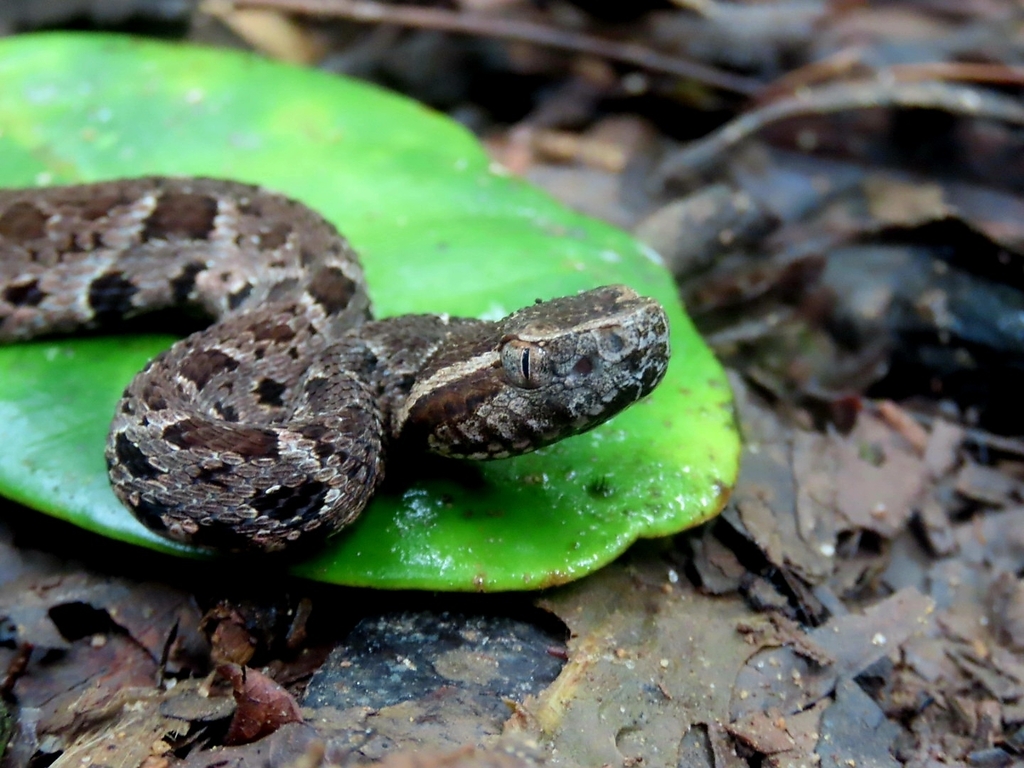
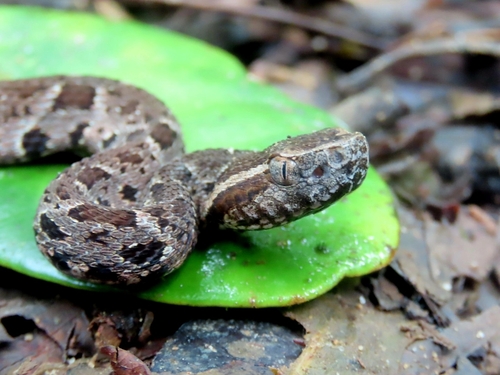
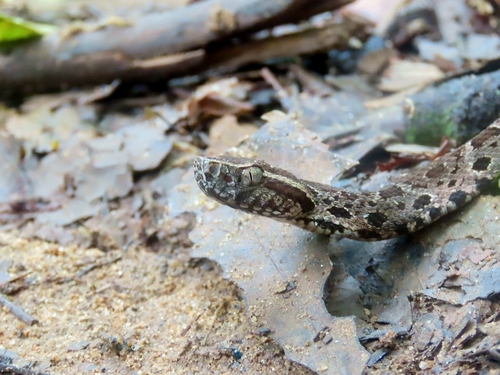
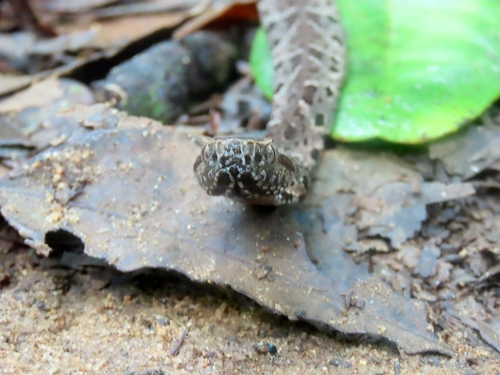
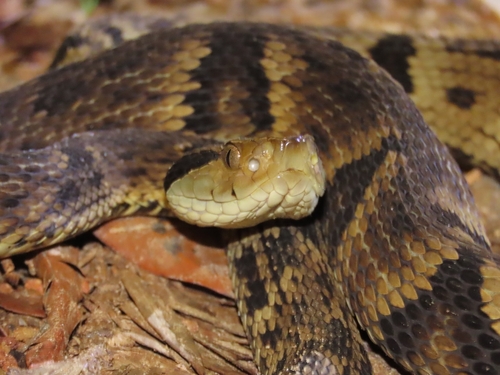
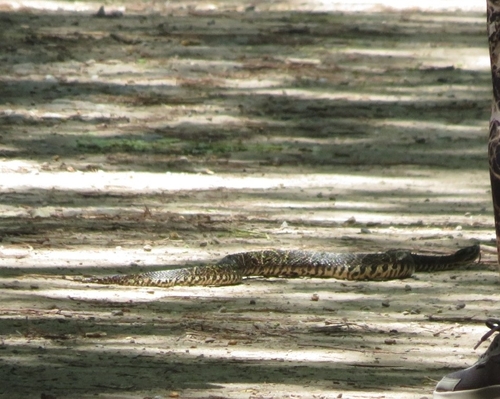
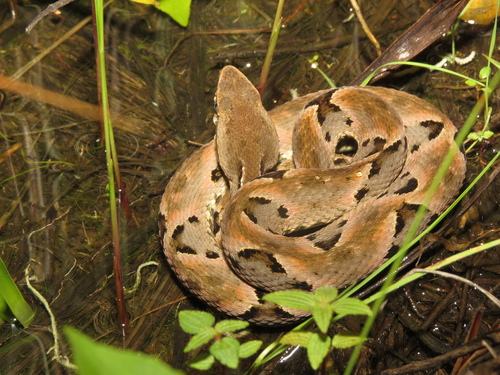
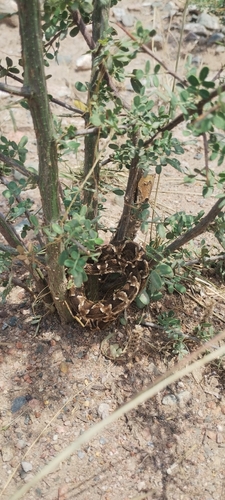
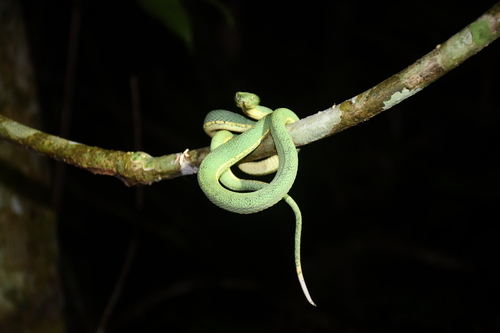
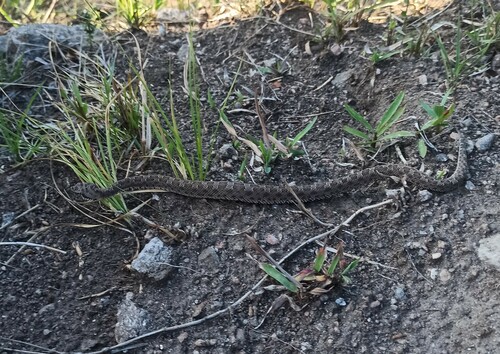
6 photographs of the Jararacussu. © Monkey Safari Tur.
The Jararacussu (Bothrops jararacussu) is a venomous snake in the Viperidae family, recorded in 5 countries.
If you are bitten
This is a venomous snake. Treat any bite as a medical emergency: stay calm, keep the bitten limb still and roughly level with the heart, remove rings and tight clothing, and get to emergency care immediately. Do not apply a tourniquet, cut the wound, apply ice, or try to suck out venom. Call your local emergency number or poison center.
- Family
- Viperidae
- Danger
- high
About the Jararacussu
Bothrops jararacussu, commonly known in English as the jararacussu, is a highly venomous pit viper species endemic to South America. It is one of the most dreaded snakes in South America and can grow up to 2.2 metres (7.2 ft).
Description and behavior
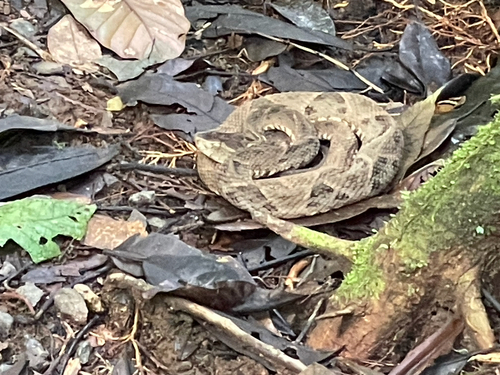
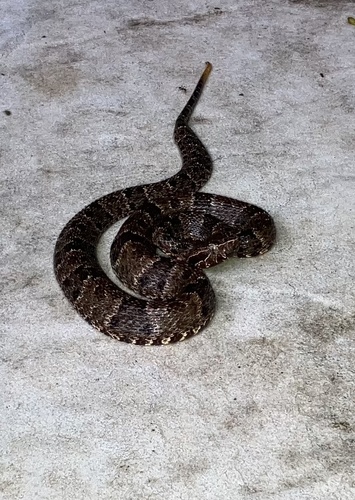
The jararacussu is a fairly large pit viper, growing up to 2.2 meters long, with a robust body and head and very aggressive behavior. The color of the body and head varies widely; the background color can be brown or yellow, almost black, the pattern of dark and light scales are constituted in a series of dark arches. The spots form on the dorsal midline, which look like the letter x. It has medium-sized eyes, with elliptical pupils vertically. With dorsal scales strongly keeled.
They have large fangs of 2.5 cm, and can inject a lot of venom. They usually feed on amphibians and rodents. They are ovoviviparous, giving birth to between 16 and 20 young, in the rainy season. Mainly diurnal and nocturnal, they usually warm up in the morning sun and venture forth to hunt at night.
Geographic range
It is found in South America in coastal Brazil (from Bahia to Santa Catarina), Paraguay, southeastern Bolivia, and northeastern Argentina (Misiones Province). They can be found in the atlantic forest and semi-deciduous forest. They also live in perennial forests, pine forests in Paraná in low swampy regions and along river banks.
Common names
In Brazil, Bothrops jararacussu is known by many common names, among which are the following: jararacuçu, jararacuçu-verdadeiro, patrona, surucucu, surucucu-dourada, surucucu-tapete, urutu-dourado, and urutu-estrela. Elsewhere in South America it is called Yarara-cussu, Yarara dorada, Yarara guasu, Yarara guazu, Painted Yope and Yoperojobobo.
Venom
Like all other species in the genus Bothrops, the jararacussu has rather potent venom, potent enough to kill sixteen people. The venom contains cytotoxins, hemotoxins and myotoxins, one study with 29 bites of jararacussu in the state of São Paulo, Brazil, found. Severe signs of local and systemic envenoming such as necrosis, shock, spontaneous systemic hemorrhage and renal failure were observed in patients bitten by specimens over 50 cm. Smaller specimens were more likely to cause blood incoagulability. Fourteen patients developed coagulopathy, six had necrosis (causing amputation of one) and five had an abscess. Two were in shock, while four developed kidney failure. Three patients aged 3, 11 and 65 years died due to respiratory and circulatory failure, even with large doses of specific anti-venom management in an intensive care unit. The autopsy of two patients showed acute tubular necrosis, cerebral edema, hemorrhagic rhabdomyolysis at the site of the bite and disseminated intravascular coagulation. One survivor had chronic renal failure, whose autopsy showed bilateral cortical necrosis.
Adapted from Wikipedia, available under CC BY-SA.
Local and regional names
The Jararacussu is known by these names across the regions where it lives:
- Chinese
- 巴西矛頭蝮
- Czech
- křovinář žararakusu
- English
- Jararacussu Lancehead
- Portuguese
- Cabeça-de-Sapo, Jaracuçu-Malha-de-Sapo, Jaracuçu-Tapete, Jaracuçu-Venenoso, Jaracuçu-Verdadeiro, Jararaca, Jararacuçu, Jararacuçu-Cabeça-de-Sapo, Jararacuçu-Tapete, Jararacuçu-Verdadeira, Patrona, Surucucu-Cabeça-de-Patrona, Surucucu-Cabeça-de-Sapo, Surucucu-Dourado, Surucucu-Tapete, Urutu, Urutu-Amarelo, Urutu-Dourado, Urutu-Estrela, Urutu-Preta, Urutu-Preto
- Russian
- Жараракусу
- Spanish
- Yararacusú
Frequently asked: Jararacussu
- Is the Jararacussu venomous?
- Yes. The Jararacussu (Bothrops jararacussu) is venomous and belongs to the Viperidae family (viper). Its bite is considered high risk to people. Treat any bite as a medical emergency.
- Is the Jararacussu poisonous?
- Snakes are venomous, not poisonous. "Poisonous" means harmful to eat or touch; "venomous" means injecting toxins through a bite. The Jararacussu is venomous, delivering venom through a bite.
- Is the Jararacussu dangerous?
- This is a venomous snake. Treat any bite as a medical emergency: stay calm, keep the bitten limb still and roughly level with the heart, remove rings and tight clothing, and get to emergency care immediately. Do not apply a tourniquet, cut the wound, apply ice, or try to suck out venom. Call your local emergency number or poison center.
- Where does the Jararacussu live?
- The Jararacussu has verified records in 5 countries, including Brazil, Argentina, Paraguay. See the distribution section below for its full range.
- Why is it called the Jararacussu?
- In Brazil, Bothrops jararacussu is known by many common names, among which are the following: jararacuçu, jararacuçu-verdadeiro, patrona, surucucu, surucucu-dourada, surucucu-tapete, urutu-dourado, and urutu-estrela. Elsewhere in South America it is called Yarara-cussu, Yarara dorada, Yarara guasu, Yarara guazu, Painted Yope and Yoperojobobo.
If you are bitten by the Jararacussu
Do
- Get away from the snake and stay calm. Most bites worsen when people panic or try again to handle the snake.
- Call 911 or Poison Control (1-800-222-1222) right away. Antivenom works best when given early.
- Note the time of the bite and, from a safe distance, the snake's color and pattern, a phone photo is enough. Do not chase it.
- Keep the bitten limb still and at roughly heart level. Sit or lie down and limit movement.
- Remove rings, watches, and tight clothing near the bite before swelling starts.
- Gently wash the bite with soap and water and cover it with a clean, dry dressing.
Do not
- Do not cut the wound or try to suck out the venom.
- Do not apply a tourniquet or ice.
- Do not drink alcohol or caffeine.
- Do not take aspirin or ibuprofen, they can worsen bleeding. Acetaminophen is safer for pain.
- Do not try to catch or kill the snake. A dead snake can still bite by reflex.
First-aid guidance adapted from the U.S. Centers for Disease Control and Prevention (CDC NIOSH), Venomous Snakes. Educational only; always follow the instructions of emergency responders.
Where it is found
More Viperidae snakes
Classification
How scientists group this snake, from the broadest category down to the exact species. Each step narrows to its closest relatives.
Keep learning
- Are Snakes Dangerous? The Real Risk, in PerspectiveMost snakes are harmless and avoid people. Here is the honest picture of snakebite risk worldwide and how to lower your own.
- Snakebite First Aid: What to Do (and What Never to Do)A clear, CDC-based guide to snakebite first aid: the steps that help, the popular myths that hurt, and how to tell a serious bite from a minor one.
- Venomous vs Nonvenomous: How to Tell the DifferenceThe folk rules for telling venomous snakes apart, where each one fails, and why location-based identification beats guessing by sight.
- What to Do If You Find a SnakeFound a snake at home or on a trail? Here is how to stay calm, give it space, identify it safely, and know when to call a professional.
Distribution from GBIF & iNaturalist. Venom status per CDC. Background: Wikipedia. Informational only. Never handle a snake to identify it.