
Viperidae
Green Jararaca
VenomousBothrops bilineatus
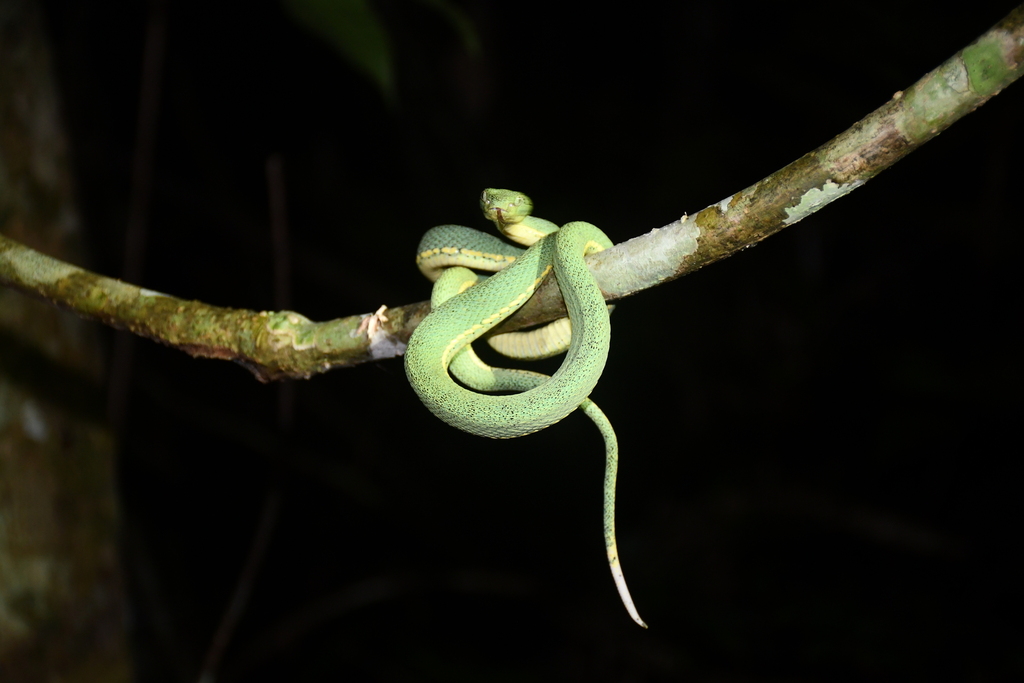
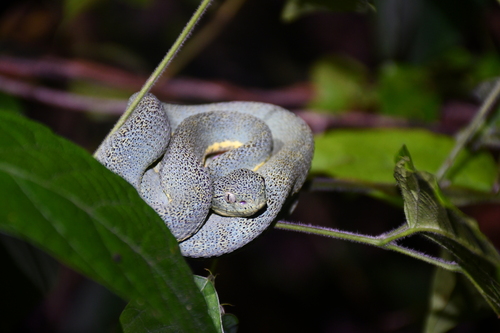
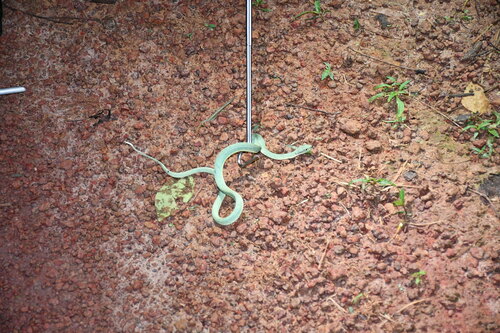
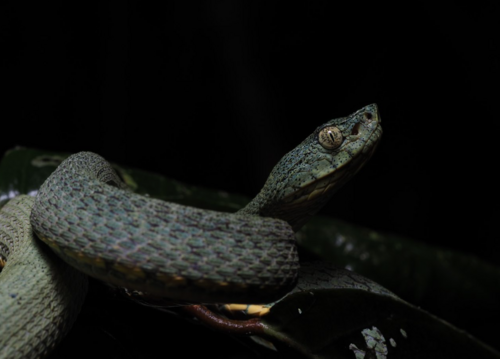
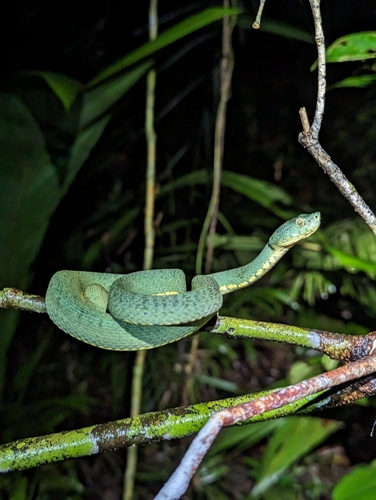
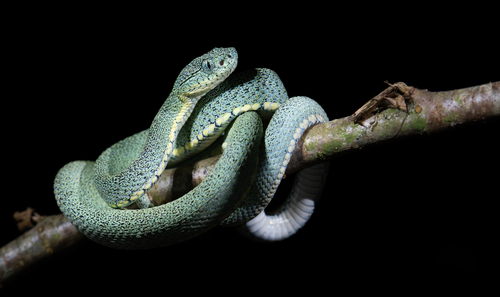
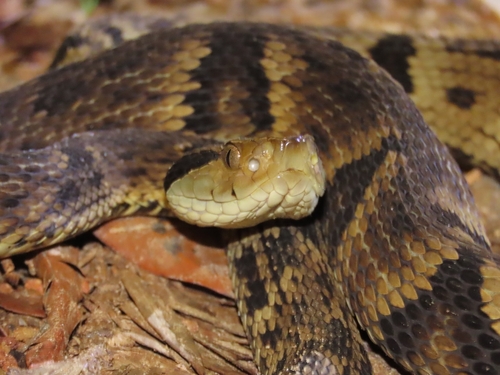
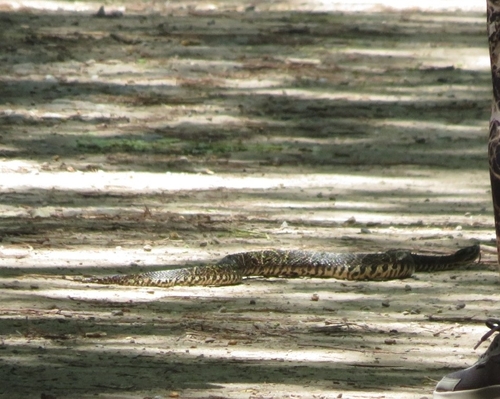
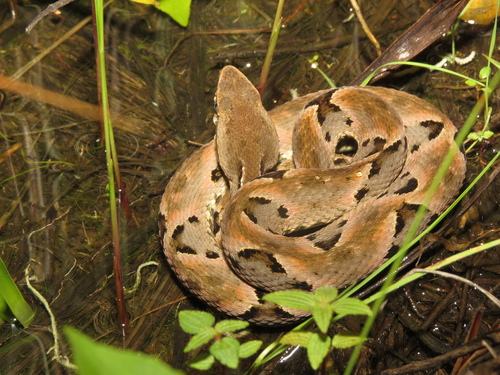
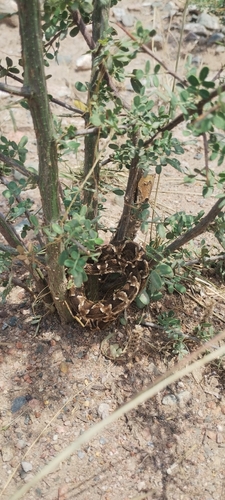
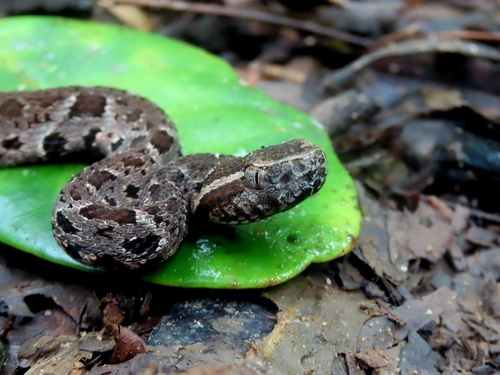
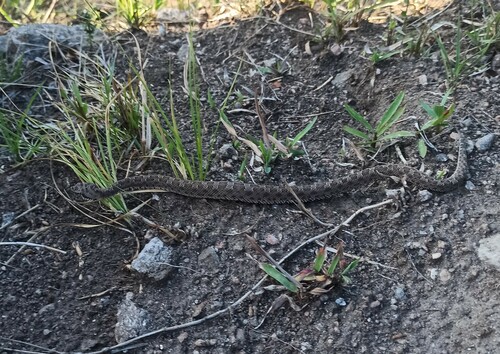
6 photographs of the Green Jararaca. © Vincent A. Vos.
The Green Jararaca (Bothrops bilineatus) is a venomous snake in the Viperidae family, recorded in 12 countries.
If you are bitten
This is a venomous snake. Treat any bite as a medical emergency: stay calm, keep the bitten limb still and roughly level with the heart, remove rings and tight clothing, and get to emergency care immediately. Do not apply a tourniquet, cut the wound, apply ice, or try to suck out venom. Call your local emergency number or poison center.
- Family
- Viperidae
- Danger
- high
About the Green Jararaca
Bothrops bilineatus, also known as the two-striped forest-pitviper, parrotsnake, Amazonian palm viper, or green jararaca, is a highly venomous pit viper species found in the Amazon region of South America. Two subspecies are currently recognized, including the nominate subspecies described here. A pale green arboreal species that may reach 1 m (3.3 ft) in length, it is an important cause of snakebite throughout the entire Amazon region.
Description
Adults usually do not grow to more than 70 cm (28 in) in length, although some may reach 100 cm (39 in). The maximum reported size is 123 cm (48 in). The body is relatively slender, with a prehensile tail.
The scalation includes 23–35 dorsal scales at midbody, 190–218/192–220 ventral scales in males/females and 65–76/55–73 mostly divided subcaudal scales in males/females. On the head are 5–9 keeled intersupraoculars, 8–12 sublabial scales and 7–9 supralabial scales. Of the latter, the second is usually fused with the prelacunal to form a lacunolabial, although partial or complete sutures may exist to separate these scales.
The colour pattern consists of a pale green ground colour overlaid dorsally with either a peppering of black spots, or a series of tan or reddish brown spots that are usually paired. The ventrals are bordered by a creamy yellow line running down the length of the body, while the belly itself is yellow and bordered with a tinge of green. The latter part of the tail is pink and bordered with yellow. The head is either green with a scattering of small black spots, or green with isolated tan or reddish brown spots that are bordered in black. The iris is pale green, while the labials are yellow green, often with black spots.
The nominate subspecies, B. b. bilineata, has vertical dark stripes on the supralabial scales and a dorsal pattern of reddish brown spots with black flecks.
Geographic range
This species is found in the Amazon region of South America: Colombia, Venezuela, Guyana, Suriname, French Guiana, Brazil, Ecuador, Peru, and Bolivia. An isolated population is known from the Atlantic versant of southeastern Brazil. The type locality given is "Brasilien".
Habitat
It is found in lowland rain forest, in shrubbery, palms and trees, and anywhere in the vicinity of water. It is almost always found in bushes and trees along streams or along the edges for forest clearings, mostly associated with primary forest, although has also been found in older secondary forest near primary forest.
Behaviour
Nocturnal, this species spends the day hidden in thick foliage, tree hollows, or at the base of palm fronds, always remaining in places where it can anchor itself with its prehensile tail. It tends to rely on ambush instead of actively hunting for prey. Some species of viper are only active during the day as they bask in the sunlight and strike at prey that draw too close. Others tend to be nocturnal choosing to hunt at night and rest in the day.
Feeding
Adapted from Wikipedia, available under CC BY-SA.
Local and regional names
The Green Jararaca is known by these names across the regions where it lives:
- Danish
- Tostribet Lanseslange
- English
- Two-Striped Forest-Pitviper, Two-striped forest-pitviper \\
- French
- Bothrops à deux raies, Grage jacquot, Grage jacquot, Vipère arboricole, Jararaca vert, Vipère arboricole, Vrai jacquot
- German
- Grüne Jararaca
- Italian
- Jararaca verde
- Portuguese
- Bico-de-Papagaio, Cobra-Papagaio, Igbigracuã, Jararaca, Jararaca-Pinta-de-Ouro, Jararaca-Verde, Oricana, Ouricana, Papagaia, Paraamboia, Paramboia, Patioba, Periquitamboia, Pindoba, Pinta-de-Ouro, Surucucu-Pinta-de-Ouro, Surucucu-de-Ouricana, Surucucu-de-Patioba, Surucucu-de-Pindoba, Uriçana
- Russian
- Зелёная жарарака
- Spanish
- Víbora arborícola verde
Frequently asked: Green Jararaca
- Is the Green Jararaca venomous?
- Yes. The Green Jararaca (Bothrops bilineatus) is venomous and belongs to the Viperidae family (viper). Its bite is considered high risk to people. Treat any bite as a medical emergency.
- Is the Green Jararaca poisonous?
- Snakes are venomous, not poisonous. "Poisonous" means harmful to eat or touch; "venomous" means injecting toxins through a bite. The Green Jararaca is venomous, delivering venom through a bite.
- Is the Green Jararaca dangerous?
- This is a venomous snake. Treat any bite as a medical emergency: stay calm, keep the bitten limb still and roughly level with the heart, remove rings and tight clothing, and get to emergency care immediately. Do not apply a tourniquet, cut the wound, apply ice, or try to suck out venom. Call your local emergency number or poison center.
- Where does the Green Jararaca live?
- The Green Jararaca has verified records in 12 countries, including Peru, Brazil, Ecuador. See the distribution section below for its full range.
- What does the Green Jararaca eat?
- The diet consists of small mammals, such as mouse opossums (Marmosa), mice, birds, lizards, and frogs. Juveniles tend to remain closer to the ground to feed on small frogs and lizards.
If you are bitten by the Green Jararaca
Do
- Get away from the snake and stay calm. Most bites worsen when people panic or try again to handle the snake.
- Call 911 or Poison Control (1-800-222-1222) right away. Antivenom works best when given early.
- Note the time of the bite and, from a safe distance, the snake's color and pattern, a phone photo is enough. Do not chase it.
- Keep the bitten limb still and at roughly heart level. Sit or lie down and limit movement.
- Remove rings, watches, and tight clothing near the bite before swelling starts.
- Gently wash the bite with soap and water and cover it with a clean, dry dressing.
Do not
- Do not cut the wound or try to suck out the venom.
- Do not apply a tourniquet or ice.
- Do not drink alcohol or caffeine.
- Do not take aspirin or ibuprofen, they can worsen bleeding. Acetaminophen is safer for pain.
- Do not try to catch or kill the snake. A dead snake can still bite by reflex.
First-aid guidance adapted from the U.S. Centers for Disease Control and Prevention (CDC NIOSH), Venomous Snakes. Educational only; always follow the instructions of emergency responders.
Where it is found
More Viperidae snakes
Classification
How scientists group this snake, from the broadest category down to the exact species. Each step narrows to its closest relatives.
Keep learning
- Are Snakes Dangerous? The Real Risk, in PerspectiveMost snakes are harmless and avoid people. Here is the honest picture of snakebite risk worldwide and how to lower your own.
- Snakebite First Aid: What to Do (and What Never to Do)A clear, CDC-based guide to snakebite first aid: the steps that help, the popular myths that hurt, and how to tell a serious bite from a minor one.
- Venomous vs Nonvenomous: How to Tell the DifferenceThe folk rules for telling venomous snakes apart, where each one fails, and why location-based identification beats guessing by sight.
- What to Do If You Find a SnakeFound a snake at home or on a trail? Here is how to stay calm, give it space, identify it safely, and know when to call a professional.
Distribution from GBIF & iNaturalist. Venom status per CDC. Background: Wikipedia. Informational only. Never handle a snake to identify it.