
Colubridae
Caspian Whipsnake
HarmlessDolichophis caspius
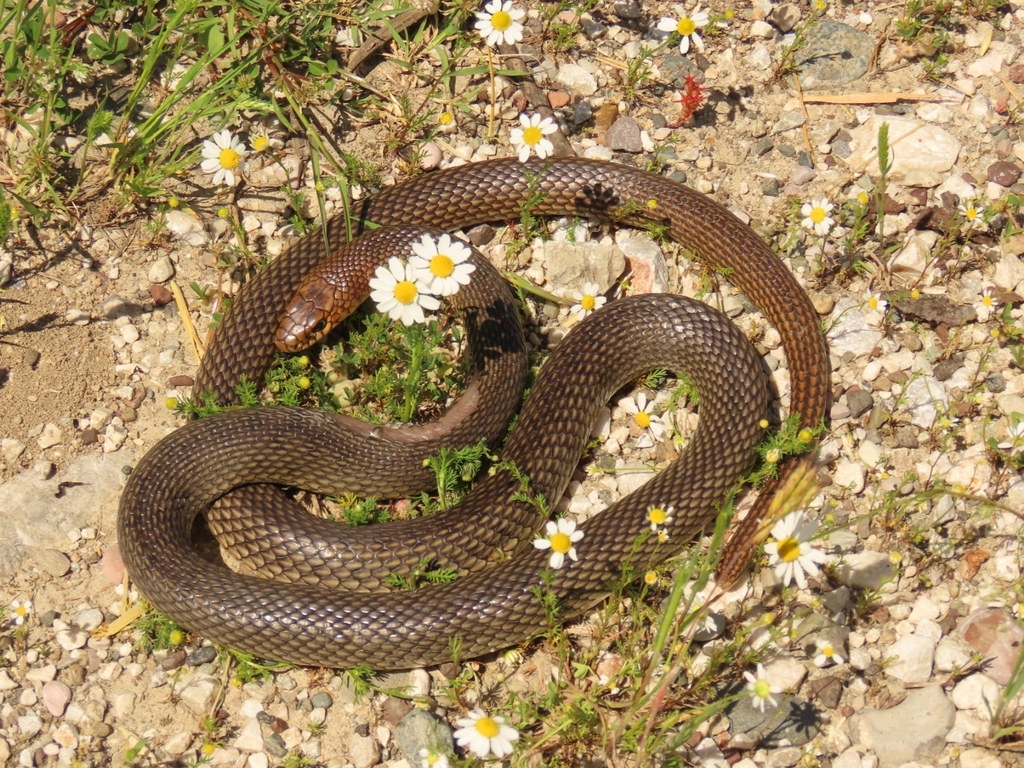
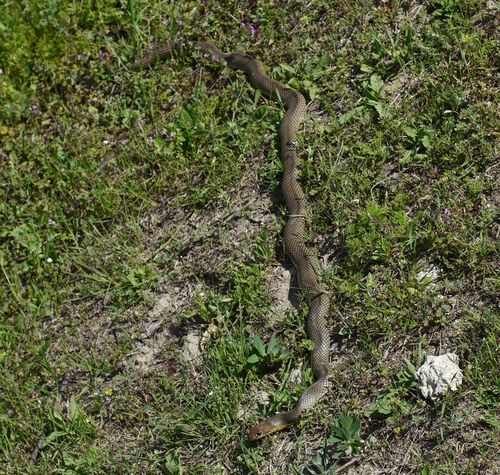
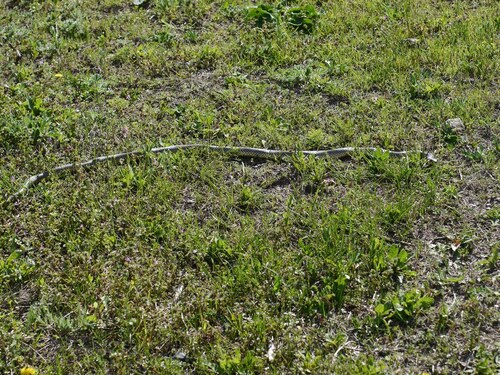
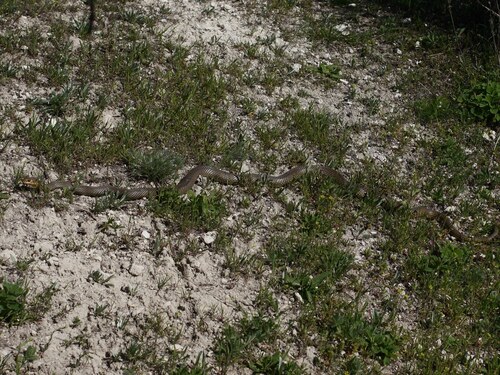
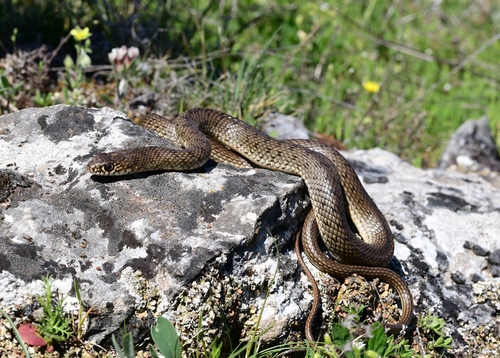
5 photographs of the Caspian Whipsnake. © Robin Fokker.
The Caspian Whipsnake (Dolichophis caspius) is a non-venomous snake in the Colubridae family, recorded in 24 countries.
- Family
- Colubridae
About the Caspian Whipsnake
The Caspian whipsnake (Dolichophis caspius, sometimes also Coluber caspius) also known as the large whipsnake (among various other species in genus Dolichophis/Coluber), is a common species of whipsnake found in the Balkans and parts of Eastern Europe.
Description
The Caspian whipsnake is perhaps the largest species of snake in Europe. It typically grows to around 140–160 cm (55–63 in) in length, though a few may exceed a length of 200 cm (79 in). The record sized specimen was approximately 250 cm (98 in) Body mass can be commonly from 120 to 673 g (4.2 to 23.7 oz). This species is not venomous and is mostly active during the day. The head is joined to the body by a thick neck. Its pupils are round. Nineteen rows of smooth scales can be found at the middle body, though rarely there may be seventeen. Dorsal scales each have two apical pits at the posterior edge. The centre of the scale is lighter in colour than the edges. The dorsal side is grey-brown and features markings which are distinctive in juveniles and young snakes but fade with age. The ventral side is light yellow or white.
Taxonomy
Synonyms
Since its original description by Johann Friedrich Gmelin in 1789, D. caspius has been known by many names. A list of such synonyms is given below:
Coluber caspius Gmelin, 1789
Coluber acontistes Pallas, 1814
Coluber thermalis Pallas, 1814
Coluber jugularis caspius — Wütschert, 1984
Hierophis caspius — Schätti, 1988
Dolichophis caspius — Nagy et al., 2004
Nota bene: In a synonymy, names without dashes are new taxa (described as new species). However, names with dashes are just new combinations (moved to a different genus, changed from species to subspecies, etc.).
Distribution
The Caspian whipsnake is found in the Balkan peninsula, parts of Eastern Europe and a small portion of Asia Minor. It may be found in Albania, Bulgaria, Greece, North Macedonia, Serbia, Romania, Croatia, Turkey, Moldova, Montenegro, southern Ukraine, southern Russia, Kazakhstan, and southern Hungary. Results from a survey indicate their habitats may be distributed along low areas near major rivers, such as the Danube and the Olt River.
It was previously assumed extinct in Moldavia (eastern Romania, southern Ukraine, and western Moldova), where it was only known from two sites, and not observed since 1937. Three specimens were collected in May 2007 in Galați County, somewhat dispelling this belief. Though it is known to be common in the Dobrudja area, knowledge of its distribution in other areas is poor. It is believed to be very rare in these parts, and may also be highly threatened. National legislation has declared D. caspius to be "a species of community interest" and thus must be strictly protected.
Adapted from Wikipedia, available under CC BY-SA.
Frequently asked: Caspian Whipsnake
- Is the Caspian Whipsnake venomous?
- No. The Caspian Whipsnake (Dolichophis caspius) is non-venomous and is not considered dangerous to humans. Like most snakes, it will retreat rather than bite when given the chance.
- Is the Caspian Whipsnake poisonous?
- Snakes are venomous, not poisonous. "Poisonous" means harmful to eat or touch; "venomous" means injecting toxins through a bite. The Caspian Whipsnake is neither poisonous nor venomous.
- Is the Caspian Whipsnake dangerous?
- The Caspian Whipsnake is not dangerous to humans. It has no medically significant venom and bites only defensively if cornered or handled.
- Where does the Caspian Whipsnake live?
- The Caspian Whipsnake has verified records in 24 countries, including Ukraine, Greece, Romania. See the distribution section below for its full range.
- What does the Caspian Whipsnake eat?
- The Caspian whipsnake is a generalist predator and feeds on various vertebrates. Its diet may include small mammals, lizards, birds, and other snakes. Though not venomous, the Caspian whipsnake is considered "ferocious" and bites quickly and without warning. Due to its ability to consume rodents which may harm crops, it is valued as natural pest control.
Where it is found
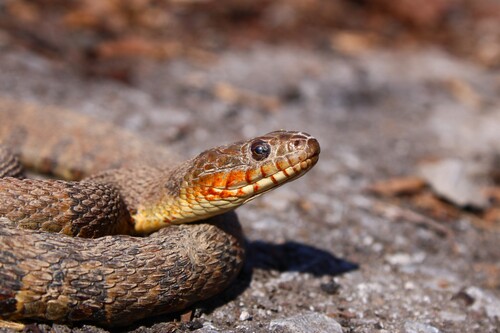
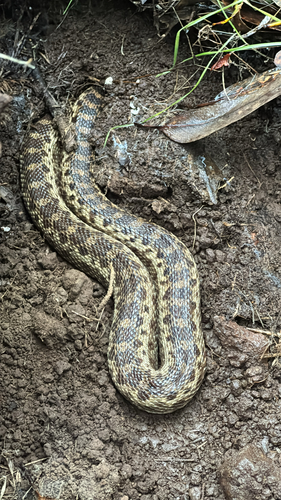
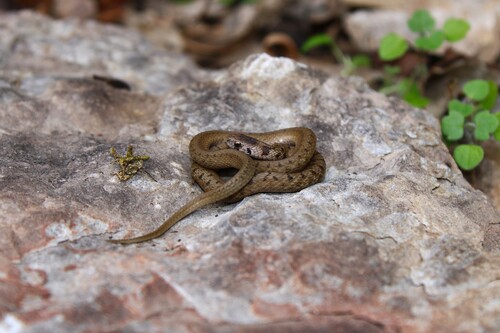
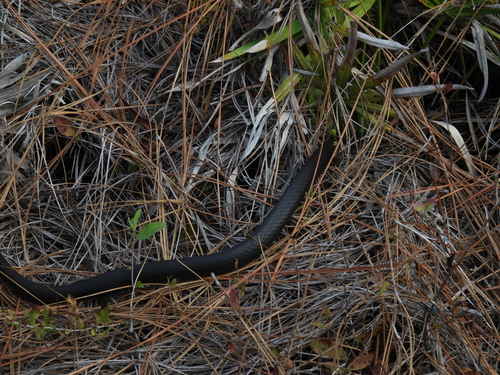
More Colubridae snakes
Classification
How scientists group this snake, from the broadest category down to the exact species. Each step narrows to its closest relatives.
- OrderThe broad group of scaled reptiles: all snakes and lizards
- Squamata
- FamilyA group of related snakes that share key traits
- Colubridae
- GenusA close-knit group of very similar species
- Dolichophis
- SpeciesThis exact snake, named in the two-part scientific name
- Dolichophis caspius
Keep learning
- What to Do If You Find a SnakeFound a snake at home or on a trail? Here is how to stay calm, give it space, identify it safely, and know when to call a professional.
- Venomous vs Nonvenomous: How to Tell the DifferenceThe folk rules for telling venomous snakes apart, where each one fails, and why location-based identification beats guessing by sight.
- What Is a Snake? Anatomy and the BasicsA clear overview of what makes a snake a snake: limbless body plan, anatomy, evolution from lizards, species diversity, and why they are ectothermic.
- How to Keep Snakes Out of Your Yard and HomeA practical guide to keeping snakes out of your yard and home using habitat changes that work, plus what to skip and what to do if one shows up.
Distribution from GBIF & iNaturalist. Venom status per CDC. Background: Wikipedia. Informational only. Never handle a snake to identify it.