
Viperidae
Nose-horned Viper
VenomousVipera ammodytes
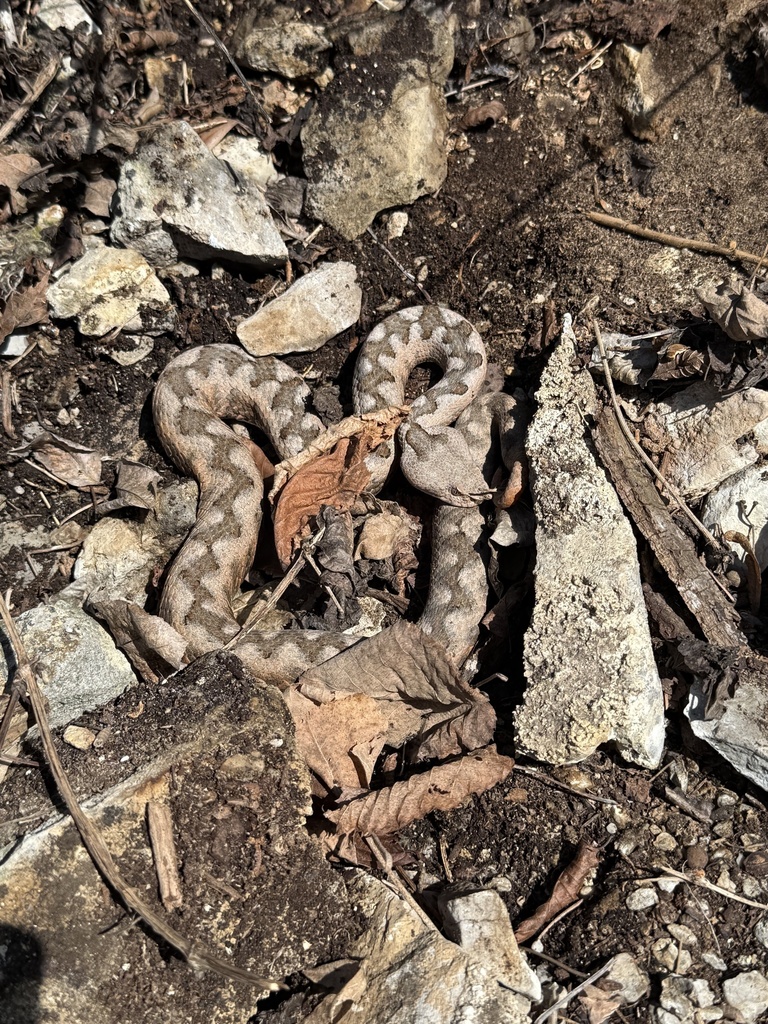
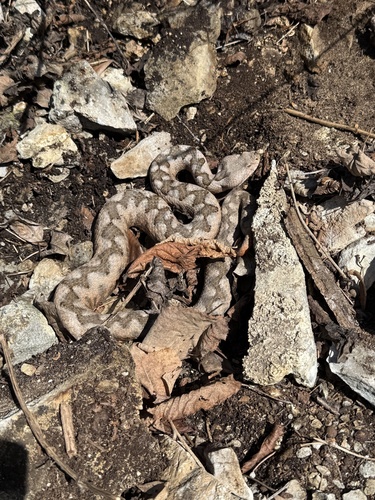
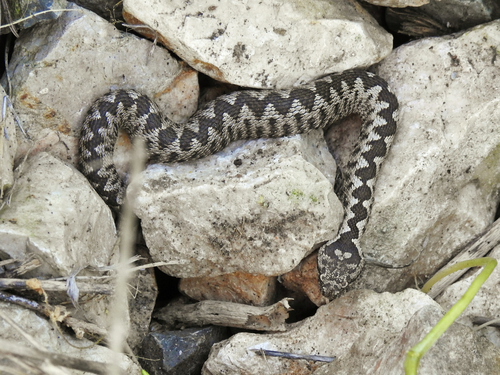
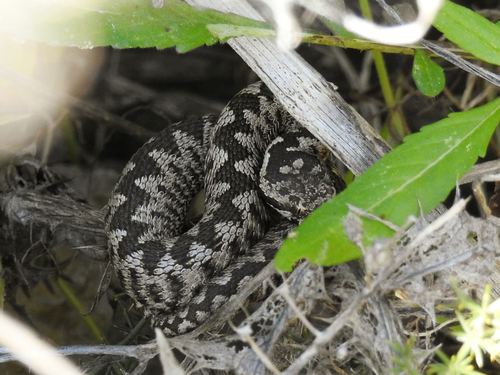
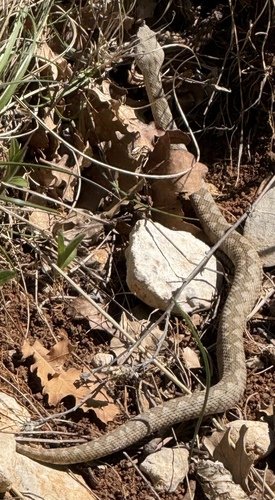
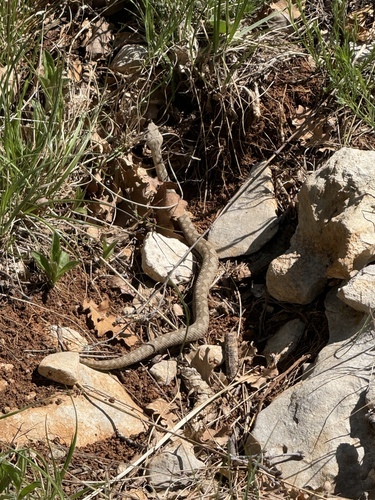
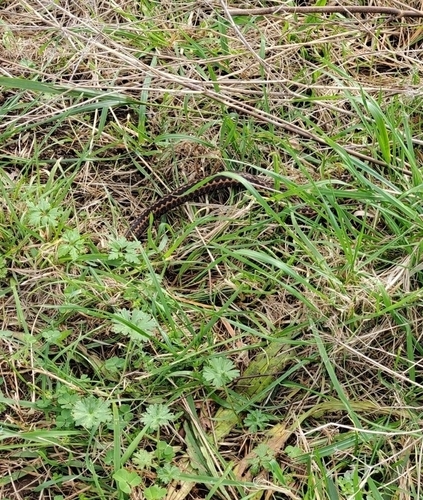
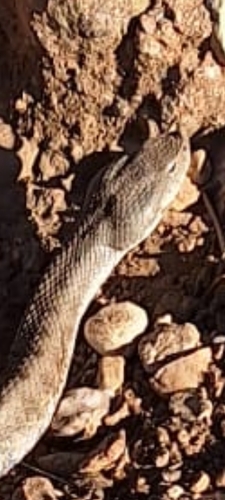
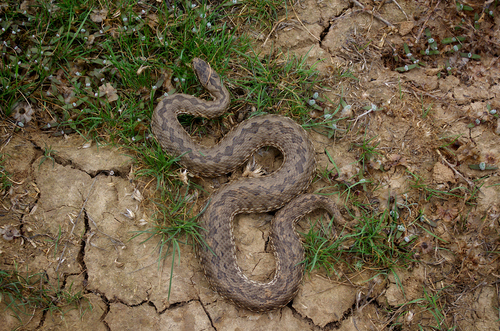
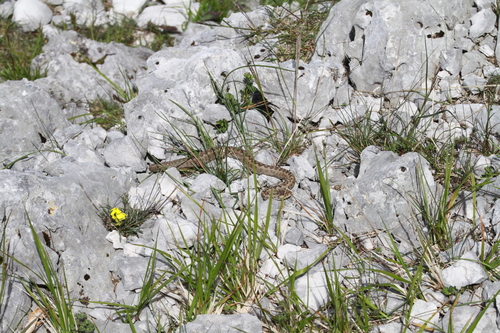
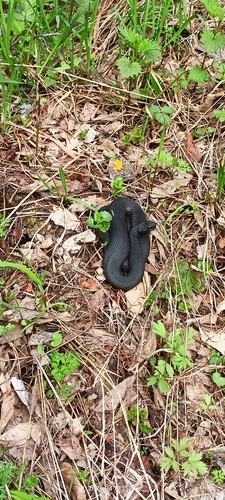
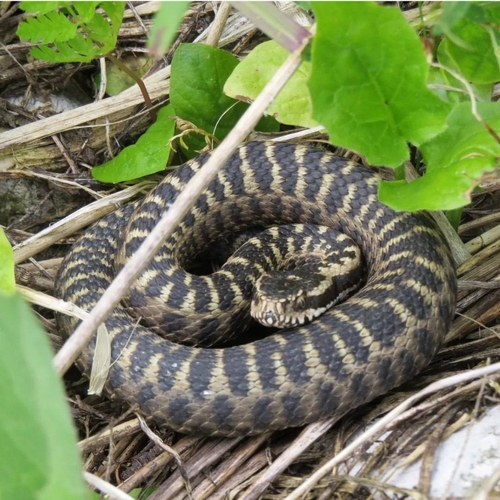
6 photographs of the Nose-horned Viper. © Vsevolod Rudyi.
The Nose-horned Viper (Vipera ammodytes) is a venomous snake in the Viperidae family, recorded in 25 countries.
If you are bitten
This is a venomous snake. Treat any bite as a medical emergency: stay calm, keep the bitten limb still and roughly level with the heart, remove rings and tight clothing, and get to emergency care immediately. Do not apply a tourniquet, cut the wound, apply ice, or try to suck out venom. Call your local emergency number or poison center.
- Family
- Viperidae
- Danger
- high
About the Nose-horned Viper
Vipera ammodytes, commonly known as horned viper, long-nosed viper, nose-horned viper, and sand viper, is a species of viper found in northern Italy, the Balkans, and parts of Asia Minor. Like all other vipers, it is venomous. It is reputed to be the most dangerous of the European vipers due to its large size, long fangs (up to 13 mm) and high venom toxicity. The specific name, ammodytes, is derived from the Greek words ammos, meaning "sand", and dutes, meaning "burrower" or "diver", despite its preference for rocky habitats. Five subspecies are currently recognized, including the nominate subspecies described here.
Description
V. ammodytes grows to an average total length (snout-tail) of 85 cm (33.5 in), although individuals usually measure less than 75 cm (29.5 in). Maximum length also depends on locality, with northern forms distinctly larger than southern ones. In one field study on Golem Grad island (in North Macedonia), for example, females averaged 35 cm., and males at 37 cm.; the largest captured during the study was a male, at 66 cm. long. This indicates some degree of regional or insular dwarfism.
The head is covered in small, irregular scales, that are either smooth or only weakly-keeled; a pair of large supraocular scales also extends beyond the posterior margin of the eye. Ten to thirteen small scales surround each eye, and two rows separate the eye from the supralabials. The nasal scale is large, single (rarely divided), and separated from the rostral by a single nasorostral scale. The rostral scale is wider than it is long.
The most distinctive characteristic is a single "horn" on the snout, just above the rostral scale. It consists of approximately nine to seventeen small scales, arranged in two (occasionally three or four) transverse rows. It grows to a length of about 5 mm (0.20 in) and is actually soft and flexible. In southern subspecies, the horn sits vertically upright, while in V. a. Ammodytes it points diagonally forward.
The body is covered with strongly keeled dorsal scales, in 21 to 23 rows (rarely 25), at mid-body. The scales bordering the ventrals are smooth or weakly-keeled. Males have anywhere from 133 to 161 ventral scales and 27 to 46 paired subcaudals, whereas females have anywhere from 135 to 164, and 24 to 38, respectively. The anal scale is single.
The color pattern is different for males and females. In males, the head has irregular dark brown, dark gray, or black markings. A thick, black stripe runs from behind the eye to behind the angle of the jaw. The tongue is usually black, and the iris has a golden or coppery color. Males have a characteristic dark blotch or V marking on the back of the head that often connects to the dorsal zigzag pattern. The ground color for males varies and includes many different shades of gray, sometimes yellowish or pinkish gray, or yellowish brown. The dorsal zigzag is dark gray or black, the edge of which is sometimes darker. A row of indistinct, dark (occasionally yellowish) spots runs along each side, sometimes joined in a wavy band.
Adapted from Wikipedia, available under CC BY-SA.
Local and regional names
The Nose-horned Viper is known by these names across the regions where it lives:
- Croatian
- Poskok
- English
- Sand Viper
- French
- Vipère des sables
- German
- Europäische Hornotter, Europäische Hornviper, Europäische Sandotter, Sandviper
- Italian
- vipera dal corno
- Turkish
- Boynuzlu Engerek
- Ukrainian
- Гадюка носата
Frequently asked: Nose-horned Viper
- Is the Nose-horned Viper venomous?
- Yes. The Nose-horned Viper (Vipera ammodytes) is venomous and belongs to the Viperidae family (viper). Its bite is considered high risk to people. Treat any bite as a medical emergency.
- Is the Nose-horned Viper poisonous?
- Snakes are venomous, not poisonous. "Poisonous" means harmful to eat or touch; "venomous" means injecting toxins through a bite. The Nose-horned Viper is venomous, delivering venom through a bite.
- Is the Nose-horned Viper dangerous?
- This is a venomous snake. Treat any bite as a medical emergency: stay calm, keep the bitten limb still and roughly level with the heart, remove rings and tight clothing, and get to emergency care immediately. Do not apply a tourniquet, cut the wound, apply ice, or try to suck out venom. Call your local emergency number or poison center.
- Where does the Nose-horned Viper live?
- The Nose-horned Viper has verified records in 25 countries, including Austria, Greece, Bulgaria. See the distribution section below for its full range.
- What does the Nose-horned Viper eat?
- Adults generally feed on small mammals and birds, whilst juveniles predominantly eat lizards. Feeding behavior changes and is influenced heavily by prey size. Larger prey are struck, released, tracked, and swallowed, while smaller prey is swallowed without using the venom apparatus. Occasionally, other snakes are eaten. There are also reports of cannibalism. Arthropods such as large insects and centipedes have regularly been found in the stomach contents of vipers, albeit more frequently in juveniles that eat centipedes like Mediterranean banded centipede.
- Why is it called the Nose-horned Viper?
- The common names that can be found for Vipera ammodytes in English are horned viper, long-nosed viper, nose-horned viper, sand viper, sand adder, common sand adder, common sand viper, and sand natter. In Bosnia and Herzegovina, Croatia, Montenegro, North Macedonia and Serbia, a common name used for this snake is poskok (поскок, lit. 'jumper'). In Greece, the common name used is ochia (οχιά).
If you are bitten by the Nose-horned Viper
Do
- Get away from the snake and stay calm. Most bites worsen when people panic or try again to handle the snake.
- Call 911 or Poison Control (1-800-222-1222) right away. Antivenom works best when given early.
- Note the time of the bite and, from a safe distance, the snake's color and pattern, a phone photo is enough. Do not chase it.
- Keep the bitten limb still and at roughly heart level. Sit or lie down and limit movement.
- Remove rings, watches, and tight clothing near the bite before swelling starts.
- Gently wash the bite with soap and water and cover it with a clean, dry dressing.
Do not
- Do not cut the wound or try to suck out the venom.
- Do not apply a tourniquet or ice.
- Do not drink alcohol or caffeine.
- Do not take aspirin or ibuprofen, they can worsen bleeding. Acetaminophen is safer for pain.
- Do not try to catch or kill the snake. A dead snake can still bite by reflex.
First-aid guidance adapted from the U.S. Centers for Disease Control and Prevention (CDC NIOSH), Venomous Snakes. Educational only; always follow the instructions of emergency responders.
Where it is found
More Viperidae snakes
Classification
How scientists group this snake, from the broadest category down to the exact species. Each step narrows to its closest relatives.
Keep learning
- Are Snakes Dangerous? The Real Risk, in PerspectiveMost snakes are harmless and avoid people. Here is the honest picture of snakebite risk worldwide and how to lower your own.
- Snakebite First Aid: What to Do (and What Never to Do)A clear, CDC-based guide to snakebite first aid: the steps that help, the popular myths that hurt, and how to tell a serious bite from a minor one.
- Venomous vs Nonvenomous: How to Tell the DifferenceThe folk rules for telling venomous snakes apart, where each one fails, and why location-based identification beats guessing by sight.
- What to Do If You Find a SnakeFound a snake at home or on a trail? Here is how to stay calm, give it space, identify it safely, and know when to call a professional.
Distribution from GBIF & iNaturalist. Venom status per CDC. Background: Wikipedia. Informational only. Never handle a snake to identify it.