
Viperidae
Asp Viper
VenomousVipera aspis
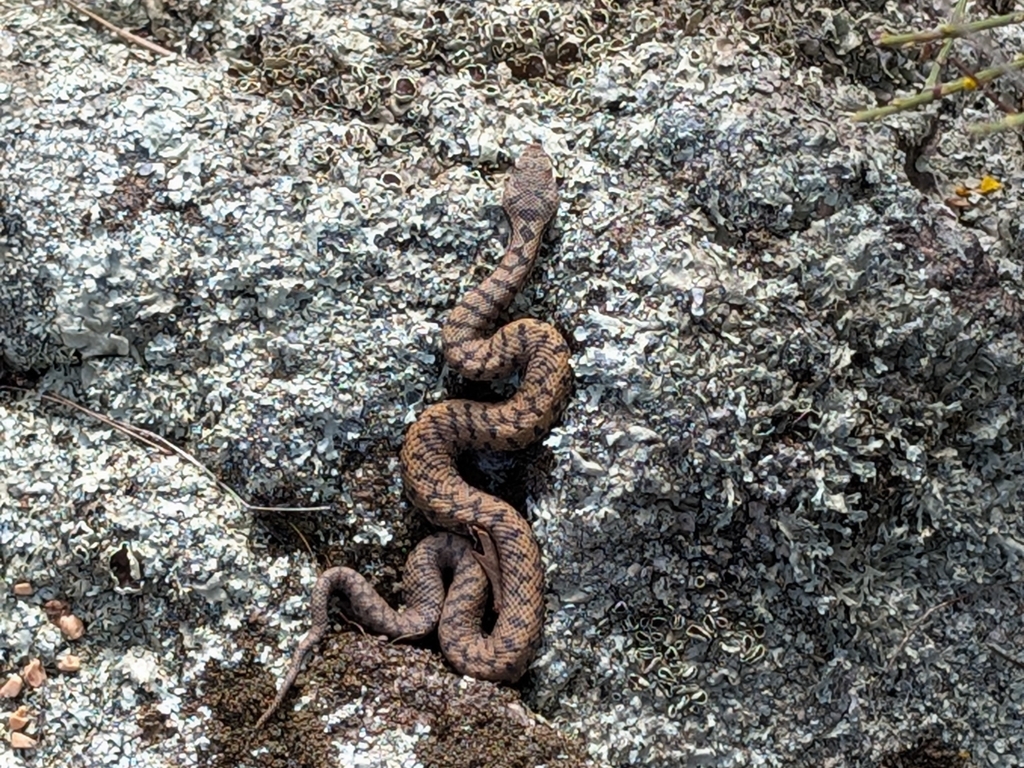
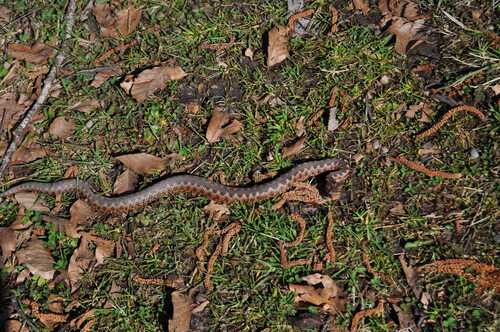
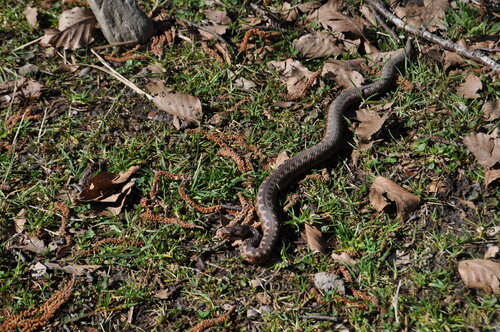
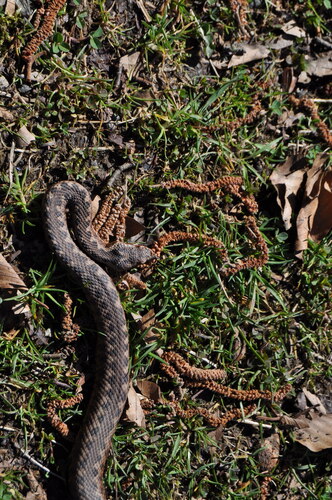
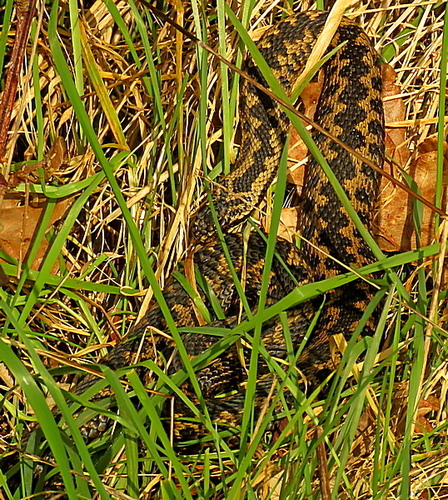
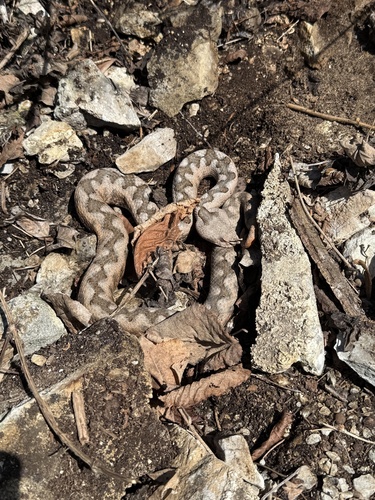
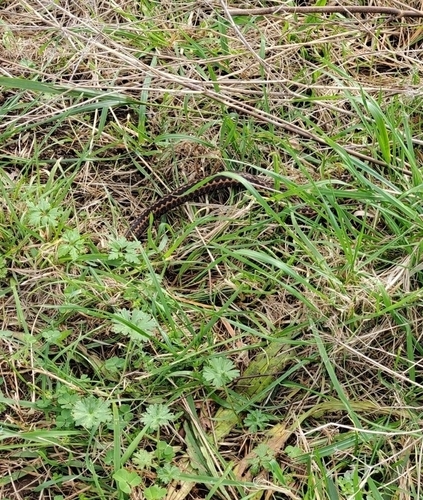
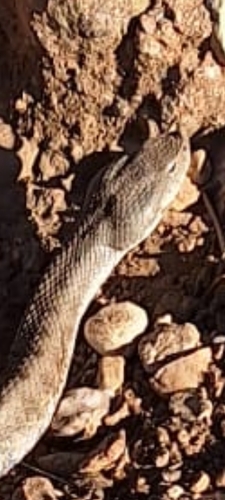
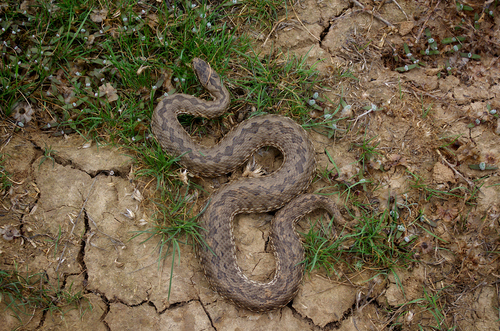
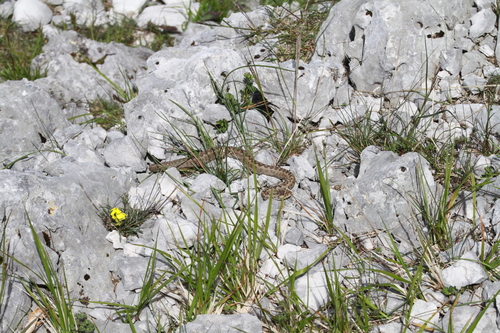
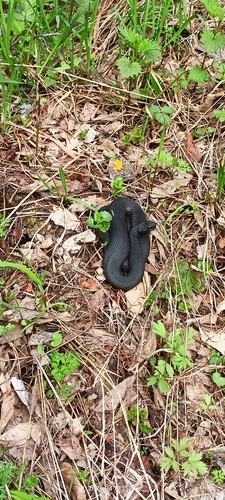
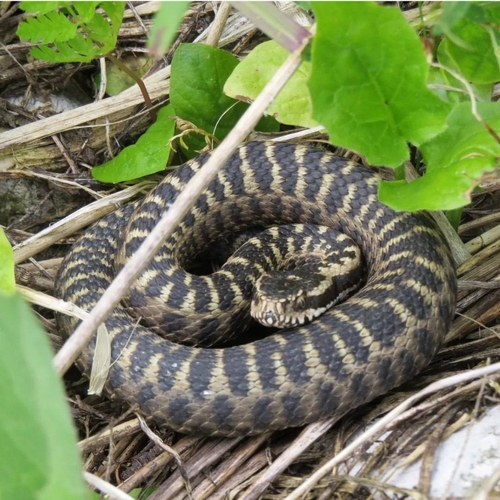
4 photographs of the Asp Viper. © Olivier Morel.
The Asp Viper (Vipera aspis) is a venomous snake in the Viperidae family, recorded in 11 countries.
If you are bitten
This is a venomous snake. Treat any bite as a medical emergency: stay calm, keep the bitten limb still and roughly level with the heart, remove rings and tight clothing, and get to emergency care immediately. Do not apply a tourniquet, cut the wound, apply ice, or try to suck out venom. Call your local emergency number or poison center.
- Family
- Viperidae
- Danger
- high
About the Asp Viper
Vipera aspis is a viper species found in southwestern Europe.
Its common names include asp, asp viper, European asp, and aspic viper, among others. Like all other vipers, it is venomous. Bites from this species can be more severe than from the European adder, V. berus; not only can they be very painful, but approximately 4% of all untreated bites are fatal. The specific epithet, aspis, is a Greek word that means "viper." Five subspecies are currently recognized, including the nominate subspecies described here.
Description
The species grows to an average total length of 60–65 centimetres (24–26 in). Males reach a maximum total length of 85 cm (33 in), females rarely more than 75 cm (30 in). Males, however, are a little slimmer than females. The tail is very short: one-seventh to one-ninth of total body length in females, and one-sixth to one-eighth in males.
The head is broad, triangular and quite distinct from the neck. The tip of the snout is slightly but distinctly upturned. The rostral scale is generally higher than it is wide, touching 2 to 3 scales on the upper side of the snout. Dorsally, the snout is flat with distinct and slightly raised sharp margins. The nasal scale is single (hardly ever divided) and separated from the rostral by a single nasorostral scale. The crown is covered with numerous small and irregular scales of different sizes that are mostly smooth, but sometimes slightly keeled. Frontal and parietal scales are usually not present, but if so, they are small and irregularly shaped, with the frontal separated from the supraoculars by 2 scale rows. The supraocular scales are large and distinct, separated by 4–7 scale rows. There are 10–12 (rarely 8–18) small circumorbital scales below the supraocular. The eye is separated from the supralabials by 2 (rarely 3) scale rows. The vertical diameter of the eye is about the same as the distance between the eye and the mouth. There are 9–13 supralabials. The 4th–5th supralabials (rarely 4th–6th or 5th–6th) are separated from the eye by 2 (rarely 3) rows of small scales, but sometimes there is a single scale between the 4th supralabial and the eye. Generally, the temporal scales are smooth, but sometimes slightly keeled.
Midbody, there are 21–23 (rarely 19 or 25) rows of dorsal scales. These are strongly keeled, except for the outermost rows that vary and are sometimes smooth. There are 134–170 ventral scales. Subspecies V. a. aspis averages fewer than 150 ventrals, while V. a. atra averages more. The anal scale is single. Males have 32–49 subcaudals, females 30–43. The subcaudal scales are paired.
The dorsal markings vary strongly, but only rarely take the form of a clear zigzag, as in V. berus.
Common names and historical usage
Adapted from Wikipedia, available under CC BY-SA.
Local and regional names
The Asp Viper is known by these names across the regions where it lives:
- Dutch
- Aspisadder
- French
- Vipère aspic
- German
- Aspisviper
- Italian
- vipera comune
- Spanish
- Vibora áspid, Víbora aspid
Frequently asked: Asp Viper
- Is the Asp Viper venomous?
- Yes. The Asp Viper (Vipera aspis) is venomous and belongs to the Viperidae family (viper). Its bite is considered high risk to people. Treat any bite as a medical emergency.
- Is the Asp Viper poisonous?
- Snakes are venomous, not poisonous. "Poisonous" means harmful to eat or touch; "venomous" means injecting toxins through a bite. The Asp Viper is venomous, delivering venom through a bite.
- Is the Asp Viper dangerous?
- This is a venomous snake. Treat any bite as a medical emergency: stay calm, keep the bitten limb still and roughly level with the heart, remove rings and tight clothing, and get to emergency care immediately. Do not apply a tourniquet, cut the wound, apply ice, or try to suck out venom. Call your local emergency number or poison center.
- Where does the Asp Viper live?
- The Asp Viper has verified records in 11 countries, including France, Spain, Italy. See the distribution section below for its full range.
- Why is it called the Asp Viper?
- Common names of Vipera aspis include "asp", "asp viper", "European asp", "aspic viper", "European viper" and "Jura viper". In the past, the term "asp" has been used to refer to any venomous snake. The snake which supposedly killed the Egyptian Queen Cleopatra is named by Velleius Paterculus as an asp, and by Martial as a viper. Virgil mentions two snakes but does not name their species, while Plutarch mentions twin prick marks on her arm but does not state that these were toothmarks, so they could also have been from a poisoned hair pin.
If you are bitten by the Asp Viper
Do
- Get away from the snake and stay calm. Most bites worsen when people panic or try again to handle the snake.
- Call 911 or Poison Control (1-800-222-1222) right away. Antivenom works best when given early.
- Note the time of the bite and, from a safe distance, the snake's color and pattern, a phone photo is enough. Do not chase it.
- Keep the bitten limb still and at roughly heart level. Sit or lie down and limit movement.
- Remove rings, watches, and tight clothing near the bite before swelling starts.
- Gently wash the bite with soap and water and cover it with a clean, dry dressing.
Do not
- Do not cut the wound or try to suck out the venom.
- Do not apply a tourniquet or ice.
- Do not drink alcohol or caffeine.
- Do not take aspirin or ibuprofen, they can worsen bleeding. Acetaminophen is safer for pain.
- Do not try to catch or kill the snake. A dead snake can still bite by reflex.
First-aid guidance adapted from the U.S. Centers for Disease Control and Prevention (CDC NIOSH), Venomous Snakes. Educational only; always follow the instructions of emergency responders.
Where it is found
More Viperidae snakes
Classification
How scientists group this snake, from the broadest category down to the exact species. Each step narrows to its closest relatives.
Keep learning
- Are Snakes Dangerous? The Real Risk, in PerspectiveMost snakes are harmless and avoid people. Here is the honest picture of snakebite risk worldwide and how to lower your own.
- Snakebite First Aid: What to Do (and What Never to Do)A clear, CDC-based guide to snakebite first aid: the steps that help, the popular myths that hurt, and how to tell a serious bite from a minor one.
- Venomous vs Nonvenomous: How to Tell the DifferenceThe folk rules for telling venomous snakes apart, where each one fails, and why location-based identification beats guessing by sight.
- What to Do If You Find a SnakeFound a snake at home or on a trail? Here is how to stay calm, give it space, identify it safely, and know when to call a professional.
Distribution from GBIF & iNaturalist. Venom status per CDC. Background: Wikipedia. Informational only. Never handle a snake to identify it.