
Boidae
Yellow Anaconda
HarmlessEunectes notaeus
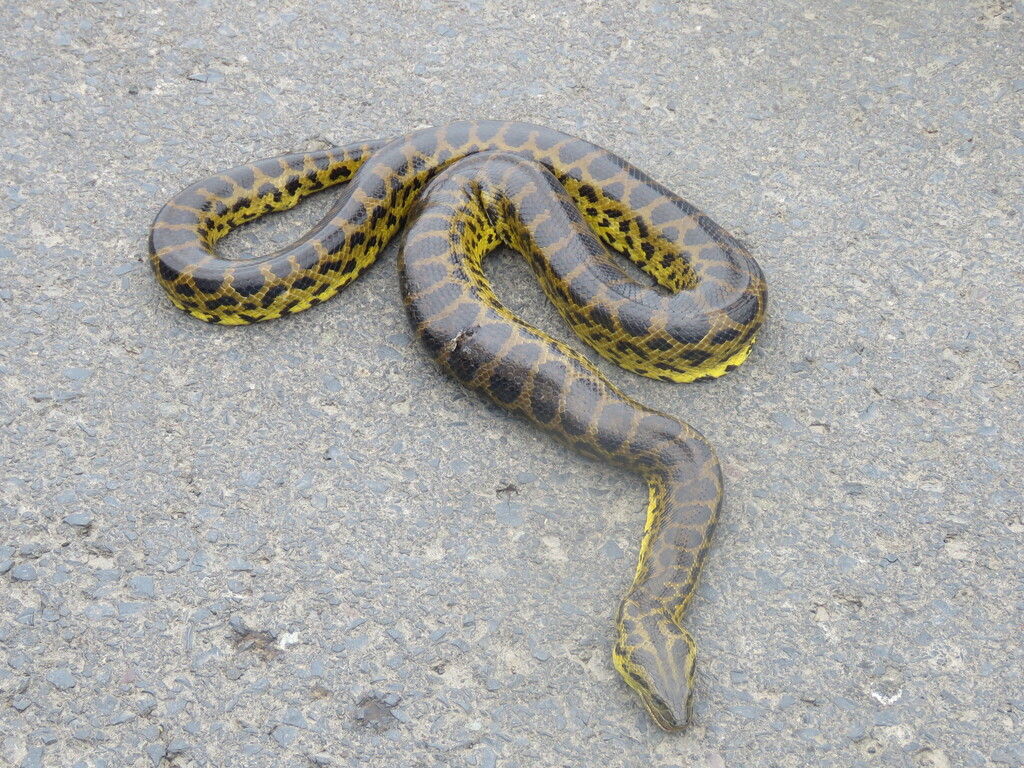
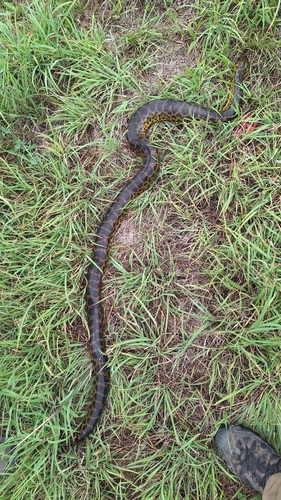
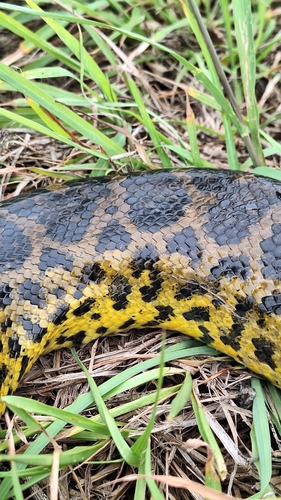
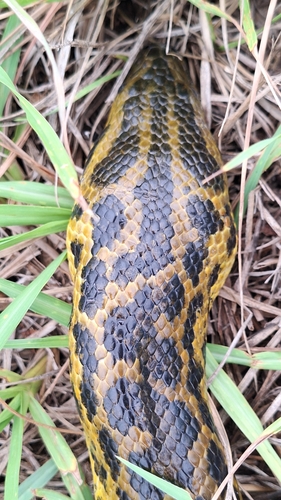
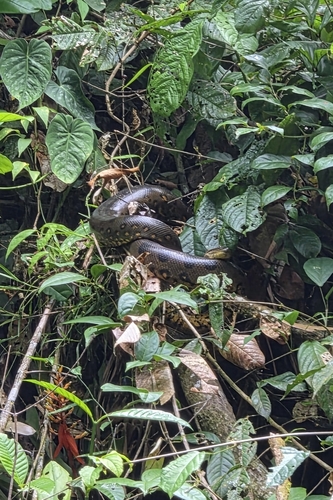
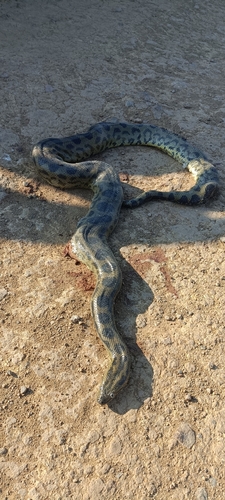
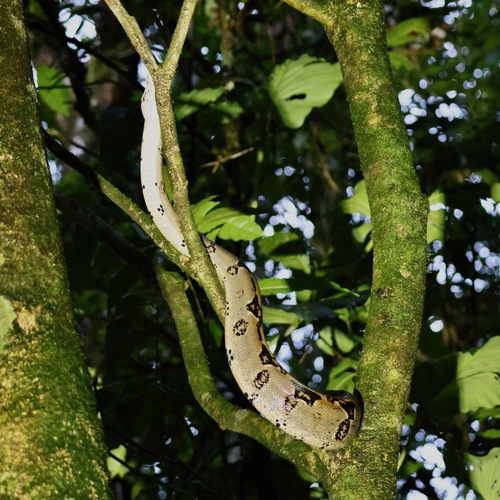
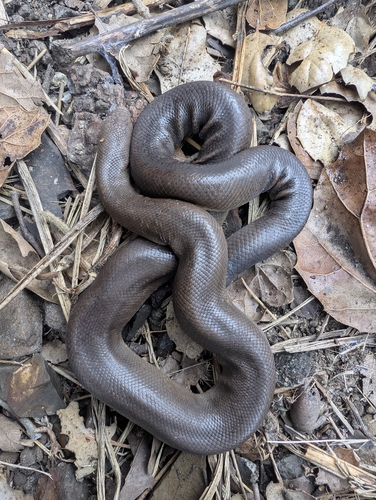
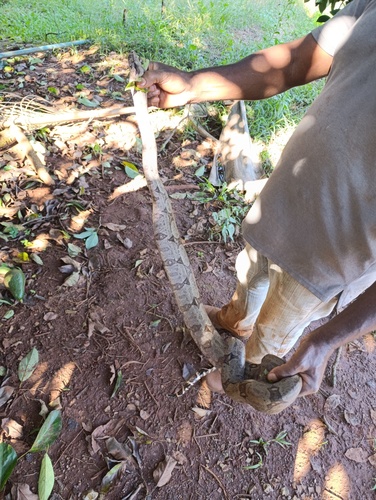
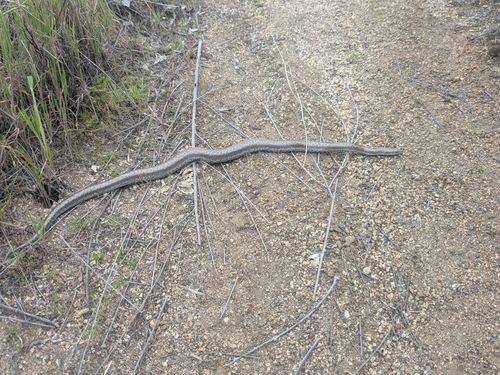
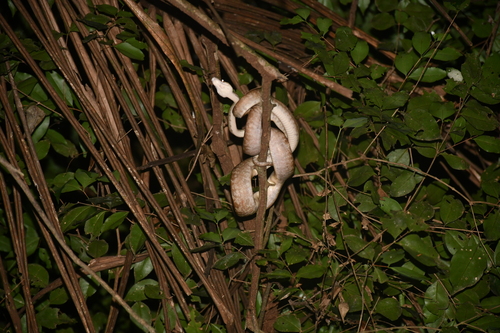
4 photographs of the Yellow Anaconda. © Gonzalo Roget.
The Yellow Anaconda (Eunectes notaeus) is a non-venomous snake in the Boidae family, recorded in 6 countries.
- Family
- Boidae
About the Yellow Anaconda
The yellow anaconda (Eunectes notaeus), also known as the Paraguayan anaconda, is a boa species endemic to southern South America. It is one of the largest snakes in the world but smaller than its close relative, the green anaconda. No subspecies are currently recognized. Like all boas and pythons, it is non-venomous and kills its prey by constriction.
Etymology
The Neo-Latin specific name notaeus derives from Ancient Greek: νωταίος, romanized: nōtaios, lit. 'dorsal' (νωταίος is a poetic form of νωτιαίος/nōtiaios). In distinguishing his new species Eunectes notaeus from Eunectes murinus, Edward Drinker Cope stated, "Dorsal scales are larger and in fewer rows."
Description
Adults grow to an average of 3.7 m (12 ft 1+1⁄2 in) in total length. Females are generally larger than males and have been reported up to 4.6 m (15 ft 1 in) in length. They commonly weigh 25 to 35 kg (55 to 77 lb), but specimens weighing more than 55 kg (121 lb) have been observed. The color pattern consists of a yellow, golden-tan or greenish-yellow ground color overlaid with a series of black or dark brown saddles, blotches, spots and streaks.
Distribution and habitat
The range of the yellow anaconda encompasses the drainage of the Paraguay River and its tributaries, from the Pantanal region in Bolivia, Paraguay, and western Brazil to northeastern Argentina and northern Uruguay.
The anaconda's most suitable habitat occurs mostly in northern Argentina and southern Paraguay. It prefers mostly aquatic habitats, including swamps, marshes, and brush-covered banks of slow-moving rivers and streams. The species appears to have been introduced in Florida, although it is unknown whether the small population (thought to derive from escaped pets) is reproductive.
The taxonomic sinking of Eunectes beniensis and Eunectes deschauenseei into Eunectes notaeus proposed by Rivas et al. (2023) results in this species also being found in western Bolivia (and possibly nearby Brazil), northern Brazil, coastal French Guiana and possibly Suriname.
Reproduction
Yellow anacondas are mostly sequentially monogamous. Males will follow the scent of a female's pheromones in the air to begin courtship which usually happens in the water. Yellow anacondas can form breeding balls which consist of one female and several males at a time. In the breeding ball, the males will fight for access to the female and the largest male typically succeeds. The breeding period for yellow anacondas occurs every year between April and May. The gestation period for female yellow anacondas is 6 months. Females are ovoviviparous, so they will incubate the eggs inside of their body and give birth to live young. The female can give birth anywhere from 4 to 82 young which can be around 60 cm in length. The female leaves the young directly after they are born to fend for themselves. Sexual maturity for yellow anacondas is 3 to 4 years old.
Ecology
Adapted from Wikipedia, available under CC BY-SA.
Frequently asked: Yellow Anaconda
- Is the Yellow Anaconda venomous?
- No. The Yellow Anaconda (Eunectes notaeus) is non-venomous and is not considered dangerous to humans. Like most snakes, it will retreat rather than bite when given the chance.
- Is the Yellow Anaconda poisonous?
- Snakes are venomous, not poisonous. "Poisonous" means harmful to eat or touch; "venomous" means injecting toxins through a bite. The Yellow Anaconda is neither poisonous nor venomous.
- Is the Yellow Anaconda dangerous?
- The Yellow Anaconda is not dangerous to humans. It has no medically significant venom and bites only defensively if cornered or handled.
- Where does the Yellow Anaconda live?
- The Yellow Anaconda has verified records in 6 countries, including Argentina, Brazil, Paraguay. See the distribution section below for its full range.
- Why is it called the Yellow Anaconda?
- The Neo-Latin specific name notaeus derives from Ancient Greek: νωταίος, romanized: nōtaios, lit. 'dorsal' (νωταίος is a poetic form of νωτιαίος/nōtiaios). In distinguishing his new species Eunectes notaeus from Eunectes murinus, Edward Drinker Cope stated, "Dorsal scales are larger and in fewer rows."
Where it is found
More Boidae snakes

Classification
How scientists group this snake, from the broadest category down to the exact species. Each step narrows to its closest relatives.
Keep learning
- What to Do If You Find a SnakeFound a snake at home or on a trail? Here is how to stay calm, give it space, identify it safely, and know when to call a professional.
- Venomous vs Nonvenomous: How to Tell the DifferenceThe folk rules for telling venomous snakes apart, where each one fails, and why location-based identification beats guessing by sight.
- What Is a Snake? Anatomy and the BasicsA clear overview of what makes a snake a snake: limbless body plan, anatomy, evolution from lizards, species diversity, and why they are ectothermic.
- How to Keep Snakes Out of Your Yard and HomeA practical guide to keeping snakes out of your yard and home using habitat changes that work, plus what to skip and what to do if one shows up.
Distribution from GBIF & iNaturalist. Venom status per CDC. Background: Wikipedia. Informational only. Never handle a snake to identify it.