
Colubridae
Common Wolf Snake
HarmlessLycodon capucinus
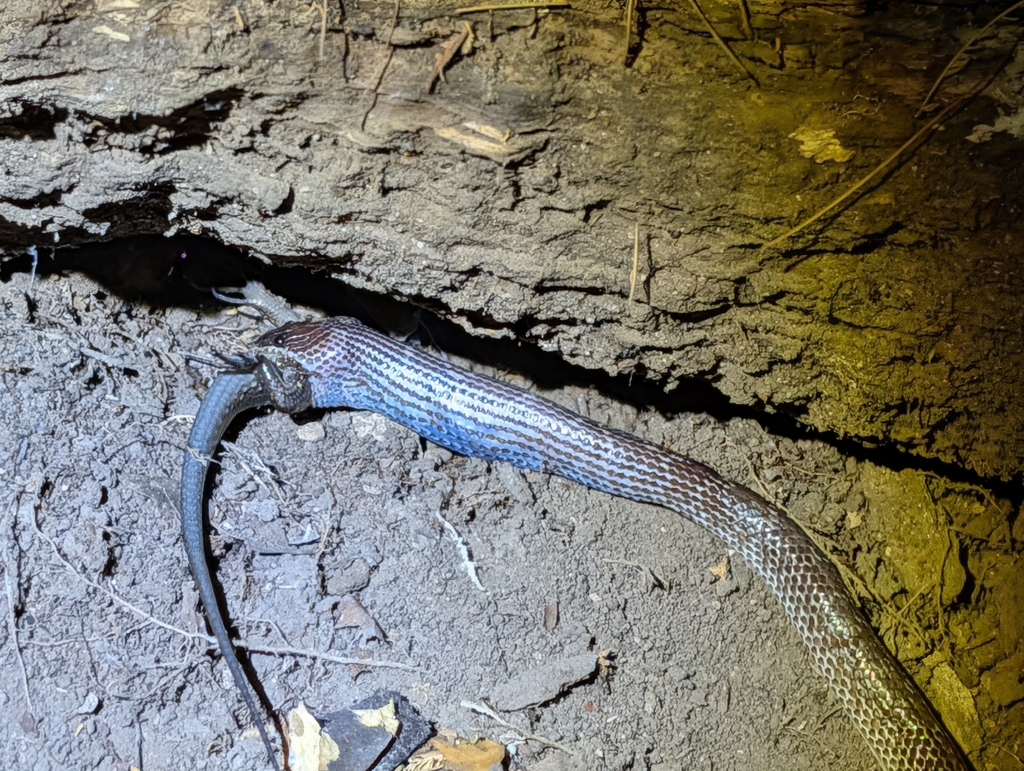
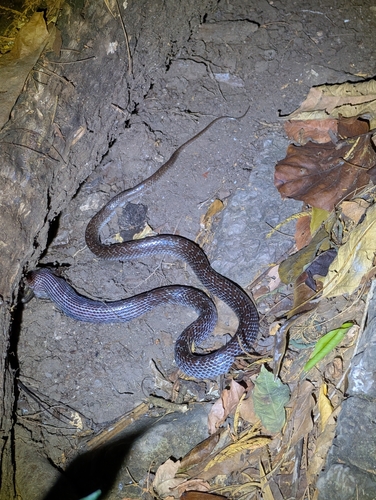
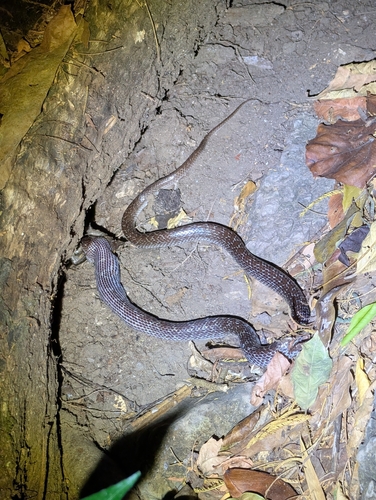
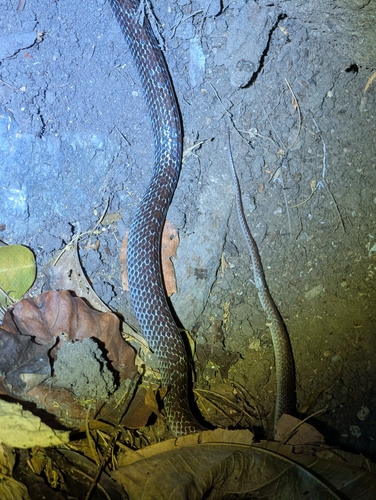
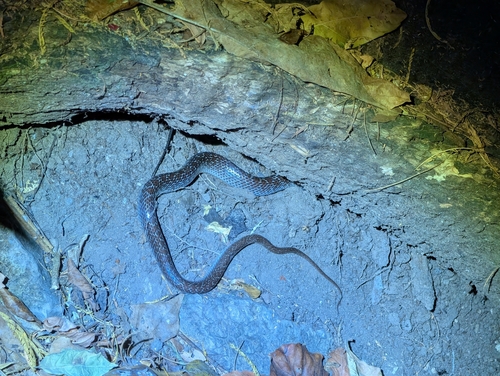
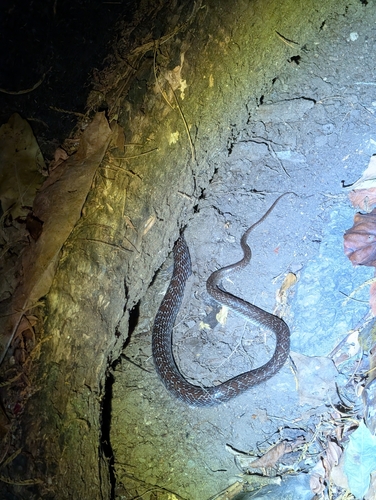
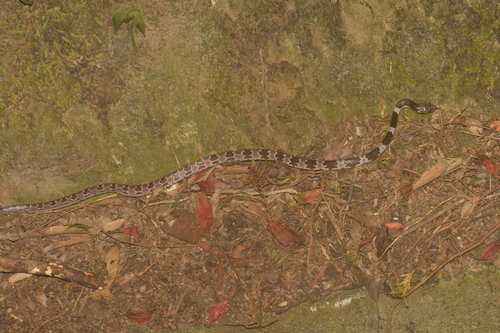
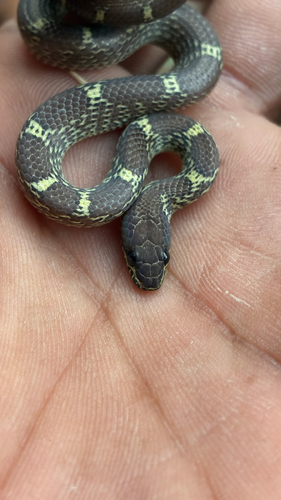
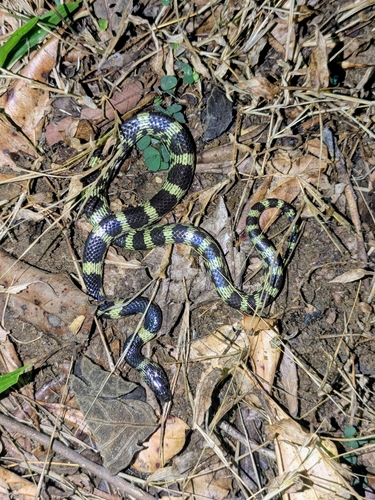
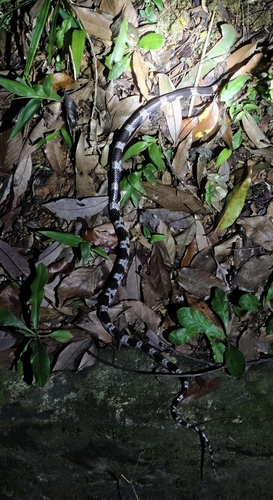
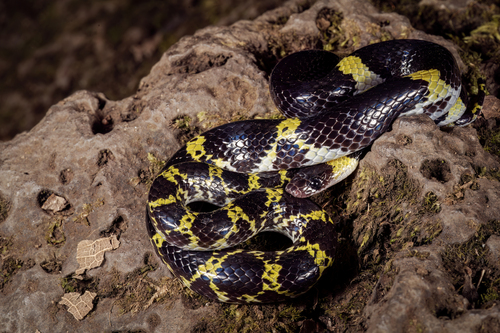
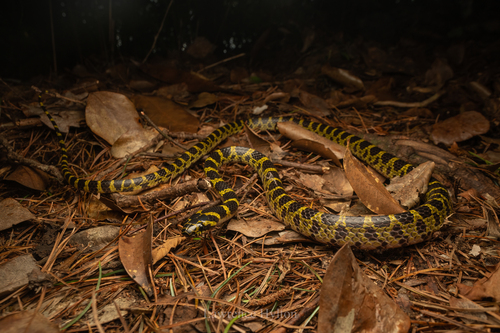
6 photographs of the Common Wolf Snake. © Zac Peterson.
The Common Wolf Snake (Lycodon capucinus) is a non-venomous snake in the Colubridae family, recorded in 28 countries.
- Family
- Colubridae
About the Common Wolf Snake
Lycodon capucinus, also known as the common wolf snake, is a species of colubrid snake commonly found in the Indo-Australian Archipelago. The species is named after the enlarged front teeth which give them a muzzled appearance similar to canines and makes the snout somewhat more squarish than other snakes.
Description
A slender-bodied small snake that ranges from barely three feet to less than one meter. Most wild-caught specimens usually reach less than these lengths. Coloration is adapted for life underground and on the forest floor. Shades of jet black, reddish-brown or dark gray with speckles, blotches and spots of white or pale yellow scattered over the body are its usual colors. There is also a distinct white coloration around its neck. Their color patterns vary from one geographic location to another. There are albino-colored ones which are very rare among this snake species. The snout is duck-bill-shaped for digging in soft or sandy ground, with enlarged front teeth. This species is relatively benign (not harmful) to humans.
Distribution
The common wolf snake is found in Cambodia, Thailand, Vietnam, Singapore, Laos, SE China, Hong Kong, Indonesia (Sumatra, Java, India, Bali, Sumbawa, Sumba, Komodo, Flores, Lomblen, Alor, Sawu, Roti, Timor, Wetar, Babar Islands, Kalao, Salajar, Buton, Sulawesi), West Malaysia, Johor: Pulau Besar, Maldives, Mascarenes (Mauritius, Reunion; fide Glaw, pers. comm.), Borneo, and The Philippines (Bantayan, Bohol, Cebu, Cuyo, Leyte, Luzon, Pampanga, Masbate, Mindanao, Mindoro, Negros, Palawan, Panay, Romblon, Samar), Tarlac.
Behavior
The common wolf snake is non-venomous. Even when they do bite humans, the impact is usually not harmful. Most bites result in pain and swelling, and do not result in any serious harm.
It is quite a nervous snake when picked up or handled and will not hesitate to bite. They may also move their tails in a to-and-fro motion much like a rattlesnake when they feel threatened. A fossorial animal, it loves burrowing down in the earth but is most often found in open ground, on rocks or in low vegetation, sometimes showing a semi-arboreal behavior. A nocturnal creature, it is most active during the night, but is also observed during daybreak. It also climbs on walls of any building. Most captive specimens become tame after some time and with proper handling.
Diet
In the wild, Lycodon capucinus feeds mainly on small lizards such as geckos and they are also among the top predators of skinks which makes it common to humans due to the abundance of prey near and in homes. They may also devour small frogs, if available. In captivity, they may be trained to feed on slender fishes such as goby or lizard-scented pinkie mice, though the latter proves to be harder.
Conservation status
Adapted from Wikipedia, available under CC BY-SA.
Frequently asked: Common Wolf Snake
- Is the Common Wolf Snake venomous?
- No. The Common Wolf Snake (Lycodon capucinus) is non-venomous and is not considered dangerous to humans. Like most snakes, it will retreat rather than bite when given the chance.
- Is the Common Wolf Snake poisonous?
- Snakes are venomous, not poisonous. "Poisonous" means harmful to eat or touch; "venomous" means injecting toxins through a bite. The Common Wolf Snake is neither poisonous nor venomous.
- Is the Common Wolf Snake dangerous?
- The Common Wolf Snake is not dangerous to humans. It has no medically significant venom and bites only defensively if cornered or handled.
- Where does the Common Wolf Snake live?
- The Common Wolf Snake has verified records in 28 countries, including Philippines, Indonesia, Hong Kong. See the distribution section below for its full range.
- What does the Common Wolf Snake eat?
- In the wild, Lycodon capucinus feeds mainly on small lizards such as geckos and they are also among the top predators of skinks which makes it common to humans due to the abundance of prey near and in homes. They may also devour small frogs, if available. In captivity, they may be trained to feed on slender fishes such as goby or lizard-scented pinkie mice, though the latter proves to be harder.
Where it is found
More Colubridae snakes
Classification
How scientists group this snake, from the broadest category down to the exact species. Each step narrows to its closest relatives.
- OrderThe broad group of scaled reptiles: all snakes and lizards
- Squamata
- FamilyA group of related snakes that share key traits
- Colubridae
- GenusA close-knit group of very similar species
- Lycodon
- SpeciesThis exact snake, named in the two-part scientific name
- Lycodon capucinus
Keep learning
- What to Do If You Find a SnakeFound a snake at home or on a trail? Here is how to stay calm, give it space, identify it safely, and know when to call a professional.
- Venomous vs Nonvenomous: How to Tell the DifferenceThe folk rules for telling venomous snakes apart, where each one fails, and why location-based identification beats guessing by sight.
- What Is a Snake? Anatomy and the BasicsA clear overview of what makes a snake a snake: limbless body plan, anatomy, evolution from lizards, species diversity, and why they are ectothermic.
- How to Keep Snakes Out of Your Yard and HomeA practical guide to keeping snakes out of your yard and home using habitat changes that work, plus what to skip and what to do if one shows up.
Distribution from GBIF & iNaturalist. Venom status per CDC. Background: Wikipedia. Informational only. Never handle a snake to identify it.