
Colubridae
Formosa Wolf Snake
HarmlessLycodon ruhstrati
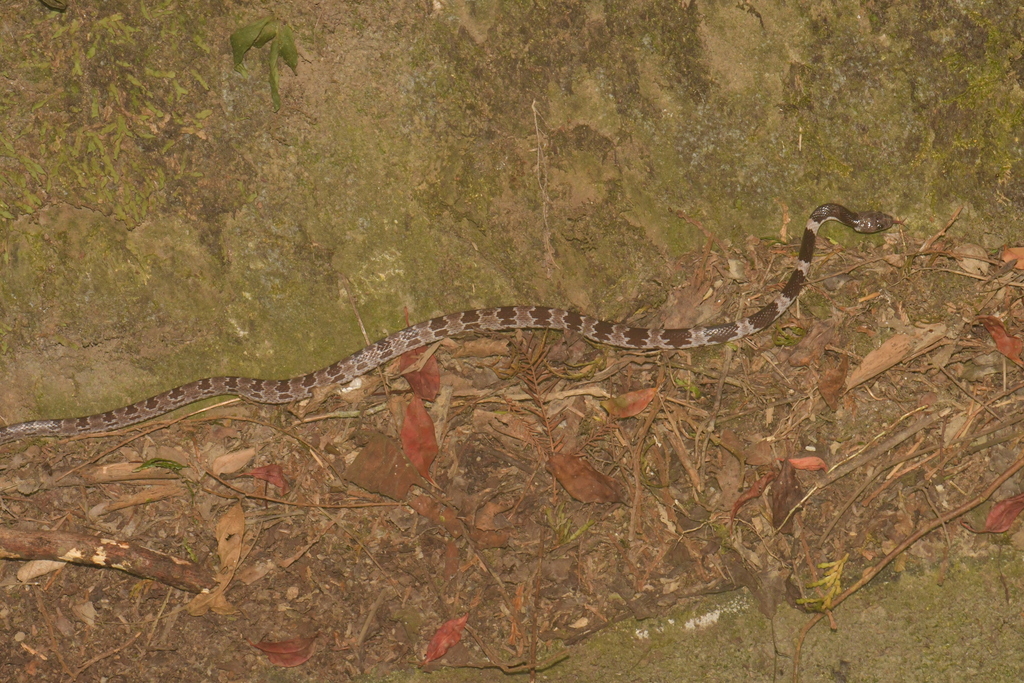
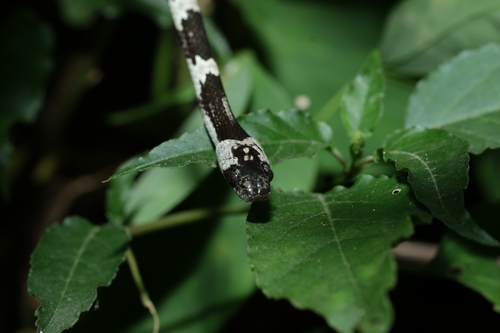
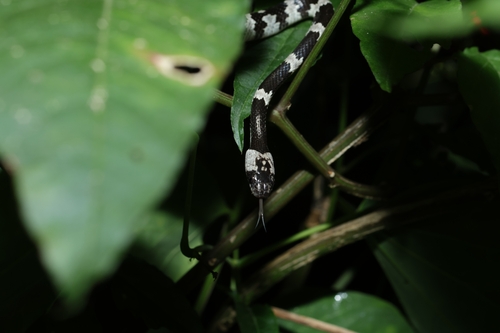
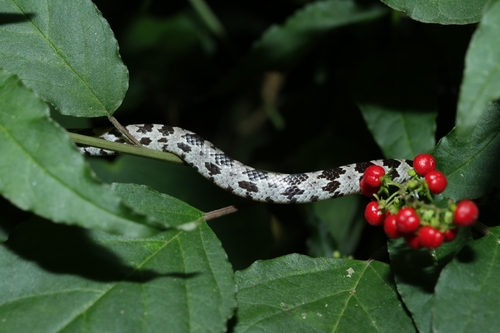
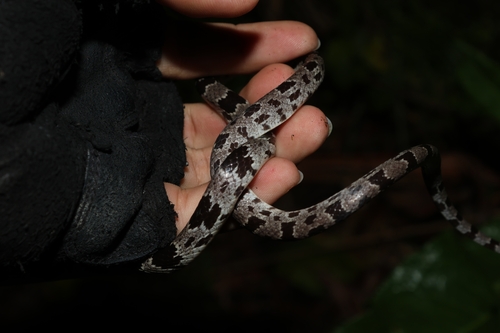
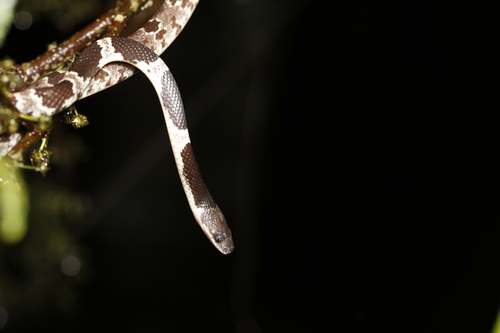
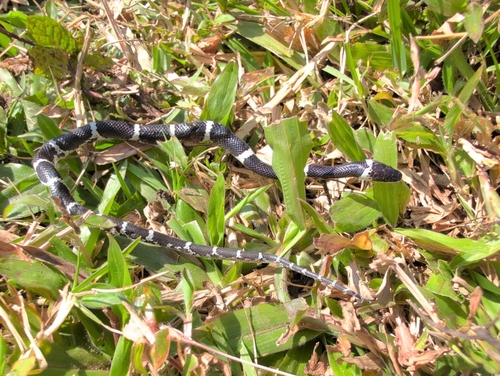
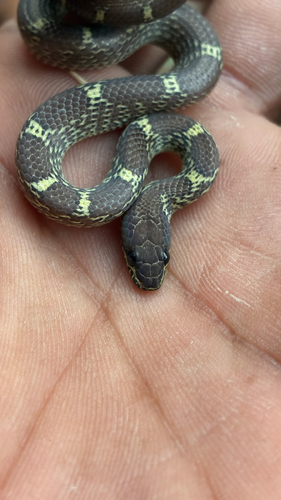
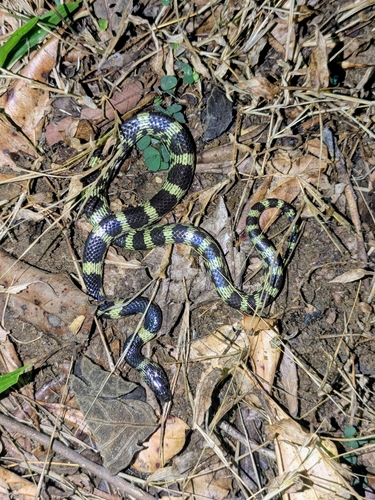
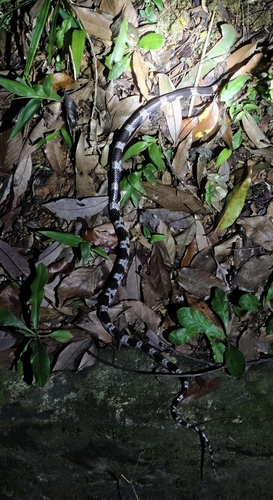
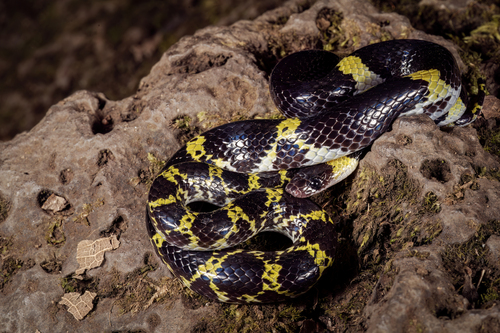
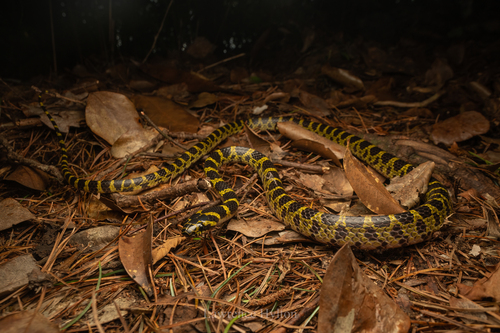
6 photographs of the Formosa Wolf Snake. © Weiting Liu.
The Formosa Wolf Snake (Lycodon ruhstrati) is a non-venomous snake in the Colubridae family, recorded in 6 countries.
- Family
- Colubridae
About the Formosa Wolf Snake
Lycodon ruhstrati, also known as Ruhstrat's wolf snake, the mountain wolf snake, or the Formosa wolf snake, is a species of non-venomous colubrid snake found in Taiwan, southern and eastern China, and northern Vietnam.
Taxonomy
The specific name, ruhstrati, was chosen to honor German-born Ernst Konrad A. Ruhstrat (died 1913), of the Imperial Chinese Customs Service, who collected the type specimens of this species in southern Taiwan.
Lycodon ruhstrati is a member of the genus Lycodon, a genus of snakes commonly known as wolf snakes. The genus belongs to the snake family Colubridae. Colubridae is the largest snake family, with member genera and species being found on every continent except Antarctica.
The genus Lycodon has at times been placed in the genus Oligodon, but this classification is under dispute. The species Lycodon multifasciatus was previously listed as a subspecies of L. ruhstrati, being classified as Lycodon ruhstrati multifasciatus in 1984. However, in 2008 it was classified as a separate species as Lycodon multifasciatus. The species Dinodon futsingensis, first described in 1928, was synonymised with Lycodon ruhstrati in 1929. However, in 2009 it was recognized as a separate species, and named Lycodon futsingensis. In 2013, the genetic sequence of L. ruhsrati was used as part of a study which suggested combining the genera Lycodon and Dinodon. L. ruhstrati currently has two subspecies: Lycodon ruhstrati ruhstrati (Fischer, 1886), the nominate subspecies, first described from Taiwan; and Lycodon ruhstrati abditus (G. Vogel et al., 2009), described from Vietnam.
Description
The color pattern of L. ruhstrati is highly variable, although it tends to be dark-colored with several light-colored crossbands on its back. The largest specimen found prior to 2008 had a total length (including tail) of 94 cm (37 in).
Habitat and ecology
L. ruhstrati is oviparous, or egg-laying, with females laying four eggs in each clutch. It is a montane species and is found on slopes, in caves, and beneath stones in mountain streams. It is also found in agricultural land and both natural and plantation forests in the foothills.
The snake is known to predate upon the brown anole, Anoles sagrei, as well as upon Diploderma swinhonis.
Range and distribution
L. ruhstrati occurs in the Tranninh Plateau of Laos, northern Vietnam, Taiwan, and southern China. It has been found in the Chinese provinces of Anhui, Fujian, Gansu, Guangdong, Guanxi, Guizhou, Jiangxi, Shaanxi, Sichuan, and Zhejiang, as well as Hong Kong. The subspecies Lycodon ruhstrati multifasciatus (Maki, 1931) has also been found in Japan's Ryukyu Islands; however, this subspecies was subsequently reclassified as a separate species.
Adapted from Wikipedia, available under CC BY-SA.
Frequently asked: Formosa Wolf Snake
- Is the Formosa Wolf Snake venomous?
- No. The Formosa Wolf Snake (Lycodon ruhstrati) is non-venomous and is not considered dangerous to humans. Like most snakes, it will retreat rather than bite when given the chance.
- Is the Formosa Wolf Snake poisonous?
- Snakes are venomous, not poisonous. "Poisonous" means harmful to eat or touch; "venomous" means injecting toxins through a bite. The Formosa Wolf Snake is neither poisonous nor venomous.
- Is the Formosa Wolf Snake dangerous?
- The Formosa Wolf Snake is not dangerous to humans. It has no medically significant venom and bites only defensively if cornered or handled.
- Where does the Formosa Wolf Snake live?
- The Formosa Wolf Snake has verified records in 6 countries, including Chinese Taipei, China, Viet Nam. See the distribution section below for its full range.
Where it is found
More Colubridae snakes
Classification
How scientists group this snake, from the broadest category down to the exact species. Each step narrows to its closest relatives.
- OrderThe broad group of scaled reptiles: all snakes and lizards
- Squamata
- FamilyA group of related snakes that share key traits
- Colubridae
- GenusA close-knit group of very similar species
- Lycodon
- SpeciesThis exact snake, named in the two-part scientific name
- Lycodon ruhstrati
Keep learning
- What to Do If You Find a SnakeFound a snake at home or on a trail? Here is how to stay calm, give it space, identify it safely, and know when to call a professional.
- Venomous vs Nonvenomous: How to Tell the DifferenceThe folk rules for telling venomous snakes apart, where each one fails, and why location-based identification beats guessing by sight.
- What Is a Snake? Anatomy and the BasicsA clear overview of what makes a snake a snake: limbless body plan, anatomy, evolution from lizards, species diversity, and why they are ectothermic.
- How to Keep Snakes Out of Your Yard and HomeA practical guide to keeping snakes out of your yard and home using habitat changes that work, plus what to skip and what to do if one shows up.
Distribution from GBIF & iNaturalist. Venom status per CDC. Background: Wikipedia. Informational only. Never handle a snake to identify it.