
Colubridae
Red-banded Snake
HarmlessLycodon rufozonatus
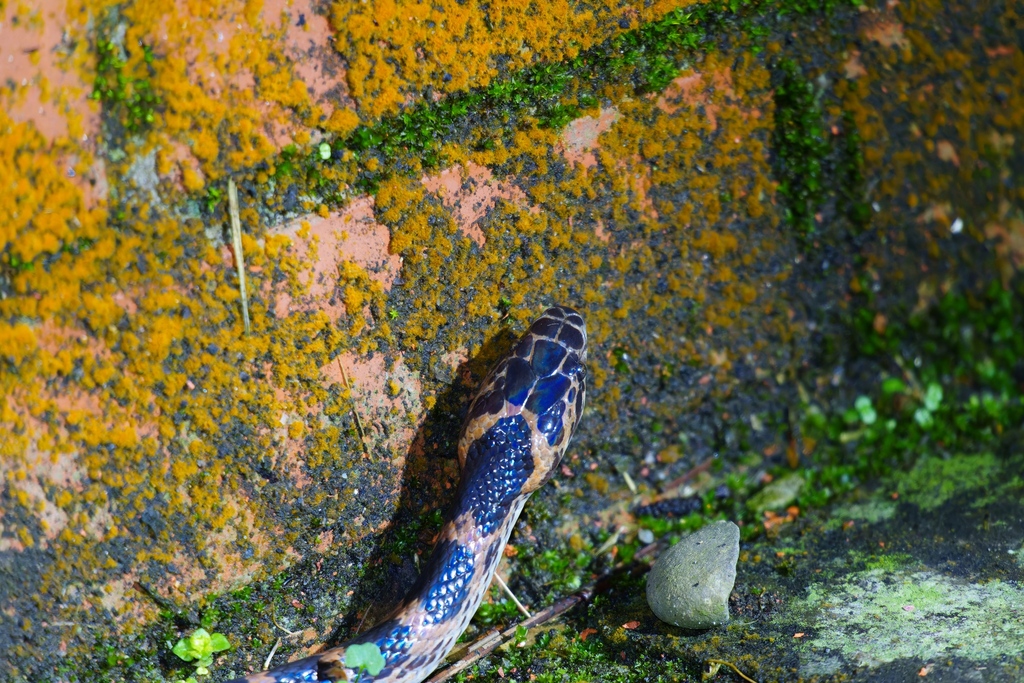
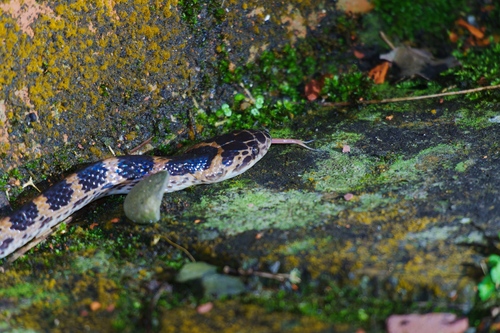
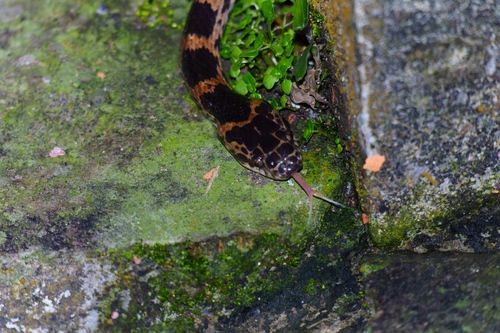
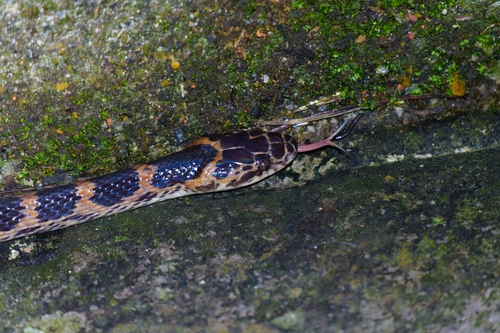
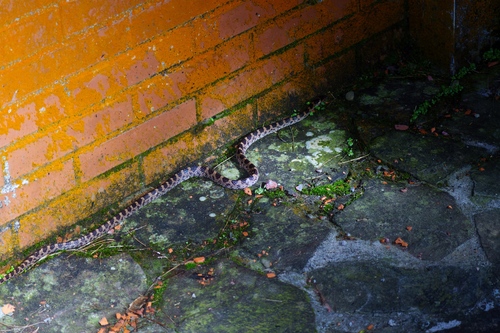
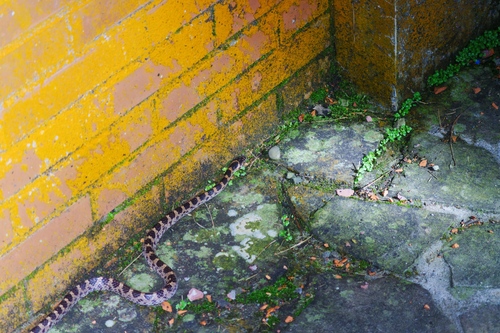
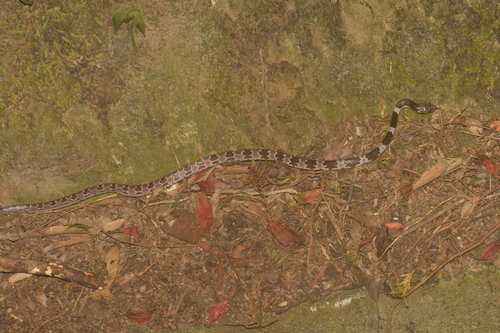
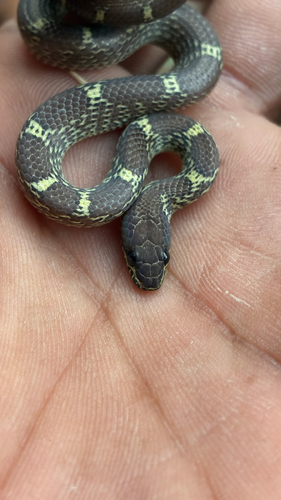
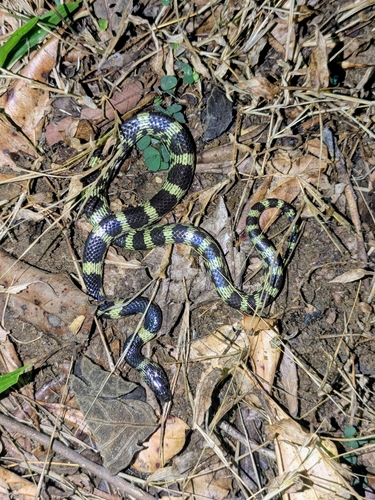
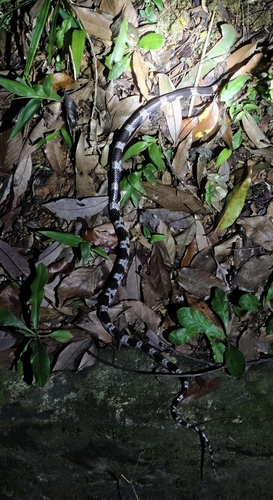
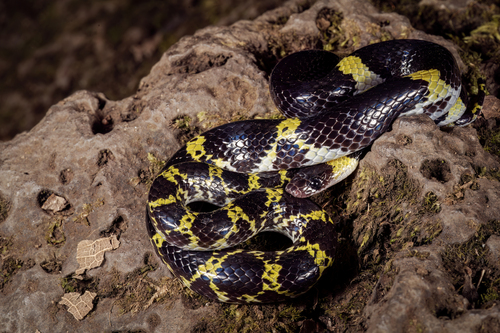
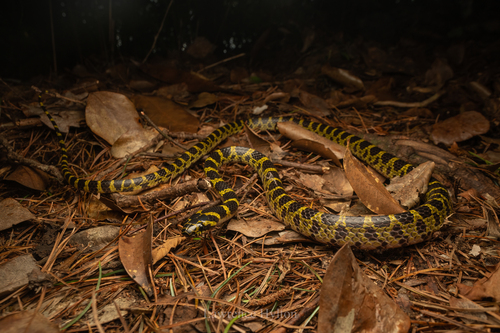
6 photographs of the Red-banded Snake. © Jay Paroline.
The Red-banded Snake (Lycodon rufozonatus) is a non-venomous snake in the Colubridae family, recorded in 12 countries.
- Family
- Colubridae
About the Red-banded Snake
Lycodon rufozonatus is a species of snake in the family Colubridae. The species is native to East Asia. It is medium-sized, nocturnal, and is considered non-venomous. Two subspecies are recognised: one of which, L. r. walli, is restricted to the Ryukyu Archipelago; the other, L. r. rufozonatus (Cantor 1842), is found only in Korea & China.
Etymology
The subspecific name, walli, is in honor of British herpetologist Frank Wall.
Description
Lycodon rufozonatus typically grows to a total length (including tail) of around 70 centimetres (28 in), reaching up to 130 cm (51 in) in extreme cases. The head is long and relatively flat, and somewhat separate from the neck. The medium-sized eyes bulge slightly and have vertical pupils. The ventral scales have a strong keel, while the dorsal scales are only faintly keeled; the scale count is typically 17:17:15, but can be up to 21:19:17.
Geographic range
Lycodon rufozonatus is found across a large part of East Asia, from the Korean Peninsula in the north (and extending just into easternmost Russia) to northern Laos and Vietnam in the south; the bulk of its range in found in eastern China. The continental populations are all placed in the nominate subspecies (L. r. rufozonatus); a second subspecies, L. r. walli, is found in the Ryukyu Archipelago of southern Japan.
Behaviour and ecology
Lycodon rufozonatus lives in a wide variety of habitats; it can be found from near sea level to as high as 2,000 metres (6,600 ft), and is most common near river plains. It is usually found on the ground, but is occasionally seen swimming in streams. It is nocturnal, feeding on fish, frogs, lizards, snakes and young birds. D. rufozonatus has a generally mild disposition, curling into a spherical mass with the head hidden when approached. Individuals can, however, be unpredictable, and some will bite readily. There are very few clinical reports on the toxinology of D. rufozonatus bites, but the species appears to be non-venomous. L. rufozonatus can harbour tapeworms of the genus Spirometra, and the consumption of raw meat from D. rufozonatus has led to cases of human sparganosis in Korea and Japan.
Reproduction
L. rufozonatus is oviparous.
Taxonomic history
The species was first described as "Lycodon rufo-zonatus " by Theodore Edward Cantor in an 1842 paper on the fauna of "Chusan" (Zhoushan, China) in the Annals and Magazine of Natural History. Cantor included it among the "innocuous" (not venomous) species, and described it as "Brown, with numerous transversal crimson bands; the abdominal surface pearl-coloured, spotted with black on the tail".
Common names
L. rufozonatus is known by several common names, including "Asian king snake", "banded red snake", "red banded krait", "red banded odd-toothed snake" and "red-banded snake".
Adapted from Wikipedia, available under CC BY-SA.
Frequently asked: Red-banded Snake
- Is the Red-banded Snake venomous?
- No. The Red-banded Snake (Lycodon rufozonatus) is non-venomous and is not considered dangerous to humans. Like most snakes, it will retreat rather than bite when given the chance.
- Is the Red-banded Snake poisonous?
- Snakes are venomous, not poisonous. "Poisonous" means harmful to eat or touch; "venomous" means injecting toxins through a bite. The Red-banded Snake is neither poisonous nor venomous.
- Is the Red-banded Snake dangerous?
- The Red-banded Snake is not dangerous to humans. It has no medically significant venom and bites only defensively if cornered or handled.
- Where does the Red-banded Snake live?
- The Red-banded Snake has verified records in 12 countries, including Chinese Taipei, Korea, Republic of, China. See the distribution section below for its full range.
- Why is it called the Red-banded Snake?
- The subspecific name, walli, is in honor of British herpetologist Frank Wall.
Where it is found
More Colubridae snakes
Classification
How scientists group this snake, from the broadest category down to the exact species. Each step narrows to its closest relatives.
- OrderThe broad group of scaled reptiles: all snakes and lizards
- Squamata
- FamilyA group of related snakes that share key traits
- Colubridae
- GenusA close-knit group of very similar species
- Lycodon
- SpeciesThis exact snake, named in the two-part scientific name
- Lycodon rufozonatus
Keep learning
- What to Do If You Find a SnakeFound a snake at home or on a trail? Here is how to stay calm, give it space, identify it safely, and know when to call a professional.
- Venomous vs Nonvenomous: How to Tell the DifferenceThe folk rules for telling venomous snakes apart, where each one fails, and why location-based identification beats guessing by sight.
- What Is a Snake? Anatomy and the BasicsA clear overview of what makes a snake a snake: limbless body plan, anatomy, evolution from lizards, species diversity, and why they are ectothermic.
- How to Keep Snakes Out of Your Yard and HomeA practical guide to keeping snakes out of your yard and home using habitat changes that work, plus what to skip and what to do if one shows up.
Distribution from GBIF & iNaturalist. Venom status per CDC. Background: Wikipedia. Informational only. Never handle a snake to identify it.