
Colubridae
Indian Wolf Snake
HarmlessLycodon aulicus
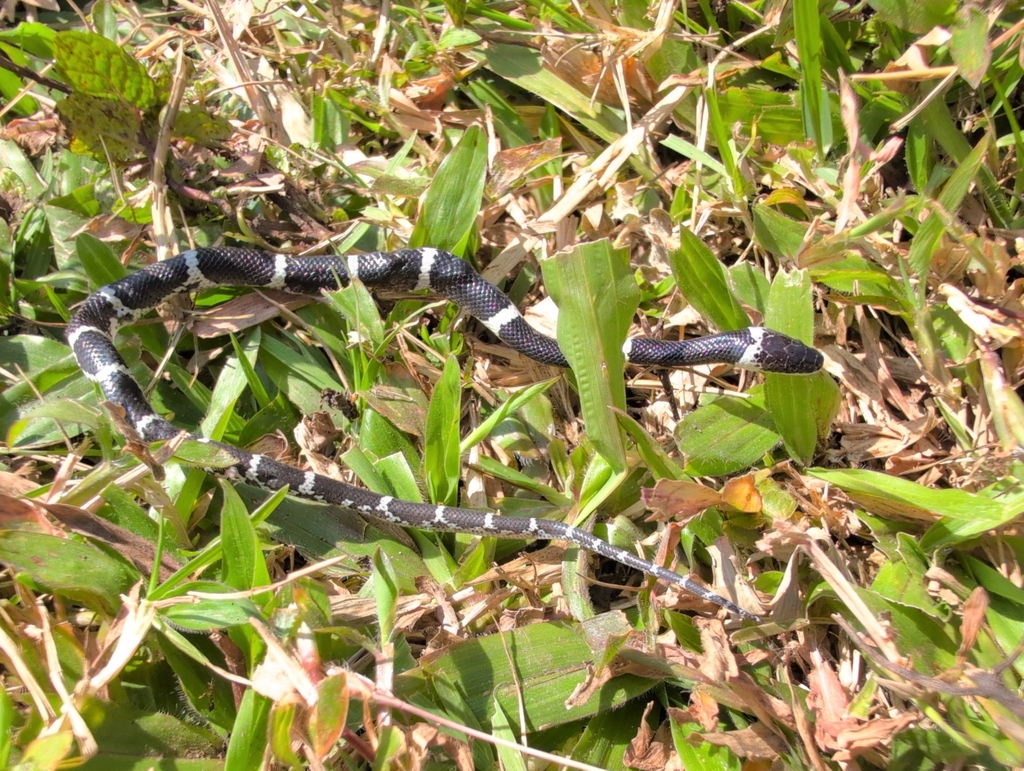
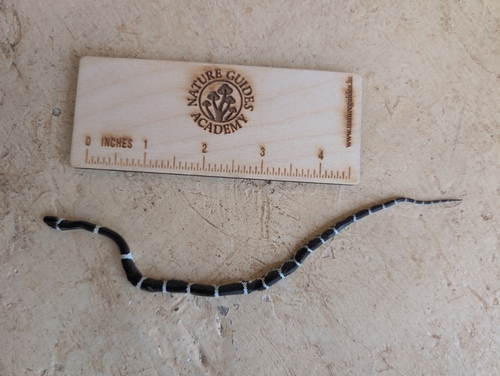
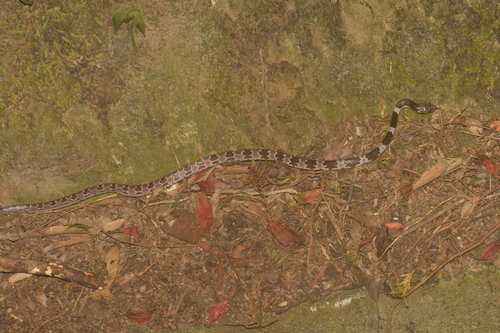
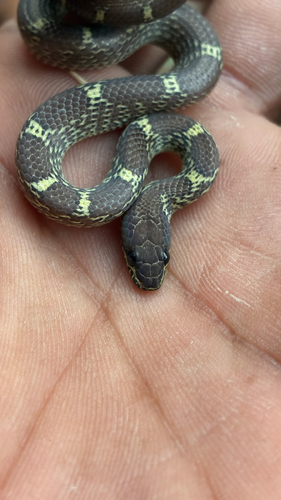
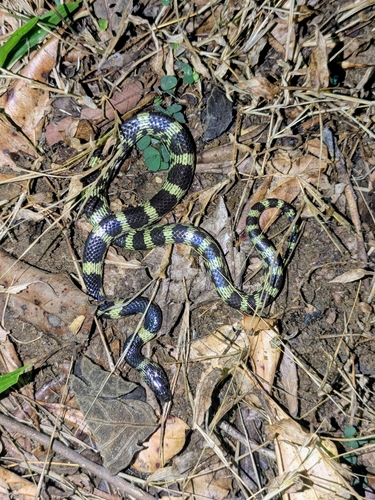
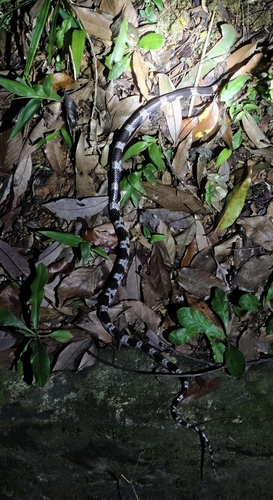
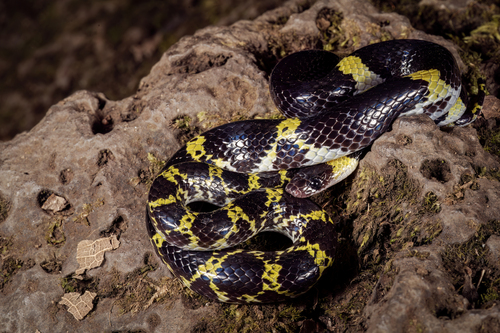
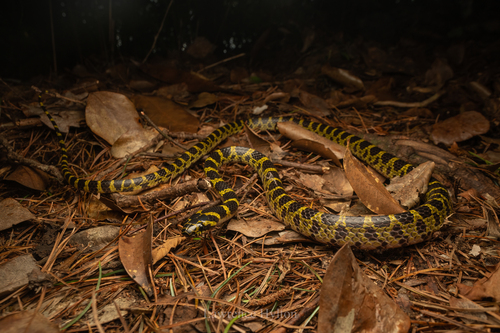
2 photographs of the Indian Wolf Snake. © T R Shankar Raman.
The Indian Wolf Snake (Lycodon aulicus) is a non-venomous snake in the Colubridae family, recorded in 25 countries.
- Family
- Colubridae
About the Indian Wolf Snake
Lycodon aulicus, commonly known as the Indian wolf snake and the common wolf snake, is a species of nonvenomous snake in the subfamily Colubrinae of the family Colubridae. The species is native to South Asia and Southeast Asia. Early naturalists suggested its resemblance to the venomous common krait, an instance of Batesian mimicry.
Description
The colouration of this snake is variable.
This snake is often confused with the common krait. The presence of a loreal shield can be used to distinguish it from kraits.
The following is a description of various forms from Albert Günther's Reptiles of British India (1864).
Snout broad, much depressed, long, spatulate, with the upper lip swollen, and without canthus rostralis. Rostral shield very low, broad, slightly bent backwards on the upper surface of the snout; anterior frontals [= internasals] very small; posterior frontals [= prefrontals] longer than broad, much more so in adult specimens than in young ones; there is a lateral notch between the anterior and posterior frontals, in which the inner anterior angle of the loreal is received; the posterior frontals have an obtuse lateral angle corresponding to the suture between loreal and praeocular; occipitals elongate. Nostril small, directed upwards, between two nasals, the anterior of which is situated on the foremost part of the snout. Loreal single, large, nearly twice as long as broad. Praeocular single, in contact with the vertical [= frontal] and with the third labial; specimens in which it does not reach the vertical are very scarce. Two postoculars; supraciliary rather small. Nine upper labials, the third, fourth, and fifth of which enter the orbit. Temporals numerous, scale-like. Scales smooth, with a minute apical groove, in seventeen rows. Abdomen and tail with an angular ridge on each side. Ventrals 183-209; anal bifid, in a few specimens entire; subcaudals 57-77. Each maxillary is armed with two fangs in front, placed in a transverse line, the outer being much larger than the inner; the lateral longitudinal series of teeth commences at some distance from the fangs; they are small, from four to twelve in number, the last being considerably larger than the others; pterygoido-palatine teeth small, of equal size;
mandible with two or three fangs on each side and with a series of small teeth.
Coloration variable.
I. Continental varieties. The posterior frontals are moderately elongate-in young specimens nearly as broad as long. Each upper labial with a brown spot. [To this category belong also specimens from the Philippine Islands.]
Var. a. Uniform brown above, without collar: Malayan peninsula, Bengal, Madras.
Adapted from Wikipedia, available under CC BY-SA.
Frequently asked: Indian Wolf Snake
- Is the Indian Wolf Snake venomous?
- No. The Indian Wolf Snake (Lycodon aulicus) is non-venomous and is not considered dangerous to humans. Like most snakes, it will retreat rather than bite when given the chance.
- Is the Indian Wolf Snake poisonous?
- Snakes are venomous, not poisonous. "Poisonous" means harmful to eat or touch; "venomous" means injecting toxins through a bite. The Indian Wolf Snake is neither poisonous nor venomous.
- Is the Indian Wolf Snake dangerous?
- The Indian Wolf Snake is not dangerous to humans. It has no medically significant venom and bites only defensively if cornered or handled.
- Where does the Indian Wolf Snake live?
- The Indian Wolf Snake has verified records in 25 countries, including India, Réunion, Sri Lanka. See the distribution section below for its full range.
- What does the Indian Wolf Snake eat?
- Lycodon aulicus feeds on lizards and frogs. According to Günther (1864) it is one of the most formidable enemies of the skinks, which form almost its sole food, the "fangs" in the front of its jaws being adapted for piercing and making good its hold on the hard smooth scales with which those lizards are coated.
Where it is found
More Colubridae snakes
Classification
How scientists group this snake, from the broadest category down to the exact species. Each step narrows to its closest relatives.
- OrderThe broad group of scaled reptiles: all snakes and lizards
- Squamata
- FamilyA group of related snakes that share key traits
- Colubridae
- GenusA close-knit group of very similar species
- Lycodon
- SpeciesThis exact snake, named in the two-part scientific name
- Lycodon aulicus
Keep learning
- What to Do If You Find a SnakeFound a snake at home or on a trail? Here is how to stay calm, give it space, identify it safely, and know when to call a professional.
- Venomous vs Nonvenomous: How to Tell the DifferenceThe folk rules for telling venomous snakes apart, where each one fails, and why location-based identification beats guessing by sight.
- What Is a Snake? Anatomy and the BasicsA clear overview of what makes a snake a snake: limbless body plan, anatomy, evolution from lizards, species diversity, and why they are ectothermic.
- How to Keep Snakes Out of Your Yard and HomeA practical guide to keeping snakes out of your yard and home using habitat changes that work, plus what to skip and what to do if one shows up.
Distribution from GBIF & iNaturalist. Venom status per CDC. Background: Wikipedia. Informational only. Never handle a snake to identify it.