
Colubridae
Common Blunt-headed Tree Snake
HarmlessImantodes cenchoa
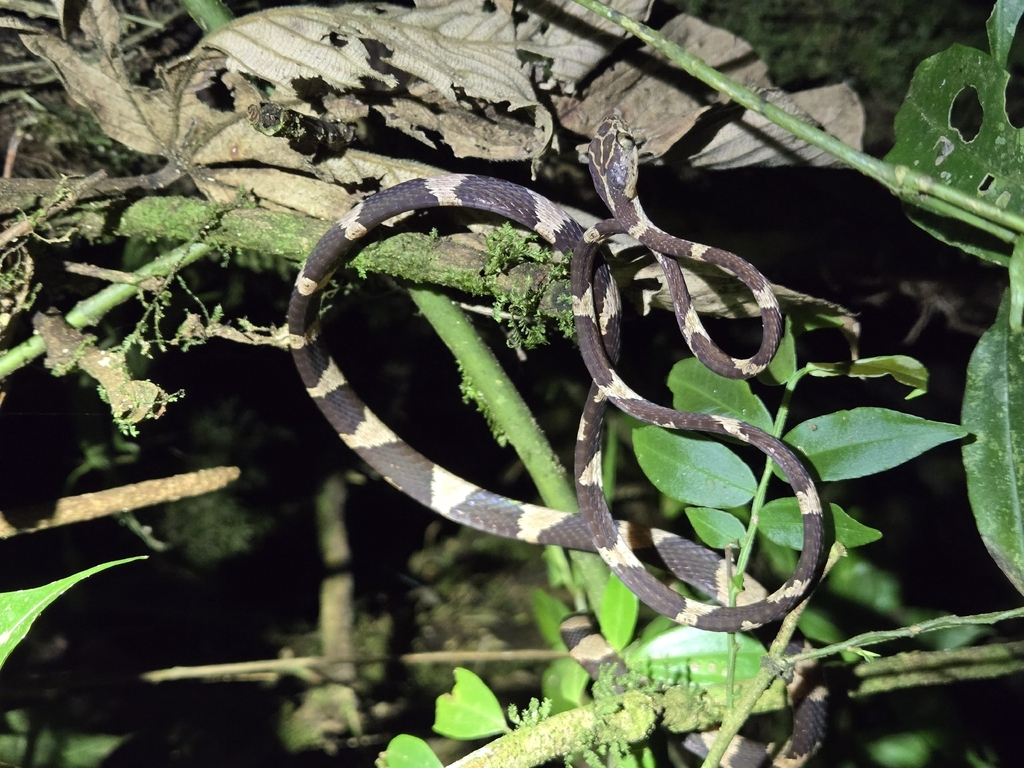
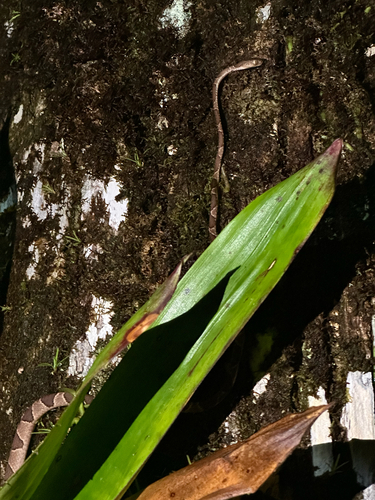
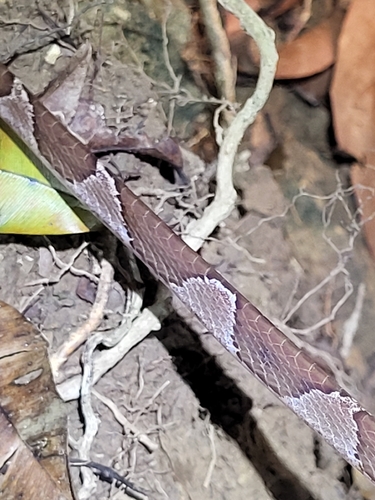
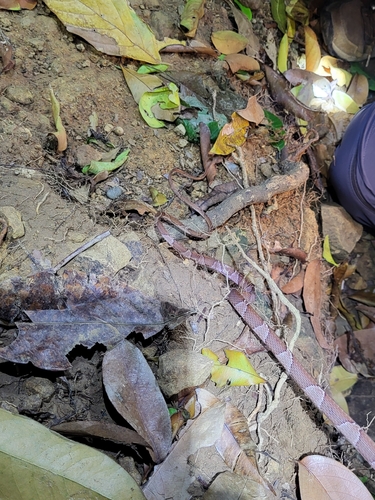
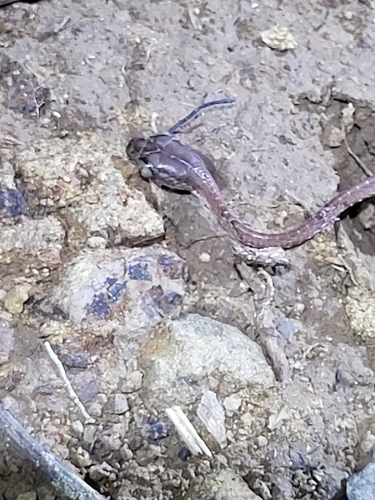
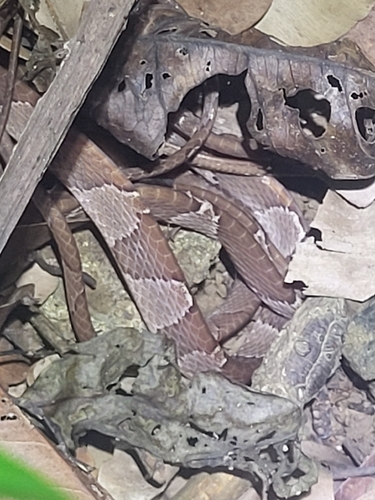
6 photographs of the Common Blunt-headed Tree Snake. © Cen_Bamper.
The Common Blunt-headed Tree Snake (Imantodes cenchoa) is a non-venomous snake in the Colubridae family, recorded in 25 countries.
- Family
- Colubridae
About the Common Blunt-headed Tree Snake
Imantodes cenchoa, also known commonly as the blunthead tree snake, the neotropical blunt-headed tree snake, and the fiddle-string snake, is a species of mildly venomous, rear-fanged snake in the family Colubridae. The species is native to Mexico, Central America, and South America.
Description
The blunthead tree snake averages about 800 mm (31 in) in total length (including tail). Maximum total length is about 1.5 m (4 ft 11 in).
I. cenchoa is known for its long, slender body and very large head. The pupil of its eye is very distinct from other snakes. Most snakes found around the world are known to have very poor vision and rely mostly on smell and vibrations to detect signs of prey and predators. Arboreal snakes have much better vision than other snakes. The blunthead tree snake has a vertical slit for a pupil which allows the snake to look downward. This trait gives the blunthead tree snake an advantage over other snakes. The large eyes make up approximately 26% of its head.
The ventral surface, or stomach, of the blunthead tree snake is mostly white, while the dorsal surface, or top, is a light or pale brown with lateral dark brown patches that begin at the head and continue down the length of the body. The northern and southern populations of the blunthead tree snake exhibit different sexual dimorphism, the existence of two different traits of a species in the same population. For example, northern males have a slightly longer tail whereas the males of southern populations have a shorter tail. In some regions females typically have a much larger head than males.
Habitat
The blunthead tree snake is arboreal. It is most often found in low vegetation such as coffee trees or bromeliads. It prefers cooler and moist areas such as wet forests and rainforests. It is found at altitudes from sea level to 1,700 m (5,600 ft).
Geographic range
I. cenchoa is found in Mexico, most of Central America, and parts of South America south to northernmost Argentina. Specifically, it has been recorded in eastern Mexico, Guatemala, Honduras, Belize, El Salvador, Nicaragua, Costa Rica, Panama, Colombia, Venezuela, Trinidad and Tobago, French Guiana, Brazil, Ecuador, Peru, Bolivia, Paraguay, and northern Argentina.
Behavior
Because the blunthead tree snake is nocturnal, it can be found in a resting coiled position in very shaded areas during the day. At night it forages for food through dense vegetation on the ground up to its resting places in the trees.
Reproduction
The blunthead tree snake is a polygynandrous reptile. Mating seasons can vary depending on the rainy seasons of its habitat. Some snakes mate year round, but the mating season of others may be synchronized with the wet and rainy seasons of their environment. For example, in areas with long rainy seasons I. cenchoa tends to show a much longer mating season compared to snakes in areas with shorter rainy seasons. The blunthead tree snake is an oviparous or egg-laying animal that has little or no embryonic development within the mother. Some blunthead tree snakes exhibit continuous reproduction depending on the environment that they live in. However, in an area that has seasonal rainfall, egg laying and hatching positively correlates with the rainy seasons. In Guatemala and Mexico for example, female snakes lay their eggs between June and July. These eggs will hatch around July and August, which are the typically rainy seasons in these countries. On the other hand, snakes in Brazil exhibit continuous reproduction. The eggs are laid from November to January and start to hatch around March throughout August. Both male and female blunthead tree snake reach sexual maturity about two years after hatching or at around 620 mm (24 in) SVL (snout-to-vent length). The female snake can lay from one to three eggs, typically called a clutch, per breeding season depending on the size of the snake, its food habits, and environmental factors. The female will leave her eggs after laying them, not presenting parental care traits.
Diet
Adapted from Wikipedia, available under CC BY-SA.
Frequently asked: Common Blunt-headed Tree Snake
- Is the Common Blunt-headed Tree Snake venomous?
- No. The Common Blunt-headed Tree Snake (Imantodes cenchoa) is non-venomous and is not considered dangerous to humans. Like most snakes, it will retreat rather than bite when given the chance.
- Is the Common Blunt-headed Tree Snake poisonous?
- Snakes are venomous, not poisonous. "Poisonous" means harmful to eat or touch; "venomous" means injecting toxins through a bite. The Common Blunt-headed Tree Snake is neither poisonous nor venomous.
- Is the Common Blunt-headed Tree Snake dangerous?
- The Common Blunt-headed Tree Snake is not dangerous to humans. It has no medically significant venom and bites only defensively if cornered or handled.
- Where does the Common Blunt-headed Tree Snake live?
- The Common Blunt-headed Tree Snake has verified records in 25 countries, including Colombia, Costa Rica, Ecuador. See the distribution section below for its full range.
- What does the Common Blunt-headed Tree Snake eat?
- The blunthead tree snake is carnivorous and forages primarily at night. It preys mostly on small lizards (primarily anoles, such as Anolis capito, A. fuscoauratus, A. latifrons, A. limifrons, A. maculiventris, A. mariarum, A. ortonii, A. punctatus, A. trachyderma, and A. tropidogaster, but also others in the genera Basiliscus, Enyalioides, and Gonatodes), frogs (such as Craugastor crassidigitus and C. raniformis), and reptile and amphibian (such as Agalychnis callidryas) eggs.
Where it is found
More Colubridae snakes
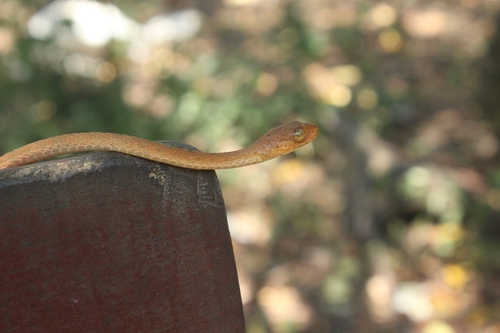 Yellow Blunt-headed Tree SnakeImantodes inornatus
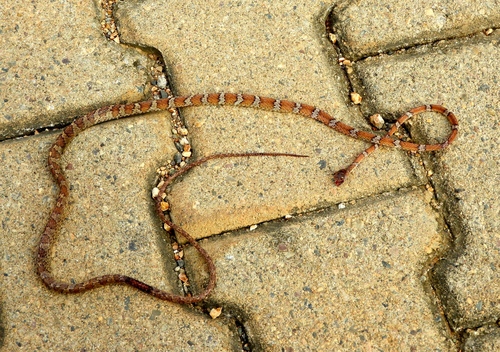 Central American Tree SnakeImantodes gemmistratus
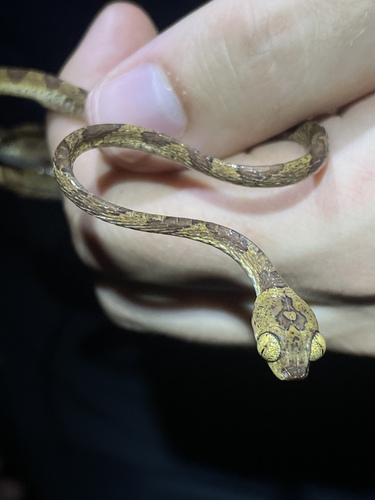 Amazon Basin Tree SnakeImantodes lentiferus
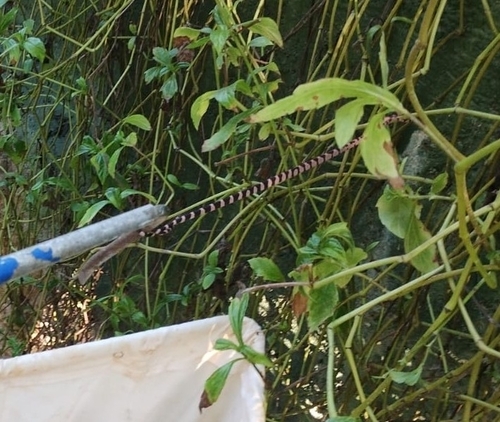 Yucatán Blunt-headed Tree SnakeImantodes tenuissimus
 Chocoan Blunt-headed Tree SnakeImantodes chocoensis
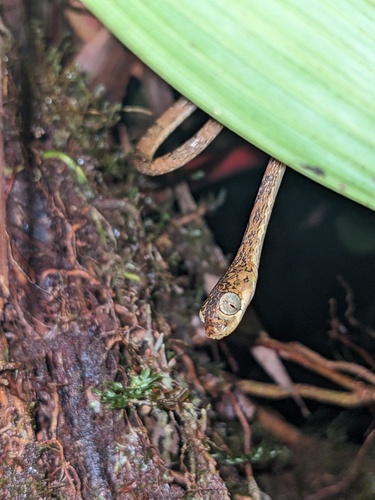 Phantasma Tree SnakeImantodes phantasma
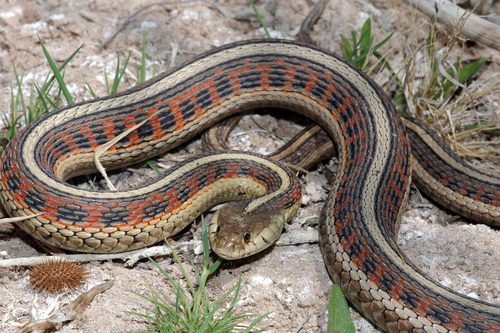 Common Garter SnakeThamnophis sirtalis
 Common WatersnakeNerodia sipedon
Classification
How scientists group this snake, from the broadest category down to the exact species. Each step narrows to its closest relatives.
- OrderThe broad group of scaled reptiles: all snakes and lizards
- Squamata
- FamilyA group of related snakes that share key traits
- Colubridae
- GenusA close-knit group of very similar species
- Imantodes
- SpeciesThis exact snake, named in the two-part scientific name
- Imantodes cenchoa
Keep learning
- What to Do If You Find a SnakeFound a snake at home or on a trail? Here is how to stay calm, give it space, identify it safely, and know when to call a professional.
- Venomous vs Nonvenomous: How to Tell the DifferenceThe folk rules for telling venomous snakes apart, where each one fails, and why location-based identification beats guessing by sight.
- What Is a Snake? Anatomy and the BasicsA clear overview of what makes a snake a snake: limbless body plan, anatomy, evolution from lizards, species diversity, and why they are ectothermic.
- How to Keep Snakes Out of Your Yard and HomeA practical guide to keeping snakes out of your yard and home using habitat changes that work, plus what to skip and what to do if one shows up.
Distribution from GBIF & iNaturalist. Venom status per CDC. Background: Wikipedia. Informational only. Never handle a snake to identify it.