
Genus · Colubridae
Types of tree snakes
7 species make up the genus Imantodes, the snakes commonly called tree snakes. None are considered dangerous to humans.
About Blunt-headed tree snakes
Wildly slender, big-eyed nocturnal tree snakes built like living vines.
Imantodes is a genus of slender, nocturnal, tree-dwelling snakes in the large family Colubridae. They are often called blunt-headed tree snakes because of their short, deep, distinctly wide head set on an extremely thin neck and body. The body is one of the most attenuated in the snake world, narrow enough to span gaps between twigs and leaves, which is the defining trait people notice first.
The genus is Neotropical. Members range from southern Mexico through Central America and into much of tropical South America. They favor humid lowland and lower-montane forest, where they spend the night moving through shrubs, vines, and low tree branches. By day they typically rest coiled in foliage. The combination of a vine-thin body, a chunky head, and very large eyes with vertical pupils is a reliable field signature for the group.
To recognize a member in general terms, look for the dramatic mismatch between a heavy, blunt head and a whip-thin body, oversized eyes suited to night vision, and enlarged vertebral scales down the spine that help stiffen the body for bridging across gaps. Coloration is usually pale brown, tan, or gray with darker blotches or saddles that break up the outline against branches.
Imantodes are rear-fanged, mildly venomous colubrids. Their venom is adapted for subduing small prey and is not considered medically significant to people, but rear-fanged does not mean risk-free. Any wild snake can bite, individual reactions vary, and handling a wild snake is never advised. If a bite occurs and symptoms develop, do not attempt home treatment; contact emergency care, in the US the Poison Control line at 1-800-222-1222 or local emergency services.
Ecologically these are specialist hunters of small, sleeping prey. Their diet centers on lizards, especially anoles and geckos, along with frogs and reptile eggs found among the leaves. They are egg-laying (oviparous), producing small clutches. Behavior is slow, deliberate, and almost entirely arboreal and nocturnal, which is why most people who live within their range rarely see them despite their wide distribution.
Imantodes belongs to the Colubridae family (Colubrids). The largest snake family, and the one most snakes you meet belong to. Typically round pupils, a head only slightly wider than the neck, and no heat-sensing facial pit or rattle. Scales may be smooth and glossy or keeled and matte depending on the species.
Danger: Almost all colubrids are harmless. A small number are rear-fanged with medically significant venom, the boomslang and the twig (vine) snakes of Africa being the dangerous exceptions. Most colubrids will flee or bluff rather than bite.
All species (7)
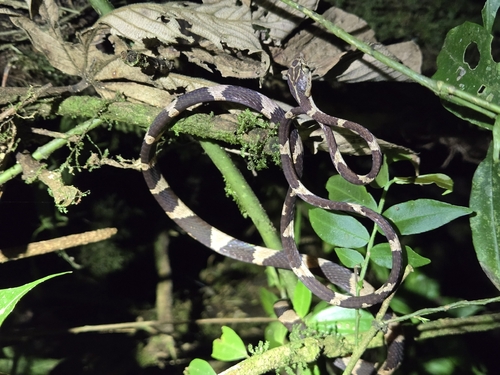 Common Blunt-headed Tree SnakeImantodes cenchoaHarmless
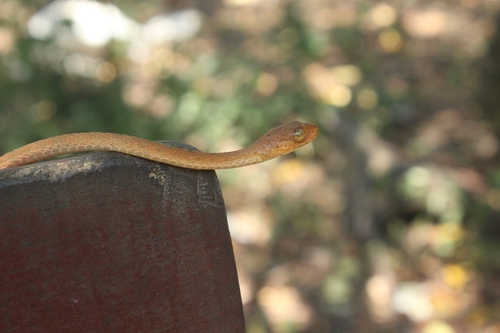 Yellow Blunt-headed Tree SnakeImantodes inornatusHarmless
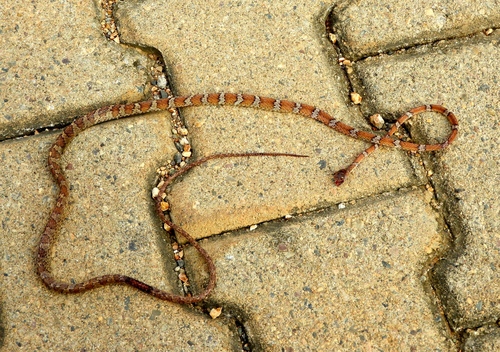 Central American Tree SnakeImantodes gemmistratusHarmless
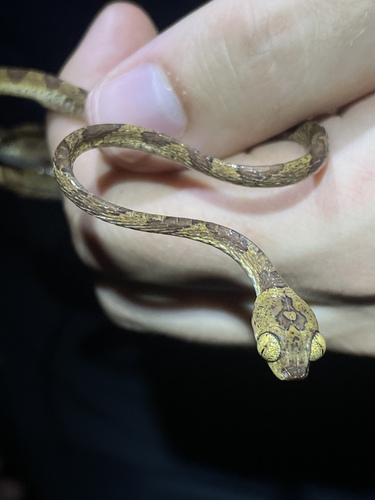 Amazon Basin Tree SnakeImantodes lentiferusHarmless
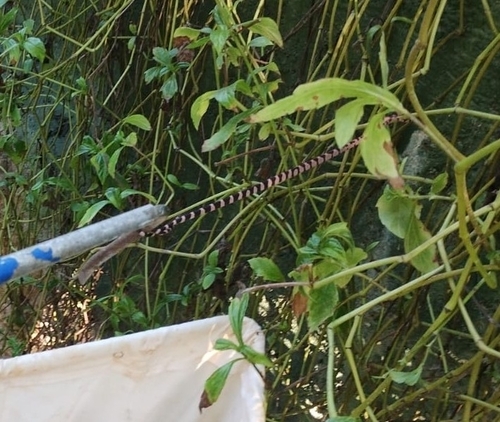 Yucatán Blunt-headed Tree SnakeImantodes tenuissimusHarmless
 Chocoan Blunt-headed Tree SnakeImantodes chocoensisHarmless
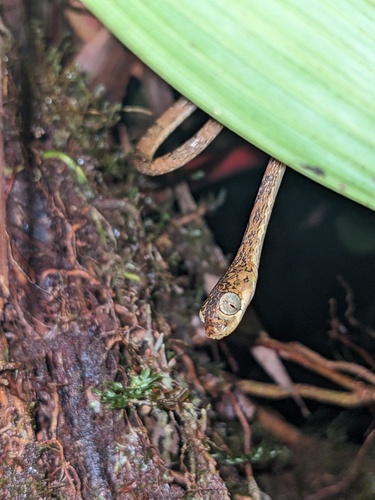 Phantasma Tree SnakeImantodes phantasmaHarmless
Keep learning
- What Is a Snake? Anatomy and the BasicsA clear overview of what makes a snake a snake: limbless body plan, anatomy, evolution from lizards, species diversity, and why they are ectothermic.
- How Snakes Move, Hunt, and EatHow snakes move without legs, hunt as ambushers or active foragers, kill by constriction or venom, and swallow prey wider than their head.
- What Do Snakes Eat?All snakes are carnivores. Learn what snakes eat, how diet changes with size and age, how often they feed, and how they hunt and swallow prey.
- Venomous vs Nonvenomous: How to Tell the DifferenceThe folk rules for telling venomous snakes apart, where each one fails, and why location-based identification beats guessing by sight.