
Elapidae
Jameson's Mamba
VenomousDendroaspis jamesoni
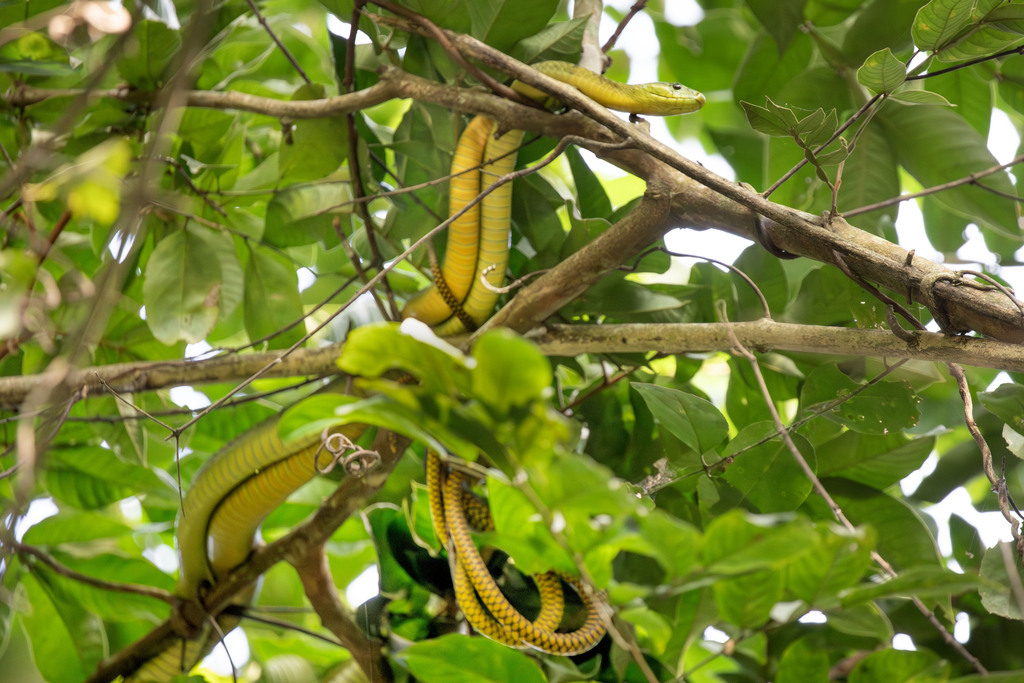
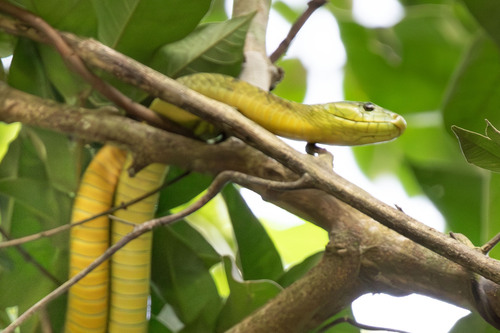
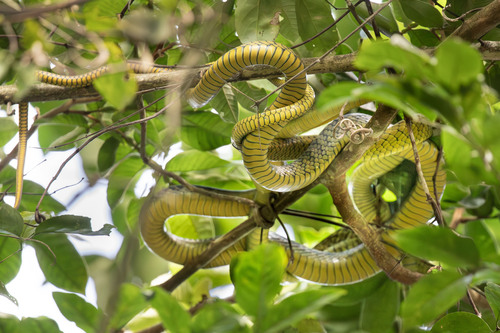
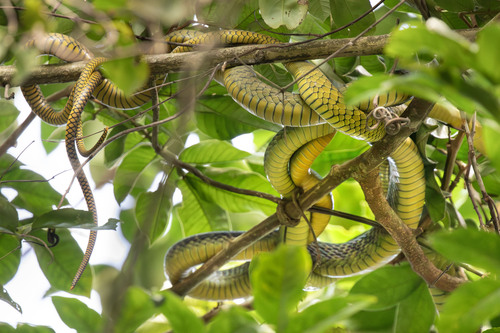
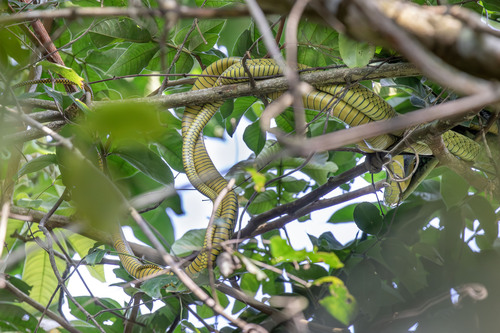
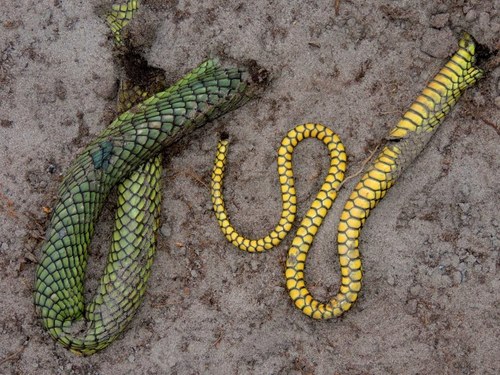
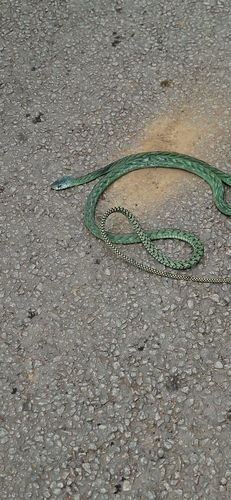
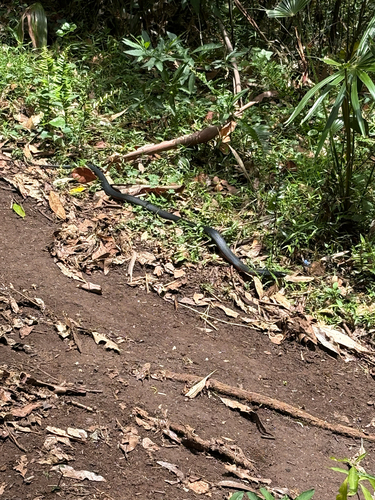
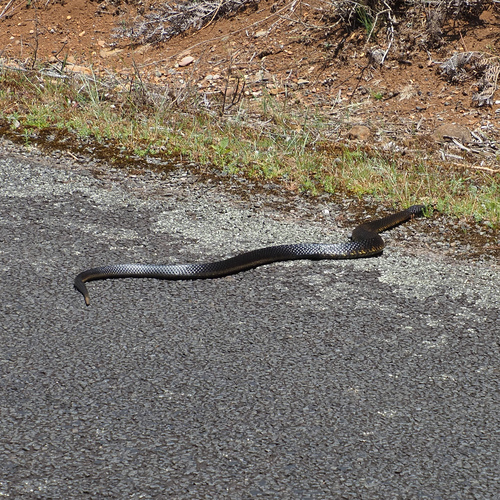
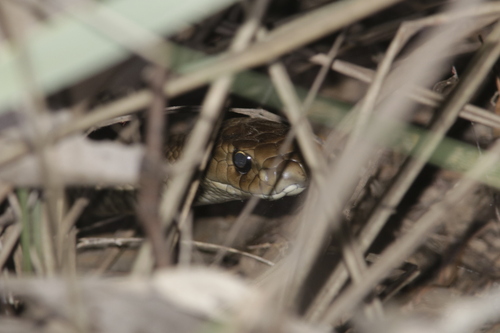
6 photographs of the Jameson's Mamba. © Kristof Zyskowski.
The Jameson's Mamba (Dendroaspis jamesoni) is a venomous snake in the Elapidae family, recorded in 18 countries.
If you are bitten
This is a venomous snake. Treat any bite as a medical emergency: stay calm, keep the bitten limb still and roughly level with the heart, remove rings and tight clothing, and get to emergency care immediately. Do not apply a tourniquet, cut the wound, apply ice, or try to suck out venom. Call your local emergency number or poison center.
- Family
- Elapidae
- Danger
- high
About the Jameson's Mamba
Jameson's mamba (Dendroaspis jamesoni) is a species of highly venomous snake in the family Elapidae. The species is native to equatorial Africa. A member of the mamba genus, Dendroaspis, it is slender with dull green upper parts and cream underparts and generally ranges from 1.5 to 2.2 m (4.9 to 7.2 ft) in total length. Described by Scottish naturalist Thomas Traill in 1843, it has two recognised subspecies. The nominate subspecies is found in central and western sub-Saharan Africa, and the eastern black-tailed subspecies is found eastern sub-Saharan Africa, mainly western Kenya.
Predominantly arboreal, Jameson's mamba preys mainly on birds and mammals. Its venom consists of both neurotoxins and cardiotoxins. Symptoms of envenomation in humans include pain and swelling at the bite site, followed by swelling, chills, sweating, abdominal pain and vomiting, with subsequent slurred speech, difficulty breathing and paralysis. Fatalities have been recorded within three to four hours of being bitten. The venom of the eastern subspecies is around twice as potent as that of the nominate subspecies.
Taxonomy and etymology
Jameson's mamba was first described as Elaps jamesoni in 1843 by Thomas Traill, a Scottish doctor, zoologist and scholar of medical jurisprudence. The specific epithet is in honour of Robert Jameson, Traill's contemporary and the Regius Professor of Natural History at the University of Edinburgh where Traill studied. In 1848, German naturalist Hermann Schlegel created the genus Dendroaspis, designating Jameson's mamba as the type species. The generic name is derived from the Ancient Greek words δένδρον (dendron, 'tree') and ἀσπίς (aspis 'asp'). The genus was misspelt as Dendraspis by French zoologist Auguste Duméril in 1856, and went generally uncorrected by subsequent authors. In 1936, Dutch herpetologist Leo Brongersma corrected the spelling to the original.
In 1936, British biologist Arthur Loveridge described a new subspecies D. jamesoni kaimosae, from a specimen collected from the Kaimosi Forest in western Kenya, observing that it had fewer subcaudal scales and a black (rather than green) tail. Analysis of the components of the venom of all mambas places Jameson's mamba as sister species to the western green mamba (Dendroaspis viridis), as shown in the cladogram below.
Description
Jameson's mamba is a long and slender snake with smooth scales and a tail which typically accounts for 20 to 25% of its total length. The total length (including tail) of an adult snake is approximately 1.5–2.2 m (4 ft 11 in – 7 ft 3 in). It may grow as large as 2.64 m (8 ft 8 in). The general consensus is that the sexes are of similar sizes, although fieldwork in southeastern Nigeria found that males were significantly larger than females. Adults tend to be dull green across the back, blending to pale green towards the underbelly with scales generally edged with black. The neck, throat and underparts are typically cream or yellowish in colour. Jameson's mamba has a narrow and elongated head containing small eyes and round pupils. Like the western green mamba, the neck may be flattened. The subspecies D. jamesoni kaimosae, which is found in the eastern part of the species' range, features a black tail, while central and western examples typically have a pale green or yellow tail. The thin fangs are attached to the upper jaw and have a furrow running down their anterior surface.
Scalation
Adapted from Wikipedia, available under CC BY-SA.
Local and regional names
The Jameson's Mamba is known by these names across the regions where it lives:
- Chinese
- 簡氏曼巴蛇
- Czech
- mamba Jamesonova
- Danish
- Centralafrikansk Grøn Mamba
- English
- Jameson's Green Mamba
- Finnish
- Jamesoninmamba
- French
- Mamba de Jameson
- German
- Jameson-Mamba, Jamesons Mamba
- Italian
- Mamba di Jameson
- Polish
- mamba Jamesona
- Portuguese
- Mamba-de-Jameson
- Russian
- Мамба Джеймсона
- Spanish
- Mamba verde del Congo
Frequently asked: Jameson's Mamba
- Is the Jameson's Mamba venomous?
- Yes. The Jameson's Mamba (Dendroaspis jamesoni) is venomous and belongs to the Elapidae family (cobra, mamba, coral or sea snake). Its bite is considered high risk to people. Treat any bite as a medical emergency.
- Is the Jameson's Mamba poisonous?
- Snakes are venomous, not poisonous. "Poisonous" means harmful to eat or touch; "venomous" means injecting toxins through a bite. The Jameson's Mamba is venomous, delivering venom through a bite.
- Is the Jameson's Mamba dangerous?
- This is a venomous snake. Treat any bite as a medical emergency: stay calm, keep the bitten limb still and roughly level with the heart, remove rings and tight clothing, and get to emergency care immediately. Do not apply a tourniquet, cut the wound, apply ice, or try to suck out venom. Call your local emergency number or poison center.
- Where does the Jameson's Mamba live?
- The Jameson's Mamba has verified records in 18 countries, including Congo, Democratic Republic of the, Benin, Cameroon. See the distribution section below for its full range.
- What does the Jameson's Mamba eat?
- Jameson's mamba has been difficult to study in the field due to its arboreal nature and green coloration. It has not been observed hunting but is thought to use a sit-and-wait strategy, which has been reported for the eastern green mamba. The bulk of its diet is made up of birds and tree-dwelling mammals, such as cisticolas, woodpeckers, doves, squirrels, shrews and mice. Smaller individuals of under 100 cm (40 in) in length have been recorded feeding on lizards such as the common agama, and toads.
- Why is it called the Jameson's Mamba?
- Jameson's mamba was first described as Elaps jamesoni in 1843 by Thomas Traill, a Scottish doctor, zoologist and scholar of medical jurisprudence. The specific epithet is in honour of Robert Jameson, Traill's contemporary and the Regius Professor of Natural History at the University of Edinburgh where Traill studied. In 1848, German naturalist Hermann Schlegel created the genus Dendroaspis, designating Jameson's mamba as the type species. The generic name is derived from the Ancient Greek words δένδρον (dendron, 'tree') and ἀσπίς (aspis 'asp').
If you are bitten by the Jameson's Mamba
Do
- Get away from the snake and stay calm. Most bites worsen when people panic or try again to handle the snake.
- Call 911 or Poison Control (1-800-222-1222) right away. Antivenom works best when given early.
- Note the time of the bite and, from a safe distance, the snake's color and pattern, a phone photo is enough. Do not chase it.
- Keep the bitten limb still and at roughly heart level. Sit or lie down and limit movement.
- Remove rings, watches, and tight clothing near the bite before swelling starts.
- Gently wash the bite with soap and water and cover it with a clean, dry dressing.
Do not
- Do not cut the wound or try to suck out the venom.
- Do not apply a tourniquet or ice.
- Do not drink alcohol or caffeine.
- Do not take aspirin or ibuprofen, they can worsen bleeding. Acetaminophen is safer for pain.
- Do not try to catch or kill the snake. A dead snake can still bite by reflex.
First-aid guidance adapted from the U.S. Centers for Disease Control and Prevention (CDC NIOSH), Venomous Snakes. Educational only; always follow the instructions of emergency responders.
Where it is found
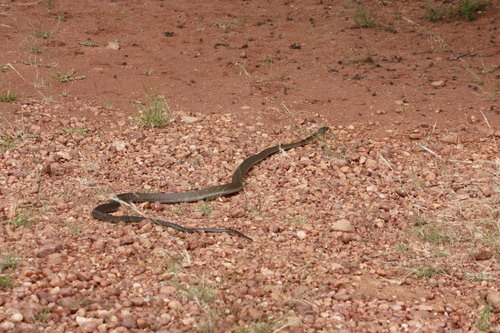
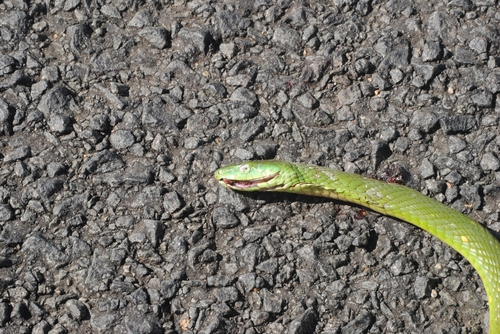
More Elapidae snakes
Classification
How scientists group this snake, from the broadest category down to the exact species. Each step narrows to its closest relatives.
- OrderThe broad group of scaled reptiles: all snakes and lizards
- Squamata
- FamilyA group of related snakes that share key traits
- Elapidae
- GenusA close-knit group of very similar species
- Dendroaspis
- SpeciesThis exact snake, named in the two-part scientific name
- Dendroaspis jamesoni
Keep learning
- Are Snakes Dangerous? The Real Risk, in PerspectiveMost snakes are harmless and avoid people. Here is the honest picture of snakebite risk worldwide and how to lower your own.
- Snakebite First Aid: What to Do (and What Never to Do)A clear, CDC-based guide to snakebite first aid: the steps that help, the popular myths that hurt, and how to tell a serious bite from a minor one.
- Venomous vs Nonvenomous: How to Tell the DifferenceThe folk rules for telling venomous snakes apart, where each one fails, and why location-based identification beats guessing by sight.
- What to Do If You Find a SnakeFound a snake at home or on a trail? Here is how to stay calm, give it space, identify it safely, and know when to call a professional.
Distribution from GBIF & iNaturalist. Venom status per CDC. Background: Wikipedia. Informational only. Never handle a snake to identify it.