
Elapidae
Western Green Mamba
VenomousDendroaspis viridis
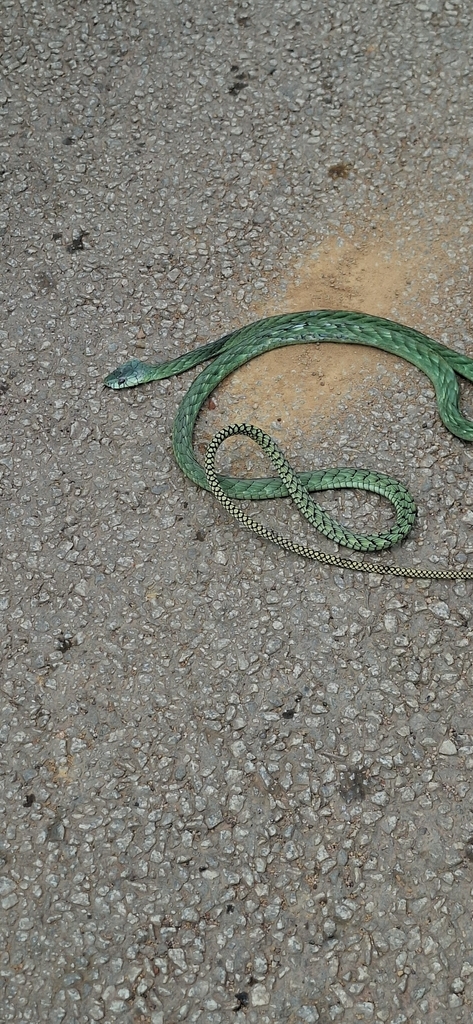
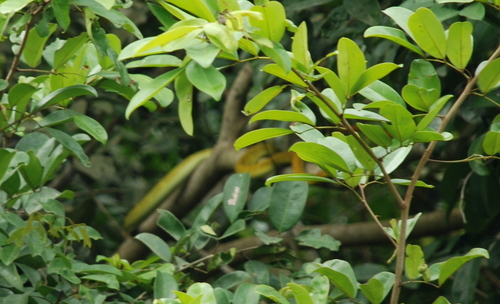
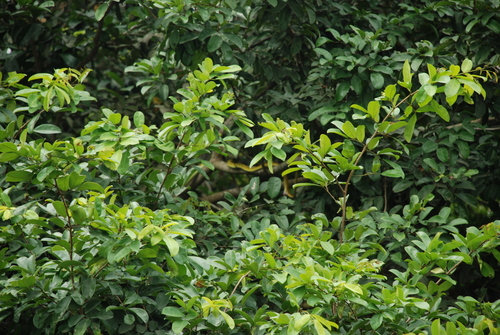
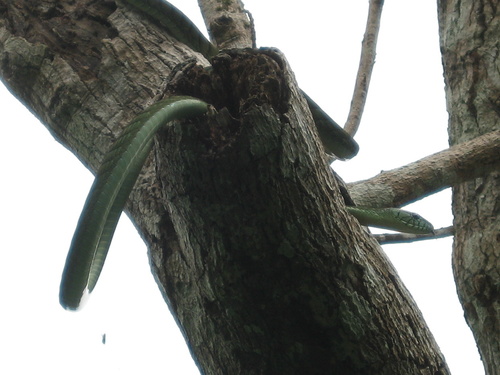
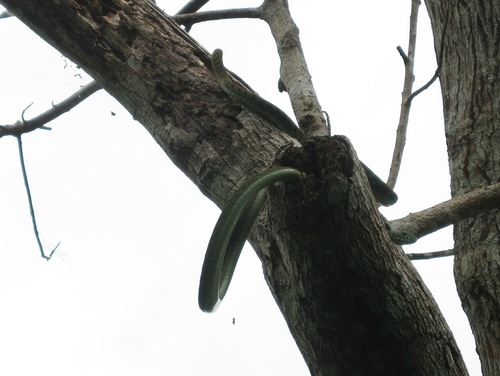
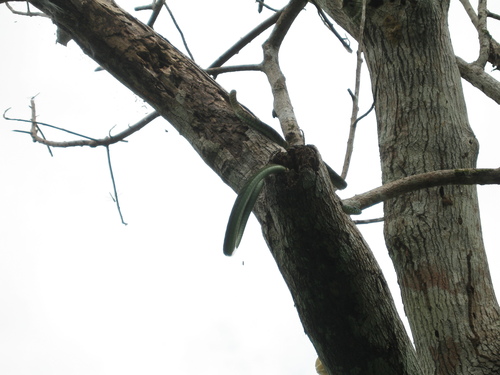
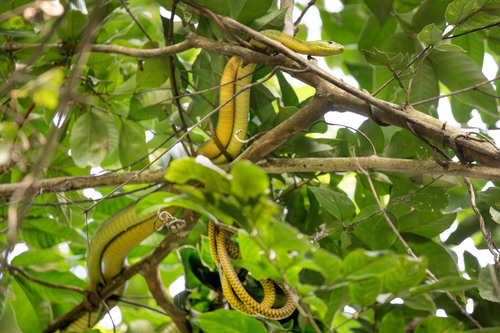
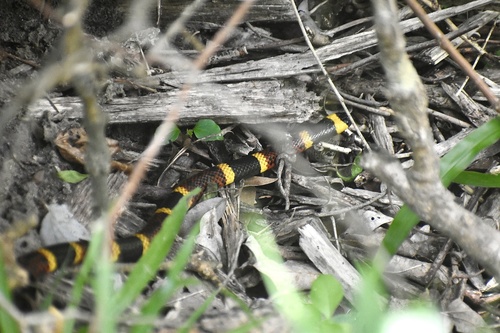
6 photographs of the Western Green Mamba. © Valentin Moser.
The Western Green Mamba (Dendroaspis viridis) is a venomous snake in the Elapidae family, recorded in 11 countries.
If you are bitten
This is a venomous snake. Treat any bite as a medical emergency: stay calm, keep the bitten limb still and roughly level with the heart, remove rings and tight clothing, and get to emergency care immediately. Do not apply a tourniquet, cut the wound, apply ice, or try to suck out venom. Call your local emergency number or poison center.
- Family
- Elapidae
- Danger
- high
About the Western Green Mamba
The western green mamba (Dendroaspis viridis) is a long, thin, and highly venomous snake species of the mamba genus, Dendroaspis. This species was first described in 1844 by American herpetologist Edward Hallowell. The western green mamba is a fairly large and predominantly arboreal species, capable of navigating through trees swiftly and gracefully. It will also descend to ground level to pursue prey such as rodents and other small mammals.
The western green mamba is a shy and agile snake that lives mainly in the coastal tropical rainforest, thicket, and woodland regions of western Africa. Its venom is a highly potent mixture of rapid-acting presynaptic and postsynaptic neurotoxins (dendrotoxins), cardiotoxins and fasciculins. Some consider this species not to be a particularly aggressive snake, but others have suggested that they are extremely nervous and are prone to attack aggressively when cornered. Conflict with humans is low compared to some other species found in the region. Bites to people by this species are quite uncommon. Their mortality rate, however, is high; many of the recorded bites have been fatal. Rapid progression of severe, life-threatening symptoms are hallmarks of mamba bites. Bites with envenomation can be rapidly fatal.
Taxonomy
The western green mamba was first described by the American herpetologist and physician Edward Hallowell in 1844 as Leptophis viridis, from a specimen collected in Liberia. The specific name viridis is the Latin adjective "green". In 1852, Hallowell described Dinophis hammondii from two specimens of western green mambas collected in Liberia, naming it for his friend Ogden Hammond of South Carolina. These were later deemed the same species by Belgian-British zoologist George Albert Boulenger.
The genus was misspelt as Dendraspis by Dumeril in 1856, and generally uncorrected by subsequent authors. In 1936, Dutch herpetologist Leo Brongersma pointed the correct spelling was Dendroaspis. Analysis of the components of the venom of all mambas places the western green mamba as sister species to Jameson's mamba. In addition to being called the western green mamba, this species is also commonly known as the West African green mamba, and formerly Hallowell's green mamba.
Analysis of the components of the venom of all mambas places the western green mamba sister to Jameson's mamba (Dendroapsis j. jamesoni and j. kaimosae), as shown in the cladogram below.
Description
The western green mamba has a long and slender body with a long tapering tail. The average length of an adult is between 1.4 metres (4.6 ft) and 2.1 metres (7 ft), with large approaching 2.4 metres (8 ft) long. The long thin head has a distinct canthus above the medium-sized eyes, which have round pupils and yellowish brown irises. When threatened or otherwise aroused, the western green mamba is capable of flattening its neck area into a slight hood. The snake is bright green fading to yellow or orange towards the tail. Its scales have prominent black margins, giving the species a networked pattern.
Adapted from Wikipedia, available under CC BY-SA.
Local and regional names
The Western Green Mamba is known by these names across the regions where it lives:
- Chinese
- 西部綠曼巴蛇
- Czech
- mamba západoafrická
- Danish
- Vestlig grøn mamba
- Dutch
- Groene mamba
- Finnish
- Lännenvihermamba
- French
- Mamba vert de l'Ouest
- German
- Grüne Mamba
- Hungarian
- nyugati zöld mamba
- Italian
- Mamba verde occidentale
- Japanese
- ニシグリーンマンバ
- Portuguese
- Mamba-verde-ocidental
- Russian
- Зелёная мамба
- Spanish
- Mamba verde africana
- Thai
- งูกรีนแมมบ้าตะวันตก, งูแมมบาเขียว
Frequently asked: Western Green Mamba
- Is the Western Green Mamba venomous?
- Yes. The Western Green Mamba (Dendroaspis viridis) is venomous and belongs to the Elapidae family (cobra, mamba, coral or sea snake). Its bite is considered high risk to people. Treat any bite as a medical emergency.
- Is the Western Green Mamba poisonous?
- Snakes are venomous, not poisonous. "Poisonous" means harmful to eat or touch; "venomous" means injecting toxins through a bite. The Western Green Mamba is venomous, delivering venom through a bite.
- Is the Western Green Mamba dangerous?
- This is a venomous snake. Treat any bite as a medical emergency: stay calm, keep the bitten limb still and roughly level with the heart, remove rings and tight clothing, and get to emergency care immediately. Do not apply a tourniquet, cut the wound, apply ice, or try to suck out venom. Call your local emergency number or poison center.
- Where does the Western Green Mamba live?
- The Western Green Mamba has verified records in 11 countries, including Benin, Ghana, Côte d’Ivoire. See the distribution section below for its full range.
- What does the Western Green Mamba eat?
- The western green mamba generally hunts in trees though can also hunt on the ground. It preys on birds and small mammals, including rodents and squirrels.
If you are bitten by the Western Green Mamba
Do
- Get away from the snake and stay calm. Most bites worsen when people panic or try again to handle the snake.
- Call 911 or Poison Control (1-800-222-1222) right away. Antivenom works best when given early.
- Note the time of the bite and, from a safe distance, the snake's color and pattern, a phone photo is enough. Do not chase it.
- Keep the bitten limb still and at roughly heart level. Sit or lie down and limit movement.
- Remove rings, watches, and tight clothing near the bite before swelling starts.
- Gently wash the bite with soap and water and cover it with a clean, dry dressing.
Do not
- Do not cut the wound or try to suck out the venom.
- Do not apply a tourniquet or ice.
- Do not drink alcohol or caffeine.
- Do not take aspirin or ibuprofen, they can worsen bleeding. Acetaminophen is safer for pain.
- Do not try to catch or kill the snake. A dead snake can still bite by reflex.
First-aid guidance adapted from the U.S. Centers for Disease Control and Prevention (CDC NIOSH), Venomous Snakes. Educational only; always follow the instructions of emergency responders.
Where it is found
More Elapidae snakes
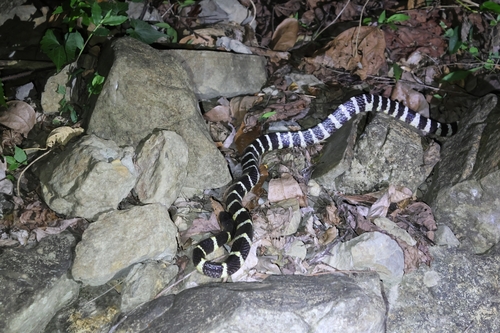
Classification
How scientists group this snake, from the broadest category down to the exact species. Each step narrows to its closest relatives.
- OrderThe broad group of scaled reptiles: all snakes and lizards
- Squamata
- FamilyA group of related snakes that share key traits
- Elapidae
- GenusA close-knit group of very similar species
- Dendroaspis
- SpeciesThis exact snake, named in the two-part scientific name
- Dendroaspis viridis
Keep learning
- Are Snakes Dangerous? The Real Risk, in PerspectiveMost snakes are harmless and avoid people. Here is the honest picture of snakebite risk worldwide and how to lower your own.
- Snakebite First Aid: What to Do (and What Never to Do)A clear, CDC-based guide to snakebite first aid: the steps that help, the popular myths that hurt, and how to tell a serious bite from a minor one.
- Venomous vs Nonvenomous: How to Tell the DifferenceThe folk rules for telling venomous snakes apart, where each one fails, and why location-based identification beats guessing by sight.
- What to Do If You Find a SnakeFound a snake at home or on a trail? Here is how to stay calm, give it space, identify it safely, and know when to call a professional.
Distribution from GBIF & iNaturalist. Venom status per CDC. Background: Wikipedia. Informational only. Never handle a snake to identify it.