
Elapidae
Many-banded Krait
VenomousBungarus multicinctus
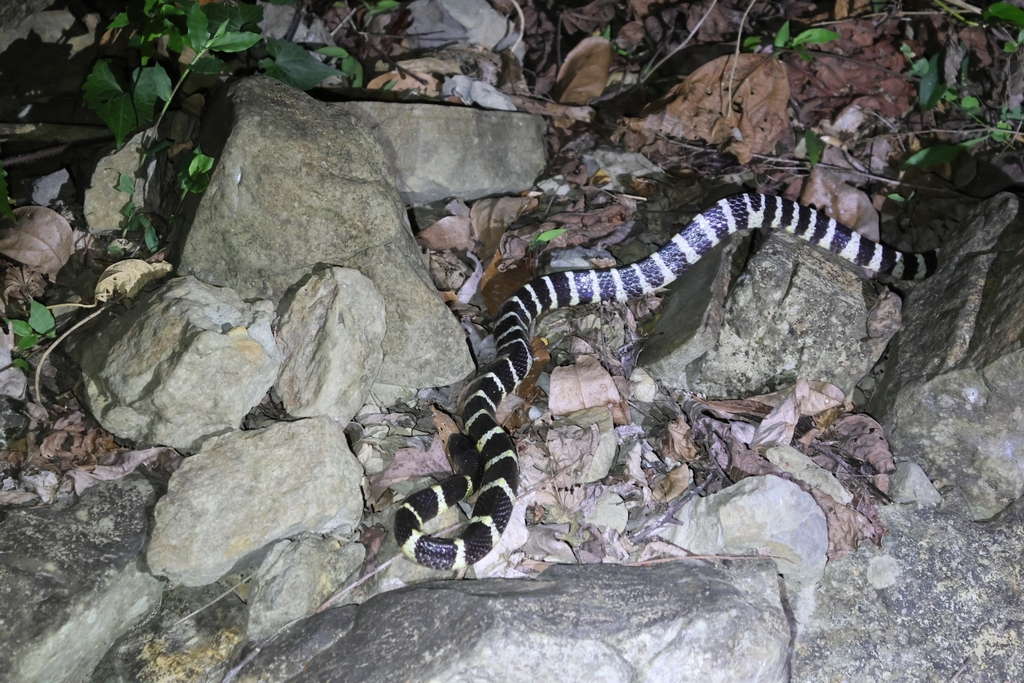
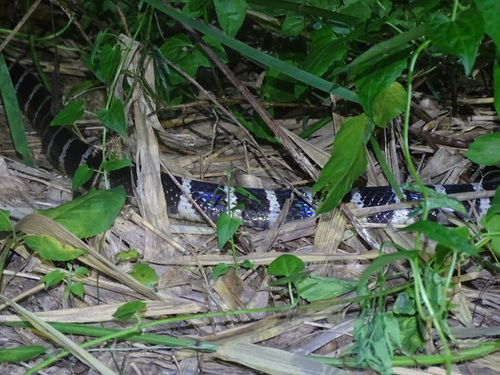
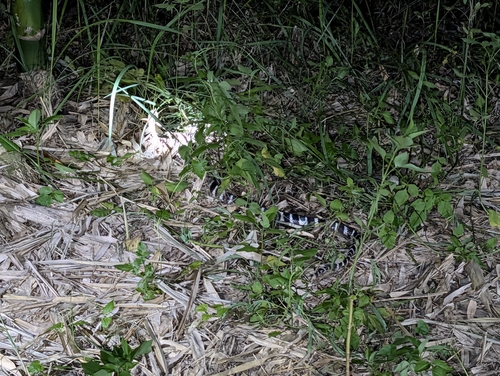
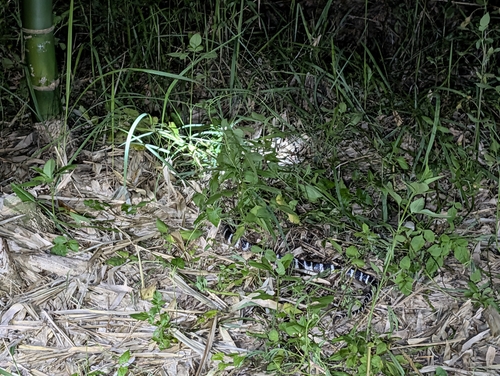
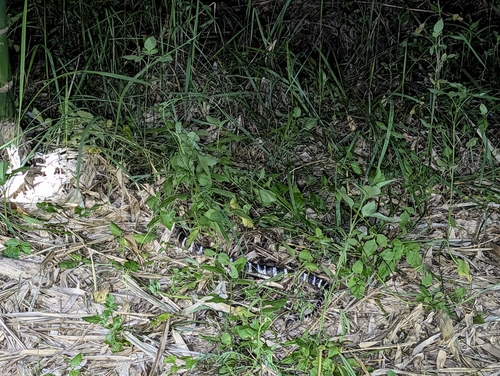
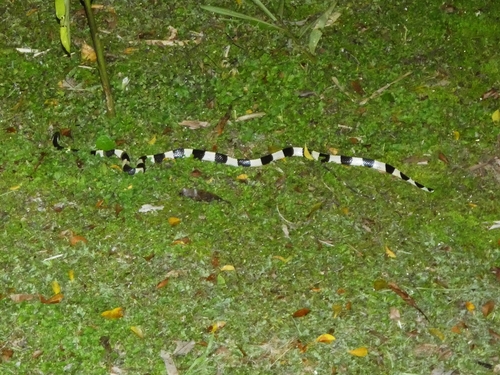
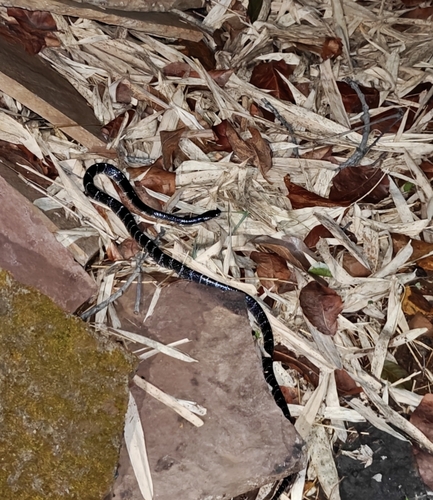
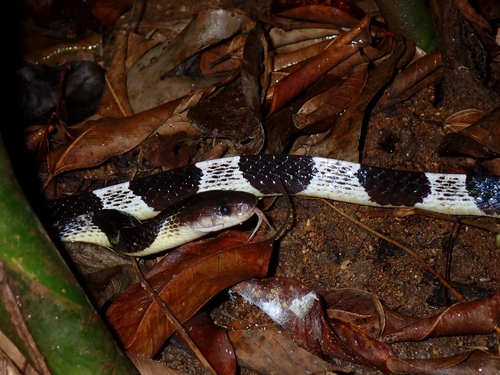
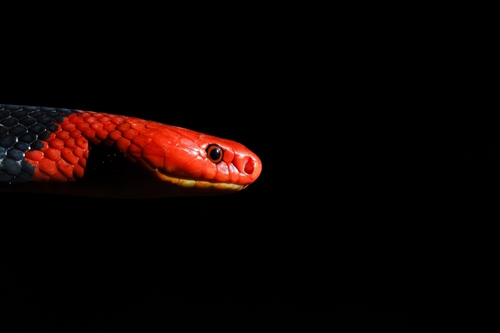
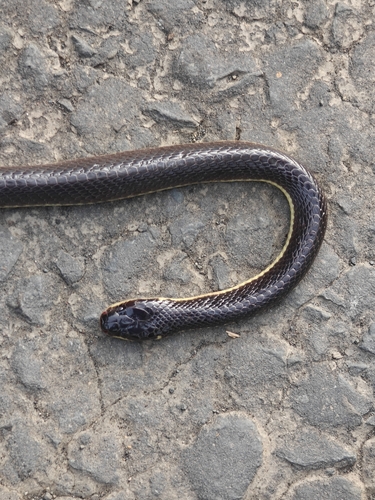
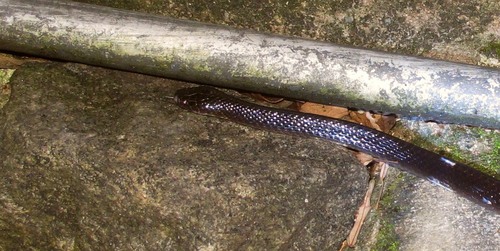
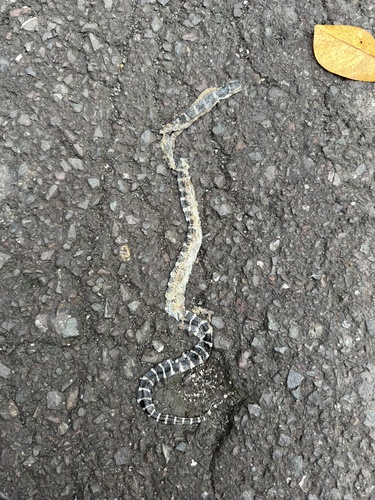
5 photographs of the Many-banded Krait. © 林正文.
The Many-banded Krait (Bungarus multicinctus) is a venomous snake in the Elapidae family, recorded in 12 countries.
If you are bitten
This is a venomous snake. Treat any bite as a medical emergency: stay calm, keep the bitten limb still and roughly level with the heart, remove rings and tight clothing, and get to emergency care immediately. Do not apply a tourniquet, cut the wound, apply ice, or try to suck out venom. Call your local emergency number or poison center.
- Family
- Elapidae
- Danger
- high
About the Many-banded Krait
The many-banded krait (Bungarus multicinctus), also known as the Taiwanese krait or the Chinese krait, is an extremely venomous species of elapid snake found in much of central and southern China and Southeast Asia. The species was first described by the scientist Edward Blyth in 1861. Averaging 1 to 1.5 m (3.5 to 5 ft) in length, it is a black or bluish-black snake with many white bands across its body. The many-banded krait mostly inhabits marshy areas throughout its geographical distribution, though it does occur in other habitat types.
Taxonomy
Zoologist and pharmacist Edward Blyth described the many-banded krait as a new species in 1861, noting that it had many more bands than the banded krait (Bungarus fasciatus). It still bears its original name Bungarus multicinctus. The generic name is a Latinisation of Telugu baṅgāru, "krait." The specific name multicinctus is derived from the Latin multi-, combining form of multus, "much, many", and Latin cinctus, past participle of cingere, "to encircle"—as in a "band". The common name "krait" is from Hindi (करैत karait), which is perhaps ultimately derived from the Sanskrit word (काल kāla), which means "black". It is also called as "கட்டுவிரியன் (kattuviriyan)" in Tamil, a common name given to the genus Bungarus.
This species has two subspecies, the nominate Bungarus multicinctus multicinctus, and Bungarus multicinctus wanghaotingi.
American herpetologist Clifford H. Pope described Bungarus wanghaotingi in 1928 from a specimen from southwestern Yunnan Province collected in November, 1926 by a Walter Granger. Naming it for zoological artist Mr. Wang Hao-t'ing, of Beijing, he distinguished it from B. multicinctus by its more numerous dorsal bands and from B. candidus by its higher ventral scale count. This taxon is also found in Myanmar, in Kachin State, Rakhine State and Sagaing Division. Herpetologist Alan Leviton and colleagues suspect there are further undescribed taxa within the species complex.
Mao et al. (1983) showed that this species, Bungarus multicinctus was slightly distinct from the other members of its genus and was immunologically more similar to Laticauda, terrestrial Australian elapids, and true sea snakes than it is to Elapsoidea sundevalli (Sundevall's garter snake), Naja naja (Indian cobra) or two Micrurus species (New World or American coral snakes). Minton (1981), Schwaner et al. and Cadle & Gorman (1981) all suggested similar things to Mao et al. (1983) based on immunological data. The many-banded krait was more similar to the Australian elapids, Laticauda and true sea snakes than they were to numerous elapids they were compared to.
Adapted from Wikipedia, available under CC BY-SA.
Local and regional names
The Many-banded Krait is known by these names across the regions where it lives:
- Chinese
- 銀環蛇, 银环蛇, 雨傘節
- Danish
- Smalbåndet Krait
- French
- Bongare rayé
- German
- Chinesischer Krait, Vielbindenbungar, Vielgebänderter Krait
- Italian
- Bungaro di Taiwan, Bungaro multifasciato, Krait di Taiwan, Krait multifasciato
- Japanese
- アマガサヘビ, タイワンアマガサ
- Russian
- Южнокитайский многополосый крайт
- Spanish
- Krait de muchas bandas
- Thai
- งูทับสมิงคลาลายถี่
- Vietnamese
- Ran cap nia bac
Frequently asked: Many-banded Krait
- Is the Many-banded Krait venomous?
- Yes. The Many-banded Krait (Bungarus multicinctus) is venomous and belongs to the Elapidae family (cobra, mamba, coral or sea snake). Its bite is considered high risk to people. Treat any bite as a medical emergency.
- Is the Many-banded Krait poisonous?
- Snakes are venomous, not poisonous. "Poisonous" means harmful to eat or touch; "venomous" means injecting toxins through a bite. The Many-banded Krait is venomous, delivering venom through a bite.
- Is the Many-banded Krait dangerous?
- This is a venomous snake. Treat any bite as a medical emergency: stay calm, keep the bitten limb still and roughly level with the heart, remove rings and tight clothing, and get to emergency care immediately. Do not apply a tourniquet, cut the wound, apply ice, or try to suck out venom. Call your local emergency number or poison center.
- Where does the Many-banded Krait live?
- The Many-banded Krait has verified records in 12 countries, including Chinese Taipei, China, Hong Kong. See the distribution section below for its full range.
- What does the Many-banded Krait eat?
- The snake is nocturnal, and may be more defensive at night. It is, however, a timid and placid species of snake. In the daytime, it hides under stones or in holes. The snake appears from April and retreats into hibernation in November. It is considered to be more defensive than the banded krait (Bungarus fasciatus), thrashing about as it is handled. Unlike other Bungarus species, who are primarily snake-eaters, the many-banded krait usually feeds on fish, but it is also preys on other species of snakes, including members of its own species.
If you are bitten by the Many-banded Krait
Do
- Get away from the snake and stay calm. Most bites worsen when people panic or try again to handle the snake.
- Call 911 or Poison Control (1-800-222-1222) right away. Antivenom works best when given early.
- Note the time of the bite and, from a safe distance, the snake's color and pattern, a phone photo is enough. Do not chase it.
- Keep the bitten limb still and at roughly heart level. Sit or lie down and limit movement.
- Remove rings, watches, and tight clothing near the bite before swelling starts.
- Gently wash the bite with soap and water and cover it with a clean, dry dressing.
Do not
- Do not cut the wound or try to suck out the venom.
- Do not apply a tourniquet or ice.
- Do not drink alcohol or caffeine.
- Do not take aspirin or ibuprofen, they can worsen bleeding. Acetaminophen is safer for pain.
- Do not try to catch or kill the snake. A dead snake can still bite by reflex.
First-aid guidance adapted from the U.S. Centers for Disease Control and Prevention (CDC NIOSH), Venomous Snakes. Educational only; always follow the instructions of emergency responders.
Where it is found
More Elapidae snakes

Classification
How scientists group this snake, from the broadest category down to the exact species. Each step narrows to its closest relatives.
Keep learning
- Are Snakes Dangerous? The Real Risk, in PerspectiveMost snakes are harmless and avoid people. Here is the honest picture of snakebite risk worldwide and how to lower your own.
- Snakebite First Aid: What to Do (and What Never to Do)A clear, CDC-based guide to snakebite first aid: the steps that help, the popular myths that hurt, and how to tell a serious bite from a minor one.
- Venomous vs Nonvenomous: How to Tell the DifferenceThe folk rules for telling venomous snakes apart, where each one fails, and why location-based identification beats guessing by sight.
- What to Do If You Find a SnakeFound a snake at home or on a trail? Here is how to stay calm, give it space, identify it safely, and know when to call a professional.
Distribution from GBIF & iNaturalist. Venom status per CDC. Background: Wikipedia. Informational only. Never handle a snake to identify it.