
Coral snake
Texas Coralsnake
VenomousMicrurus tener
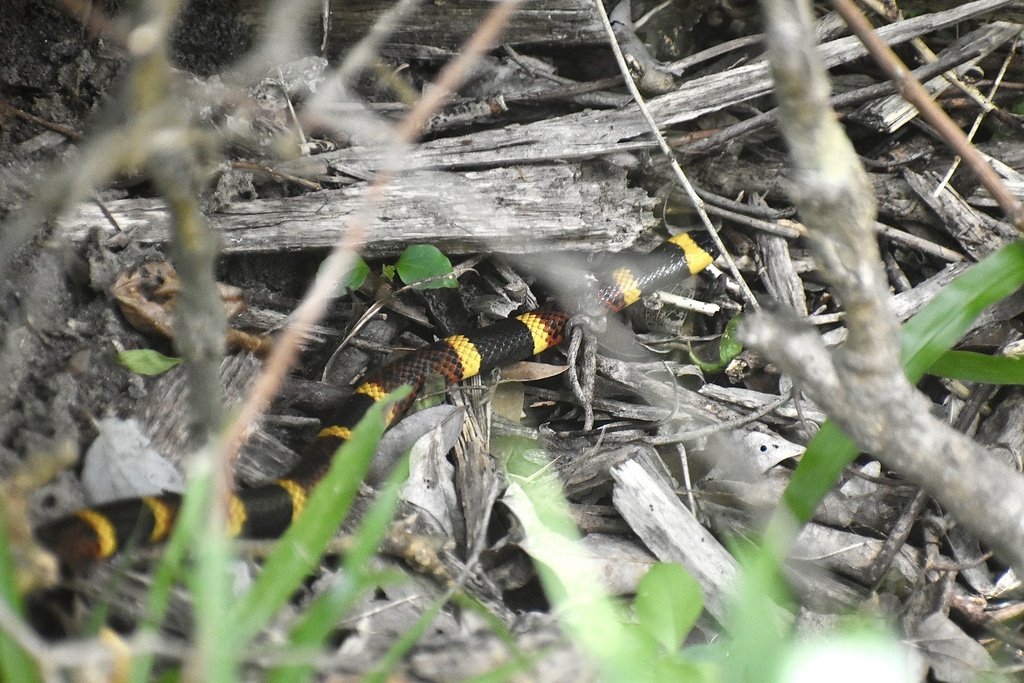
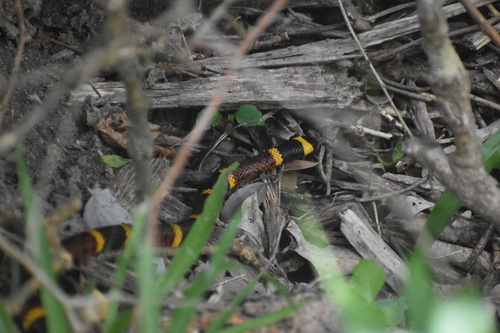
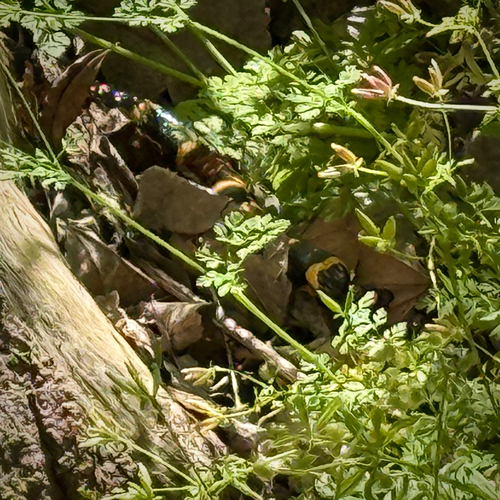
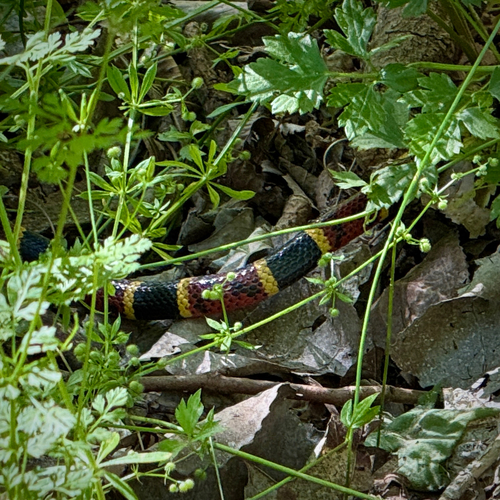
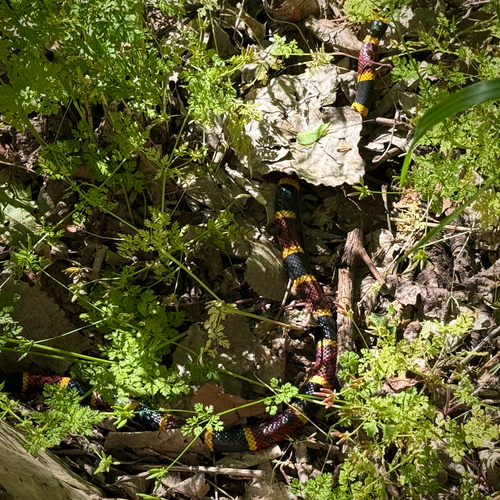
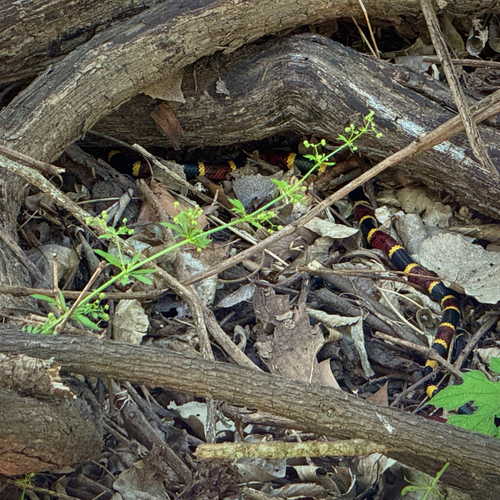
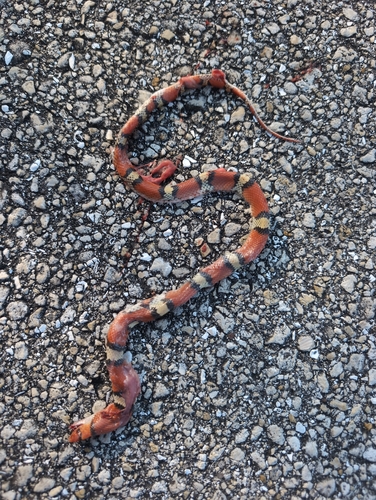
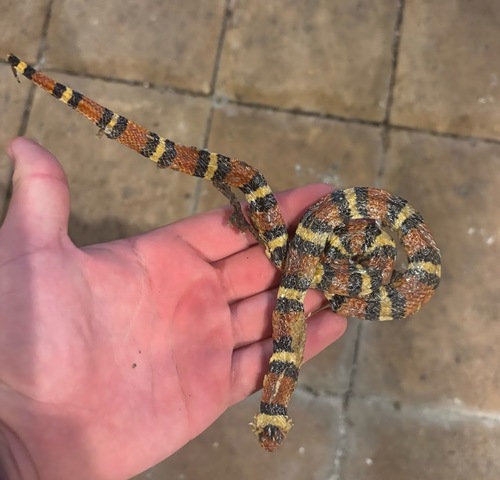
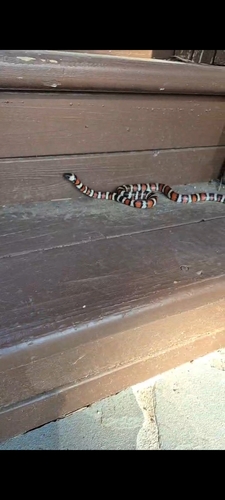
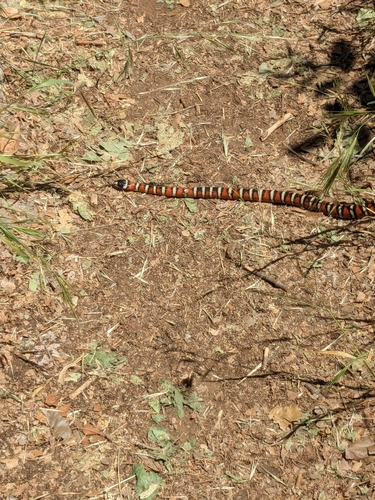
6 photographs of the Texas Coralsnake. © sandor_nagy.
The Texas Coralsnake (Micrurus tener) is a venomous snake in the Elapidae family, recorded in 2 countries.
If you are bitten
Coral snake venom is neurotoxic and symptoms can be delayed for many hours. Treat any suspected coral snake bite as a medical emergency and go to an emergency room even if you feel fine — antivenom may be needed. Keep calm and still. Call Poison Control at 1-800-222-1222 or 911 in the US, or your local emergency number. (Source: CDC.)
- Also called
- Coral snake
- Family
- Elapidae
- Size
- Slender, usually 1.5–3 ft.
- Habitat
- Pine and hardwood forests with sandy, well-drained soils.
- Behavior
- Secretive and semi-burrowing; reluctant to bite but venom is neurotoxic.
- Identify
- Rings of red, yellow, and black where red touches yellow; small rounded head and round pupils.
- Danger
- high (delayed)
About the Texas Coralsnake
Micrurus tener, commonly known as the Texas coral snake and el coralillo tejano in Mexican Spanish, is a species of venomous snake in the family Elapidae. The species is native to the southern and southwestern United States and adjacent northeastern and central Mexico. Six subspecies are recognized as being valid, including the nominotypical subspecies, Micrurus tener tener. Although originally described as a species new to science, Micrurus tener was for many years considered to be a subspecies of the eastern coral snake (Micrurus fulvius).
Geographic range
The Texas coral snake ranges from the southern United States south to northeastern and central Mexico. It inhabits the states of Texas, Louisiana and Arkansas, and the Mexican states of Tamaulipas, San Luis Potosí, Guanajuato, Querétaro and Morelos.
Description
The Texas coral snake has the traditional coloration associated with coral snakes: black, yellow, and red rings. These rings extend onto the belly. It is capable of growing to 48 in (122 cm) in total length (tail included), but most are closer to 24 in (61 cm). Males are typically smaller than females. It has smooth dorsal scales, a rounded head, and the eyes have round pupils. Albinistic (lacking black pigment) and anerythristic (lacking red pigment) specimens have been found in the wild. "Pastel" (pink, translucent cream, and very light blue) coloration has been noted, and completely black (melanistic) specimens, are known. The Texas coral snake is somewhat larger (longer and stouter) than the eastern coral snake (Micrurus fulvius), and has a somewhat larger venom yield.
Behavior
All coral snakes are shy, secretive animals, typically nocturnal. They spend most of their time hiding in leaf litter, under logs. They can be seen crawling on the surface, after heavy rains, when the nighttime temperatures rise above 78 °F (26 °C).
When grabbed suddenly, or sometimes just when touched, they may thrash about, swing around, and bite.
Diet
The primary diet of the Texas coral snake consists of other snakes, primarily earth snakes, and other small fossorial species. It is cannibalistic. It also occasionally eats small lizards, but the consumption of rodents by coral snakes is rare.
Reproduction
The Texas coral snake is oviparous.
Mimicry
Other nonvenomous snakes resemble the Texas coral snake as a form of Batesian mimicry. In the United States only, all three species of venomous coral snakes (Micruroides euryxanthus, Micrurus fulvius, and Micrurus tener) can be identified by the red rings contacting the yellow rings. A common mnemonic device is "red and yellow, kill a fellow. Red on black, friend of Jack". However, this mnemonic is not always accurate, due to the aforementioned color variations, and its usage is dangerous to both snakes and humans.
Venom
Adapted from Wikipedia, available under CC BY-SA.
Local and regional names
The Texas Coralsnake is known by these names across the regions where it lives:
- Chinese
- 德州珊瑚蛇
- Danish
- Texas-koralslange
- English
- Blotched Coral Snake, Guanajuato coral snake, Saddled Coral Snake, Spotted coral snake, Tamaulipas coral snake, Tampico coral snake, Texas Coral Snake, Texas Gulf-Coast Coral Snake
- German
- Texas-Korallenotter
- Italian
- Serpente corallo del Texas
- Persian
- مار مرجانی تگزاس
- Spanish
- Coralillo Ensillado, Coralillo Tejano, Coralillo de la Sierra Madre Oriental, Coralillo tamaulipeca, Serpiente coralillo arlequín
Frequently asked: Texas Coralsnake
- Is the Texas Coralsnake venomous?
- Yes. The Texas Coralsnake (Micrurus tener) is venomous and belongs to the Elapidae family (coral snake). Its bite is considered high (delayed) risk to people. Treat any bite as a medical emergency.
- Is the Texas Coralsnake poisonous?
- Snakes are venomous, not poisonous. "Poisonous" means harmful to eat or touch; "venomous" means injecting toxins through a bite. The Texas Coralsnake is venomous, delivering venom through a bite.
- Is the Texas Coralsnake dangerous?
- Coral snake venom is neurotoxic and symptoms can be delayed for many hours. Treat any suspected coral snake bite as a medical emergency and go to an emergency room even if you feel fine — antivenom may be needed. Keep calm and still. Call Poison Control at 1-800-222-1222 or 911 in the US, or your local emergency number. (Source: CDC.)
- Where does the Texas Coralsnake live?
- The Texas Coralsnake has verified records in 2 countries, including United States of America, Mexico. See the distribution section below for its full range.
- How do I identify the Texas Coralsnake?
- Rings of red, yellow, and black where red touches yellow; small rounded head and round pupils.
- How big does the Texas Coralsnake get?
- Slender, usually 1.5–3 ft.
- What does the Texas Coralsnake eat?
- The primary diet of the Texas coral snake consists of other snakes, primarily earth snakes, and other small fossorial species. It is cannibalistic. It also occasionally eats small lizards, but the consumption of rodents by coral snakes is rare.
- Why is it called the Texas Coralsnake?
- The Latin specific name, tener, means "soft or delicate". This is in reference to the graceful features of the snake. The subspecific name, bernadi, is in honor of French physician Santiago Bernad, who practiced medicine in Zacualtipán, Hidalgo, Mexico, where he collected the holotype. The subspecific name, fitzingeri, is in honor of Austrian herpetologist Leopold Fitzinger. The name maculatus (Latin for "spotted") refers to the presence of some large black spots in the red rings.
If you are bitten by the Texas Coralsnake
Do
- Get away from the snake and stay calm. Most bites worsen when people panic or try again to handle the snake.
- Call 911 or Poison Control (1-800-222-1222) right away. Antivenom works best when given early.
- Note the time of the bite and, from a safe distance, the snake's color and pattern, a phone photo is enough. Do not chase it.
- Keep the bitten limb still and at roughly heart level. Sit or lie down and limit movement.
- Remove rings, watches, and tight clothing near the bite before swelling starts.
- Gently wash the bite with soap and water and cover it with a clean, dry dressing.
Do not
- Do not cut the wound or try to suck out the venom.
- Do not apply a tourniquet or ice.
- Do not drink alcohol or caffeine.
- Do not take aspirin or ibuprofen, they can worsen bleeding. Acetaminophen is safer for pain.
- Do not try to catch or kill the snake. A dead snake can still bite by reflex.
First-aid guidance adapted from the U.S. Centers for Disease Control and Prevention (CDC NIOSH), Venomous Snakes. Educational only; always follow the instructions of emergency responders.
Where it is found
Snakes it is confused with
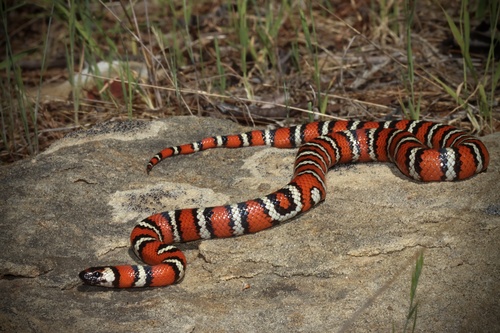
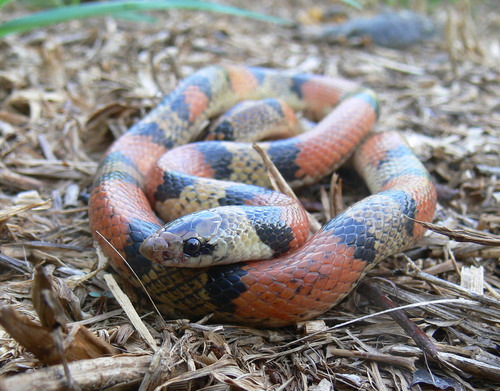
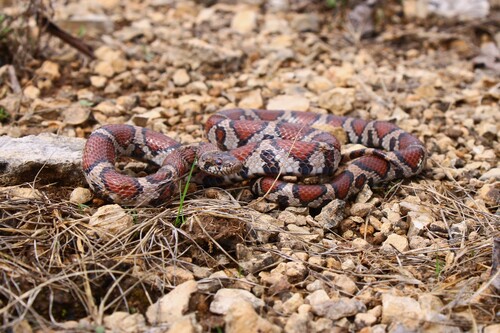 Eastern MilksnakeHarmless
The venomous US coral snake has red bands touching yellow ('red touches yellow, kill a fellow') — but this rhyme works ONLY for coral snakes native to the United States, so never judge a coral snake by color outside the US.
Texas Coralsnake vs Eastern Milksnake→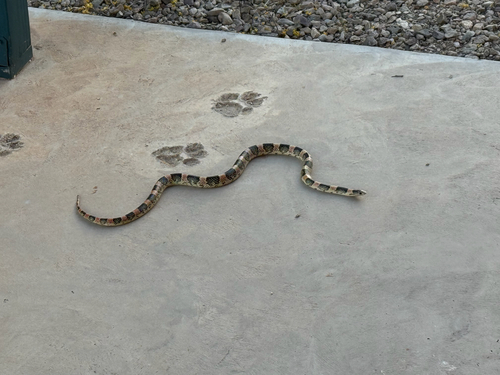
More Elapidae snakes
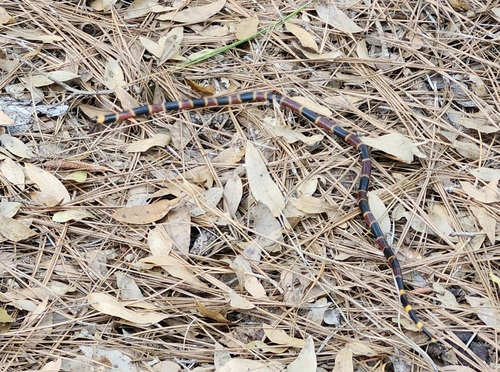 Eastern CoralsnakeMicrurus fulvius
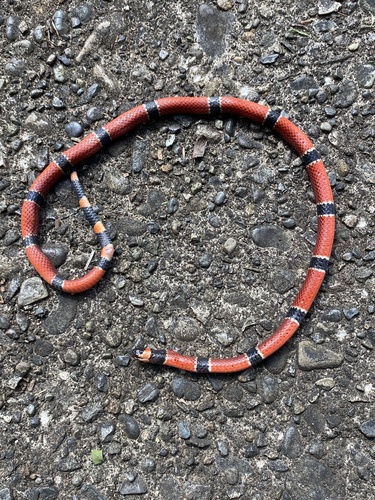 Central American CoralsnakeMicrurus nigrocinctus
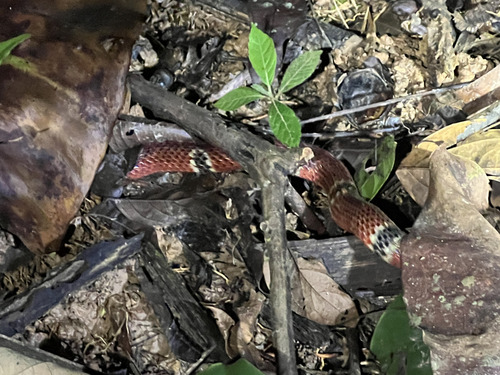 Variable CoralsnakeMicrurus diastema
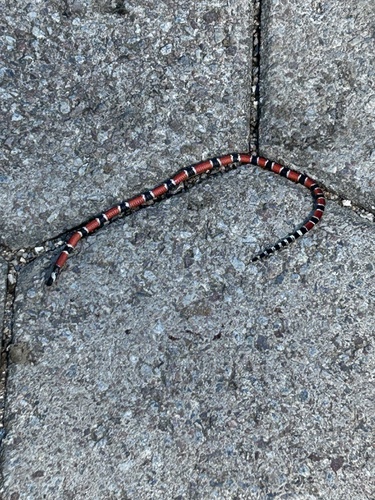 Painted CoralsnakeMicrurus corallinus
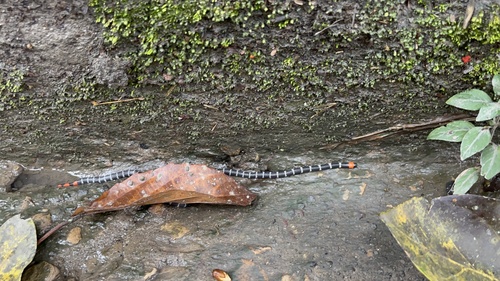 Redtail CoralsnakeMicrurus mipartitus
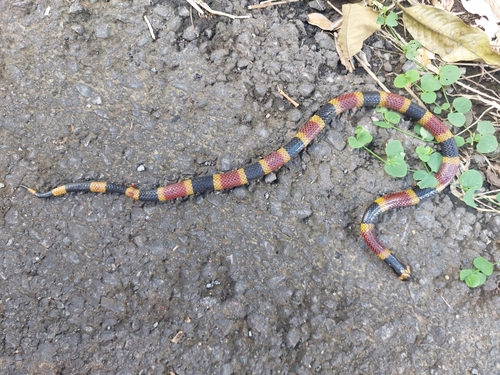 Costa Rican CoralsnakeMicrurus mosquitensis
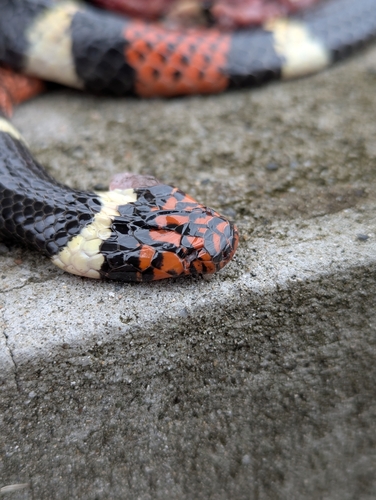 Aquatic CoralsnakeMicrurus surinamensis
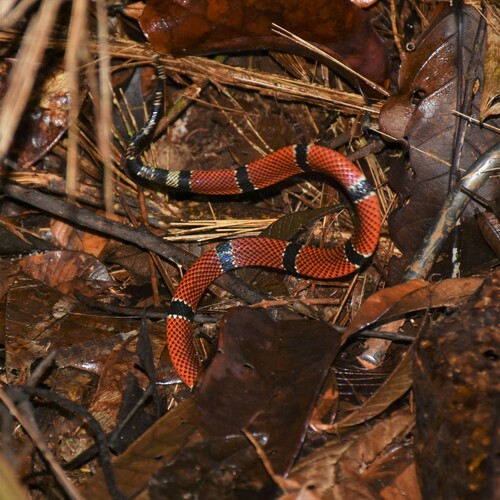 Transandean Capuchin CoralsnakeMicrurus dumerilii
Classification
How scientists group this snake, from the broadest category down to the exact species. Each step narrows to its closest relatives.
Keep learning
- Are Snakes Dangerous? The Real Risk, in PerspectiveMost snakes are harmless and avoid people. Here is the honest picture of snakebite risk worldwide and how to lower your own.
- Snakebite First Aid: What to Do (and What Never to Do)A clear, CDC-based guide to snakebite first aid: the steps that help, the popular myths that hurt, and how to tell a serious bite from a minor one.
- Venomous vs Nonvenomous: How to Tell the DifferenceThe folk rules for telling venomous snakes apart, where each one fails, and why location-based identification beats guessing by sight.
- What to Do If You Find a SnakeFound a snake at home or on a trail? Here is how to stay calm, give it space, identify it safely, and know when to call a professional.
Distribution from GBIF & iNaturalist. Venom status per CDC. Background: Wikipedia. Informational only. Never handle a snake to identify it.