
Genus · Elapidae
Types of mambas
4 species make up the genus Dendroaspis, the snakes commonly called mambas. All of them are venomous.
About mambas
Dendroaspis, the mambas, are slender, fast, alert African elapids whose name means tree asp. Three of the four species are green and tree-dwelling; the famous black mamba spends most of its time on the ground.
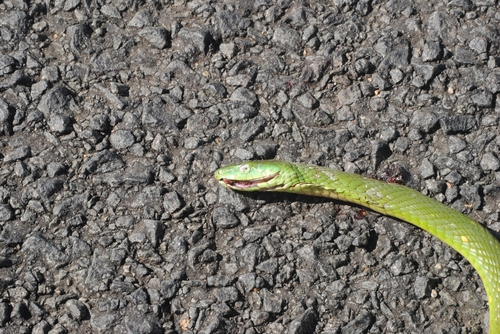
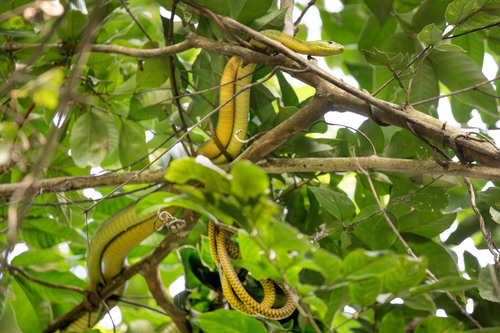
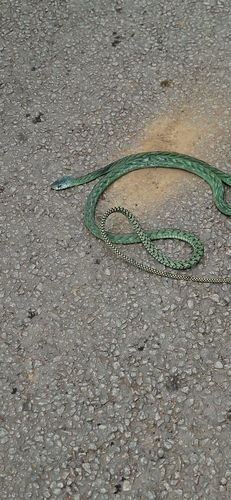
Dendroaspis is a small genus of long, lean, highly alert snakes in the family Elapidae, found across sub-Saharan Africa. Our database lists 4 species, all 4 venomous. The genus name means tree asp, and it fits most of its members: the eastern green mamba, western green mamba, and Jameson's mamba are bright-to-olive green snakes that live up in trees and dense vegetation, blending into the canopy. The black mamba is the outlier of the group, spending much of its time on the ground in savanna and rocky terrain. What unites all four is a build made for speed and reach: smooth narrow bodies, large eyes, and a watchful, nervous disposition.
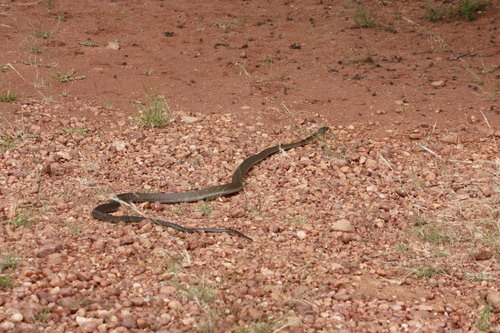
The black mamba, Dendroaspis polylepis, is the standout of the genus and one of the most talked-about snakes in the world. It is among the longest venomous snakes in Africa and among the fastest snakes on Earth over short distances. Its name is misleading: the body is usually grey to brownish, not black. The name comes from the inky black lining inside its mouth, which it may display when threatened. Decades of stories have given the black mamba a fearsome reputation, and while parts of that reputation are exaggerated, the snake is a genuine medical concern wherever it overlaps with people.
Mambas range widely across sub-Saharan Africa, occupying savanna, woodland, and forest depending on the species. They are active, diurnal hunters that move through their environment by day in search of prey. The green mambas hunt birds and their eggs, small mammals, and other arboreal animals among the branches, while the black mamba takes small mammals and birds across more open ground. All mambas lay eggs rather than giving live birth.
Mamba venom is made up of potent, fast-acting neurotoxins that can interfere with the nervous system and cause rapid paralysis. Before the development of antivenom, black mamba bites were very often fatal, which is exactly why prompt hospital treatment matters so much today. The speed at which symptoms can progress means a confirmed or suspected mamba bite is a true emergency, and effective antivenom plus supportive hospital care is the standard of treatment.
Despite their reputation, mambas are not aggressive aggressors looking for trouble. Like most snakes, they usually try to flee, and they tend to bite only when cornered, surprised, or unable to escape. The popular image of a mamba chasing people down is largely myth. None of this makes a wild venomous snake safe to handle: the honest framing is that mambas are best given distance and respect, and any bite should be treated as a life-threatening emergency that needs professional medical care without delay.
Dendroaspis belongs to the Elapidae family (Cobras, mambas, coral & sea snakes). Front-fanged venomous snakes, many with potent neurotoxic venom. Usually slender with a head barely wider than the neck and fixed front fangs (not the folding fangs of vipers). Coral snakes are boldly ringed; sea snakes have a flattened, paddle-like tail.
Danger: All elapids are venomous and the family is responsible for a large share of fatal snakebites worldwide. Many are shy, but bites can be life-threatening. Treat any bite as a medical emergency.
All species (4)
Keep learning
- Venomous vs Nonvenomous: How to Tell the DifferenceThe folk rules for telling venomous snakes apart, where each one fails, and why location-based identification beats guessing by sight.
- Are Snakes Dangerous? The Real Risk, in PerspectiveMost snakes are harmless and avoid people. Here is the honest picture of snakebite risk worldwide and how to lower your own.
- Snake Venom Explained: How It Works and WhyWhat snake venom actually is, why it evolved, the main venom types, fang delivery, how antivenom works, and why ranking the most venomous snake is hard.
- How Snakes Move, Hunt, and EatHow snakes move without legs, hunt as ambushers or active foragers, kill by constriction or venom, and swallow prey wider than their head.