
Elapidae
Tiger Snake
VenomousNotechis scutatus
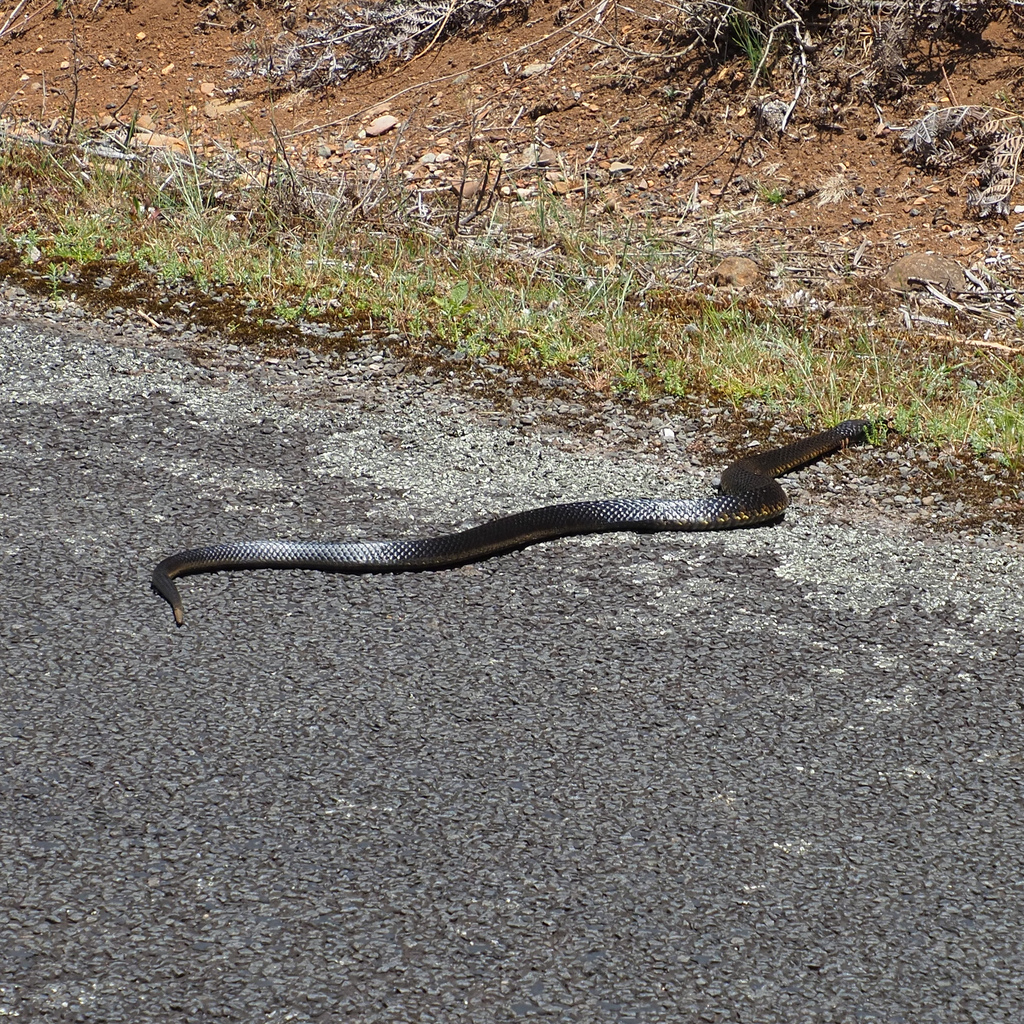
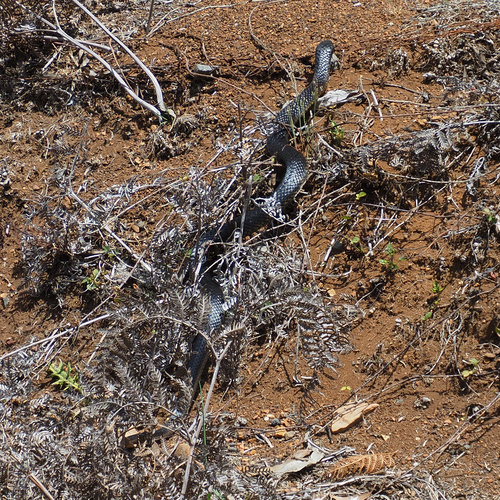
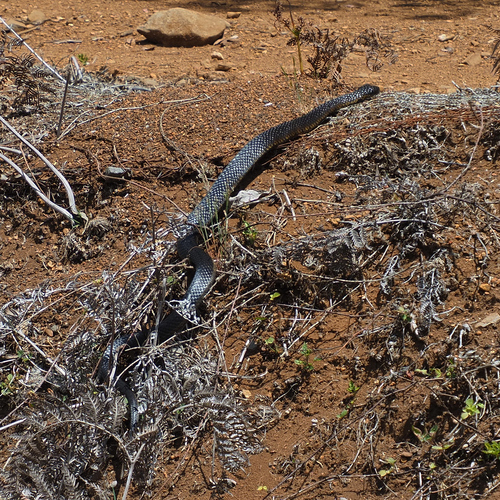
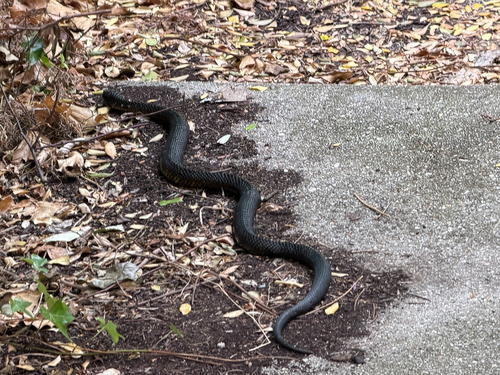
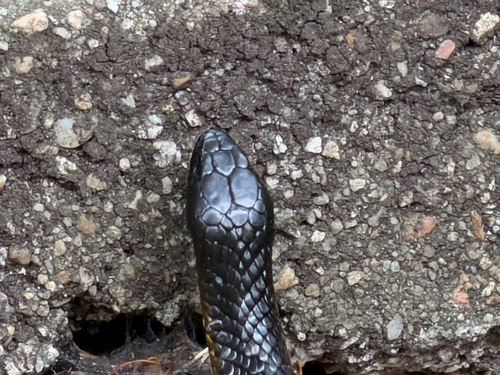
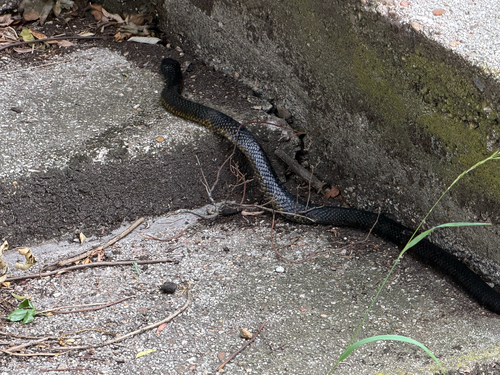
6 photographs of the Tiger Snake. © Cowirrie.
The Tiger Snake (Notechis scutatus) is a venomous snake in the Elapidae family, recorded in 1 country.
If you are bitten
This is a venomous snake. Treat any bite as a medical emergency: stay calm, keep the bitten limb still and roughly level with the heart, remove rings and tight clothing, and get to emergency care immediately. Do not apply a tourniquet, cut the wound, apply ice, or try to suck out venom. Call your local emergency number or poison center.
- Family
- Elapidae
- Danger
- high
About the Tiger Snake
The tiger snake (Notechis scutatus) is a large and highly venomous snake of southern Australia, including its coastal islands and Tasmania. These snakes are often observed and locally well known by their banding, black and yellow like a tiger, although the species can be highly variable in colouration and patterning. All populations are classified within the genus Notechis (Elapidae). Their diverse characteristics have been classified either as distinct species or by subspecies and regional variation.
While tiger snakes are usually ground-dwelling, they are able to swim as well as climb into trees and buildings.
Taxonomy
The genus Notechis is in the elapid family, venomous snakes with fixed front fangs. The classification of this genus is given as a single and highly variable species, Notechis scutatus, or a second species Notechis ater, and by an arrangement of subspecies or regional morphs.
A 2016 genetic analysis showed that the closest relative of the tiger snakes is the rough-scaled snake (Tropidechis carinatus).
The two extensively recognized species of this genus are Notechis scutatus (Peters, 1861) and Notechis ater (Krefft, 1866), which show further variety in their characteristics. Several authors have published revisions or described subspecies of these species. Others consider the names contained by this taxonomic arrangement to be unwarranted, and describe Notechis as a monotypic genus. Various authorities accept some or all the systematics previously applied, but most agree a revision of the genus is needed. Names for these subdivisions include the western types, appended to both species names as occidentalis (Glauert 1948) The island groups have also been described as subspecies: Chappell Island tiger snake as N. ater serventyi (Warrell, 1963), King Island and Tasmanian tiger snakes subspecies as N. ater humphreysi, (Warrell, 1963) and the Peninsula tiger snake as N. ater niger (Kinghorn 1921).
Island populations of N. scutatus have evolved larger heads to cope with large prey animals. Young populations have larger heads by phenotypic plasticity, whereas large heads have become genetically assimilated in older populations.
* Not including the nominate subspecies (typical form).
Description
Notechis is a genus of large venomous snakes in the family Elapidae restricted to subtropical and temperate regions of Australia. Tiger snakes are a large group of distinct populations, which may be isolated or overlapping, with extreme variance in size and colour. Individuals also show seasonal variation in colour.
The total length is typically about 1.2 metres (3 ft 11 in) The patterning is darker bands, strongly contrasting or indistinct, which are pale to very dark in colour. Colouration is olive, yellow, orange-brown, or jet-black, and the underside of the snake is light yellow or orange. Tiger snakes use venom to kill prey, and may also bite an aggressor; they are potentially fatal to humans. Tolerant of low temperatures, the snake may be active on warmer nights.
Adapted from Wikipedia, available under CC BY-SA.
Local and regional names
The Tiger Snake is known by these names across the regions where it lives:
- Chinese
- 虎蛇
- Czech
- pakobra páskovaná
- Danish
- Tigerslange
- English
- Black Tiger Snake, Common Tiger Snake, Eastern Tiger Snake, Flinders Ranges Tiger snake, Krefft's Tiger Snake, Mainland Island Snake, Mainland Tiger Snake, Peninsula Tiger Snake, Western Tiger Snake
- French
- Serpent-tigre
- German
- Ostliche Tigerotter, Schwarze Tigerotter, Östliche Tigerotter
- Hungarian
- ausztráliai tigriskígyó
- Italian
- Serpente tigre
- Japanese
- タイガースネーク
- Russian
- Тигровая змея
- Spanish
- Serpiente tigre de Krefft
Frequently asked: Tiger Snake
- Is the Tiger Snake venomous?
- Yes. The Tiger Snake (Notechis scutatus) is venomous and belongs to the Elapidae family (cobra, mamba, coral or sea snake). Its bite is considered high risk to people. Treat any bite as a medical emergency.
- Is the Tiger Snake poisonous?
- Snakes are venomous, not poisonous. "Poisonous" means harmful to eat or touch; "venomous" means injecting toxins through a bite. The Tiger Snake is venomous, delivering venom through a bite.
- Is the Tiger Snake dangerous?
- This is a venomous snake. Treat any bite as a medical emergency: stay calm, keep the bitten limb still and roughly level with the heart, remove rings and tight clothing, and get to emergency care immediately. Do not apply a tourniquet, cut the wound, apply ice, or try to suck out venom. Call your local emergency number or poison center.
- Where does the Tiger Snake live?
- The Tiger Snake has verified records in 1 country, including Australia. See the distribution section below for its full range.
If you are bitten by the Tiger Snake
Do
- Get away from the snake and stay calm. Most bites worsen when people panic or try again to handle the snake.
- Call 911 or Poison Control (1-800-222-1222) right away. Antivenom works best when given early.
- Note the time of the bite and, from a safe distance, the snake's color and pattern, a phone photo is enough. Do not chase it.
- Keep the bitten limb still and at roughly heart level. Sit or lie down and limit movement.
- Remove rings, watches, and tight clothing near the bite before swelling starts.
- Gently wash the bite with soap and water and cover it with a clean, dry dressing.
Do not
- Do not cut the wound or try to suck out the venom.
- Do not apply a tourniquet or ice.
- Do not drink alcohol or caffeine.
- Do not take aspirin or ibuprofen, they can worsen bleeding. Acetaminophen is safer for pain.
- Do not try to catch or kill the snake. A dead snake can still bite by reflex.
First-aid guidance adapted from the U.S. Centers for Disease Control and Prevention (CDC NIOSH), Venomous Snakes. Educational only; always follow the instructions of emergency responders.
Where it is found
More Elapidae snakes
 Red-bellied Black SnakePseudechis porphyriacus
 Eastern Brown SnakePseudonaja textilis
 Texas CoralsnakeMicrurus tener
 Many-banded KraitBungarus multicinctus
 Lowlands CopperheadAustrelaps superbus
 Indian CobraNaja naja
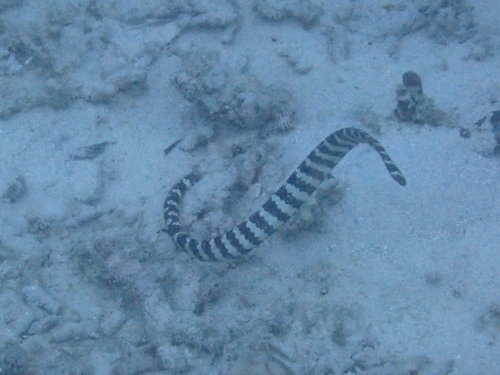 Eastern Turtle-headed Sea SnakeEmydocephalus annulatus
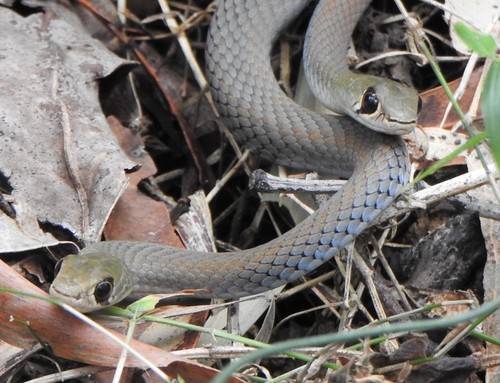 Yellow-faced WhipsnakeDemansia psammophis
Classification
How scientists group this snake, from the broadest category down to the exact species. Each step narrows to its closest relatives.
Keep learning
- Are Snakes Dangerous? The Real Risk, in PerspectiveMost snakes are harmless and avoid people. Here is the honest picture of snakebite risk worldwide and how to lower your own.
- Snakebite First Aid: What to Do (and What Never to Do)A clear, CDC-based guide to snakebite first aid: the steps that help, the popular myths that hurt, and how to tell a serious bite from a minor one.
- Venomous vs Nonvenomous: How to Tell the DifferenceThe folk rules for telling venomous snakes apart, where each one fails, and why location-based identification beats guessing by sight.
- What to Do If You Find a SnakeFound a snake at home or on a trail? Here is how to stay calm, give it space, identify it safely, and know when to call a professional.
Distribution from GBIF & iNaturalist. Venom status per CDC. Background: Wikipedia. Informational only. Never handle a snake to identify it.