
Colubridae
Green Whip Snake
HarmlessHierophis viridiflavus
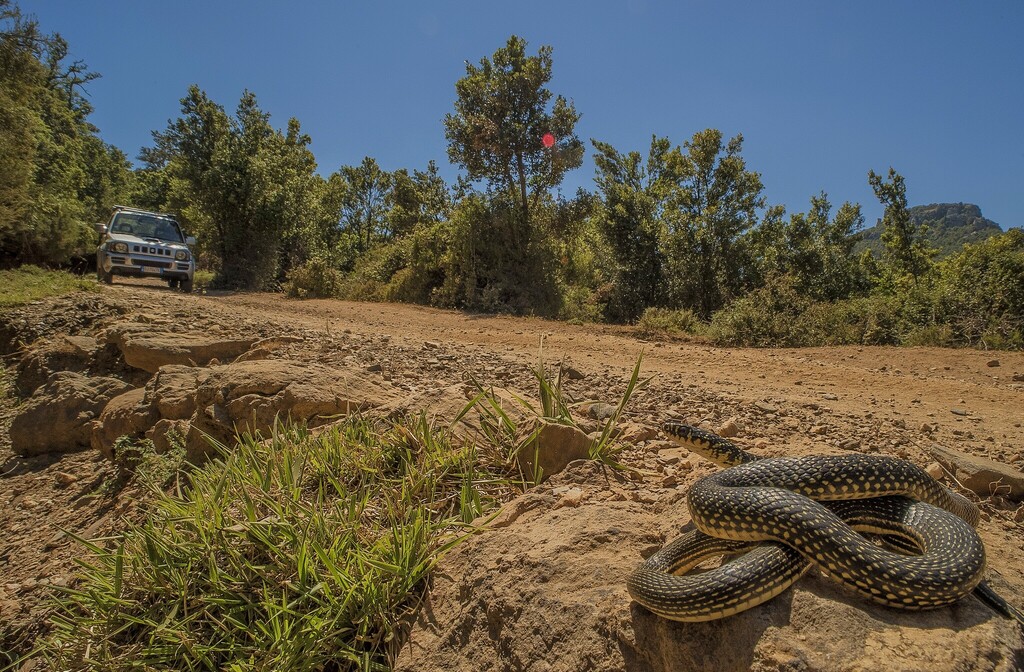
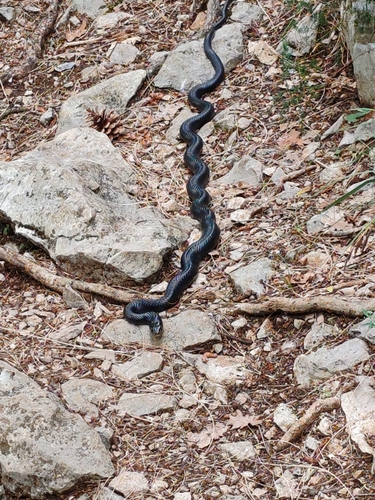
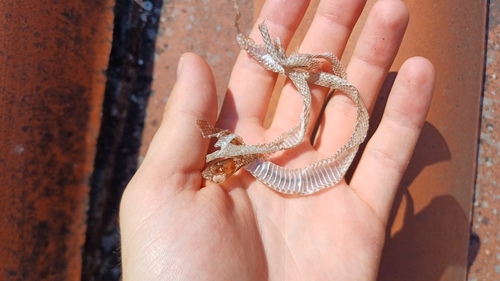
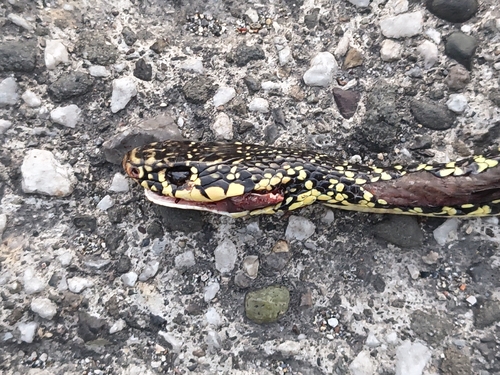
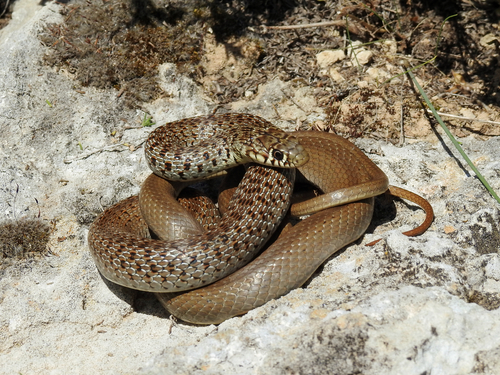
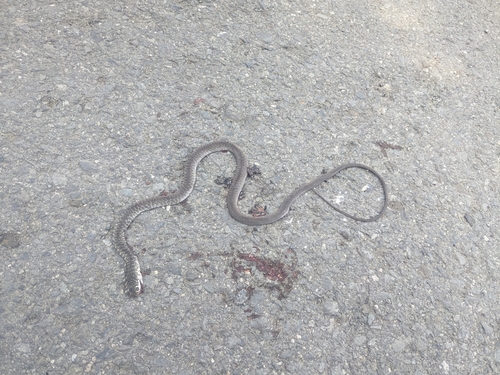
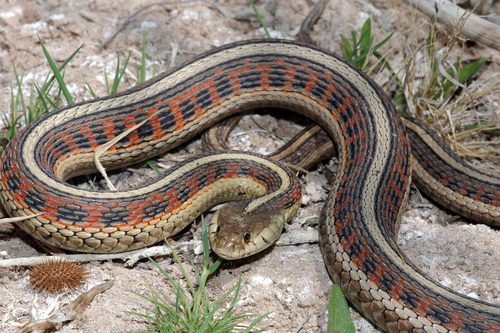
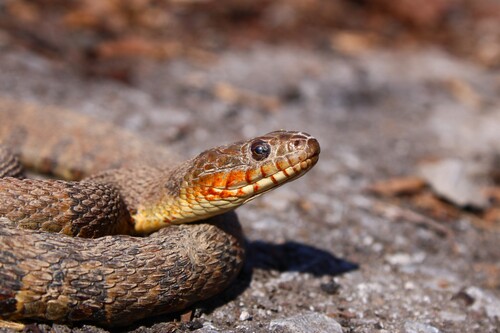
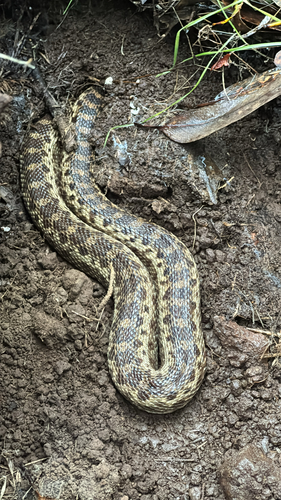
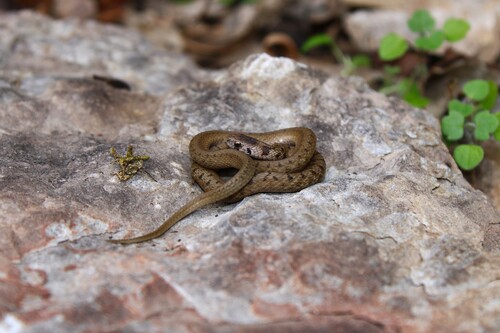
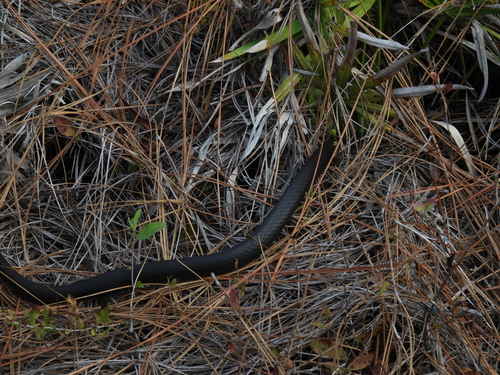
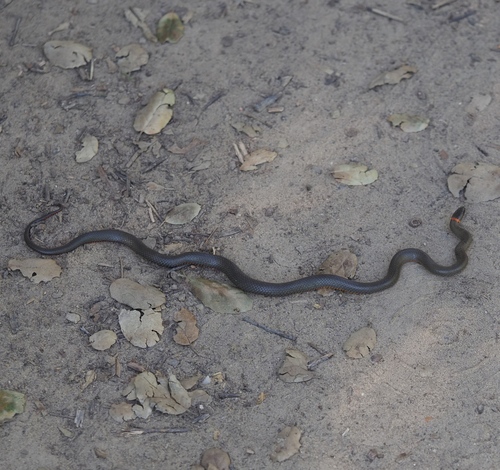
4 photographs of the Green Whip Snake. (c) Lorenzo De Luca, some rights reserved (CC BY).
The Green Whip Snake (Hierophis viridiflavus) is a non-venomous snake in the Colubridae family, recorded in 18 countries.
- Family
- Colubridae
About the Green Whip Snake
The green whip snake or western whip snake (Hierophis viridiflavus) is a species of snake in the family Colubridae.
Geographic range and subspecies
This species is present in Andorra, Croatia, France, Greece, Italy, Malta, Slovenia, Spain, Switzerland, and possibly Luxembourg.
Currently two subspecies are distinguished, a melanic (H. v. carbonarius) and a striped form (H. v. viridiflavus). The melanic form occurs in the eastern part of the range and the striped in the western part, with a contact zone throughout most of northern Italy.
Habitat
Its natural habitats are temperate forests, temperate shrubland, Mediterranean-type shrubby vegetation, arable land, pastureland, plantations, rural gardens, and urban areas.
Description
The green whip snake is a slender species with a small but well-defined head, prominent eyes with circular pupils, and smooth scales. The background colour is greenish-yellow but this is mostly obscured by heavy, somewhat irregular bands of dark green or black, particularly in the front half of the snake. The underparts are grey or yellowish and the tail has narrow longitudinal stripes. The young are a greyish colour and develop their full adult colouring by about their fourth year. This snake grows to a total length of about 150 cm (60 in). In the northeastern part of its range, in Sicily and southern Italy, most individuals are blackish in colour. There is a larger, up to two metres (6.5 ft) long, often pure black variant – Coluber viridiflavus carbonarius (Bonaparte, 1833) – found in Italy and Malta. referred to there as 'Il Biacco'.
Status
The green whip snake has a wide distribution and is very common within that range. The population is steady and faces no significant threats, apart from road kill and persecution, and the International Union for Conservation of Nature has assessed its conservation status as being of "least concern".
Biology
These snakes mainly feed on lizards, skinks, frogs, mice, as well as on the young and eggs of small birds. This species lays four to 15 eggs. They are very lively and when cornered, may bite furiously. They hibernate in winter.
Venom
Commonly regarded as non-venomous, it is described that a subject who endured 'sustained biting' of up to 5 minutes began showing suspect symptoms, including problems with neuromotor skills. The presence of modified rear maxillary fangs in correspondence to a gland called the Duvernoy's gland, similar to the venom gland and involved in the production of toxins, has recently been discovered.
Images
Adapted from Wikipedia, available under CC BY-SA.
Frequently asked: Green Whip Snake
- Is the Green Whip Snake venomous?
- No. The Green Whip Snake (Hierophis viridiflavus) is non-venomous and is not considered dangerous to humans. Like most snakes, it will retreat rather than bite when given the chance.
- Is the Green Whip Snake poisonous?
- Snakes are venomous, not poisonous. "Poisonous" means harmful to eat or touch; "venomous" means injecting toxins through a bite. The Green Whip Snake is neither poisonous nor venomous.
- Is the Green Whip Snake dangerous?
- The Green Whip Snake is not dangerous to humans. It has no medically significant venom and bites only defensively if cornered or handled.
- Where does the Green Whip Snake live?
- The Green Whip Snake has verified records in 18 countries, including France, Italy, Switzerland. See the distribution section below for its full range.
Where it is found
More Colubridae snakes
Classification
How scientists group this snake, from the broadest category down to the exact species. Each step narrows to its closest relatives.
- OrderThe broad group of scaled reptiles: all snakes and lizards
- Squamata
- FamilyA group of related snakes that share key traits
- Colubridae
- GenusA close-knit group of very similar species
- Hierophis
- SpeciesThis exact snake, named in the two-part scientific name
- Hierophis viridiflavus
Keep learning
- What to Do If You Find a SnakeFound a snake at home or on a trail? Here is how to stay calm, give it space, identify it safely, and know when to call a professional.
- Venomous vs Nonvenomous: How to Tell the DifferenceThe folk rules for telling venomous snakes apart, where each one fails, and why location-based identification beats guessing by sight.
- What Is a Snake? Anatomy and the BasicsA clear overview of what makes a snake a snake: limbless body plan, anatomy, evolution from lizards, species diversity, and why they are ectothermic.
- How to Keep Snakes Out of Your Yard and HomeA practical guide to keeping snakes out of your yard and home using habitat changes that work, plus what to skip and what to do if one shows up.
Distribution from GBIF & iNaturalist. Venom status per CDC. Background: Wikipedia. Informational only. Never handle a snake to identify it.