
Genus · Colubridae
Types of whip snakes
3 species make up the genus Hierophis, the snakes commonly called whip snakes. None are considered dangerous to humans.
About European whip snakes
Hierophis are fast, slender, sharp-eyed whip snakes of southern Europe and the Mediterranean that flee first and bite only when cornered.
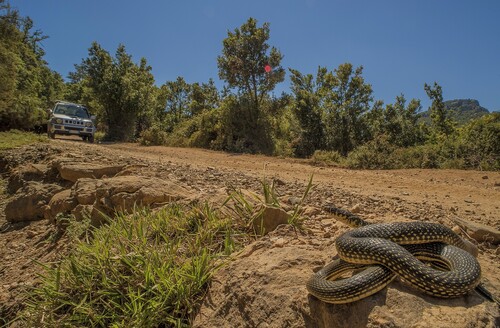
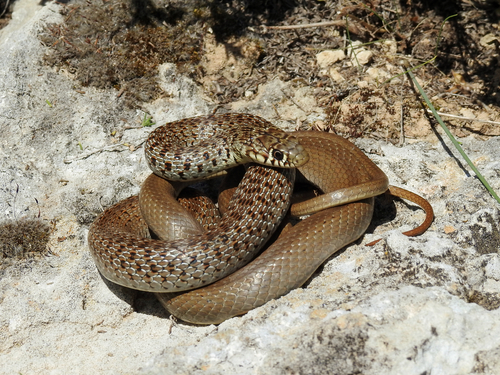
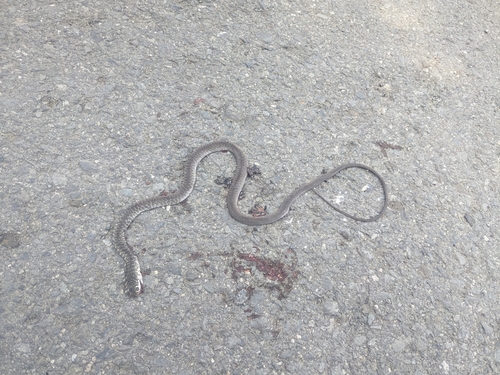
Hierophis is a genus of whip snakes in the family Colubridae, the largest and most diverse snake family in the world. Like most colubrids, these are slim, agile, daytime hunters built for speed rather than ambush. The genus sits among the Old World racers and whip snakes, a loose grouping of long-bodied, alert serpents that rely on vision and quick movement to catch prey and to escape danger. Three species are recorded in our database, including the Green Whip Snake, the Balkan Whip Snake, and the Cyprus Whip Snake.
The range is centered on southern Europe and the Mediterranean basin, extending into the Balkans, parts of the Near East, and Mediterranean islands such as Cyprus. Typical habitats are warm, dry, and open: rocky hillsides, scrubland, vineyards, stone walls, hedgerows, woodland edges, and abandoned farmland. These are sun-loving snakes that bask to warm up and then move quickly through cover, often disappearing into rock crevices or dense brush when disturbed.
In general terms, members of Hierophis are long and thin with a relatively narrow head, large eyes with round pupils, and a tapering tail. Coloration varies by species but commonly includes greens, olives, grays, or yellowish tones, sometimes with banding, spotting, or a paler underside. The slender build, smooth fast movement, and large alert eyes are the practical field clues that separate whip snakes from the heavier-bodied, vertically slit-eyed vipers of the same regions.
On safety: these are non-venomous colubrids, harmless to people in the medical sense. They are not dangerous in the way a viper is, and they have no venom that threatens human health. They are, however, nervous and defensive when handled, and a frightened whip snake may strike repeatedly and bite hard enough to break skin. The right response to any wild snake is to leave it alone and give it room to escape. If you are ever bitten by a snake you cannot confidently identify, treat it as potentially serious, do not attempt first aid procedures or remedies, and contact emergency care, US Poison Control at 1-800-222-1222 or your local emergency services.
Ecologically, Hierophis whip snakes are active foragers that hunt by day. They feed on lizards, small mammals, nestling birds, large insects, and sometimes other snakes, using speed and constriction-like pinning to subdue prey. Like most colubrids in their range they are egg-laying, depositing clutches in warm, sheltered spots in late spring or summer. Behaviorally they are shy and flight-prone, fast across open ground, and far more interested in escaping than confronting anything as large as a person.
Hierophis belongs to the Colubridae family (Colubrids). The largest snake family, and the one most snakes you meet belong to. Typically round pupils, a head only slightly wider than the neck, and no heat-sensing facial pit or rattle. Scales may be smooth and glossy or keeled and matte depending on the species.
Danger: Almost all colubrids are harmless. A small number are rear-fanged with medically significant venom, the boomslang and the twig (vine) snakes of Africa being the dangerous exceptions. Most colubrids will flee or bluff rather than bite.
All species (3)
Keep learning
- What Is a Snake? Anatomy and the BasicsA clear overview of what makes a snake a snake: limbless body plan, anatomy, evolution from lizards, species diversity, and why they are ectothermic.
- How Snakes Move, Hunt, and EatHow snakes move without legs, hunt as ambushers or active foragers, kill by constriction or venom, and swallow prey wider than their head.
- What Do Snakes Eat?All snakes are carnivores. Learn what snakes eat, how diet changes with size and age, how often they feed, and how they hunt and swallow prey.
- Venomous vs Nonvenomous: How to Tell the DifferenceThe folk rules for telling venomous snakes apart, where each one fails, and why location-based identification beats guessing by sight.