
Colubridae
Boddaert's Tropical Racer
HarmlessMastigodryas boddaerti
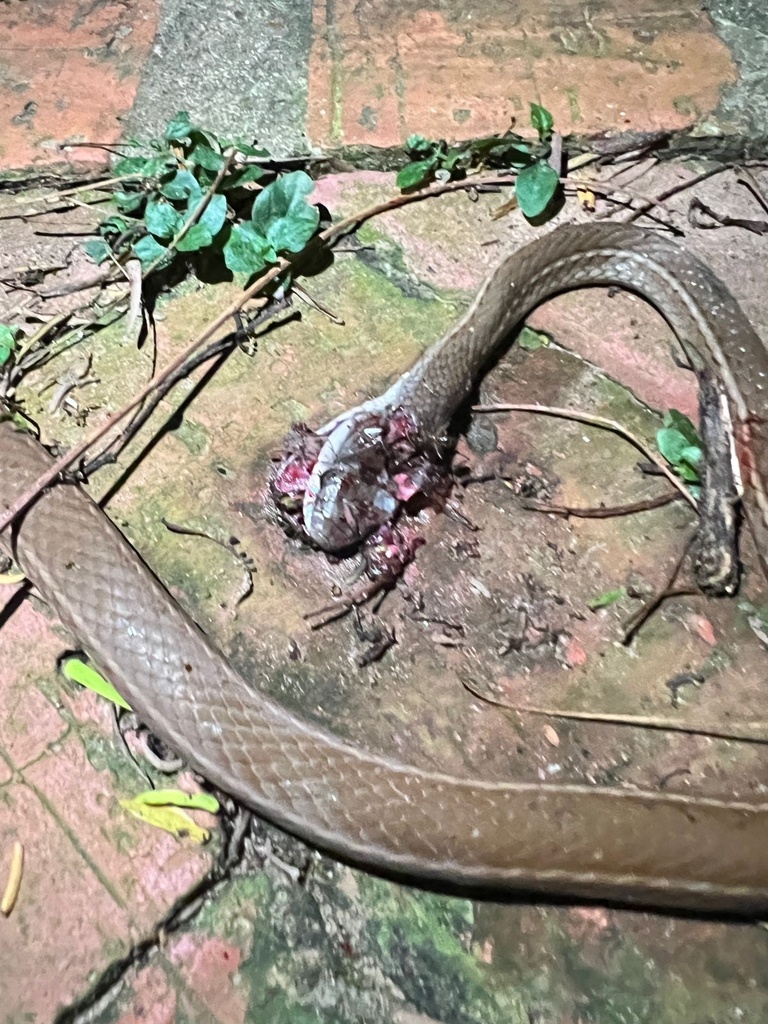
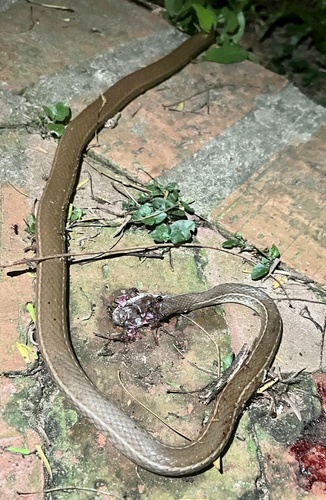
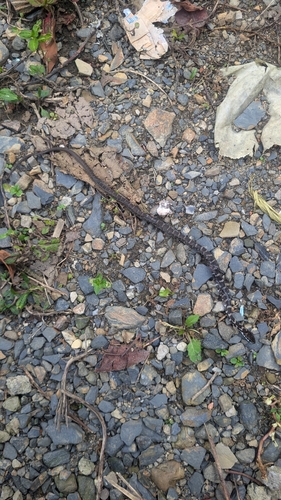
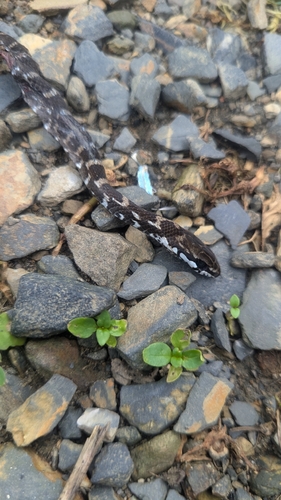
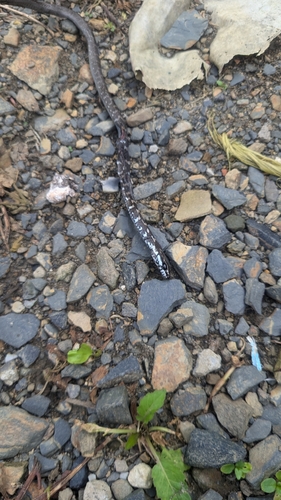
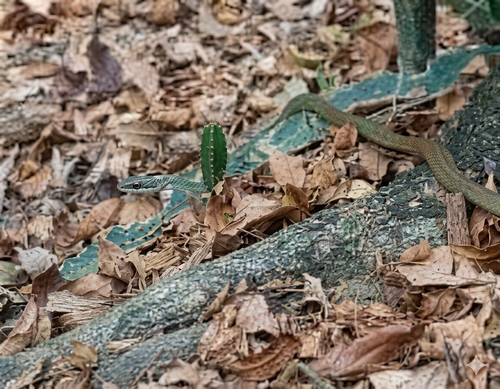
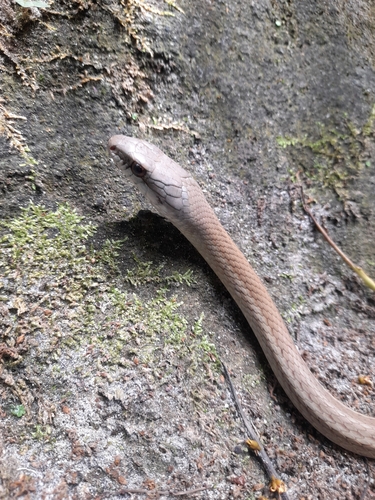
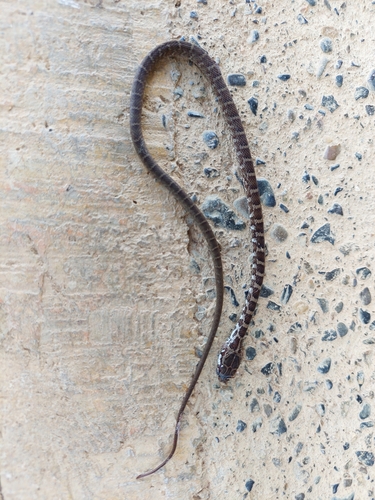
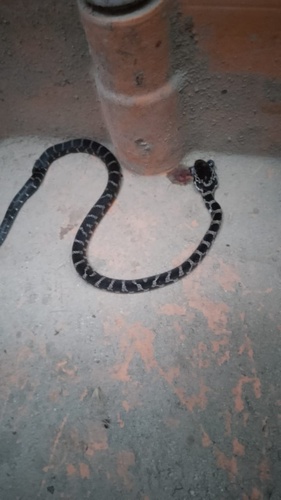
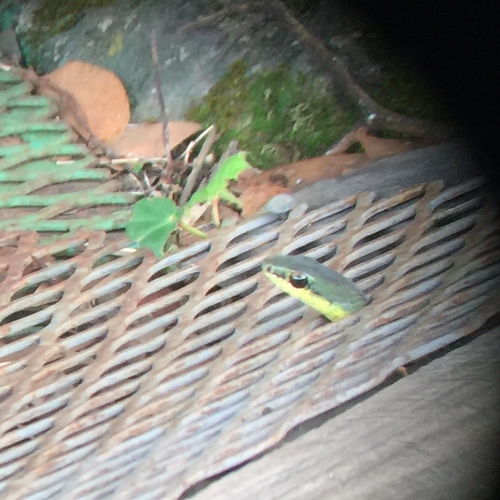
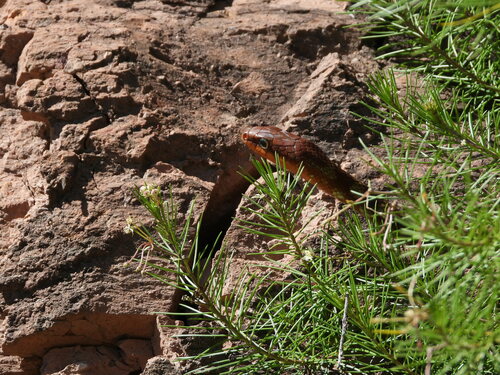
6 photographs of the Boddaert's Tropical Racer. © Raquel Mondino.
The Boddaert's Tropical Racer (Mastigodryas boddaerti) is a non-venomous snake in the Colubridae family, recorded in 23 countries.
- Family
- Colubridae
About the Boddaert's Tropical Racer
Mastigodryas boddaerti, commonly known as Boddaert's tropical racer, is a species of snake in the family Colubridae. The species is native to tropical South America including Trinidad and Tobago.
Distribution
M. boddaerti occurs in Bolivia, Brazil, Colombia, Ecuador, French Guiana, Guyana, Peru, Trinidad and Tobago, and Venezuela.
Habitat
The preferred natural habitat of M. boddaerti is forest, at altitudes of 24–2,600 m (79–8,530 ft).
Description
M. boddaerti changes coloration ontogenetically. Juveniles from Guyana have a brown dorsum with grayish tan bands, with white spots ventrolaterally on anterior ends of the tan bands. The chin and throat are white, with dark brown irregular spots. The venter is tan-colored. Adults are nearly uniform brown dorsally, with traces of bands anteriorly. There is a lateral light tan stripe on the anterior half of the body. The venter is light gray with darker gray smudges on the throat. Individuals from Brazilian Amazonas measured up to 109 centimetres (3 ft 7 in) in snout–vent length.
Behavior
M. boddaerti is diurnal and mainly terrestrial, but it will occasionally climb low vegetation.
Diet
M. boddaerti feeds on young birds, lizards, and mice. Specimens from Brazilian Amazonas fed mostly on lizards, followed by mammals and frogs.
Reproduction
M. boddaerti is oviparous.
Subspecies
Three subspecies are recognized, including the nominotypical subspecies.
Mastigodryas boddaerti boddaerti (Sentzen, 1796)
Mastigodryas boddaerti dunni (Stuart, 1933)
Mastigodryas boddaerti ruthveni (Stuart, 1933)
Etymology
The specific name, boddaerti, is in honor of Dutch naturalist Pieter Boddaert. The subspecific names, dunni and ruthveni, are in honor of American herpetologists Emmett Reid Dunn and Alexander G. Ruthven, respectively.
Adapted from Wikipedia, available under CC BY-SA.
Frequently asked: Boddaert's Tropical Racer
- Is the Boddaert's Tropical Racer venomous?
- No. The Boddaert's Tropical Racer (Mastigodryas boddaerti) is non-venomous and is not considered dangerous to humans. Like most snakes, it will retreat rather than bite when given the chance.
- Is the Boddaert's Tropical Racer poisonous?
- Snakes are venomous, not poisonous. "Poisonous" means harmful to eat or touch; "venomous" means injecting toxins through a bite. The Boddaert's Tropical Racer is neither poisonous nor venomous.
- Is the Boddaert's Tropical Racer dangerous?
- The Boddaert's Tropical Racer is not dangerous to humans. It has no medically significant venom and bites only defensively if cornered or handled.
- Where does the Boddaert's Tropical Racer live?
- The Boddaert's Tropical Racer has verified records in 23 countries, including Brazil, Colombia, Venezuela (Bolivarian Republic of). See the distribution section below for its full range.
- What does the Boddaert's Tropical Racer eat?
- M. boddaerti feeds on young birds, lizards, and mice. Specimens from Brazilian Amazonas fed mostly on lizards, followed by mammals and frogs.
- Why is it called the Boddaert's Tropical Racer?
- The specific name, boddaerti, is in honor of Dutch naturalist Pieter Boddaert. The subspecific names, dunni and ruthveni, are in honor of American herpetologists Emmett Reid Dunn and Alexander G. Ruthven, respectively.
Where it is found
More Colubridae snakes
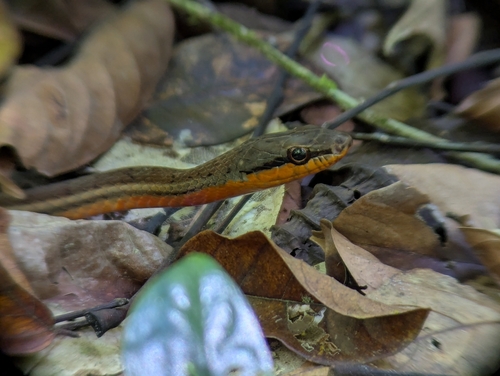 Salmon-bellied RacerMastigodryas melanolomus
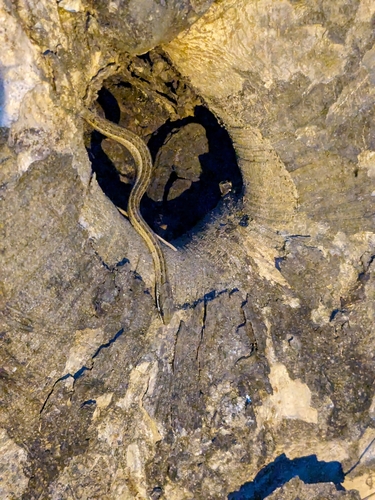 Plee's Tropical RacerMastigodryas pleii
 Central American Lizard EaterMastigodryas alternatus
 Daniel's Tropical RacerMastigodryas danieli
 Cope's Tropical RacerMastigodryas pulchriceps
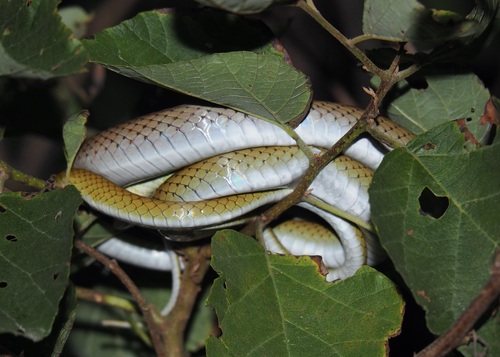 Mastigodryas reticulatusMastigodryas reticulatus
 Striped Lizard EaterMastigodryas dorsalis
 Clifton’s Lizard EaterMastigodryas cliftoni
Classification
How scientists group this snake, from the broadest category down to the exact species. Each step narrows to its closest relatives.
- OrderThe broad group of scaled reptiles: all snakes and lizards
- Squamata
- FamilyA group of related snakes that share key traits
- Colubridae
- GenusA close-knit group of very similar species
- Mastigodryas
- SpeciesThis exact snake, named in the two-part scientific name
- Mastigodryas boddaerti
Keep learning
- What to Do If You Find a SnakeFound a snake at home or on a trail? Here is how to stay calm, give it space, identify it safely, and know when to call a professional.
- Venomous vs Nonvenomous: How to Tell the DifferenceThe folk rules for telling venomous snakes apart, where each one fails, and why location-based identification beats guessing by sight.
- What Is a Snake? Anatomy and the BasicsA clear overview of what makes a snake a snake: limbless body plan, anatomy, evolution from lizards, species diversity, and why they are ectothermic.
- How to Keep Snakes Out of Your Yard and HomeA practical guide to keeping snakes out of your yard and home using habitat changes that work, plus what to skip and what to do if one shows up.
Distribution from GBIF & iNaturalist. Venom status per CDC. Background: Wikipedia. Informational only. Never handle a snake to identify it.