
Genus · Colubridae
Types of racers
10+ species make up the genus Mastigodryas, the snakes commonly called racers. None are considered dangerous to humans.
About tropical racers (machete savanes)
Fast, alert, ground-dwelling daytime snakes of the American tropics, widely known as tropical racers.
Mastigodryas is a genus of slender, fast-moving colubrid snakes in the family Colubridae, the largest and most diverse snake family on Earth. Like most colubrids, these are typical "true snakes" rather than vipers, cobras, or pythons. The genus is part of the broad group of New World racers and whipsnakes, and the common name "racer" reflects their speed and active, terrestrial hunting style. The database here covers 10+ species, including the Salmon-bellied Racer, Boddaert's Tropical Racer, Plee's Tropical Racer, and the Central American Lizard Eater.
These snakes are spread across a wide swath of the Americas, from Mexico and Central America through much of tropical South America, with several species also found on Caribbean islands. They favor warm, open and semi-open country: savanna, grassland, forest edges, clearings, scrub, and agricultural land, as well as the margins of more closed forest. They are mostly ground dwellers that move quickly through low vegetation and leaf litter, though they can climb into shrubs and low branches when hunting or escaping.
In general terms, a Mastigodryas is recognized by a long, lean body, a fairly long tail, large eyes built for daytime activity, and smooth scales that give the body a clean, streamlined look. Many species show a brownish, olive, or gray back, often with a paler stripe along each side and a lighter or yellowish belly, and some, such as the Salmon-bellied Racer, are named for the warm color of the underside. Coloration changes between species and sometimes with age, so precise identification usually depends on scale counts and locality rather than color alone. Treat general appearance as a guide, not a guarantee.
These are nonvenomous to very mildly rear-fanged colubrids. They are not front-fanged and are not considered medically dangerous to people; any enlarged rear teeth and weak saliva are geared toward subduing small prey, not harming humans. That said, honest framing matters: any wild snake can bite, a bite is a mechanical wound that can become infected, and field identification can be uncertain. The right response to any wild snake is to leave it alone and let it move off rather than handle it. If a bite occurs, or if there is any doubt about what bit someone, seek medical care and contact emergency services or US Poison Control at 1-800-222-1222 or your local equivalent.
Ecologically, tropical racers are active, visually oriented daytime hunters that run down their prey rather than ambushing it. Their diet centers on lizards, frogs, and small vertebrates, with some species taking other snakes, small mammals, or eggs, and names like Central American Lizard Eater point to this lizard-heavy menu. They are egg-laying (oviparous), like the great majority of colubrids, producing clutches of eggs rather than live young. Their speed, alertness, and habit of fleeing make them a common but hard-to-catch part of the open-country fauna across Latin America, where they help control populations of lizards and other small animals.
Mastigodryas belongs to the Colubridae family (Colubrids). The largest snake family, and the one most snakes you meet belong to. Typically round pupils, a head only slightly wider than the neck, and no heat-sensing facial pit or rattle. Scales may be smooth and glossy or keeled and matte depending on the species.
Danger: Almost all colubrids are harmless. A small number are rear-fanged with medically significant venom, the boomslang and the twig (vine) snakes of Africa being the dangerous exceptions. Most colubrids will flee or bluff rather than bite.
All species (13)
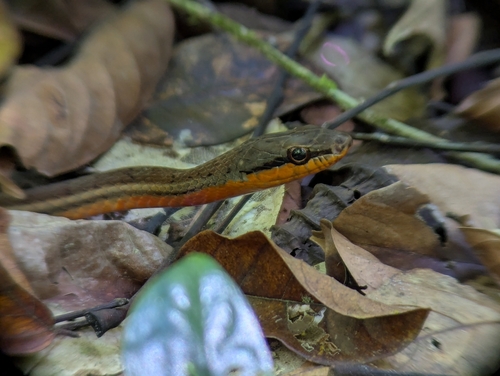 Salmon-bellied RacerMastigodryas melanolomusHarmless
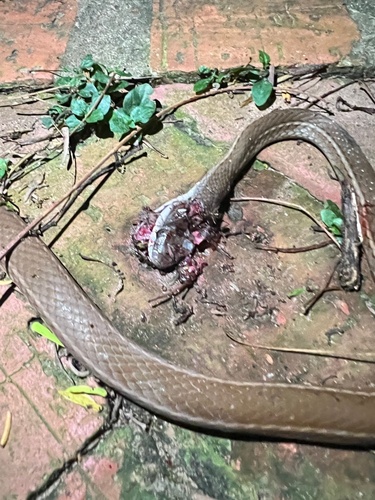 Boddaert's Tropical RacerMastigodryas boddaertiHarmless
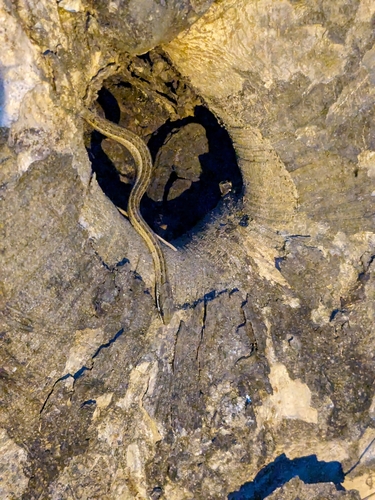 Plee's Tropical RacerMastigodryas pleiiHarmless
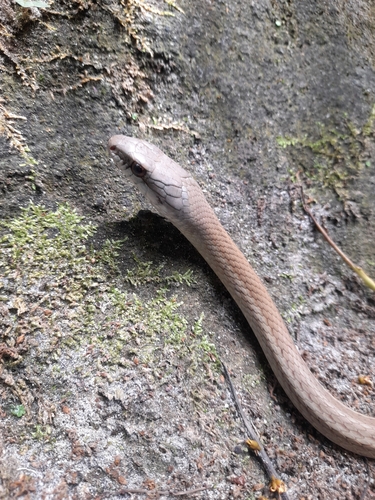 Central American Lizard EaterMastigodryas alternatusHarmless
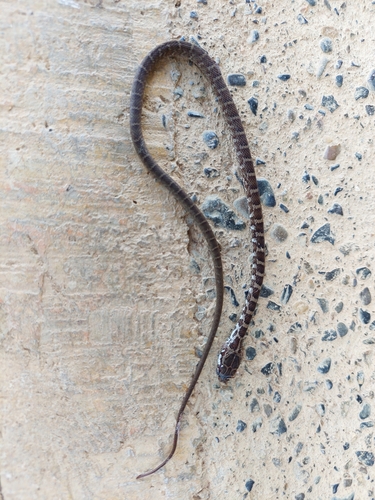 Daniel's Tropical RacerMastigodryas danieliHarmless
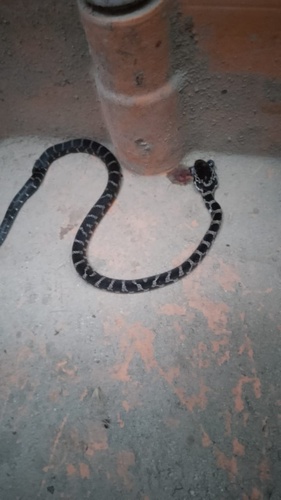 Cope's Tropical RacerMastigodryas pulchricepsHarmless
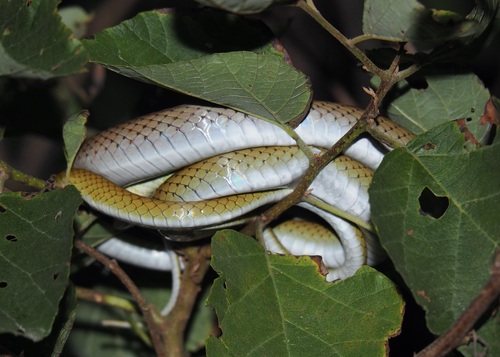 Mastigodryas reticulatusHarmless
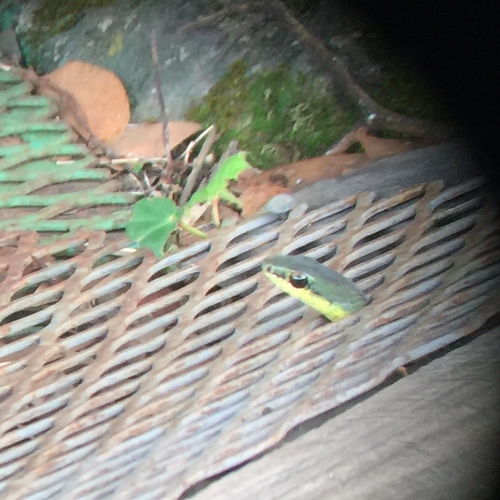 Striped Lizard EaterMastigodryas dorsalisHarmless
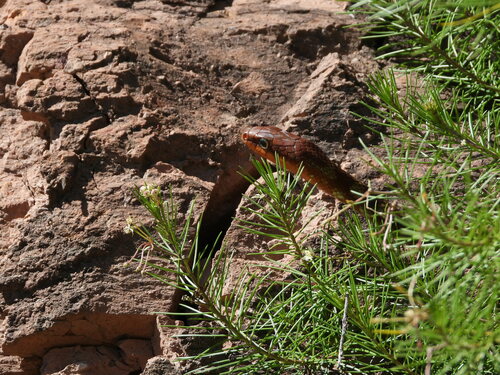 Clifton’s Lizard EaterMastigodryas cliftoniHarmless
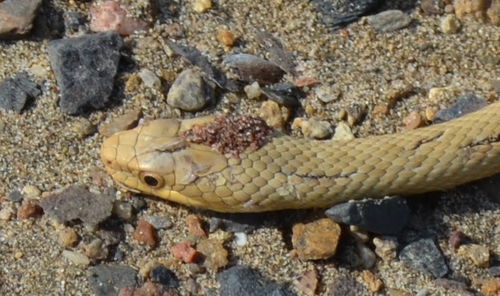 Heath's Tropical RacerMastigodryas heathiiHarmless
 Barbour's Tropical RacerMastigodryas bruesiHarmless
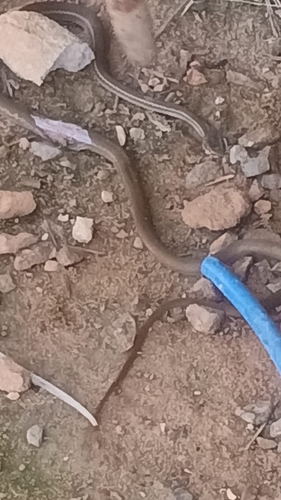 Mastigodryas moratoiHarmless
- No photoAmaral's Tropical RacerMastigodryas amaraliHarmless
Keep learning
- What Is a Snake? Anatomy and the BasicsA clear overview of what makes a snake a snake: limbless body plan, anatomy, evolution from lizards, species diversity, and why they are ectothermic.
- How Snakes Move, Hunt, and EatHow snakes move without legs, hunt as ambushers or active foragers, kill by constriction or venom, and swallow prey wider than their head.
- What Do Snakes Eat?All snakes are carnivores. Learn what snakes eat, how diet changes with size and age, how often they feed, and how they hunt and swallow prey.
- Venomous vs Nonvenomous: How to Tell the DifferenceThe folk rules for telling venomous snakes apart, where each one fails, and why location-based identification beats guessing by sight.