
Psammophiidae
Moila Snake
HarmlessMalpolon moilensis
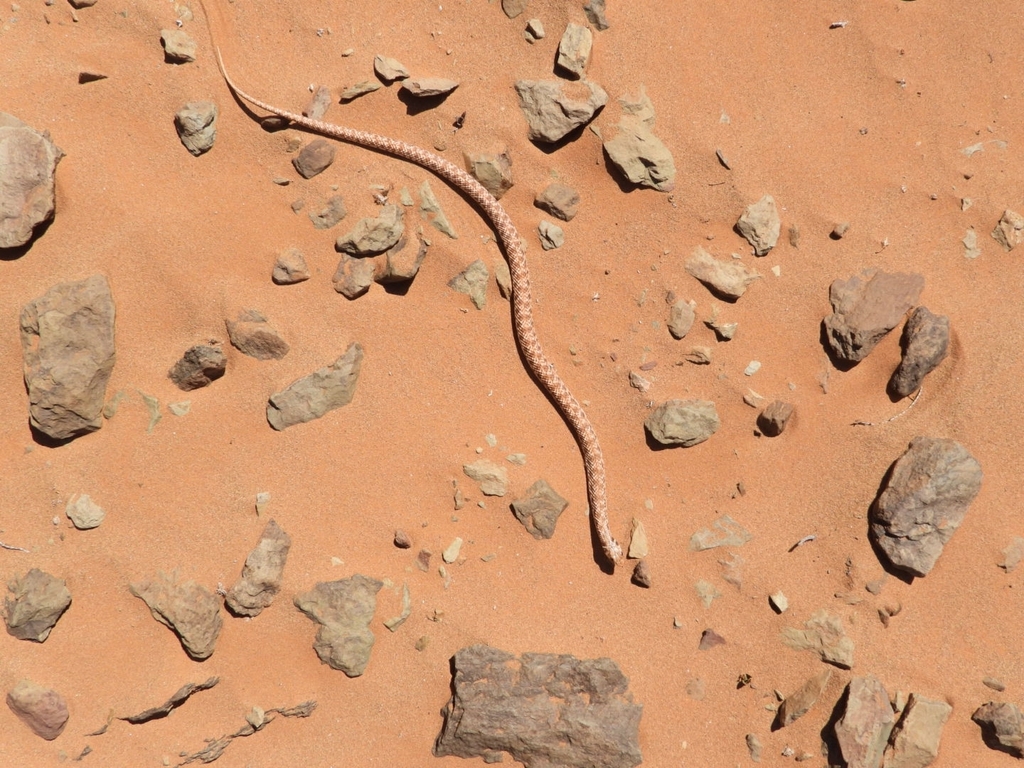
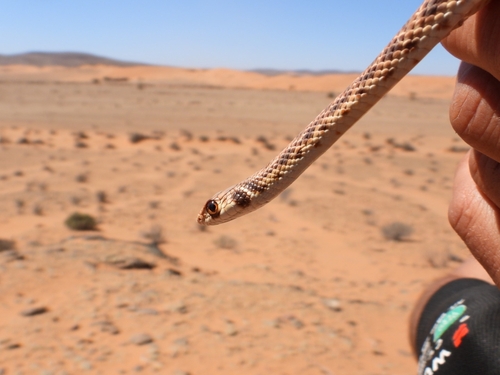
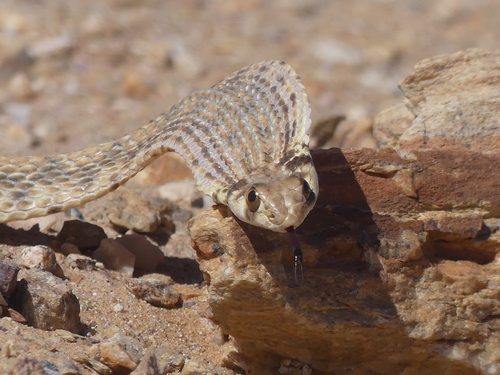
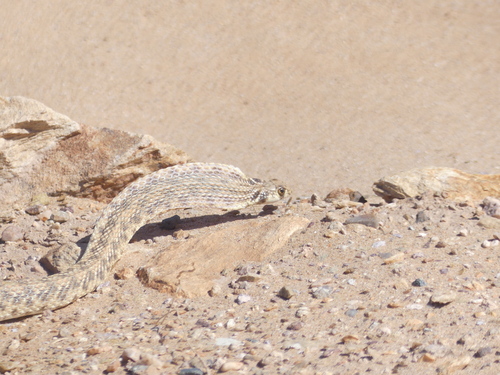
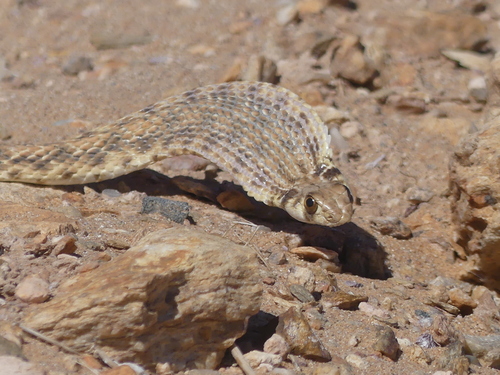
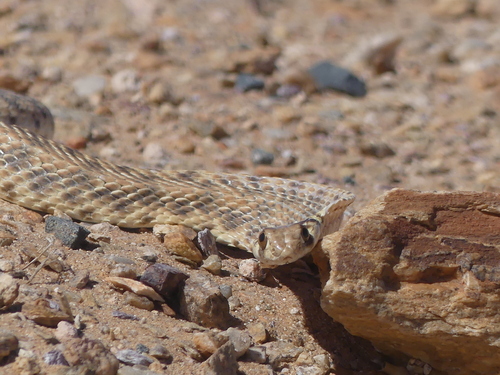
6 photographs of the Moila Snake. © Sara Navarro.
The Moila Snake (Malpolon moilensis) is a rear-fanged, mildly venomous snake in the Psammophiidae family, recorded in 24 countries.
- Family
- Psammophiidae
About the Moila Snake
The false cobra (Malpolon moilensis), or hooded malpolon, is an opisthoglyphous snake found in parts of Africa and the Middle East. The name "false cobra" comes from the fact that while it is not a cobra, it imitates a cobra's stance by spreading its neck into a hood and hissing like the cobra. It can grow up to 1.5 metres in length and preys on rodents and lizards, while it itself falls prey to the Great grey shrike.
Description
Adults are usually 0.8 – 1.4 m in length, but some specimens have reached about 1.9 m. They have big round eyes, reddish in colour. One distinctive feature that the snake has is a black blotch which runs from the cheek to the angle of the jaw.
It generally has a straw coloured background checkered with brownish spots running along the body. The belly surface is usually creme.
Geographical range
Malpolon moilensis is found in North Africa and the Middle East.
Behavior
When threatened, Malpolon moilensis will imitate a cobra's stance by spreading its neck into a hood and hissing like the cobra.
Feeding
In the wild, it mainly feeds on rodents, fledgling birds, and lizards. Captives accept mice (pre-killed, frozen, and live)
Captivity
M. moilensis is not commonly found in collections in the United States, possibly due to the highly aggressive nature of some specimens. In the Middle East, they are rarely found in some petshops, as snakes are not commonly kept as pets. Some specimens can be extremely docile and easy to handle, while others might not tolerate handling and display their above-mentioned defensive posture. The venom may not be deadly, but if the fangs do get hold of bare flesh and venom is injected, the pain can be excruciating; causing swelling and potentially other complications.
Care
In captivity, M. moilensis should be kept at low humidity, and can be fed a mouse (pinkies for smaller specimens) once every 14–20 days. They should be supplied with a clean bowl of water, a hiding place, and a small rock to assist in the shedding process.
Shedding
M. moilensis will shed once every 30–50 days. Like other snakes, the process will take about 7–10 days. On the first two days, the eyes will become bluish in color and the skin will become pale. A week later, the snake will shed its skin. During the whole period, you should avoid handling the snake or feeding it.
Postage stamps
In 2024 La poste du Mali issued a series of stamps with reptiles. False cobra appeared on one of them.
Adapted from Wikipedia, available under CC BY-SA.
Frequently asked: Moila Snake
- Is the Moila Snake venomous?
- The Moila Snake (Malpolon moilensis) is rear-fanged and only mildly venomous. It is not considered dangerous to humans (its venom is weak and its fangs sit at the back of the mouth) but a bite can cause local swelling or irritation, so it should not be handled.
- Is the Moila Snake poisonous?
- Snakes are venomous, not poisonous. "Poisonous" means harmful to eat or touch; "venomous" means injecting toxins through a bite. The Moila Snake is neither poisonous nor venomous.
- Is the Moila Snake dangerous?
- The Moila Snake is not dangerous to humans. It has no medically significant venom and bites only defensively if cornered or handled.
- Where does the Moila Snake live?
- The Moila Snake has verified records in 24 countries, including Saudi Arabia, Morocco, Israel. See the distribution section below for its full range.
- What does the Moila Snake eat?
- In the wild, it mainly feeds on rodents, fledgling birds, and lizards. Captives accept mice (pre-killed, frozen, and live)
Where it is found
More Psammophiidae snakes
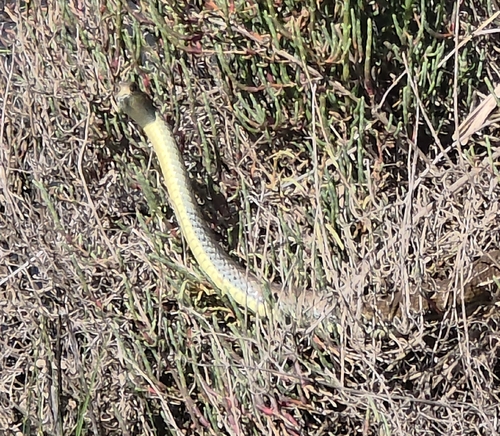 Western Montpellier SnakeMalpolon monspessulanus
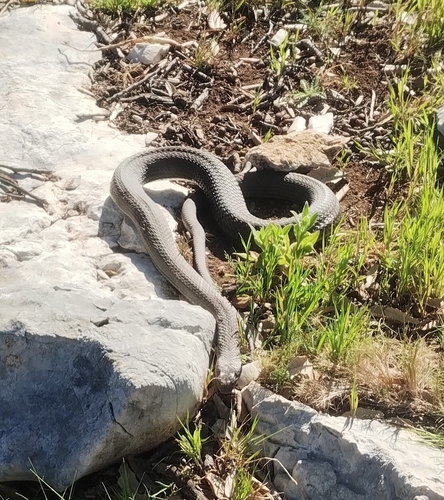 Eastern Montpellier SnakeMalpolon insignitus
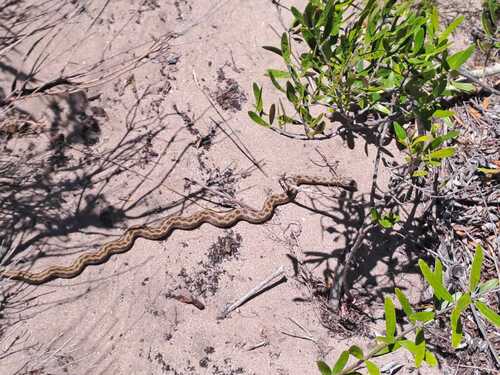 Rhombic SkaapstekerPsammophylax rhombeatus
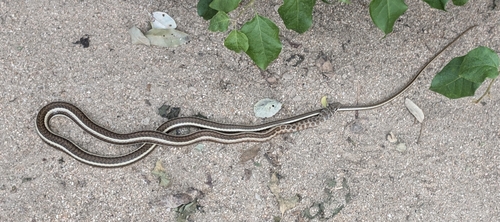 Stripe-bellied Sand SnakePsammophis subtaeniatus
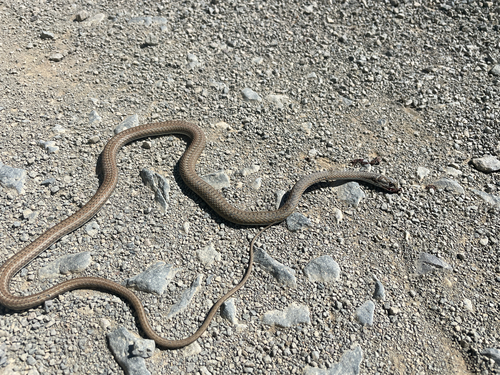 Karoo Sand SnakePsammophis notostictus
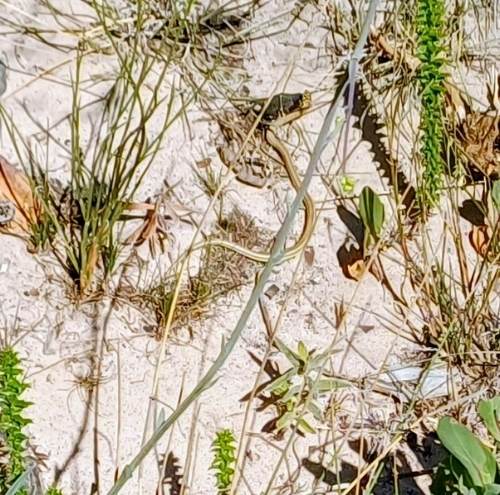 Cross-marked Sand SnakePsammophis crucifer
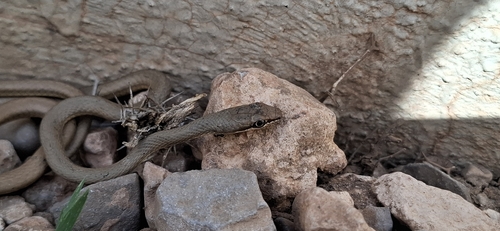 Forskal Sand SnakePsammophis schokari
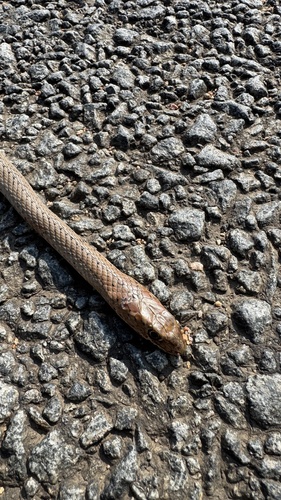 Olive Whip SnakePsammophis mossambicus
Classification
How scientists group this snake, from the broadest category down to the exact species. Each step narrows to its closest relatives.
- OrderThe broad group of scaled reptiles: all snakes and lizards
- Squamata
- FamilyA group of related snakes that share key traits
- Psammophiidae
- GenusA close-knit group of very similar species
- Malpolon
- SpeciesThis exact snake, named in the two-part scientific name
- Malpolon moilensis
Keep learning
- What to Do If You Find a SnakeFound a snake at home or on a trail? Here is how to stay calm, give it space, identify it safely, and know when to call a professional.
- Venomous vs Nonvenomous: How to Tell the DifferenceThe folk rules for telling venomous snakes apart, where each one fails, and why location-based identification beats guessing by sight.
- What Is a Snake? Anatomy and the BasicsA clear overview of what makes a snake a snake: limbless body plan, anatomy, evolution from lizards, species diversity, and why they are ectothermic.
- How to Keep Snakes Out of Your Yard and HomeA practical guide to keeping snakes out of your yard and home using habitat changes that work, plus what to skip and what to do if one shows up.
Distribution from GBIF & iNaturalist. Venom status per CDC. Background: Wikipedia. Informational only. Never handle a snake to identify it.