
Genus · Psammophiidae
Types of montpellier snakes
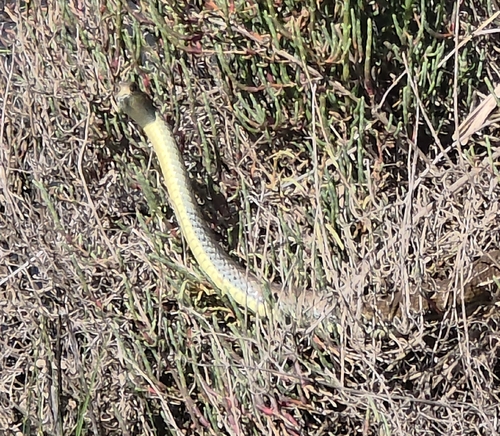
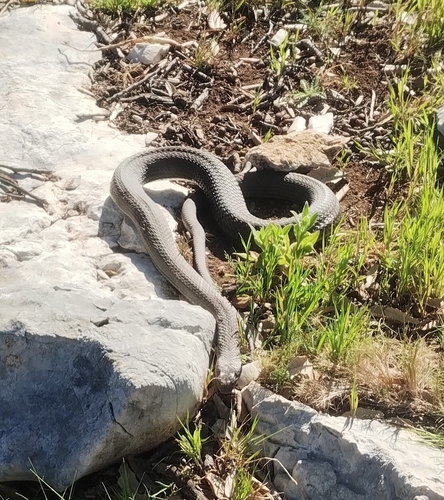
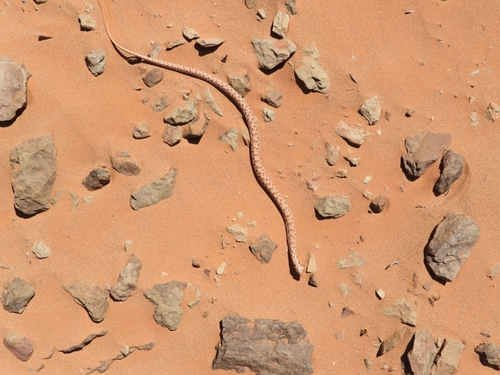
3 species make up the genus Malpolon, the snakes commonly called montpellier snakes. None are considered dangerous to humans.
About Montpellier snakes
Large, fast, daytime hunters of the Mediterranean, mildly venomous but rear-fanged and not considered dangerous to people in normal encounters.
Malpolon is a small genus of snakes in the family Psammophiidae, the sand and grass snakes. The genus is best known by its common members, the Western Montpellier Snake and the Eastern Montpellier Snake, along with the Moila Snake. These are among the largest snakes in their range, with big individuals reaching well 1+.5 meters and sometimes approaching 2 meters in the Montpellier snakes.
The genus is centered on the western Mediterranean basin and adjacent arid zones. Montpellier snakes range across southern Europe, North Africa, and parts of the Middle East, while the Moila Snake is more a creature of North African and Arabian deserts and dry scrub. Typical habitat is open and sun-exposed: dry scrubland, rocky hillsides, garrigue, vineyards, field edges, and sandy semidesert. They favor warm, broken terrain with cover to hunt across.
In general terms, members are slender but powerfully built snakes with a narrow head, large forward-set eyes, and a noticeable ridge or grooves over the eyes that gives them an alert, almost frowning look. Adults of the Western Montpellier Snake are often plain gray to olive or brown above with a paler underside, while juveniles can be more patterned. They are diurnal and rely heavily on vision, moving fast with the head held up off the ground.
These snakes are venomous but rear-fanged, with enlarged grooved teeth set far back in the upper jaw and a mild venom adapted for subduing small prey. They are not considered dangerous to humans in ordinary encounters, since the fangs are positioned at the back of the mouth and the venom is weak by medical standards. Bites to people are uncommon and usually trivial, but a wild venomous snake should never be handled. If a bite occurs and any unusual symptoms develop, treat it as a medical matter and seek care promptly. In the US contact Poison Control at 1-800-222-1222, and elsewhere call your local emergency services.
Ecologically, Malpolon snakes are active foragers that hunt lizards, other snakes, small mammals, and birds, using both speed and venom to overpower prey. They are egg-laying, depositing clutches in summer that hatch later in the season. Behaviorally they are wary and quick to flee, but a cornered Montpellier snake can rear up, flatten the neck, and hiss loudly in a convincing bluff before escaping.
Malpolon belongs to the Psammophiidae family (Sand & grass snakes). Fast, slender, day-active snakes of open country. Long, slim, and fast, with large eyes and a streamlined head, often striped lengthwise.
Danger: Rear-fanged and mildly venomous; bites can cause local swelling but are not considered dangerous to people.
All species (3)
Keep learning
- What Is a Snake? Anatomy and the BasicsA clear overview of what makes a snake a snake: limbless body plan, anatomy, evolution from lizards, species diversity, and why they are ectothermic.
- How Snakes Move, Hunt, and EatHow snakes move without legs, hunt as ambushers or active foragers, kill by constriction or venom, and swallow prey wider than their head.
- What Do Snakes Eat?All snakes are carnivores. Learn what snakes eat, how diet changes with size and age, how often they feed, and how they hunt and swallow prey.
- Venomous vs Nonvenomous: How to Tell the DifferenceThe folk rules for telling venomous snakes apart, where each one fails, and why location-based identification beats guessing by sight.