
Colubridae
Golden Tree Snake
HarmlessChrysopelea ornata
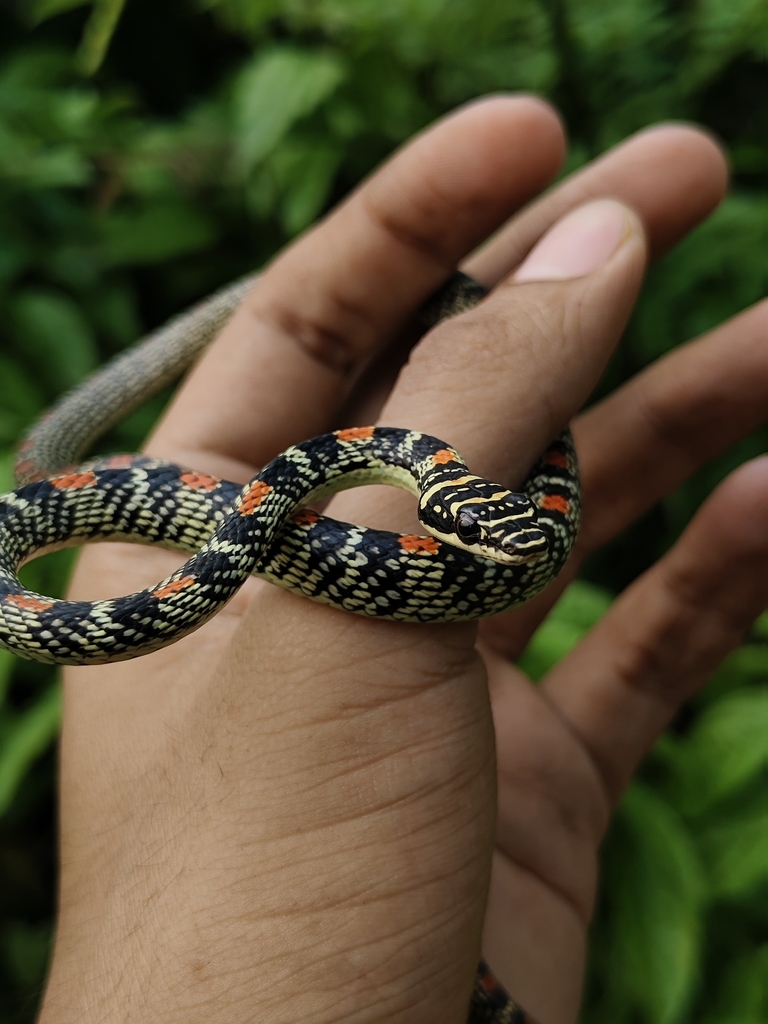
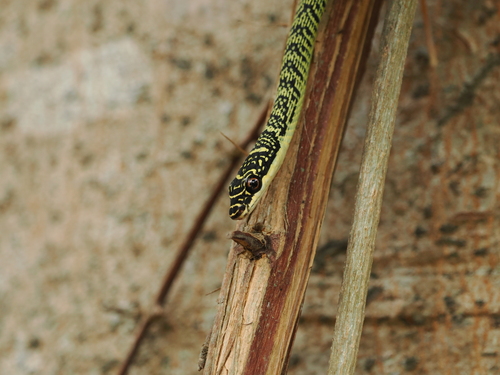
2 photographs of the Golden Tree Snake. (c) Ankur Nandi, some rights reserved (CC BY).
The Golden Tree Snake (Chrysopelea ornata) is a non-venomous snake in the Colubridae family, recorded in 20 countries.
- Family
- Colubridae
About the Golden Tree Snake
Chrysopelea ornata (Thai: งูเขียวพระอินทร์) is a species of mildly venomous opisthoglyphous (rear-fanged) colubrid snake found in both South Asia and Southeast Asia. It is commonly known as the golden tree snake, ornate flying snake, and golden flying snake. Along with the other species in the genus Chrysopelea, the golden tree snake is unusual, as it is capable of a type of gliding "flight" (more of a controlled "throwing" or "falling") — mainly utilised during the pursuit of prey animals — from tree-to-tree. This action is also used to great effect for the snake to flee its own potential predators (such as birds or other reptiles). Currently, three subspecies are recognised. The snake's striking looks, and potential for gliding, have made it a coveted choice for captivity.
Etymology
The species name ornata is Latin for "decorated or "ornamented", in reference to the ornate coloration.
Common names
English: golden tree snake, gliding snake, ornate flying snake, golden flying snake, gold and black tree snake, flying tree snake
Hindi: kala jin.
Sinhala: pol-mal-karawala, malsara.
German: Gelbgrüne Schmuckbaumnatter, Gewöhnliche Schmuckbaumnatter.
Bengali: কালনাগিনী (Kaalnagini), উড়ন্ত সাপ, উড়াল মহারাজ সাপ, সুন্দরী সাপ, কালসাপ, কালনাগ
Konkani: Naneto
Nepali: Seerise
Thai: งูเขียวดอกหมาก (Ngoo kee-ow dork maak)
Khmer: ពស់តុកកែ (Pous Tok Kae)
Malayalam: നാഗത്താൻ പാമ്പ് (nagathan pambu)
Taxonomy
Chrysopelea ornata belongs to the genus Chrysopelea, which contains four other described species.
Chrysopelea is one of five genera belonging to the vine snake subfamily Ahaetuliinae, of which Chrysopelea is most closely related to Dendrelaphis, as shown in the cladogram below:
Subspecies
Three subspecies of C. ornata are recognized:
C. o. ornata (Shaw, 1802) – southwest India
C. o. ornatissima Werner, 1925 – north and east India, Nepal, Bangladesh and Southeast Asia
C. o. sinhaleya Deraniyagala, 1945 – Sri Lanka.
Geographic range
It is found in India (North Bengal), Bangladesh, Sri Lanka, Nepal, Myanmar, Thailand, Western Malaysia, Laos, Cambodia, Vietnam, China (Hong Kong, Hainan, Yunnan), and Singapore (introduced).
In India, Chrysopelea ornata ranges from the Western Ghats, up to the Dangs, Katernia Ghat in Uttar Pradesh, North Bihar, northern West Bengal eastwards to Arunachal Pradesh. It is also found in the forests of the Andaman Islands.
Description
Chrysopelea ornata is usually green in color, with black cross-hatching and yellow or gold colored accents. The body, though slender, is far less so than in other tree snakes. It has a flattened head with constricted neck, a blunt nose and large eyes with round pupils.
The lateral, sharp and pronounced keeled condition of the ventrals in association with the normal, not enlarged, vertebral row of scales distinguish this snake.
Adapted from Wikipedia, available under CC BY-SA.
Frequently asked: Golden Tree Snake
- Is the Golden Tree Snake venomous?
- No. The Golden Tree Snake (Chrysopelea ornata) is non-venomous and is not considered dangerous to humans. Like most snakes, it will retreat rather than bite when given the chance.
- Is the Golden Tree Snake poisonous?
- Snakes are venomous, not poisonous. "Poisonous" means harmful to eat or touch; "venomous" means injecting toxins through a bite. The Golden Tree Snake is neither poisonous nor venomous.
- Is the Golden Tree Snake dangerous?
- The Golden Tree Snake is not dangerous to humans. It has no medically significant venom and bites only defensively if cornered or handled.
- Where does the Golden Tree Snake live?
- The Golden Tree Snake has verified records in 20 countries, including Thailand, Viet Nam, India. See the distribution section below for its full range.
- Why is it called the Golden Tree Snake?
- The species name ornata is Latin for "decorated or "ornamented", in reference to the ornate coloration.
Where it is found
More Colubridae snakes
 Paradise Flying SnakeChrysopelea paradisi
 Banded Flying SnakeChrysopelea pelias
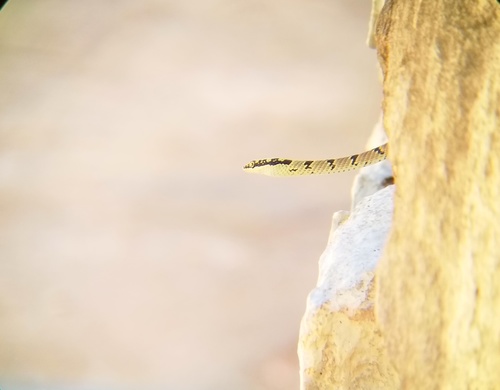 Sri Lankan Flying SnakeChrysopelea taprobanica
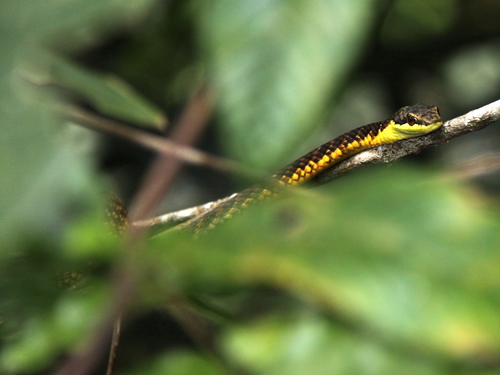 Moluccan Flying SnakeChrysopelea rhodopleuron
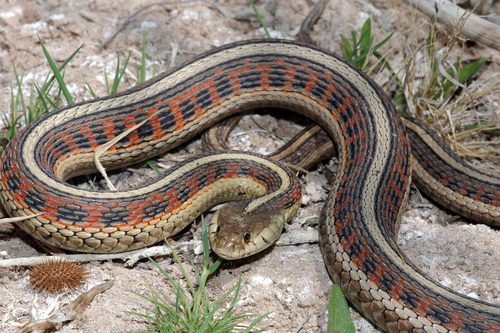 Common Garter SnakeThamnophis sirtalis
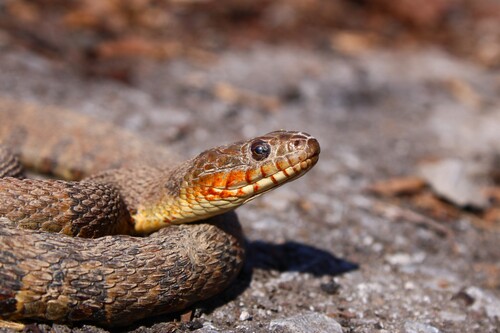 Common WatersnakeNerodia sipedon
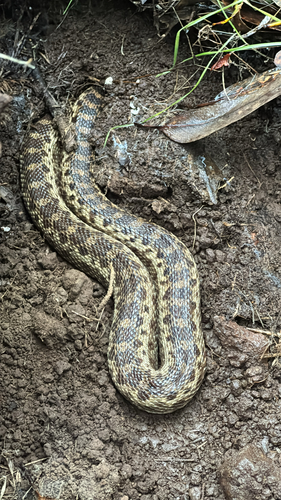 Gopher SnakePituophis catenifer
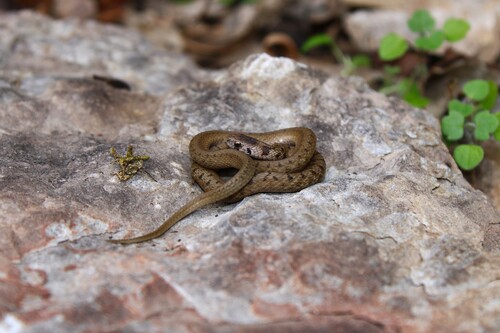 DeKay's BrownsnakeStoreria dekayi
Classification
How scientists group this snake, from the broadest category down to the exact species. Each step narrows to its closest relatives.
- OrderThe broad group of scaled reptiles: all snakes and lizards
- Squamata
- FamilyA group of related snakes that share key traits
- Colubridae
- GenusA close-knit group of very similar species
- Chrysopelea
- SpeciesThis exact snake, named in the two-part scientific name
- Chrysopelea ornata
Keep learning
- What to Do If You Find a SnakeFound a snake at home or on a trail? Here is how to stay calm, give it space, identify it safely, and know when to call a professional.
- Venomous vs Nonvenomous: How to Tell the DifferenceThe folk rules for telling venomous snakes apart, where each one fails, and why location-based identification beats guessing by sight.
- What Is a Snake? Anatomy and the BasicsA clear overview of what makes a snake a snake: limbless body plan, anatomy, evolution from lizards, species diversity, and why they are ectothermic.
- How to Keep Snakes Out of Your Yard and HomeA practical guide to keeping snakes out of your yard and home using habitat changes that work, plus what to skip and what to do if one shows up.
Distribution from GBIF & iNaturalist. Venom status per CDC. Background: Wikipedia. Informational only. Never handle a snake to identify it.