
Colubridae
Paradise Flying Snake
HarmlessChrysopelea paradisi
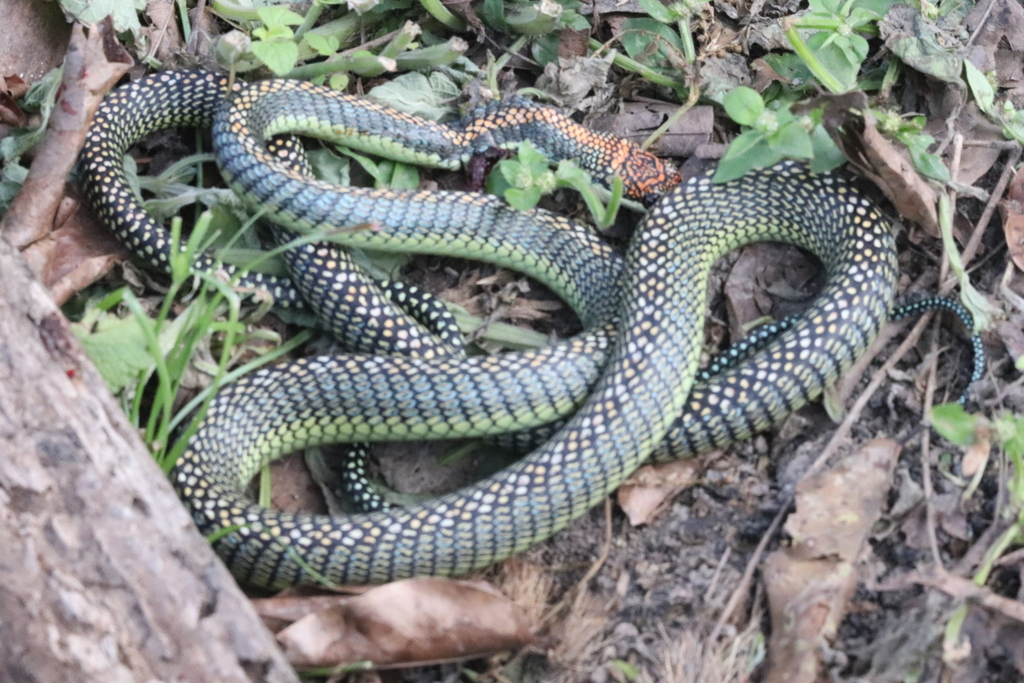
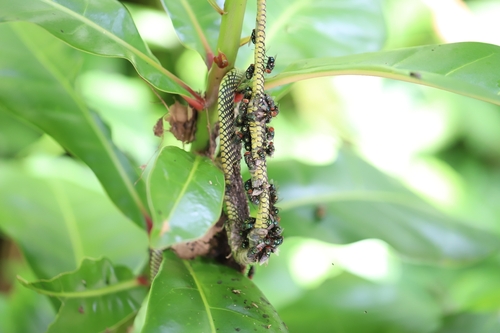
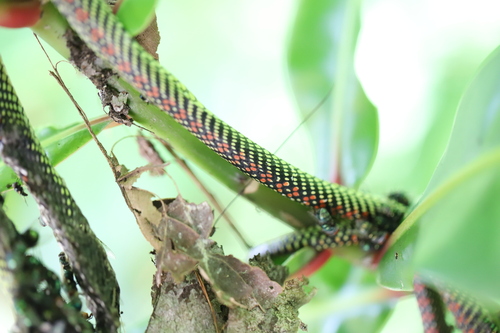
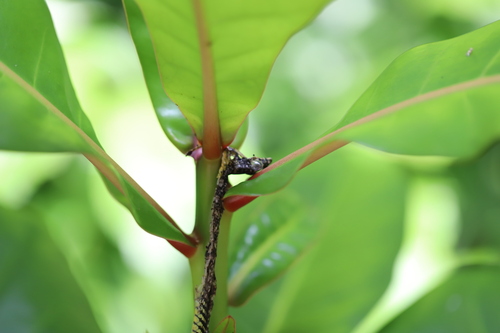
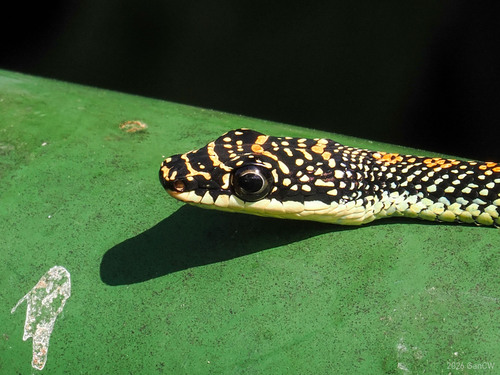
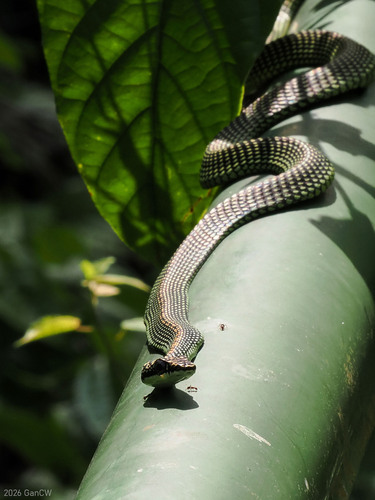
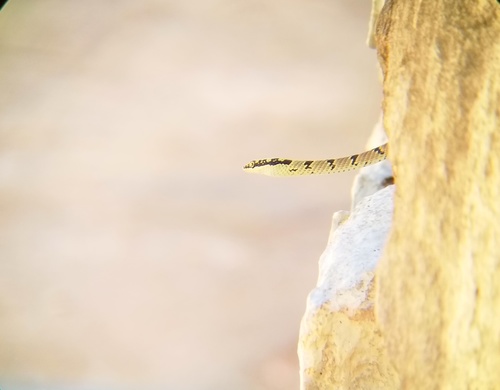
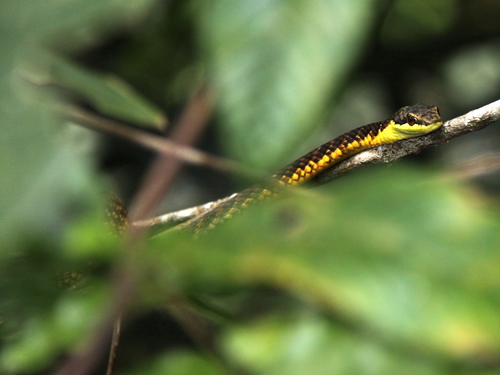
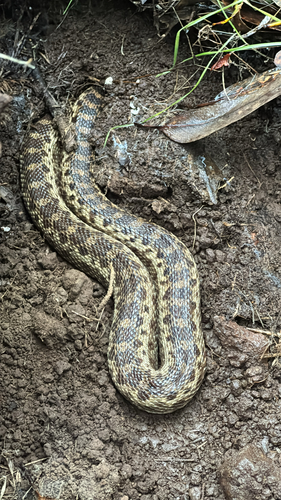
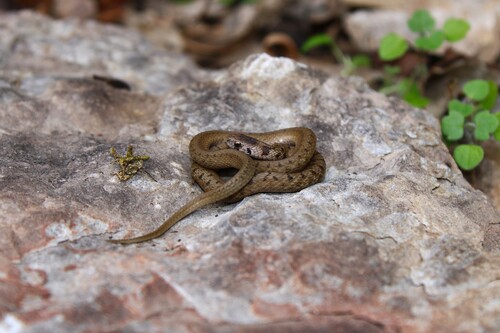
6 photographs of the Paradise Flying Snake. © Fathurrahman Sidiq.
The Paradise Flying Snake (Chrysopelea paradisi) is a non-venomous snake in the Colubridae family, recorded in 9 countries.
- Family
- Colubridae
About the Paradise Flying Snake
Paradise tree snake, paradise flying snake or garden flying snake (Chrysopelea paradisi) is a species of colubrid snake found in Southeast Asia. It can, like all species of its genus Chrysopelea, glide by stretching the body into a flattened strip using its ribs. It is mostly found in moist forests and can cover a horizontal distance of 10 meters (33 feet) or more in a glide from the top of a tree. Slow motion photography shows an undulation of the snake's body in flight while the head remains relatively stable, suggesting controlled flight. They are mildly venomous with rear fangs and also can constrict their prey, which consists of mostly lizards and bats.
Etymology
The species name paradisi comes from either the Latin "paradisus" or Greek "paradeisos", which means park. It is assumed that the holotype from 1826 was found in a park.
Taxonomy
Chrysopelea paradisi belongs to the genus Chrysopelea, which contains four other described species.
Chrysopelea is one of five genera belonging to the vine snake subfamily Ahaetuliinae, of which Chrysopelea is most closely related to Dendrelaphis, as shown in the cladogram below:
Distribution
It is found in Thailand, Indonesia, Brunei, India, Malaysia, Myanmar, Philippines, and Singapore.
Behavior
It lives in forests and is fully arboreal, and glides between trees. It has oviparous reproduction.
Similar to some other colubrid snakes, flying snakes possess enlarged posterior maxillary teeth, produce venom from Duvernoy's glands, and are believed to be mildly venomous.
Because this snake is uncommon, arboreal, and prefers forests, encounters with humans are rare. However, in 2013 there was a report of a 45-year-old woman who was bitten on her right thumb by a snake hanging to the window grill when she was trying to close the windowpanes of her bedroom.
Gliding
The flying snake has a unique kinematic that is different compared to other animals with gliding or flight because they are cylindrical and do not have limbs such as legs or wings. Although the flying snake does not display visible characteristics that contribute to its ability to glide, there are three aspects that have been studied and found to have great positive effects on this. Their form of takeoff which is most commonly the anchored J-loop take-off, once airborne their cross sectional body is shaped into a triangle, and their bodies use an aerial undulation to maximize the distance traveled.
Adapted from Wikipedia, available under CC BY-SA.
Frequently asked: Paradise Flying Snake
- Is the Paradise Flying Snake venomous?
- No. The Paradise Flying Snake (Chrysopelea paradisi) is non-venomous and is not considered dangerous to humans. Like most snakes, it will retreat rather than bite when given the chance.
- Is the Paradise Flying Snake poisonous?
- Snakes are venomous, not poisonous. "Poisonous" means harmful to eat or touch; "venomous" means injecting toxins through a bite. The Paradise Flying Snake is neither poisonous nor venomous.
- Is the Paradise Flying Snake dangerous?
- The Paradise Flying Snake is not dangerous to humans. It has no medically significant venom and bites only defensively if cornered or handled.
- Where does the Paradise Flying Snake live?
- The Paradise Flying Snake has verified records in 9 countries, including Singapore, Malaysia, Philippines. See the distribution section below for its full range.
- Why is it called the Paradise Flying Snake?
- The species name paradisi comes from either the Latin "paradisus" or Greek "paradeisos", which means park. It is assumed that the holotype from 1826 was found in a park.
Where it is found
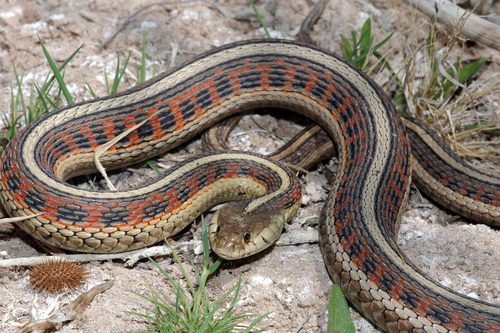
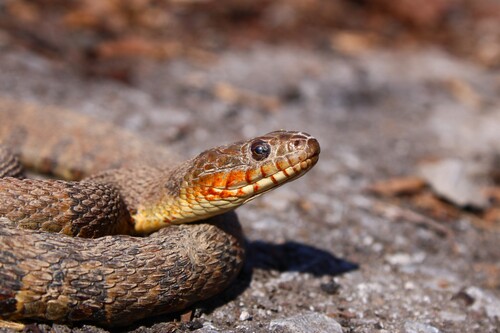
More Colubridae snakes
Classification
How scientists group this snake, from the broadest category down to the exact species. Each step narrows to its closest relatives.
- OrderThe broad group of scaled reptiles: all snakes and lizards
- Squamata
- FamilyA group of related snakes that share key traits
- Colubridae
- GenusA close-knit group of very similar species
- Chrysopelea
- SpeciesThis exact snake, named in the two-part scientific name
- Chrysopelea paradisi
Keep learning
- What to Do If You Find a SnakeFound a snake at home or on a trail? Here is how to stay calm, give it space, identify it safely, and know when to call a professional.
- Venomous vs Nonvenomous: How to Tell the DifferenceThe folk rules for telling venomous snakes apart, where each one fails, and why location-based identification beats guessing by sight.
- What Is a Snake? Anatomy and the BasicsA clear overview of what makes a snake a snake: limbless body plan, anatomy, evolution from lizards, species diversity, and why they are ectothermic.
- How to Keep Snakes Out of Your Yard and HomeA practical guide to keeping snakes out of your yard and home using habitat changes that work, plus what to skip and what to do if one shows up.
Distribution from GBIF & iNaturalist. Venom status per CDC. Background: Wikipedia. Informational only. Never handle a snake to identify it.