
Boidae
Bibron's Bevel-nosed Boa
HarmlessCandoia bibroni
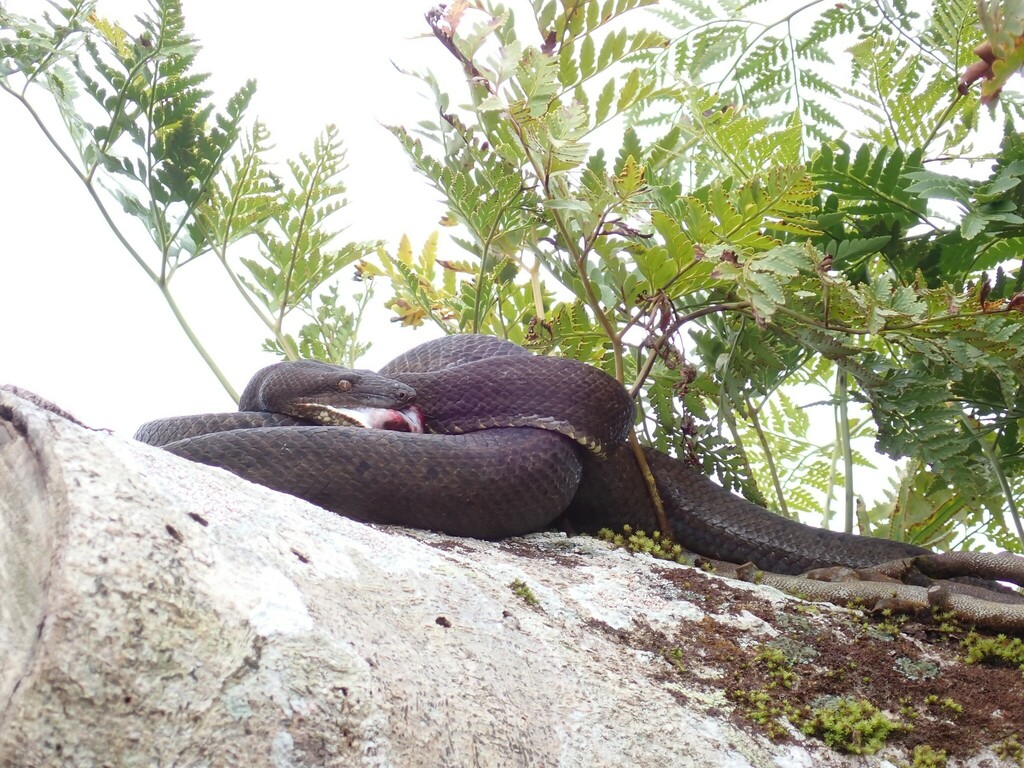
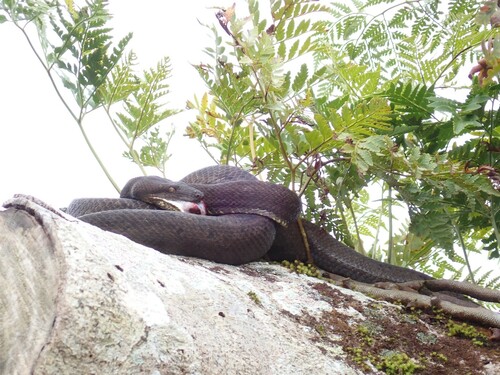
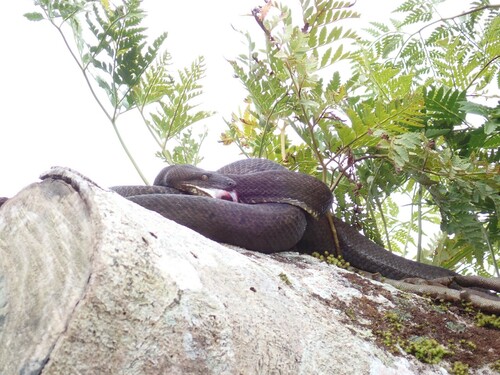
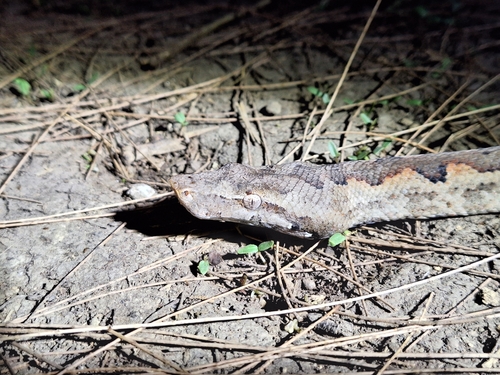
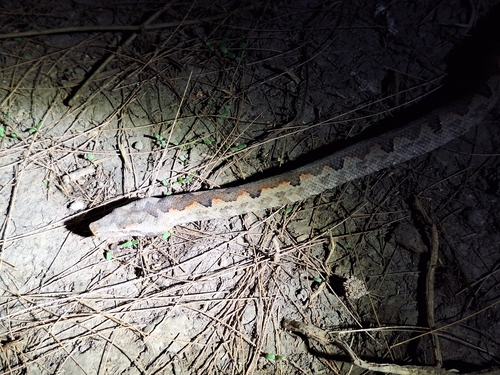
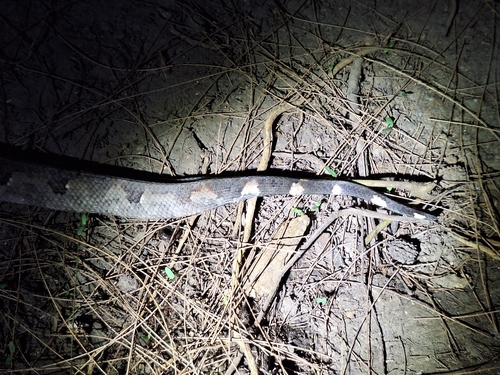
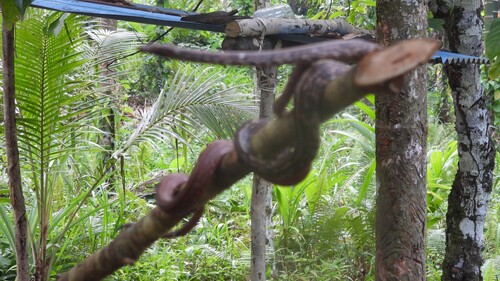
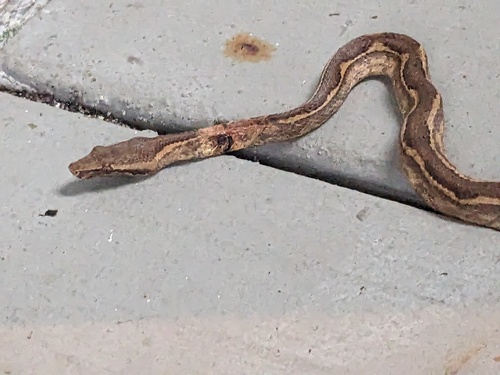
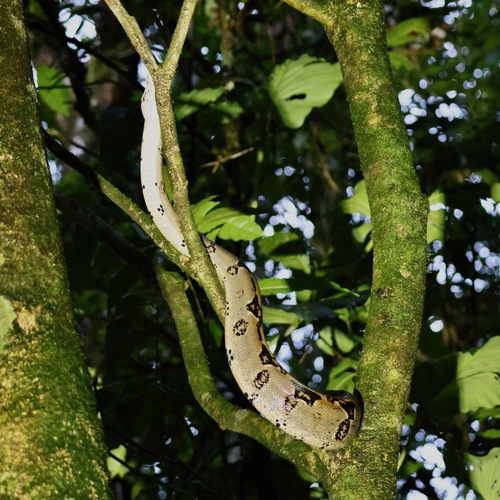
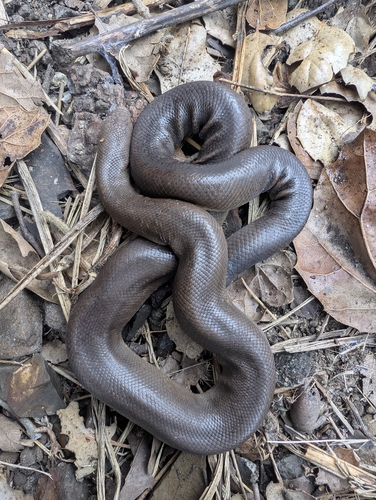
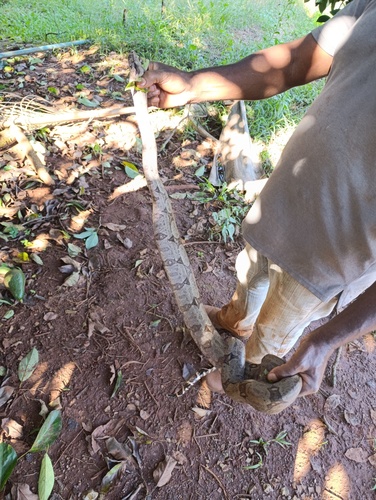
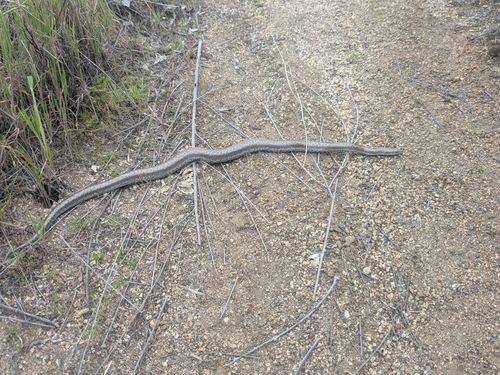
6 photographs of the Bibron's Bevel-nosed Boa. © Dominik Maximilián Ramík.
The Bibron's Bevel-nosed Boa (Candoia bibroni) is a non-venomous snake in the Boidae family, recorded in 18 countries.
- Family
- Boidae
About the Bibron's Bevel-nosed Boa
Candoia bibroni—commonly known as Bibron's bevel-nosed boa, Bibron's keel-scaled boa, the Pacific tree boa or the Fiji boa—is a species of boa, a group of non-venomous, constricting snakes, endemic to the southern Pacific Ocean island chains of Melanesia and Polynesia. Two subspecies are recognized, including the nominate subspecies, described here. Candoia bibroni is one of the most isolated and far-removed species of boid snakes on earth, as the majority of boa species (such as Boa constrictor) are found in the Americas and the Caribbean, or, in the case of the terrestrial sand boas (subfamily: Erycinae), in Africa and Eurasia.
Etymology
The specific name, bibroni, is in honor of French herpetologist Gabriel Bibron.
Description
C. bibroni is the largest member of the genus Candoia; adults can grow to up to 5 ft /1.5 meters in total length (including the tail). The color pattern usually consists of a pale brown, tan, or reddish-brown ground color overlaid with stripes, blotches, or spots. However, some individuals have no pattern at all.
Geographic range
Candoia bibroni is found in the South Pacific, primarily across the islands of Melanesia and Polynesia, including the eastern Solomon Islands (Olu Malau, Ugi, Rennell, Makira, Santa Ana, Santa Cruz, Bellona, Vanikoro and Utupua), the Banks Islands (Vanua Lava), Vanuatu (Efate, Erromango, Espiritu Santo), the Loyalty Islands (Lifou, Ouvéa, Tiga), Fiji—including Kadavu, Rotuma, Ovalau, Taveuni, the Mamanuca (Malolo, Mana), Yasawa and Lau Islands—, Tuvalu, Western Samoa (Savaiʻi and Upolu), and American Samoa (Taʻū).
The type locality given is "l'île Viti" (local name of Fiji Islands archipelago). Jacquinot and Guichenot (1853) list the type locality as "de l'archipel de Viti, Polynésie".
Habitat
The preferred natural habitat of C. bibroni is forest, at altitudes from sea level to 1,600 m (5,200 ft).
Feeding
Candoia bibroni is both an arboreal and a terrestrial hunter, preying primarily on birds, lizards (such as the many insular gecko and skink species) and small mammals, including rodents and bats.
Reproduction
C. bibroni is viviparous.
Subspecies
Adapted from Wikipedia, available under CC BY-SA.
Frequently asked: Bibron's Bevel-nosed Boa
- Is the Bibron's Bevel-nosed Boa venomous?
- No. The Bibron's Bevel-nosed Boa (Candoia bibroni) is non-venomous and is not considered dangerous to humans. Like most snakes, it will retreat rather than bite when given the chance.
- Is the Bibron's Bevel-nosed Boa poisonous?
- Snakes are venomous, not poisonous. "Poisonous" means harmful to eat or touch; "venomous" means injecting toxins through a bite. The Bibron's Bevel-nosed Boa is neither poisonous nor venomous.
- Is the Bibron's Bevel-nosed Boa dangerous?
- The Bibron's Bevel-nosed Boa is not dangerous to humans. It has no medically significant venom and bites only defensively if cornered or handled.
- Where does the Bibron's Bevel-nosed Boa live?
- The Bibron's Bevel-nosed Boa has verified records in 18 countries, including Fiji, Vanuatu, Solomon Islands. See the distribution section below for its full range.
- What does the Bibron's Bevel-nosed Boa eat?
- Candoia bibroni is both an arboreal and a terrestrial hunter, preying primarily on birds, lizards (such as the many insular gecko and skink species) and small mammals, including rodents and bats.
- Why is it called the Bibron's Bevel-nosed Boa?
- The specific name, bibroni, is in honor of French herpetologist Gabriel Bibron.
Where it is found
More Boidae snakes
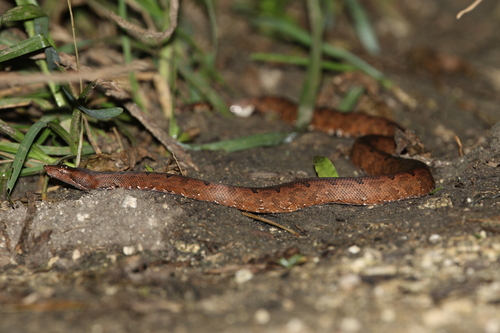
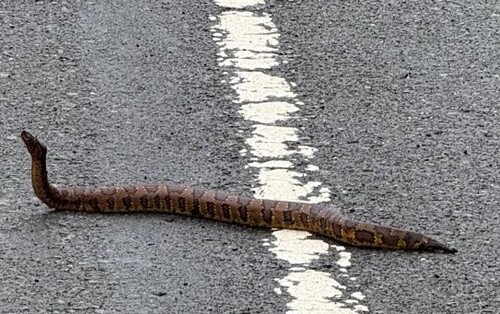
Classification
How scientists group this snake, from the broadest category down to the exact species. Each step narrows to its closest relatives.
Keep learning
- What to Do If You Find a SnakeFound a snake at home or on a trail? Here is how to stay calm, give it space, identify it safely, and know when to call a professional.
- Venomous vs Nonvenomous: How to Tell the DifferenceThe folk rules for telling venomous snakes apart, where each one fails, and why location-based identification beats guessing by sight.
- What Is a Snake? Anatomy and the BasicsA clear overview of what makes a snake a snake: limbless body plan, anatomy, evolution from lizards, species diversity, and why they are ectothermic.
- How to Keep Snakes Out of Your Yard and HomeA practical guide to keeping snakes out of your yard and home using habitat changes that work, plus what to skip and what to do if one shows up.
Distribution from GBIF & iNaturalist. Venom status per CDC. Background: Wikipedia. Informational only. Never handle a snake to identify it.