
Boidae
Solomon Island Ground boa
HarmlessCandoia paulsoni
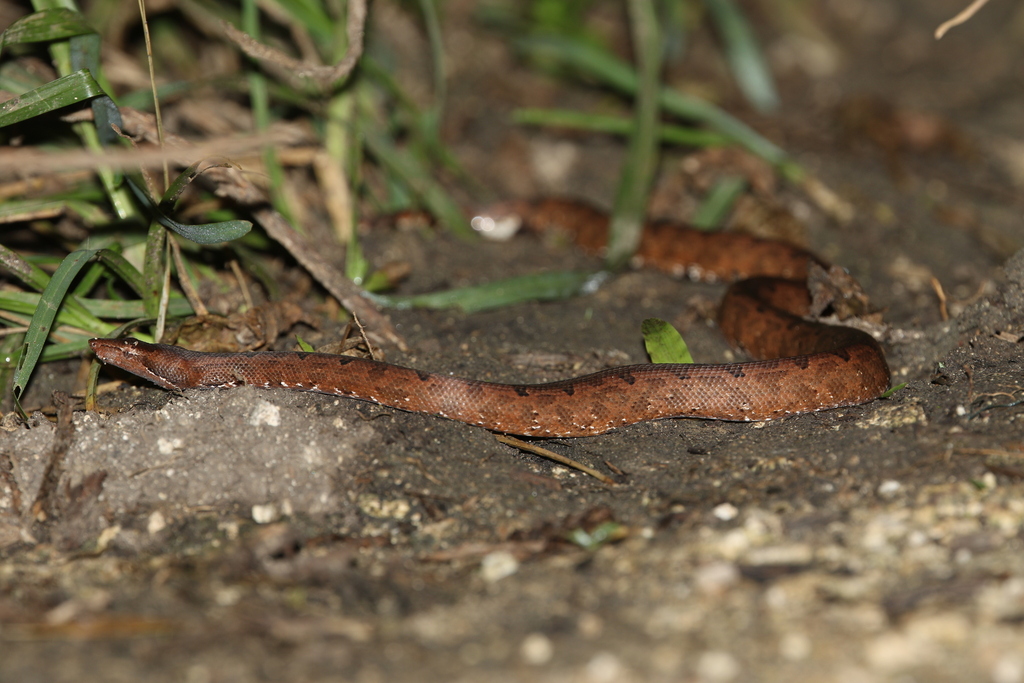
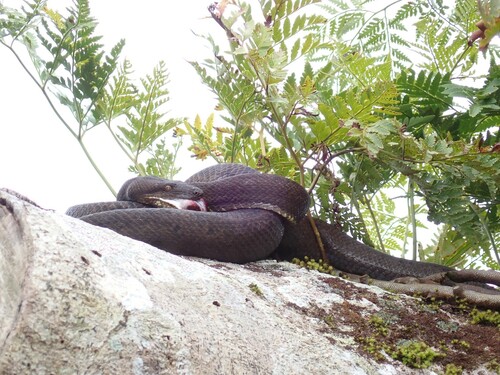
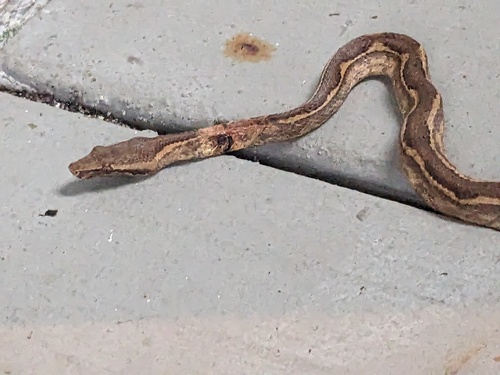
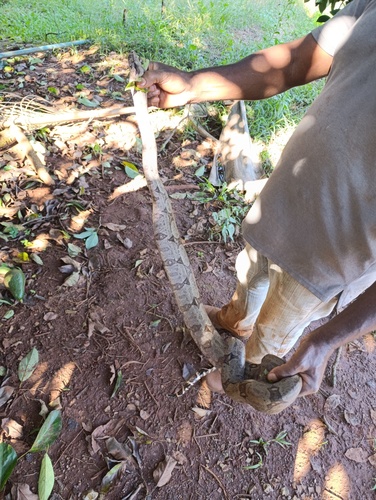
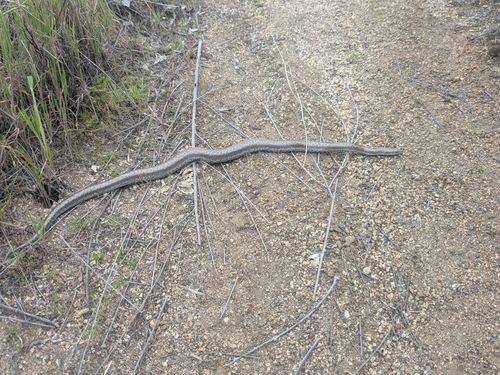
2 photographs of the Solomon Island Ground boa. © James Eaton.
The Solomon Island Ground boa (Candoia paulsoni) is a non-venomous snake in the Boidae family, recorded in 4 countries.
- Family
- Boidae
About the Solomon Island Ground boa
Candoia paulsoni, also known commonly as Paulson's bevel-nosed boa, the Solomon Islands ground boa, and the Solomons ground boa, is a species of snake in the subfamily Candoiinae of the family Boidae. The species is native to the Maluku Islands and Melanesia. Six subspecies are recognized.
Subspecies
Six subspecies are recognized as being valid, including the nominotypical subspecies.
C. p. paulsoni (Stull, 1956) – the Solomon Islands
C. p. vindumi H.M. Smith & Chiszar, 2001 – Bougainville Island
C. p. tasmai H.M. Smith & Tepedelen, 2001 – Halmahera and the Talaud Islands, as well as Sulawesi
C. p. mcdowelli H.M. Smith & Chiszar, 2001 – eastern Papua New Guinea
C. p. sadlieri H.M. Smith & Chiszar, 2001 – Woodlark Island
C. p. rosadoi H.M. Smith & Chiszar, 2001 – Misima Island
Geographic distribution
Candoia paulsoni is found in Indonesia, Papua New Guinea, and the Solomon Islands. The type locality is Ugi Island in the Solomon Islands.
Behavior
Candoia paulsoni is both terrestrial and arboreal, and it is mainly nocturnal. Young snakes feed on skinks, while larger individuals eat larger lizards and small mammals. This snake has been found deep within limestone caves where it may have been eating small bats and/or juvenile frogs (Cornufer).
Reproduction
Candoia paulsoni is viviparous. Litter size can be as many as 20 young.
Etymology
The specific name paulsoni is in honor of Swedish herpetologist John Paulson.
The subspecific name, mcdowelli, is in honor of American herpetologist Samuel Booker McDowell Jr.
The subspecific name, rosadoi, is in honor of herpetologist José P. O. Rosado of the Museum of Comparative Zoology.
The subspecific name, sadlieri, is in honor of Australian herpetologist Ross Allen Sadlier.
The subspecific name, tasmai, is in honor of Indonesian reptile breeder Budiyanto Tasma.
The subspecific name, vindumi, is in honor of American herpetologist Jens Verner Vindum.
Adapted from Wikipedia, available under CC BY-SA.
Frequently asked: Solomon Island Ground boa
- Is the Solomon Island Ground boa venomous?
- No. The Solomon Island Ground boa (Candoia paulsoni) is non-venomous and is not considered dangerous to humans. Like most snakes, it will retreat rather than bite when given the chance.
- Is the Solomon Island Ground boa poisonous?
- Snakes are venomous, not poisonous. "Poisonous" means harmful to eat or touch; "venomous" means injecting toxins through a bite. The Solomon Island Ground boa is neither poisonous nor venomous.
- Is the Solomon Island Ground boa dangerous?
- The Solomon Island Ground boa is not dangerous to humans. It has no medically significant venom and bites only defensively if cornered or handled.
- Where does the Solomon Island Ground boa live?
- The Solomon Island Ground boa has verified records in 4 countries, including Papua New Guinea, Solomon Islands, Indonesia. See the distribution section below for its full range.
- Why is it called the Solomon Island Ground boa?
- The specific name paulsoni is in honor of Swedish herpetologist John Paulson. The subspecific name, mcdowelli, is in honor of American herpetologist Samuel Booker McDowell Jr. The subspecific name, rosadoi, is in honor of herpetologist José P. O. Rosado of the Museum of Comparative Zoology. The subspecific name, sadlieri, is in honor of Australian herpetologist Ross Allen Sadlier. The subspecific name, tasmai, is in honor of Indonesian reptile breeder Budiyanto Tasma.
Where it is found
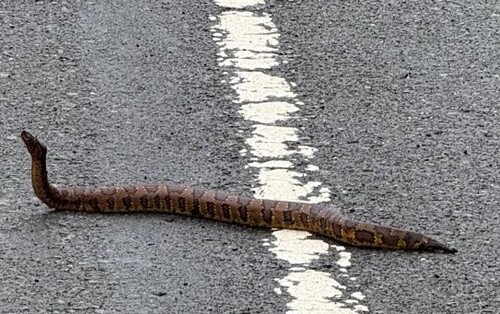
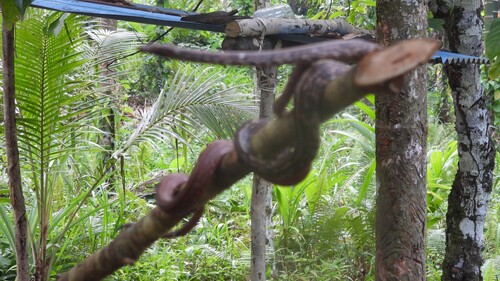
More Boidae snakes
Classification
How scientists group this snake, from the broadest category down to the exact species. Each step narrows to its closest relatives.
Keep learning
- What to Do If You Find a SnakeFound a snake at home or on a trail? Here is how to stay calm, give it space, identify it safely, and know when to call a professional.
- Venomous vs Nonvenomous: How to Tell the DifferenceThe folk rules for telling venomous snakes apart, where each one fails, and why location-based identification beats guessing by sight.
- What Is a Snake? Anatomy and the BasicsA clear overview of what makes a snake a snake: limbless body plan, anatomy, evolution from lizards, species diversity, and why they are ectothermic.
- How to Keep Snakes Out of Your Yard and HomeA practical guide to keeping snakes out of your yard and home using habitat changes that work, plus what to skip and what to do if one shows up.
Distribution from GBIF & iNaturalist. Venom status per CDC. Background: Wikipedia. Informational only. Never handle a snake to identify it.